Yaizu’s Hacchoro (八丁櫓) Fishing Boat

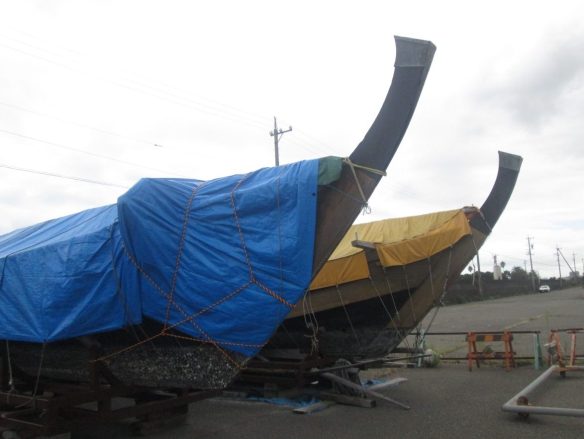
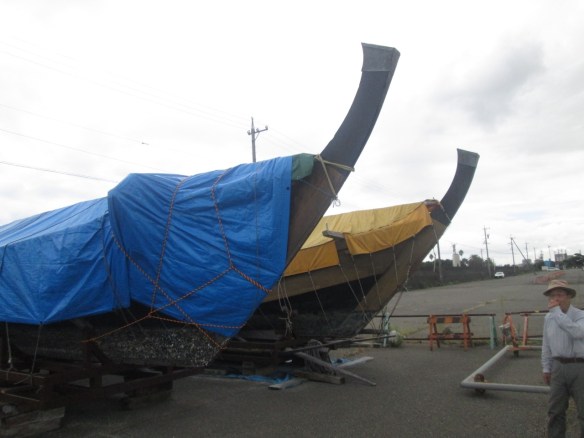
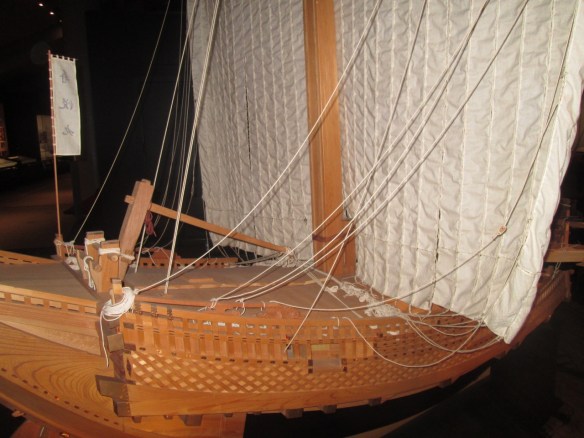
Yaizu is a coastal city on Suruga Bay, 10 miles south of Shizuoka, and about 50 miles southwest of Mt. Fuji. On a clear day, you can see Fujiyama. I visited Yaizu during typhoon season, and the mountain was obscured by clouds. Yaizu is the home of two replica Hacchoro (hot-cho-ro), fishing boats that got their claim to fame as boats of these types were once commissioned as escort boats for the retiring Shogun, Tokugawa Ieyasu.

img_0886

Hacchoro at the port of Yaizu, wrapped up for the season.

The story goes that the Shogun, or military ruler of Japan, liked to hunt game using a falcon. Travel to the hunting grounds required a trip by sea. To provide escort, 24 fishing boats were commissioned. But, the fishermen operating the boats had a difficult time keeping up with the Shogun’s boat due to strict limitations in place on the number of oars that could be implemented on fishing boats – a limitation imposed to limit the military capability of the craft. The fishermen of Yaizu were then granted permission to use 8 oars, which gave the boats their name – Hacchoro, translates to “8 oars”.

Continue reading

Speaking at the 2016 NRG Conference

Having been involved in Ship Modeling for more than 20 years, I’ve been a big admirer of the Nautical Research Guild and the work of its impressive membership. There have been so many great modelers involved in the Guild, I feel honored to be speaking together in a combined talk with boatbuilder Douglas Brooks at the opening talk of this year’s conference in San Diego. Douglas Brooks will be reprising his talk at last year’s conference on Japanese Wooden Boatbuilding, while I’ll be adding the element of modeling them.

IMG_1804

Douglas Brooks speaking at the 2015 NRG Conference in Mystic, CT.

Granted, my portion of the talk will the shorter segment. In the 15 minutes or so that I’ll have, I’ll only be able to scratch the surface of the subject, mostly talking about resources available to those who are interested in building a traditional Japanese boat. Pretty much, just enough to give folks a nudge toward attempting one.

The other part of my participation at the conference came as something of a surprise as I was told just last month that I was scheduled to do one of the round table sessions. These are 20-minute sessions that takes place simultaneously with 4 other sessions. People attend the session of their choice, and after 20 minutes, people then switch to another table. So, basically, I have a 20-minute demo, repeated a total of 4 times (with one 20-minute break).

Having no idea what I was expected to do, I’d considered a couple possibilities. The first thing that actually came to mind that I thought would work out, was to demo some of the details of paper modeling. Having completed only 1 paper model made it seem a bit odd, but I don’t think anyone else has done it, and I actually did have some interesting techniques to show.

But, talking with Kurt Van Dahm, the NRG Chairman, and others, it seemed that the idea was to give me more time to talk about modeling Japanese boats. So, I’ll be talking a mix of building Japanese kits and building from scratch. It seems a bit odd to me, as talking about kits seems a bit like a sales pitch. The only thing preventing it from being a complete conflict of interest, seeing as how I’ve done some work for Ages of Sail, is that Ages of Sail doesn’t currently carry any of the kits I’ll be talking about. And, my most highly recommended kit, the Tosa Wasen, will only be available direct from the manufacturer.

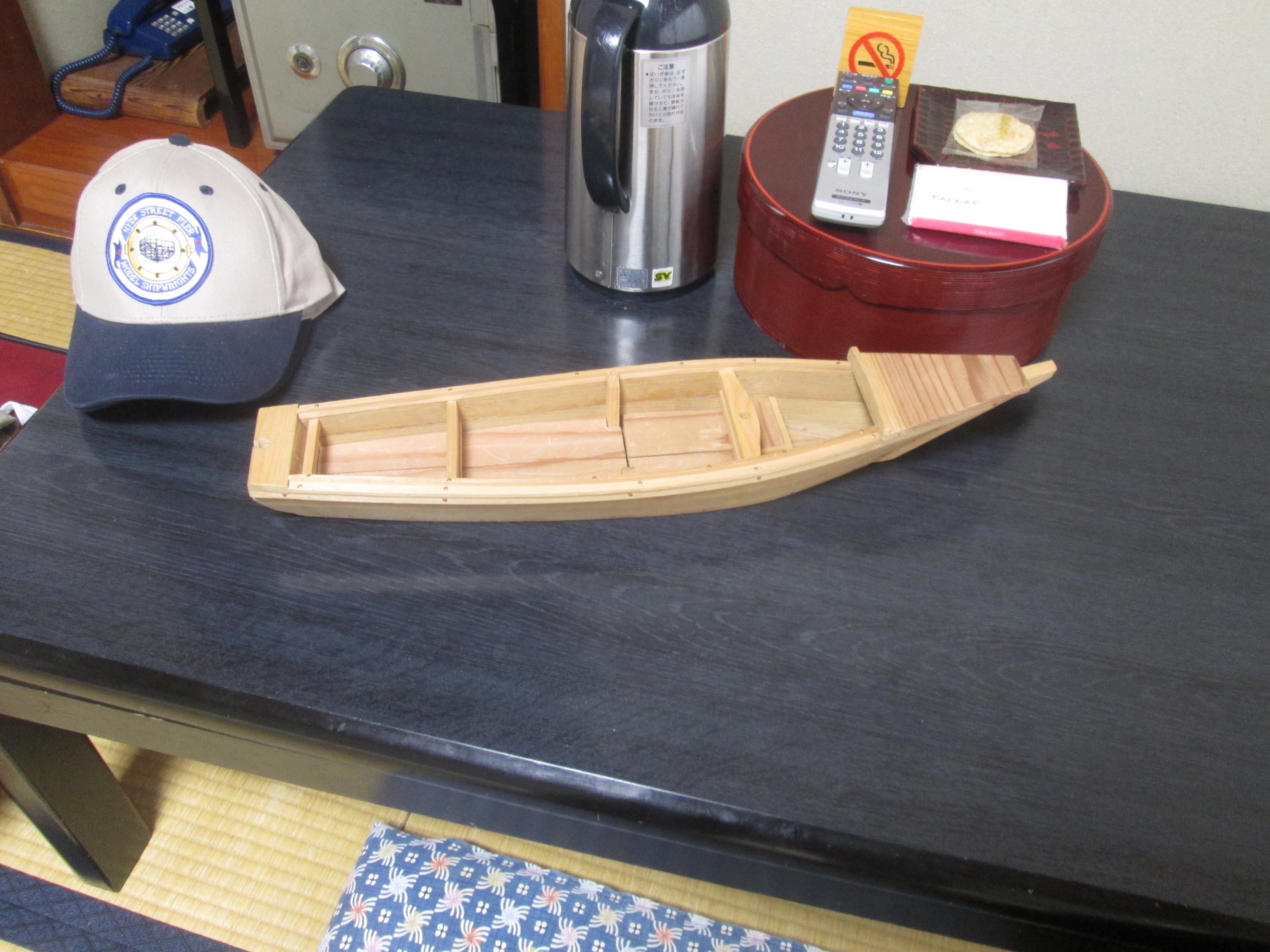
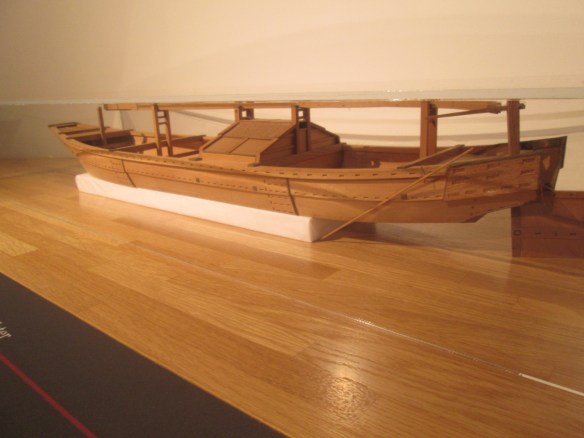
Bekabune model gifted to me from the Urayasu Museum.

Bekabune model given to me by the curator of the Urayasu Museum.

In any case, I’ll bring my in-progress Urayasu Bekabune models and a small supply of Japanese woods for people to sample themselves, giving them a chance to sand, cut and bend them. Show a couple in-progress kits, talk about how to read the Japanese language plans, etc. A 20-minute discussion should go by pretty quick, then repeat it three more times.

I really hope it won’t end up being the lamest NRG round table discussion in history, and people will find it interesting and useful. Wish me luck!

Japan Trip 2016 Wrap Up

Here it is, Wednesday, September 14th, and I’m back at home on day 2 of my recovery. I’ve had a great trip, made new contacts in Japan, met several existing contacts in person for the first time, seen a Bekabune, Hacchoro and Kitamaebune up close and personal, took tons of photos, rode countless buses and trains, and now I’m back and ready to put my experiences and collected information together and make use of it.

It will take me a while to get myself organized. Well, first it’s going to take me a while just to recover. The trip was great, but it was such a short one for covering so many interesting places. The amount of travel was actually fairly stressful. It would have been great to have been able to stay in each location a couple more days or even longer. But, I did manage to see everything on my primary list, and I’m really happy with the trip. It was a great experience, and I brought back a lot of information to share.

I’m really grateful to all those who supported me, financially, logistically, or otherwise. I wouldn’t have been able to do this without their help. And, now, it’s time for me to start sorting things out and putting the information together and to good use.

The first task is to finish putting together my part of a talk I’m doing at the Nautical Research Guild conference in San Diego early next month. The topic is Modeling Japanese Boats. As I’ve been scheduled for a roundtable discussion later on the same day, I’m also having to put that together on the same topic.

To support the discussion, I’m going to have to finish up my model of the Urayasu Bekabune. And, now that I’ve seen one in Toba and been to the Urayasu Museum and talked to people there, I should be able to have the model complete enough to use as a physical prop for the discussion. I also have a model given to me by the Urayasu Museum’s curator to help me out.

img_1826

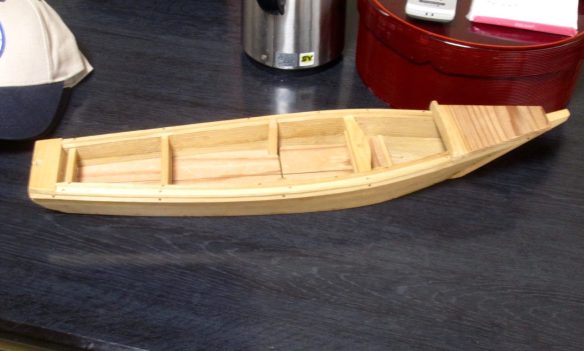
The Bekabune Model from the Urayasu Museum

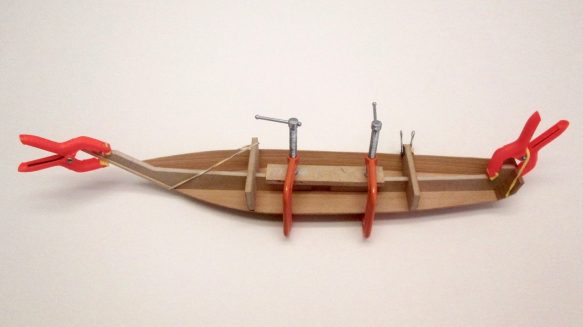
On my own model, I already had the the floor, transom and stem together (In Japanese, that’s the Shiki, Todate and Miyoshi, respectively), and shaped the lower planks (called the Kajiki). Having seen the models being built at the Urayasu Museum, I decided to move forward and glued together what I had, with my newly found confidence.

My Urayasu Bekabune under construction.

Finally, I have a 95% completed article on building Woody Joe’s Higaki Kaisen kit. I decided to hold off from submitting the article to Seaways’ Ships in Scale magazine until after my Japan trip, so I could reference some first-hand information in the article. I started working on finishing that up yesterday and will be sending that off soon.

By the middle of next month, all of the above with be completed and I will be working to complete any changes to my Japanese Watercraft Models Display, which will be going up again for the month of November, and should include my completed bekabune.

After that, I’ll leave open for now. But, I do have a lot of photos I took of the Hacchoro in Yaizu, and I recently ordered another Hacchoro model kit from Japan. So, expect to see something come of that in the near future.

img_0886

The two Hacchoro at Yaizu, wrapped up for the season.

In the meantime, I actually have several posts that I started on the trip, but were not complete enough to submit. Watch for those, as well as photos and other posts, in the very near future. Ω

Visiting the Edo Tokyo Museum

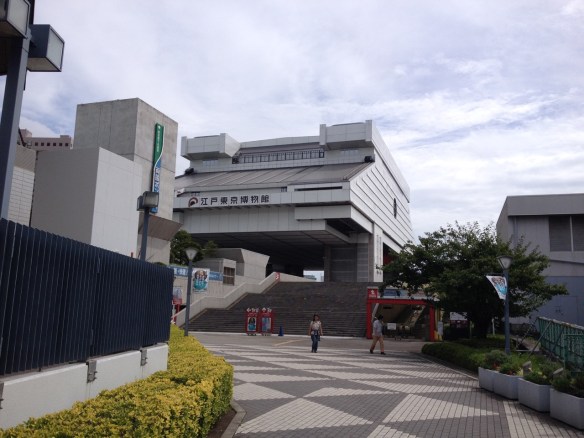
If you want to see what life in Edo period Japan was like (1603-1868), you might want to make a visit to the Edo Tokyo Museum, located in Tokyo’s Sumida ward. This is a neat place and it’s big. The building’s architecture is interesting and is said to be patterned after the shape of a type of Edo period storehouse.

img_2740

The Edo Period Tokyo (or Edo period, Edo) is on display as the museum’s permanent exhibit on the 5th and 6th floors of the building, but tickets are purchased on the first floor. The price of admission is 800¥ for adults and the ticket is good all day, so don’t toss it out, in case you might want to exit and come back later. There is, after all, a lot to take in.

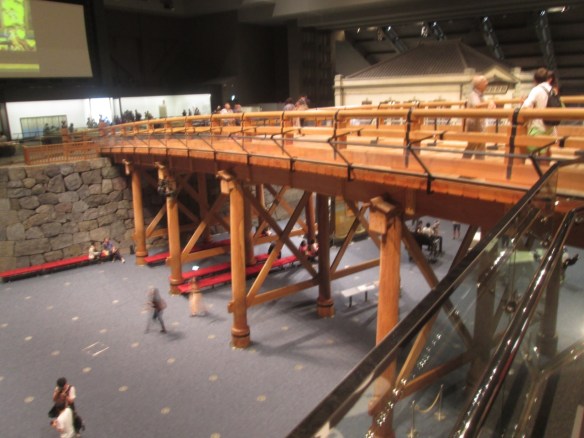
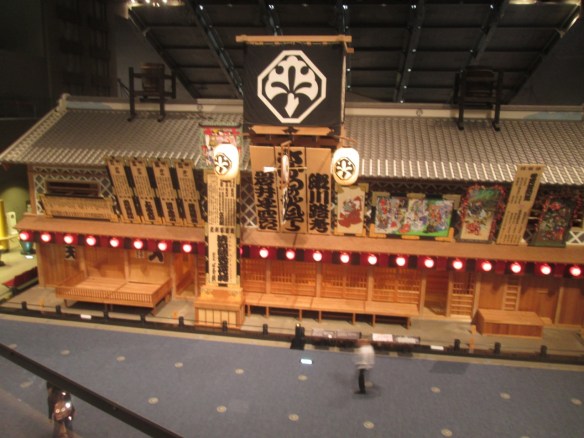
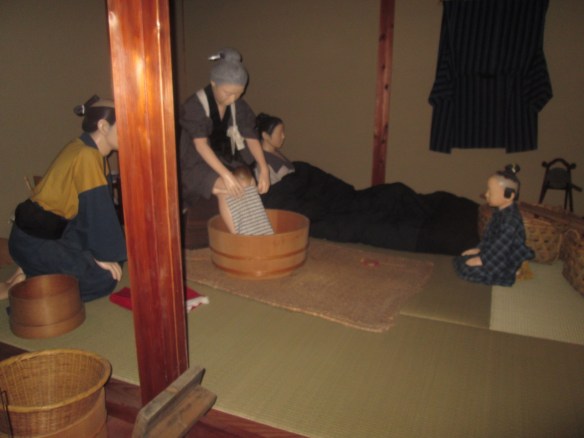
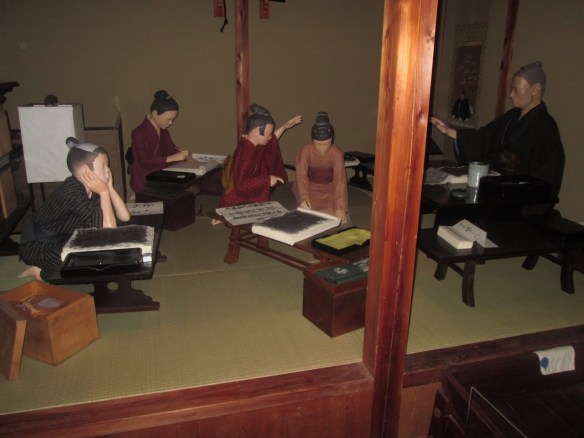
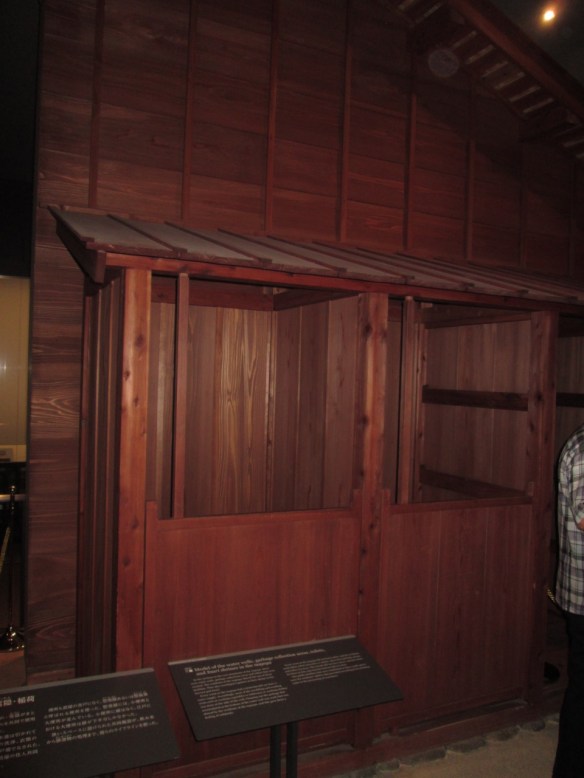
Walking through the museum, you get to see some life-size representations of life in old Edo. The first thing you run across is a reproduction of the Nihonbashi, which is one of the main bridges leading into the city, also there is a reproduction of the Nakamuraza theater, which was one of three Kabuki theaters in Edo.

img_1459

img_1464

You will also glimpse how people lived and worked in Edo. This place provides a great opportunity to look at the buildings, tools, culture and lifestyles of Edo. Of course, it’s Japan, so the information provided is predominantly in Japanese. But, some of the signs are also written in English. Even so, docents abound at the museum, and you can request a docent, who will lead you through the museum and tell you about the things that were really special about old Edo and Japan.

img_1549

img_1556

Being that I was on my own personal search for obscure information, I didn’t bother with a docent guide. However, I kept running across the same groups of English speakers and their docent guides and couldn’t help but overhear some interesting information that I wouldn’t have gotten otherwise.

img_1551

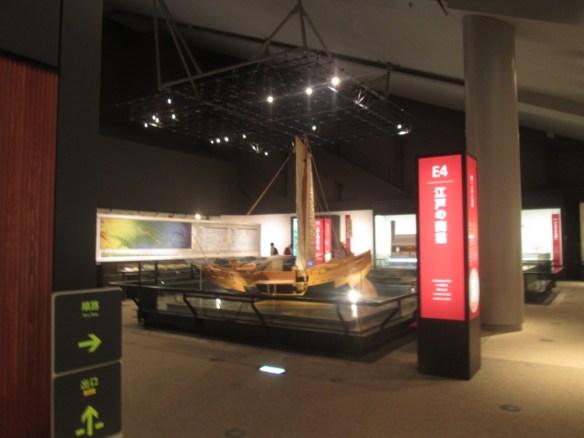
For the ship modeler, or someone interested specifically in Japanese watercraft, the museum doesn’t really have much. There is one large model of a Higaki Kaisen that is well worth seeing (I’ll post more photos later).

img_1562

img_1586

I also discovered the first model I’ve seen yet of a Takasebune, which is a basic riverboat transport. This is one of the types of boats I’d really hoped to see a model of. Sadly, the lighting in the museum is absolutely horrible, and the model is in a tiny case, barely bigger than the model, creating a lot of haze and glare, and the only light shining on it was from the front, from behind the viewer, so it was hard not to create harsh shadows.

img_1598

img_2764

img_1610

img_1607


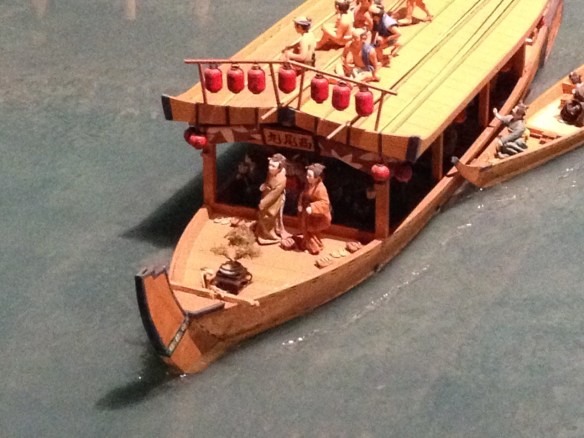
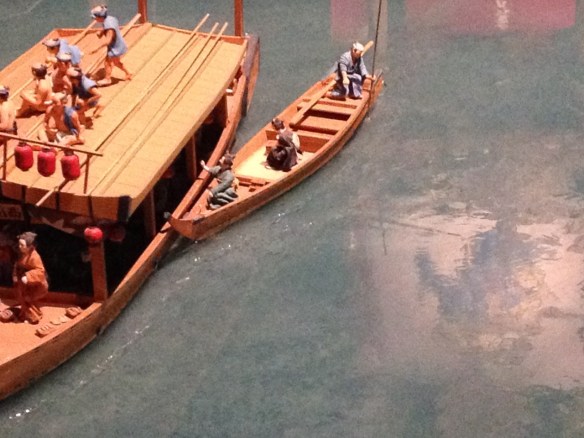
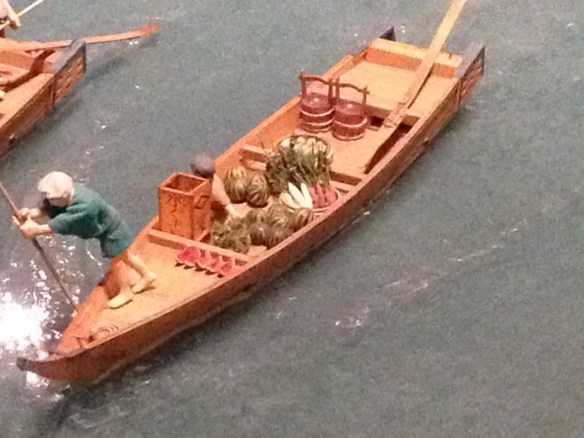
But, the biggest attraction for me, ended up being the large diorama of the Nihonbashi bridge and the activity on the water below. There are many small boats on the river, including chokibune (water taxis), large yakatabune (pleasure boats), and various other small boats who’s specific names I don’t know and/or don’t recall. I only know from the book Funakagami, that the boats are generically called chabune.

img_2777

img_2778

img_2781

For me, it was important to see these boats in the context of their daily work. Seeing the people on them, how they used them, etc.

Unfortunately, I couldn’t get better photos of anything due to the poor lighting. The whole museum is this way. Lighting is kept at a low level. As a result, most of my photos are fuzzy, underexposed, or overexposed (due to flash). Okay, some of that’s due to my lack of photographic skill and use of a simple point-and-shoot camera. But, the problem was exactly the same at the Toba Seafolk Museum, and makes for a very frustrating experience.

At the gift shop area, I found no books on Japanese watercraft, and I asked about any books that might have some good photos of the dioramas. The shop staff was very apologetic, but they apparently had nothing useful.

Still, a great experience if you’re in Tokyo, and well worth visiting. Ω

Books from Japan

When I visited the Toba Seafolk Museum on Tuesday, I took a lot of photos. In fact, I killed off a camera battery, but luckily had purchased a second battery before leaving for Japan. I also made sure to purchase a larger SSD card for my camera. A 32GB card wasn’t all that expensive, and literally allows me to take 1000’s of pictures before filling up the card.

But probably the biggest find for me was in their gift shop. Okay, first biggest find was the cold, bottled water (The temperature was in the 80’s with something like 86% humidity). But the next biggest find was that they had several books on Japanese boats. Some of them I was aware of, but I was surprised to find titles I was not aware of.

It was difficult looking through all these books, because I really wanted them all, and their not available in the U.S., and, as I verified later, they are very hard to find on the Internet in Japan. Of course, I couldn’t get everything I wanted to buy, and not just because of the cost, but also I’d be lugging them around Japan for the next several days.

So, I selected a few titles. A couple that I passed up, I had thought I’d seen though Japanese online sites, and a few others, I figured I’d find in other museums I’d be visiting, so I might still be able to pick them up. As for lugging them around Japan, well I could just send them to my Tenso.com account, which is a forwarding service I signed up for that gives me a Japanese mailing address, and that will package up anything I send them, and they’ll ship it to my home. Of course, books are a bit heavy and shipping won’t be cheap. So, I’m lugging around what I can for now.

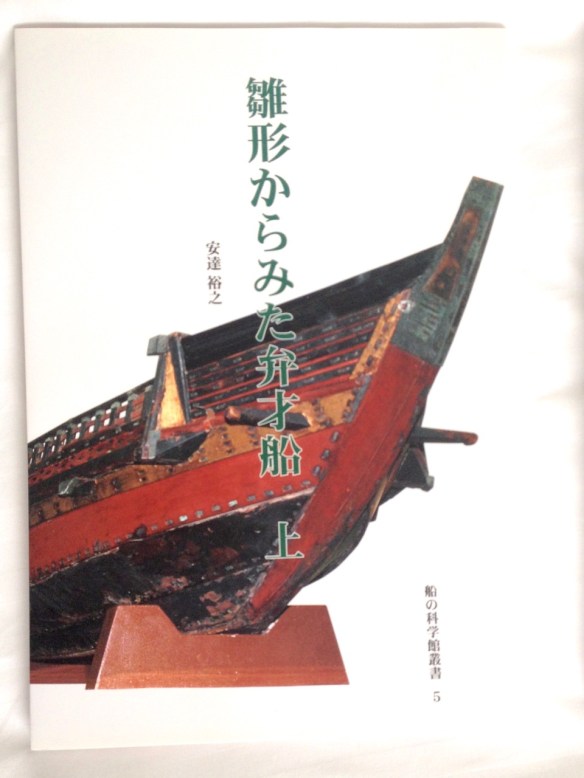
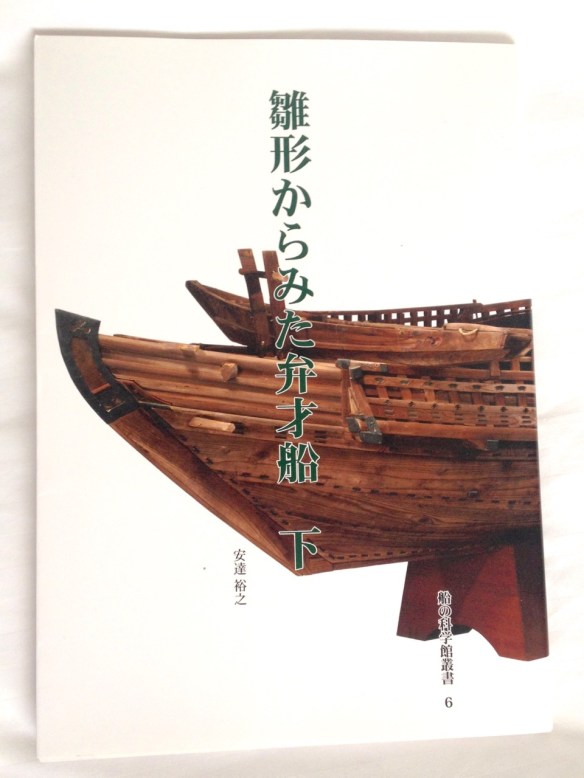
I can’t tell you anything about these until I’ve had a chance to sit down and do some translation and study, but you can see what they are:

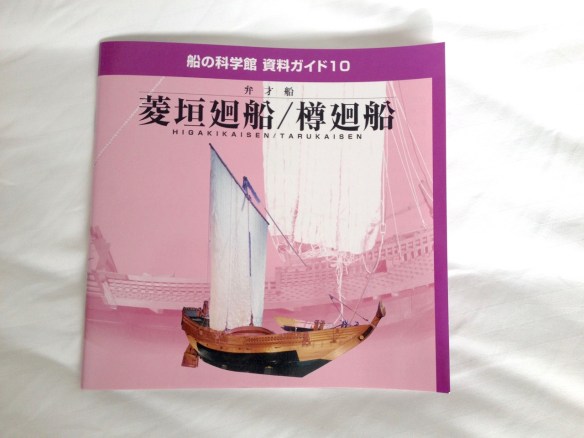
img_2724 img_2725 img_2726 img_2730

The last book was a “no brainer”. It’s a small format publication from the Tokyo Museum of Maritime Science. It’s just a 40-page book and cost a whopping $3 (300¥).

The other three books were $15 each, except for that third book, which included a set of drawings. I thought it was $35, but I think they only charged me about $26, as best as I can figure.

As you can see, the first three are numbered. They’re part of a series of books that appear to be connected to the Nippon Foundation. But, the publication information in the books all reference the Museum of Maritime Science. There looked to be some 9 books in the series, though some of them looked to be on subjects I wasn’t interested in.

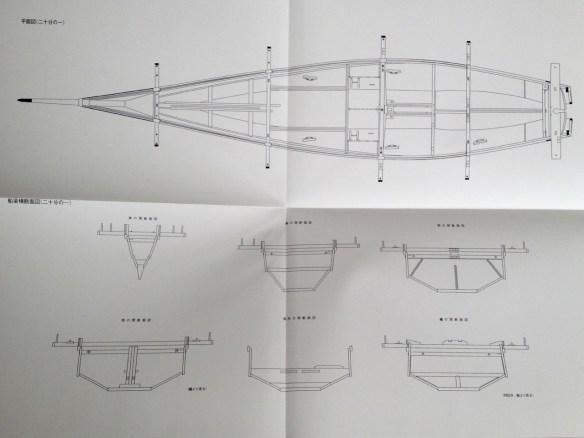
The third book, I believe the title refers to a boat named the Senzanmaru, I got mostly because it was the only book I’d seen that included a set of plan drawings. I know nothing of this boat, but hey, the drawings make it build-able. So, I bought it in kind of a “shoot now and ask questions later” mentality (I have to say that phrase now has become incredibly awkward to write). Here are a couple of the sheets.

The top one shows the actual Edo period boat below and an artists rendering of the original boat above.

img_2734

The plan drawings are really done in a modern style, which is a good technical drawing, but a model builder will have to loft a lot of the hull planking details from one of the sheets which shows station lines and hull contour.

img_2733

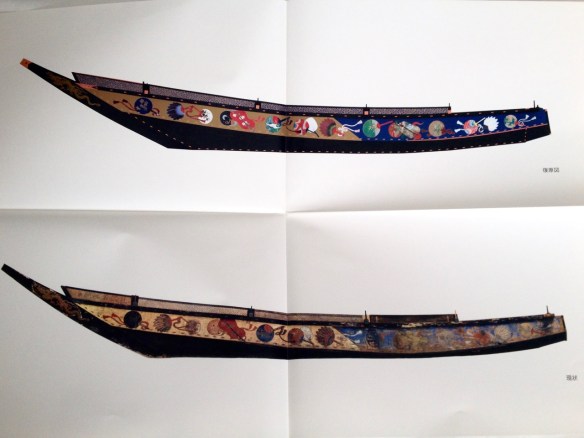
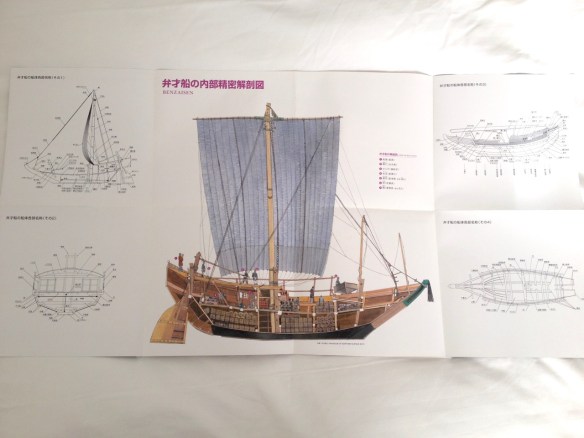
Meanwhile, the little book on Higakikaisen and Tarukaisen included a nice fold-out (centerfold sounded weird)

img_2727

Today, I’m off to the Edo Tokyo Museum and will try to get to the Urayasu Museum as well. There’s a Typhoon passing by this afternoon. With luck it will mostly stay away, but I might get the first rain of my trip today.

Visiting the Umi no Hakubutsukan

That’s what the Toba Seafolk Museum is called here in Japan. While there are some signs in english on occasion, if you ask anybody for directions or about the museum, it really helps to say it in Japanese: Umi no Hakubutsukan (oo-mee-noh-ha-coo-boo-tsoo-kahn).
IMG_2688

After a really long first day in Japan, which included visiting Woody Joe in Shizuoka and then getting a good look at the Hacchoro in the port of Yaizu, I was a bit burned out and decided to just relax in my room in the morning. The museum opens at 9:00am, but I didn’t get there until a little before noon.

First, a note about using Google Maps, which I used heavily during trip planning. If you look on the web about the museum, it would appear that the museum is open daily except for a small handful of holidays. Well, Google Maps, has a neat feature where you click on a public place like the museum, and it will tell you how popular the place is over the hours of the day. This would help you figure out when to avoid crowds. Well, I had a last minute freak-out before I left home when Google indicated that the museum was closed on Tuesdays, the main day I was to be in Toba.

So, I made contingency plans, and when I arrived at Toba, I asked about the issue at the hotel, but they said it was open. Could the hotel owner not know the museum is closed on Tuesdays? Seems unlikely. And, in fact, the museum is open on Tuesdays. Google lied, so just beware of that online feature.

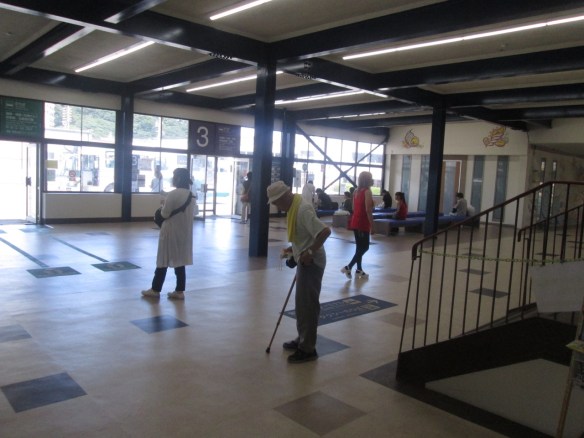
Getting to the museum from town is very easy. There is a great local bus system here that you want to use called the Kamome Bus (kah-mow-may). The bus center is attached to the Toba JR station. Just be aware it’s on the ocean side of the tracks. The bus to Umi no Hakubutsukan is the No. 4 bus and it picks up at station number 2. The person at the ticket window can indicate which door the bus arrives at.
IMG_0946

The round-trip is 500¥, but you don’t have to pay until you arrive at the museum. As you enter the bus, grab the little return ticket that’s sticking out of the machine just inside the bus door. You’ll give this to the driver when you exit the bus on your return to the bus center.
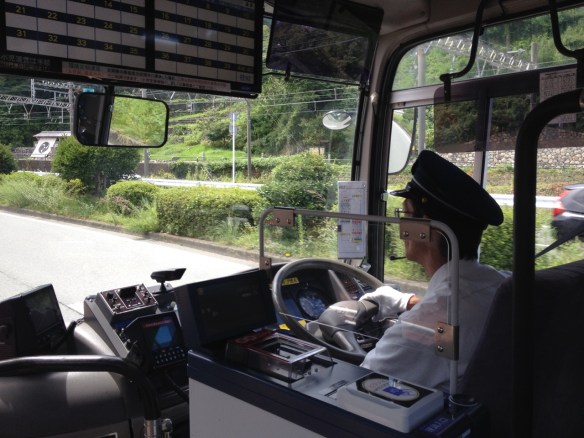
IMG_2648

At the Museum

I read something that indicated it was a 10 minute walk from the museum bus stop to the museum itself. Another lie. The bus stops directly in front of the museum entrance. Just be sure to push one of the stop request buttons when you get close so the bus driver knows to stop there. Maybe he’d stop anyway, but why chance it?

Admission to the museum is 800¥ for adults and 400¥ for children under 17. If you want a refreshment, there is a little café right across from the museum entrance. It appears to be staffed by the museum people, so you may have to let them know at the front desk that you want to sit in the café. If it’s a hot day, you might take a respite from the heat as the café is air conditioned. Note that the rest of the museum is not, with the exception of movie viewing theater, where you can watch some film about Ama, the female divers of Japan.
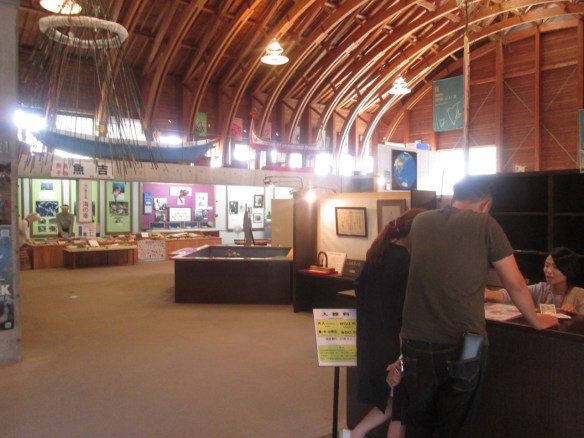
IMG_0953

Museum entrance and main building.

If I had more time, I would have take more time to learn about the Ama, as there is a great deal of information about them at the museum. There is also “Pearl Island” in Toba, where I believe you can learn more about the Ama.

As it was, I spent about 3 hours looking at boats, fishing history, models of boats, the history of Toba, boats, and more boats. I did my best to learn and collect as much information as I could. I ended up burning up one camera battery, filling up my iPhone (doesn’t take much), and collecting more than 500 photos throughout the day. Of course, some were just countryside photos, a few selfies, and views of the bus, etc. But, for the most part, they were boat pictures.
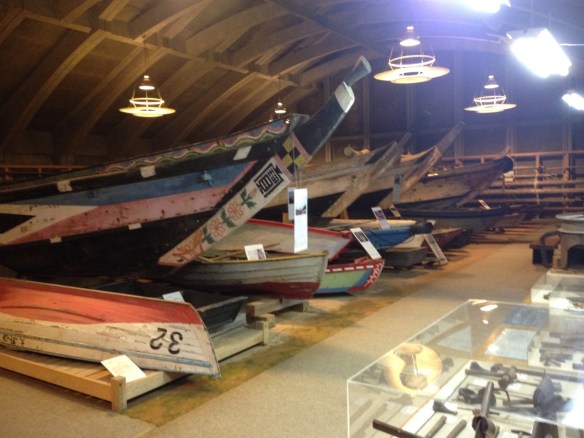
IMG_2676

Inside the boat repository building.

I will have to admit that the value of most of the photos may be somewhat less than might be expected. There are so many boats in the repository that you can’t even get close to most of them. Also, the lighting is so bad that it’s hard to get good shots. Some are blurry and when I used the flash, it over exposed some of the pics.
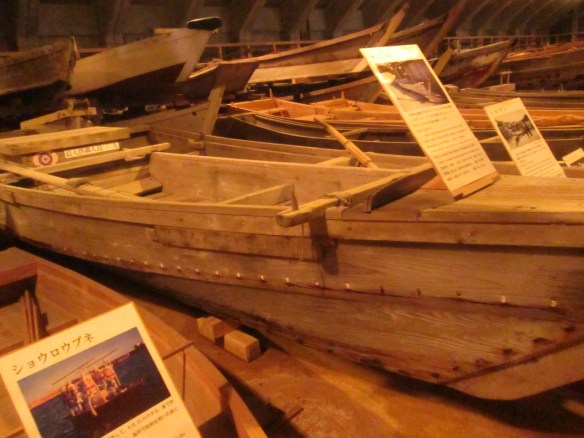
IMG_1385

Not a lot of room to get close to the boats.

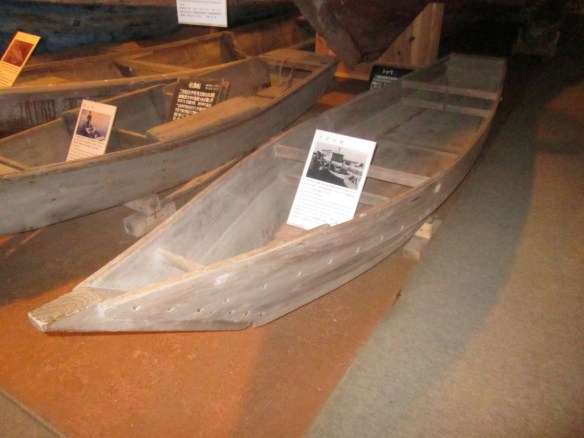
One subject that was really hard to shoot because it was in a dark corner, in the shadow of a bigger boat, was a small score for me. The boat is a nori gathering boat called a Bekabune, and I happen to be currently modeling one of these. So, this was a particularly nice find.
IMG_1298

Bekabune, once used on Tokyo Bay for harvesting seaweed.

Besides the full-sized boats, there’s a nice assortment of models in the main building. Again, there was a problem with lighting. But some in a glass case were well lit. Others that were not well lit suffered further by being in a glass case, where glare was a bigger issue.

Amazingly, some models were not in a case, and one European style galleon model made me nervous because I was carrying a backpack, and if I was careless, I could have easily stepped back or turned around and broken some of the rigging. The Japanese visitors must be amazingly careful around this stuff!

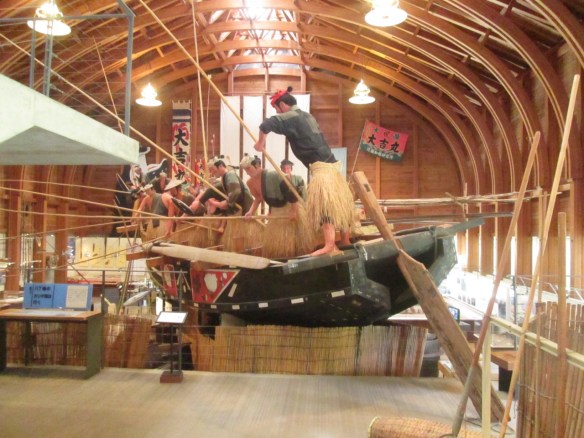
One of the things I found the most interesting were the dioramas showing how fishing was carried out. One was a full-sized boat suspended above the floor, with fishermen wearing what is most easily described as grass skirts, pole fishing over the side. It looked very dynamic, and I think it must have been a very accurate image, as there was a video playing in one part of the museum below the boat where a the bow of a modern day fishing boat was lined with fishermen with long poles just hauling up fish after fish. One fisherman pulls up a big fish and flings the line overhead and behind him with a big catch. He then throws the line back in and it looks like within seconds he’s caught another. So, the boat display seems authentic.
IMG_1179

But, the big score for me, turned out to be the museum store. I found a whole section on Japanese boats, most of which were from the currently closed Maritime Science Museum in Tokyo. It took me a while to decide what to get, but I ended up buying about 6000¥ on books. Sadly, there were many others I wanted to get too, as they are really hard to order and have shipped to the U.S. But, I figure I’ll have an opportunity to find the same books when I’m in Tokyo or in the Ogi Folk Museum on Sado Island in a few days.

Well, after about 3 hours, I was pretty well spent given the 80 degree weather and 87% humidity. I cooled off in the café while waiting for the bus. I almost decided to just hang out there around the museum and in the café until closing time, 5:00pm. But, at the last minute, I figured I’d better head back and get to work writing.
IMG_2687

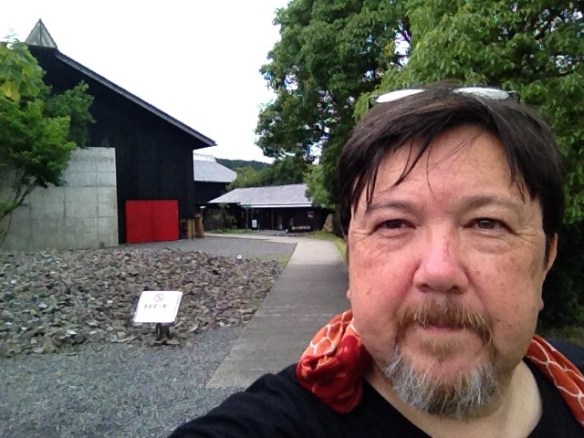
Hot, tired, wet, stuffed brain, but satisfied.

Tomorrow, I could go back to the museum in the morning for a bit, but I don’t think I’d get that much more out of it if I did. At least not so soon after, and without specific goals in mind. So, I’ll be leaving for Ise-shi station tomorrow. Not sure if I will stop at Ise now or not. It’s a beautiful place, but, I have been there before, and there’s so much to see everywhere that it might be better to get settled in Tokyo, where I’ll be staying the next two nights.

Sometime in the future, when I have more time to sort through things I’ll start posting more of the photos from the Toba Seafolk Museum. Ω