Modeling Japanese Boats – MESS Talk Follow-Up

My first webcast talk on the modeling of Japanese traditional boats is done. It was the first time I’d done anything like this. Though I’ve spoken on the subject before, this is the first time that I couldn’t see my audience, which was an interesting experience that more or less ended up going fine. Talking from the comfort of my own workshop garage also made it more relaxing.
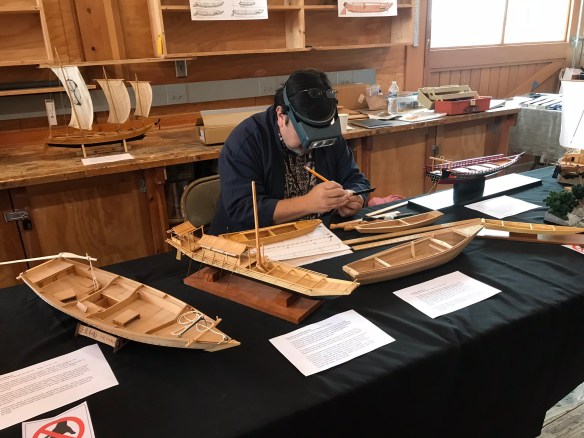
The even was only an hour long, and my talk was about 50 minutes or so, which isn’t a long time for this subject, particularly with my penchant for digression. So, there wasn’t a lot of time to get into anything very deeply, and it was really more of just an overview. But, considering it was aimed at a general audience, that was probably about right.

For those of you who wanted to attend the talk, but couldn’t, it was recorded and is now posted on the San Francisco Maritime National Park Association’s Vimeo page, which you can view here:

At the end I mention that the talk had gotten me thinking about doing actual wasen modeling workshops via Zoom, and I’m actually pretty serious about that. But, of course, there would need to be enough interest to make it worthwhile. Not sure about costs, materials I’d provide, etc., but I’ll have to see if there is much interest first. So, if you’d be interested in a workshop or, more likely, a series of workshops on building a model of a smaller wasen from scratch, email me at info@wasenmodeler.com.
 

Modeling Japanese Boats – MESS Lecture Series – This Thursday, May 27, 11am PDT

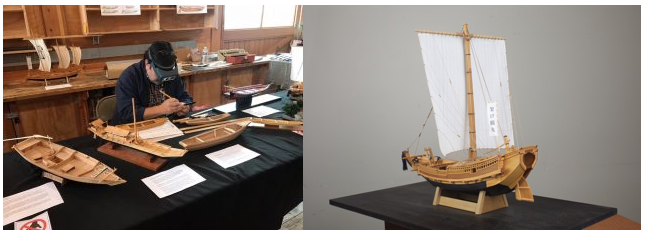
Here it is at last, my first webcast talk on the modeling of Japanese traditional boats, from research to construction. This talk is part of the San Francisco Maritime National Park Associations monthly lunchtime talks called MESS, for Maritime Education for Students of the Sea. Earlier this year, I was asked if I could participate, and I agreed, as long as I could talk about modeling Japanese traditional boats.

The talk will take place this Thursday, May 27th, at 11am PDT. The talk itself should last about 40 minutes. You can watch the livestream here: https://givebutter.com/MESS. There is no cost to attend, and you can ignore the banners that suggest you need to register for tickets, as there aren’t any.

This talk is aimed at a general audience, so it’s not going to be very technical. I’ll talk about how I manage the research and get into some of the basics of traditional Japanese boats and their design, and the general process of building them from scratch.

If you’re interested, I hope you’ll attend. Afterwards, if there is enough interest, perhaps I’ll organize my own web-based workshop on building one particular boat. If you’re interested in that, be sure to let me know. In the meantime, I hope to see you at the talk this Thursday. Ω

The Tonegawa Takasebune (高瀬船) – a Model in 1/72 Scale, Part 3

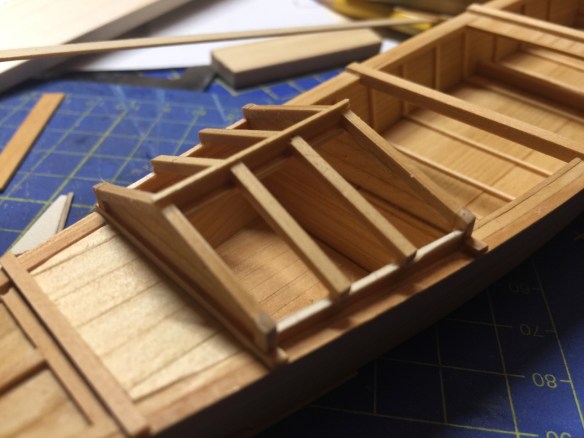
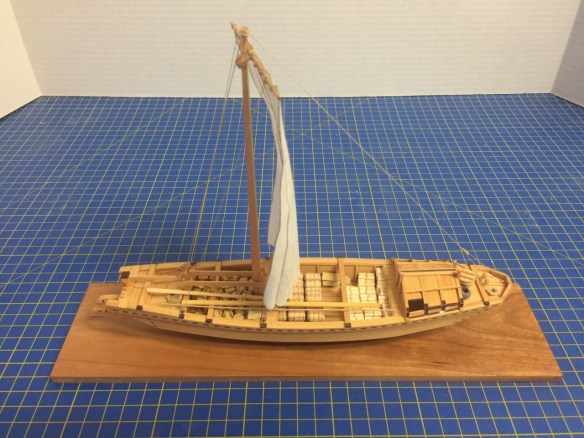
The bow cabin, which was called the seiji (say-jee) actually turned out to be one of the easier features of this model to reconstruct. And, honestly, nothing about the Tonegawa Takasebune is difficult to construct, though I did have a little trouble getting the upper part of the bow so that it looked right. But, the cabin is essentially like a wooden tent. Triangular walls front and back, a center beam at the top, and sloping roofs divided into three parts by a pair of beams on either side.

You might notice that I put an interior wall in the bow of the ship, and I added strips to simulate the frame around a sliding door. It’s not a big cabin, maybe close to 9 feet square, so there’s not a lot of living space. Probably enough for a small family to sit or sleep together. But, bedding, utensils and dishes would certainly have to be put away when not in use. Most of it, probably in the storage in the bow. Continue reading

May 2021 Wasenmodeler Update

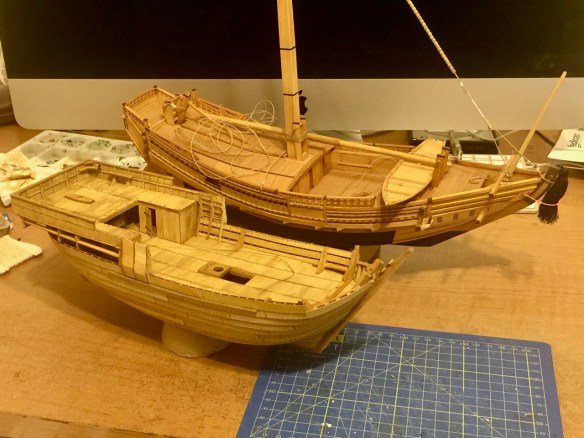
After some time off to finish a medieval European cog model and to gain some ground on a couple other ship modeling projects, I started working on wasen models again. It is interesting, though, to have the cog model and a sengokubune model (the Kitamaebune is a class of sengokubune, a common term for this type of coastal transport), sitting close together, as they are both in 1/72 scale.

My models of a medieval european cog (foreground, left) and kitamaebune (background, right), both in 1/72 scale. Different eras and regions, but still interesting to see them side-by-side.

Continue reading