I’ve just updated the Wasen Modeler site’s Resources menu and added a new glossary of Japanese boat types and terms. This is definitely a work in progress. As much as anything, it is a place for me to store my notes. But, it’s publicly accessible to you.
I’ve included the opening text for the page below…
This is a list of terms relating to traditional Japanese boats, or wasen, that I’ve collected in my notes. This is not even close to being a comprehensive list, and the descriptions given are really quite basic. I’ve compiled this list from my own studies, and with the help of many others who are more knowledgeable than myself.

Yubune 湯船 – a bath boat from the Edo period.
Sources of information include the book Funakagami, books I’ve collected by Professor Kenji Ishii, the works of Douglas Brooks, information parsed from the Internet, and information I’ve gathered personally through visits to the Toba Seafolk Museum, the Urayasu Museum, the Edo Tokyo Museum, and the Ogi Folk Museum.
At some point, I hope to write more complete and detailed descriptions for each of the terms. Probably, this will happen one term at a time, as I learn about each one and study them in more depth. However, the list of boat types seems endless, and I have only a small number listed here. I have many more that are not in this list, so I will expand it over time.
I’ve grouped these terms in a way that seems most meaningful to me. I’ve sorted alphabetically where possible, but, more importantly, in order or relevance (to me). Note that this page is under construction and will be revised as time permits.
For the boat types and general terms, I’ve tried to include the terms written in kanji (chinese characters adopted for the Japanese language). However, in many cases, I’ve only found the names written in katakana (one of two phonetic alphabets used in Japanese). Boatbuilding terms, in particular, seem most commonly written using katakana.
I include the Japanese text in order to make it easier to search the web for images and information. Simply copy the characters and past them into your web searches and you’ll find a lot more than simply using the romanized words.
General Terms
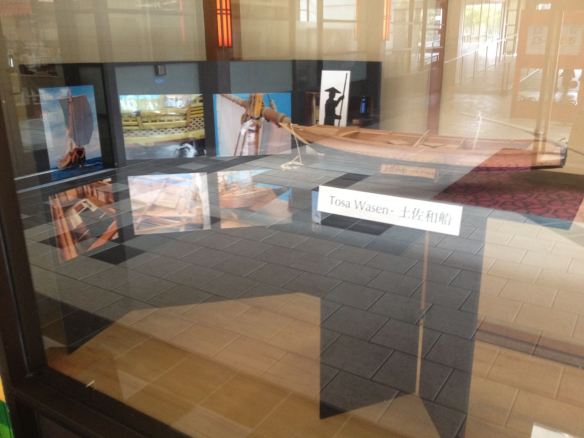
Wasen 和船- meaning “traditional Japanese boat”. A general term for any wooden boat of Japanese style.
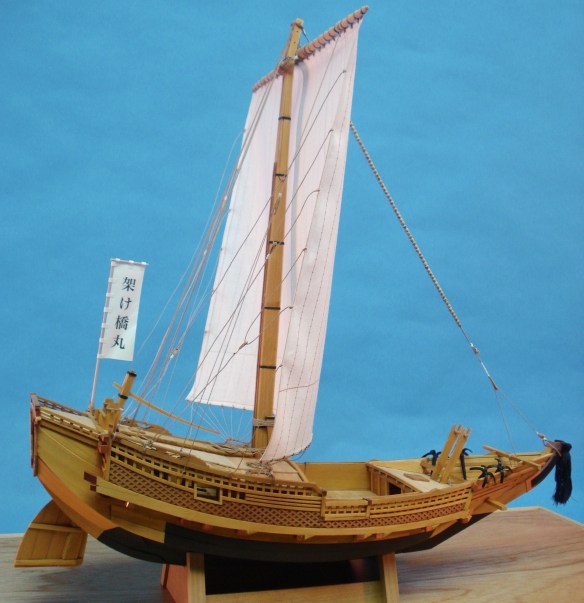
Bezaisen 弁才船- a class of large coastal transport, of which there are several types.
Kawabune 川船- a generic term for riverboat.
Sengokubune 千石船- meaning “1000 koku ship”. A common term for bezaisen
Boat Types
Aganogawa Kawabune – a long, narrow riverboat of the Agano river used in cast net fishing.
Bekabune ベカブネ – a one-person boat used in Urayasu for shell fishing or gathering seaweed. The term might be used in other regions, as are the terms Beka and Noribeka.
Chabune 茶船 – a general term for a small boat used for transport on rivers during the Edo period; the name refers to a small riverboat used for selling food and drink (Funakagami).
Chokibune 猪牙舟 – a small boat used as a river taxi during the Edo period.
Choro 丁櫓 – a small boat used for pole-and-line fishing and for the harvesting of wakame seaweed, net fishing of sea cucumber and octopus, and spear fishing of shellfish.
Godairikisen 五大力船 – a large, local seagoing transport.
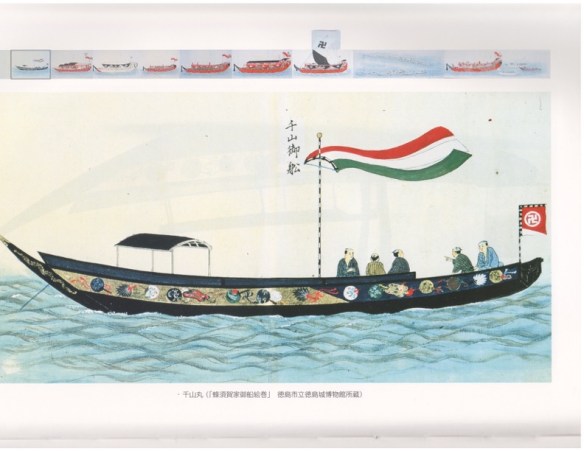
Gozabune 御座船 – large boats used by aristocrats or high-ranking warriors. Often decorated for fesitvals. Built for use both on rivers and on ocean. Oceangoing Gozabune were essentially warships used to demonstrate a warriors prowess during peaceful times.
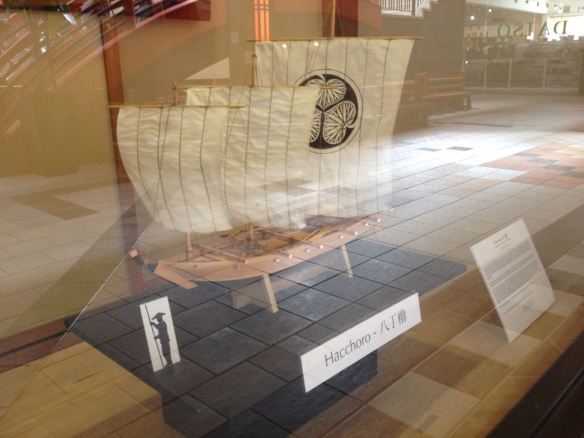
Hacchoro 八丁櫓 – an 8-oar boat used for pole-and-line fishing of bonito. At one time, boats of this type from Yaizu were commissioned as escort boats for the Shogun Tokugawa Ieyasu.
Higaki Kaisen 菱垣回線 – A bezaisen of the Higaki trade guild, operated between Osaka and Edo (e.g. Naniwamaru)
Hiratabune 艜船 – A large riverboat from 50 to 80 feet long, similar to takasebune. Long and narrow, flat bottom boat, used to transport freight. The largest had a capacity of 300 koku. (Deal)
Hobikisen – a side-trawling fishing boat used on Lake Kasumigaura
Isanabune – a fishing boat.
Kasaibune 葛西舟 – fertilizer carrying boat.
Katsuobune カツオ船 – a boat used for bonito fishing. 8-oared variant is sometimes also referred to as a Hacchoro 八丁櫓.
Kitamaebune 北前船- a northern port bezaisen (e.g. Michinokumaru, Hakusanmaru)
Kujirabune 鯨舟 – a colorfully painted whale boat used in whale spear fishing from Shiroura, Mie prefecture. Same type of boat was used for pole-and-line fishing of bonito, and was called a Hacchoro 八丁櫓. (13.7m, 2.3m)
Mizubune 水船 – a water carrying boat (from Funakagami)
Satsumagata サツマガタ – Literally, a Satsuma style boat used for mackerel and marlin fishing on the west coast of Satsuma.
Sedoribune 瀨取り船 – a small boat for loading and unloading cargo from larger ships.
Tabune – a ricefield boat
Takasebune 高瀬船 – long and narrow riverboat with a flat bottom, used to transport freight typically on the Takase River. (Deal)
Taraibune – a tub boat from Sado island
Taru Kaisen – barrel carrying bezaisen, usually carrying sake or miso.
Tenmasen – common term for a workboat or lighter
Tosen 渡船 – a river ferry (from Funakagami)
Utasebune – a side-trawling fishing boat
Uwanibune 上に船 – small boat for unloading cargo from a large anchored boat; lighter.
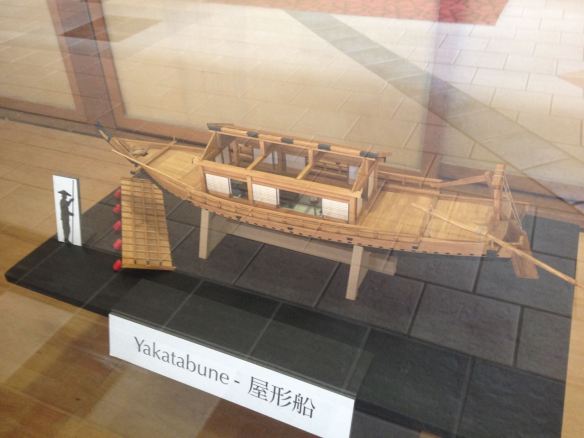
Yakatabune 屋形船 – a pleasure boat
Yanebune 屋根船 – a roof boat, like yakatabune, but smaller
Yubune 湯船 – a bath boat (from Funakagami). A floating public bath typically used by cargo ship crews and dock workers (Deal).
Zutta Tenma – “crawling” workboat, Himi name for tabune
Boatbuilding Terms
These terms are very regional, so they may differ depending on the boatbuilder and the locale. In some cases, I’ve listed more than one term together, but there may be others as well. I also listed the terms in katakana, as I often see them written this way in books and on drawings. However, you should be aware that there are probably kanji for these terms as well.
shiki シキ, kawara カワラ – bottom
kajiki カジキ – garboard planks
uwadana ウワダナ- shear plank
miyoshi ミオシ – stem
koberi コベリ- rubrail
uwakoberi ウワコベル – caprail
futabari フタバリ – beam
matsura マツラ – frame
shikiriita シキリイタ – floor timber
tana タナ – planks
nedana ネダナ –
todate トダテ – transom
toko トコ or ootoko オオトコ – stern beam
ro ロ – sculling oar
kai カイ – paddle
sekidai セキダイ or namigaeshi (波返し) ナミガエシ – boards used to improve stability in rough seas.
omoki-zukuri – carved log construction
ita-awase – fitted plank construction
suriawase – sawn plank fitting
tsubanomi – a sword-hilt chisel
Sagari 下り- a tassle decoration found on the bow of some larger boats
Nobori – a pole-mounted banner or flag, usually tall and rectangular
hobashira – mast
hogeta – yardarm
War Boats
Atakebune – Large war vessel
Sekibune – Used in the Warring States period, smaller and faster war vessel than the Atakebune (Deal)
Hayabune – Fast war boat
Kohaya – Small fast war boat



 Wasen Mokei 和船模型