Japanese Article about Douglas Brooks

Boatbuilder Douglas Brooks, who you should know all about if you follow this blog, has been teaching Japanese boatbuilding techniques in his classes at Middlebury College in Vermont.

This article appeared recently in Mainichi Shimbun, one of Japan’s three largest newspapers. I can’t easily read much Japanese, but this article mentions the pool launching of the Hozugawa Ayubune that the class built.
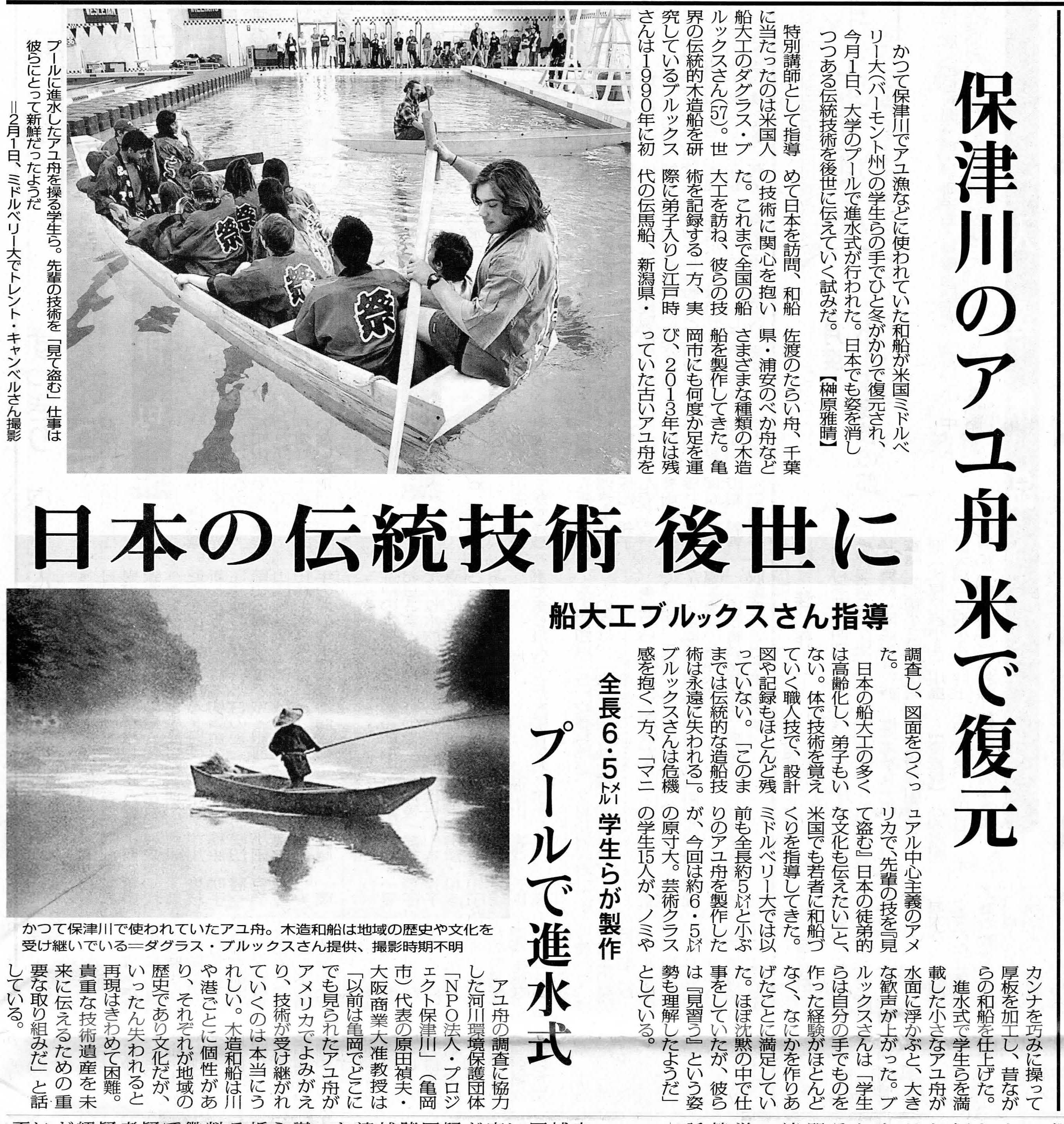
This is the same type of boat I recently modeled, based on information I got from Mr. Brooks. The boat shown here that his students built was a 6.5 meter boat, or a little over 21 shaku. My model, in comparison, is about 4.5 meters, or 15 shaku.

The class at Middlebury College actually built two boats during the semester. In addition to the Ayubune, they built a rice field boat, or tabune, from Niigata prefecture. You can read more about the student built boats on Douglas Brooks’s blog here: http://blog.douglasbrooksboatbuilding.com/2018/02/launching.html
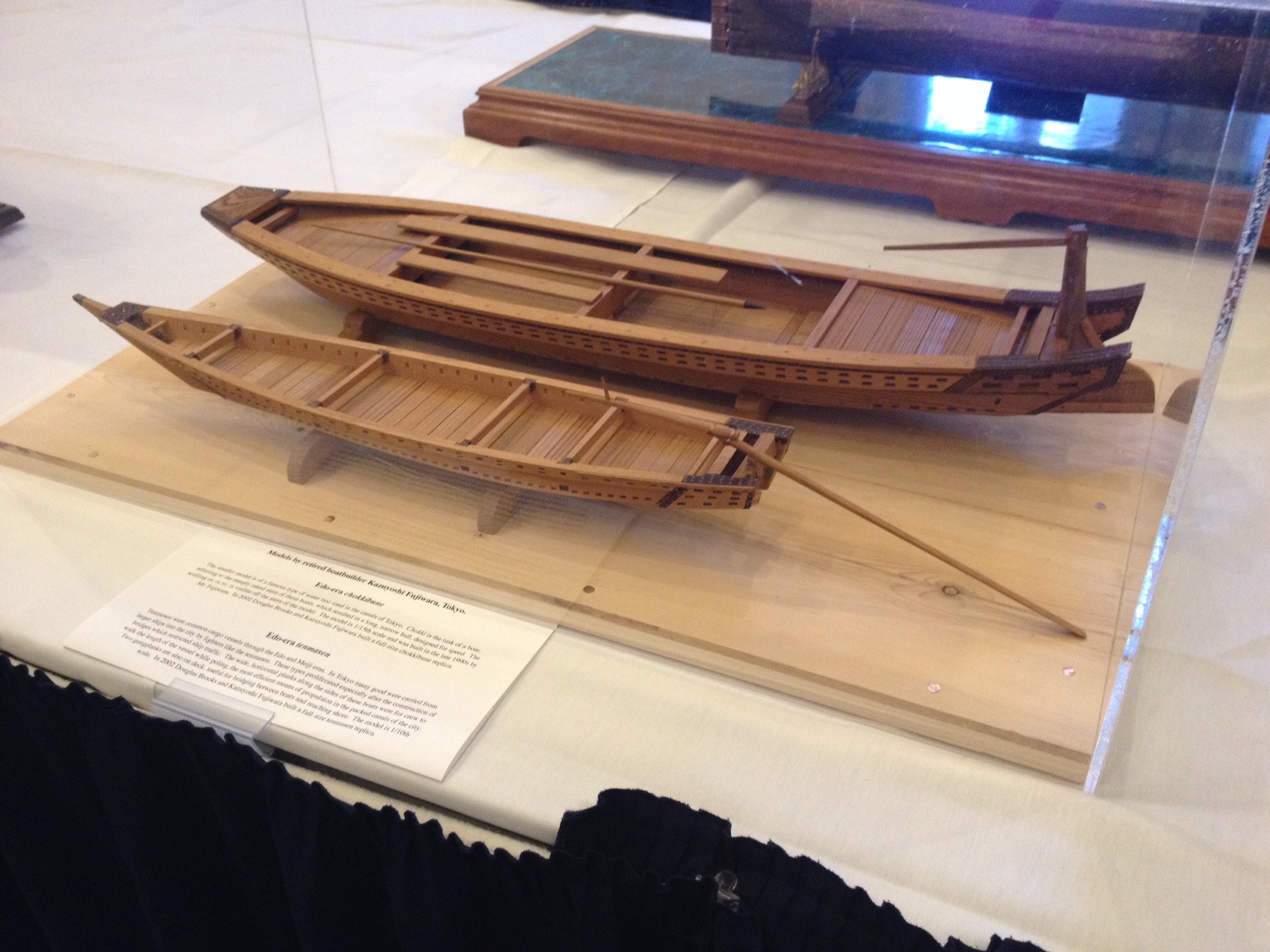


Mr. Kazuyoshi Fujiwara’s Wasen Models

While I have been in touch with boatbuilder Douglas Brooks by email for close to 3 years, we met at the Nautical Research Guild’s annual conference in Mystic, CT, in the Fall of 2016, where he gave a talk on Japanese traditional boatbuilding and his apprenticeships.

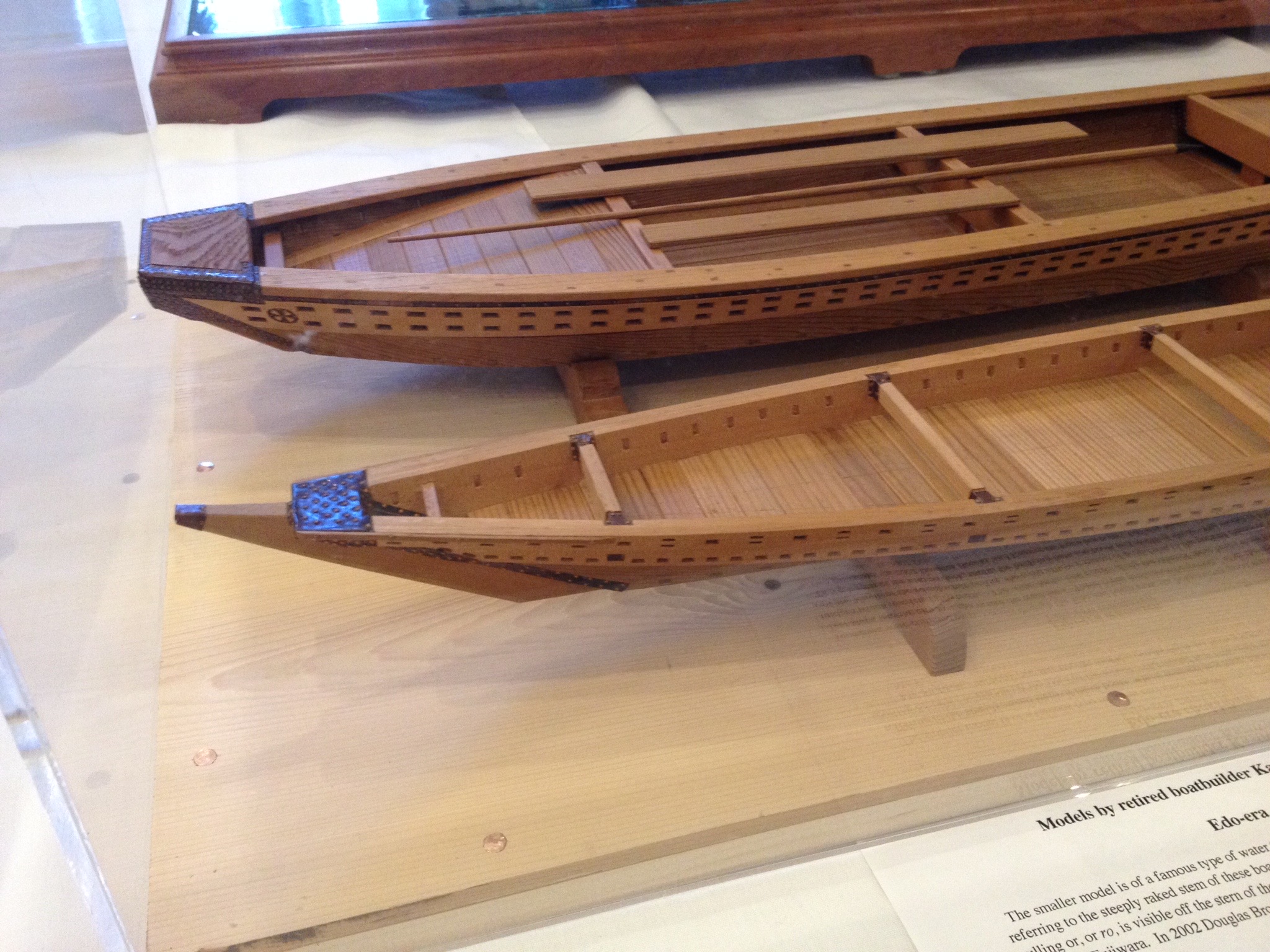
At the conference, he had a pair of models that were built by his teacher in Japan, Mr. Fujiwara. These were beautifully made and I’ve been inspired by them.

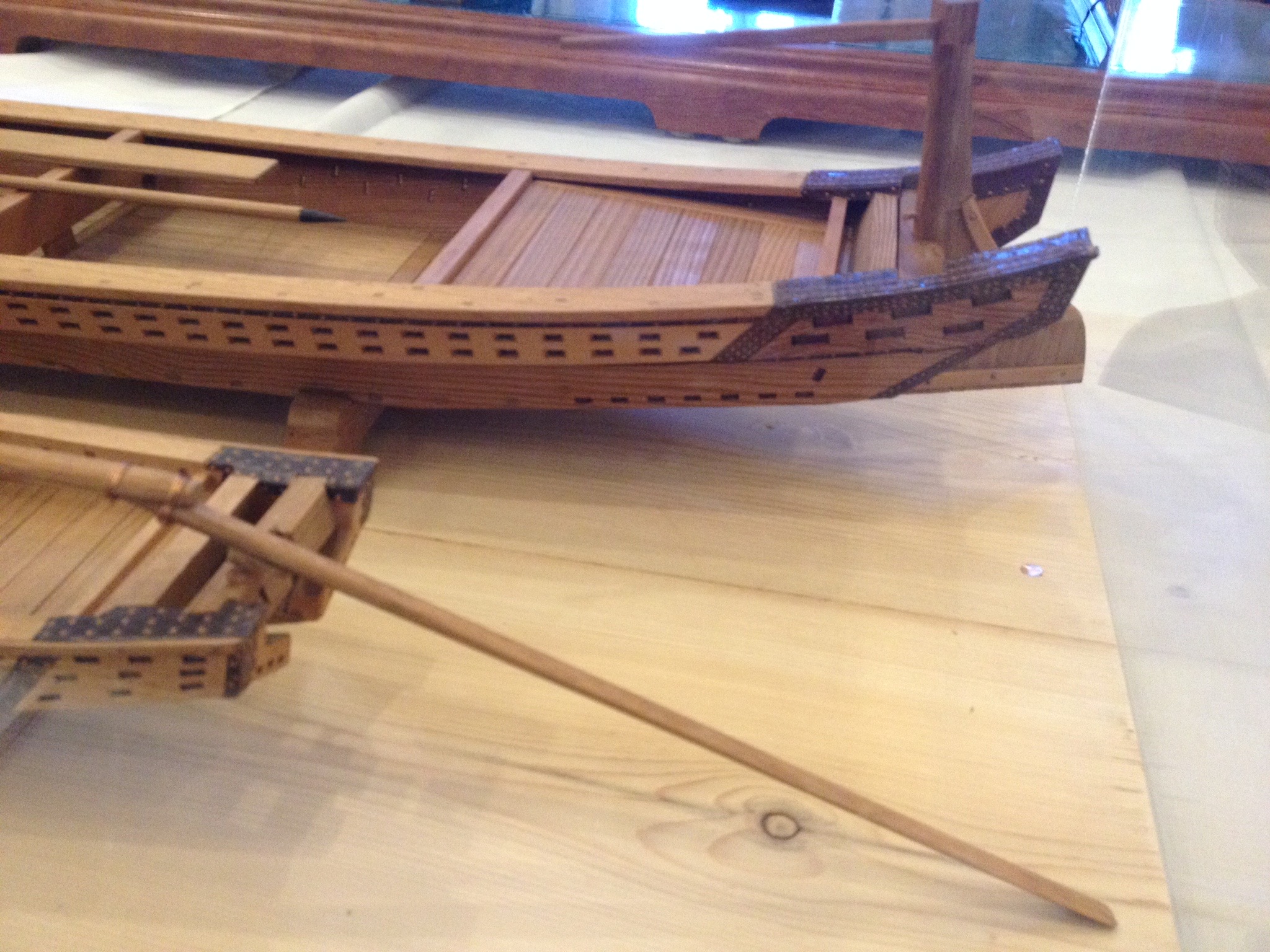
The smaller one is a chokibune, an Edo period water taxi, built at 1/15 scale. The larger is a tenmasen, a cargo lighter, also Edo period, used for carrying goods to and from the large coastal transports, commonly called sengokubune. The tenmasen model is built at 1/10 scale.

The construction of the chokibune is described in detail in Douglas Brooks’s book, but the tenmasen was built by he and his teacher after he completed his apprenticeship and only a few photos of it appear in his book. But, the tenmasen is a fairly simple design, and should be easy to construct, and there are other similar wasen found in the funakagami.

I’m hoping to score some information from Mr. Brooks, but I don’t know how much he has in the way of notes and photos. Keeping my fingers crossed. Ω

My Next Wasen Model Display, March 1st – 31st , 2018

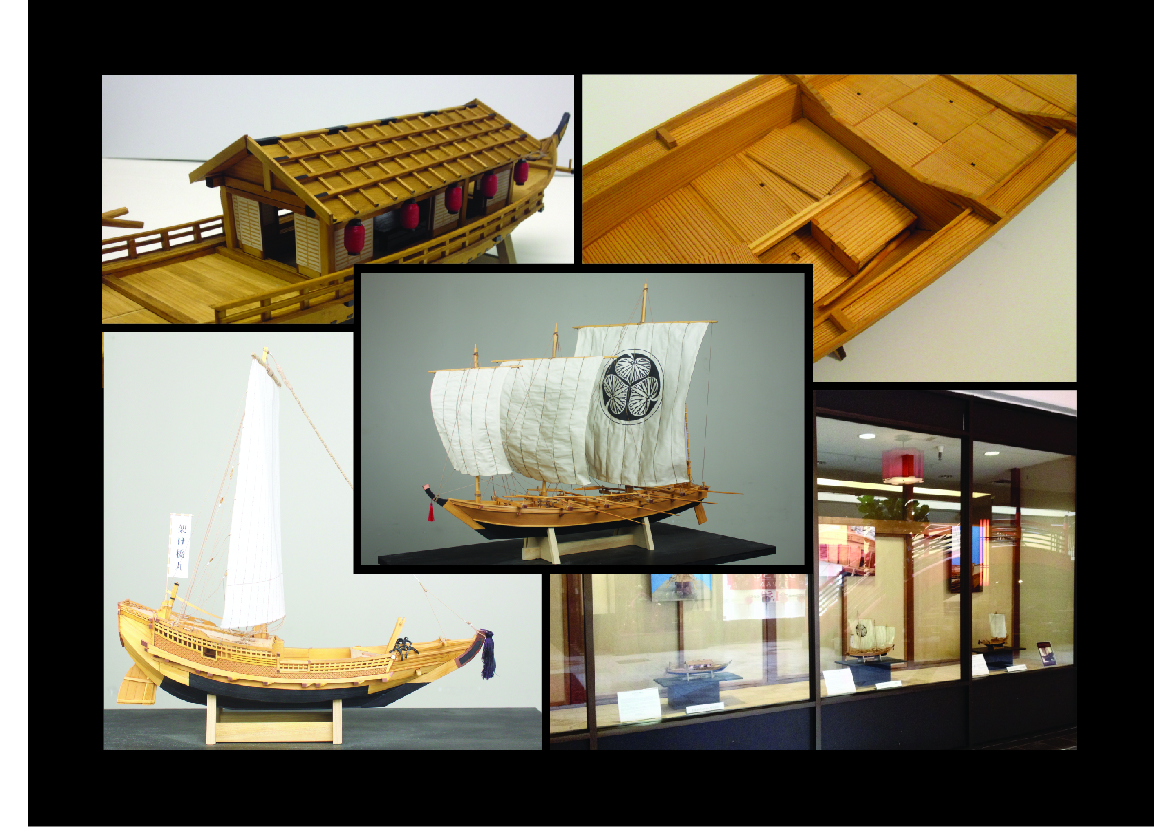
I may be no Yukio Nakayama, but I will have my own wasen model display coming up again in Japantown, San Francisco, in the display window of Union Bank’s community room inside the Japan Center’s East Mall.

Continue reading

Building the Urayasu Bekabune Model – Part 2

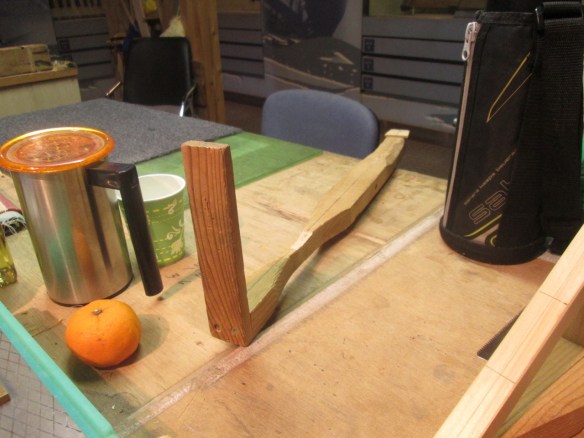
It took me a long while before I had any hull planking in place, as I considered ways to work on the model with no frames. I also wanted try to figure out a way to build the model as closely as I could to the way the Japanese boatbuilders did it, which is upright, and not on a mold. So, my model actually sat for quite a while.

When I went to Japan, in September of 2016, and visited the museum in Urayasu, I saw that the model builders there had made a special L-shaped fixture that the model rested on with the stem supported by the leg of the “L”.

Continue reading