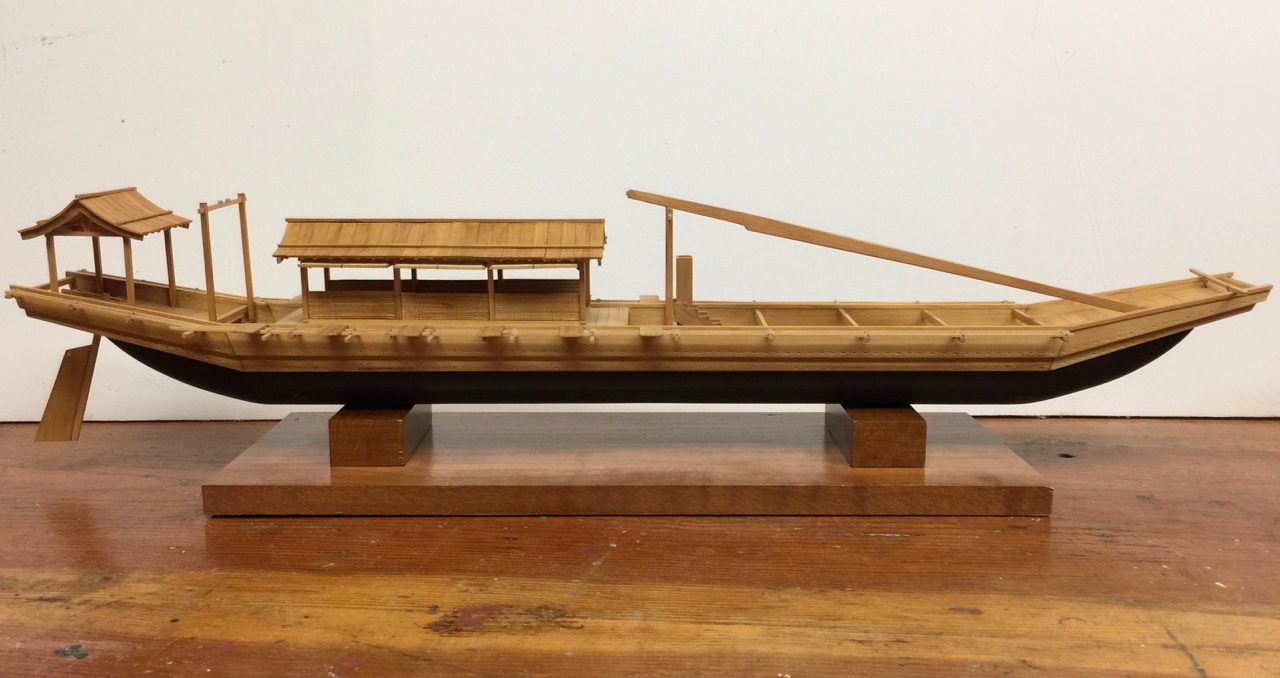
Building the Kamakura Period Umi-Bune – Final

I brought my Kamakura period sea boat to the Nautical Research Guild Conference, which was held this past weekend in Las Vegas, Nevada. I had some last minute work to complete, but finished in time for the model display.
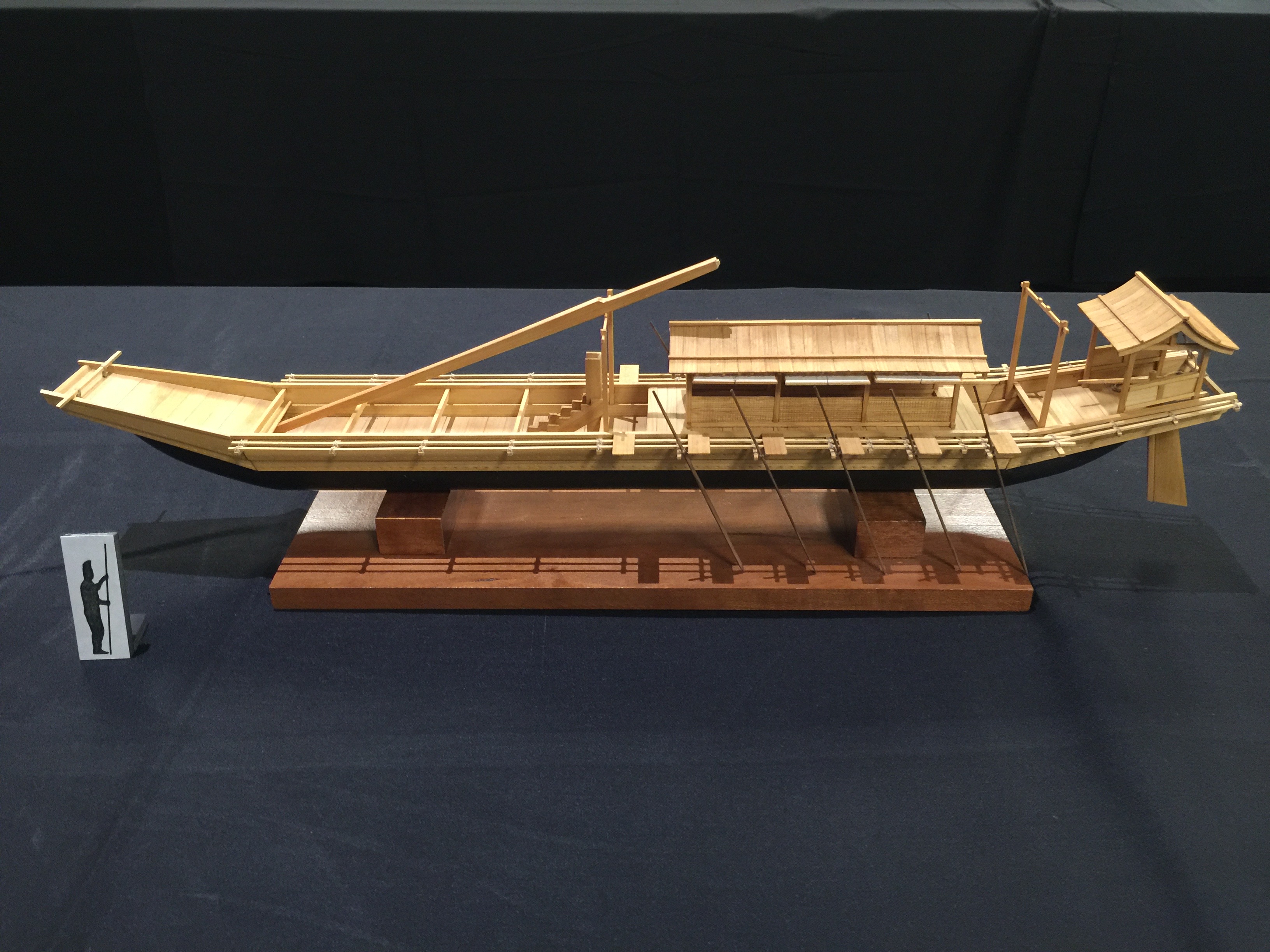
Kamakura Period Sea Boat (鎌倉時代の海船) at the 2018 Nautical Research Guild Conference.

Preparing it for the display took a bit of last minute work. I hadn’t put the remaining oars on until I was actually in the hotel the night before. The reason for the delay was mostly due to my taking the model to the October meeting of the Hyde Street Pier Model Shipwrights. Carrying around of model of this nature, or any nature I suppose, has certain hazzards associated with it. I had taken the model to the meeting of the South Bay Model Shipwrights the night before with no problems whatsoever.

Continue reading

Japanese Diorama Products Now Available from Zootoyz

This isn’t specifically about Japanese boats, but if you are interested in making Japanese boats or dioramas from the Edo period, in 1/144 or 1/150 scale, these products appear to be ideal.

catopower's avatarShip Modeler

Just saw that the online Japanese hobby store, Zootoyz.com, has just added Woody Joe diorama products.

[Note: This was announced on Zootoyz’s Facebook page, but there is currently no link on the website itself. Until the site’s navigation is updated, here’s a link to the new products: https://www.japan-wooden-model-kits-zootoyz.shop/contents/en-us/d2045761143_Diorama-products-by-Woody-JOE.html]

This line of products includes sakura, cherry blossom trees, Japanese pines, cypress trees, box trees, cedar trees, generic broadleaf and conifer trees and other vegetation. There are also bags of ground cover for simulating grass, dirt, and gravel.

View original post 167 more words

Building the Kamakura Period Umi-Bune – Part 10

Just a quick update on the model as I continue to make progress in small increments.

You may recall that this boat has one large sail. I don’t know if I will mount a sail on it or not. I find it rather interesting how the lowered mast is stowed. I think I have a method for creating the sail, which was made from rice-straw matting, not cloth. But, I will have other opportunities to make that, and it would probably be simpler and more realistic at a larger scale.

In any case, I also have the full set of oars I made. I’ve decided that even though the museum models I’ve seen show the boat equipped for sculling, that my interpretation of early scroll paintings suggest they were rowed and not sculled. Also, I started to thinking about the side-to-side motion involved in sculling, and I see only rope bindings on these oars in all cases (museum models).

I can’t see how rope bindings would be able to take the amount of side-to-side pressure without loosing very quickly. If rowed, the binding would simply be to hold the oar and keep it from slipping. All the force of propulsion from the oars are taken by the beam extensions of the ship.

Continue reading

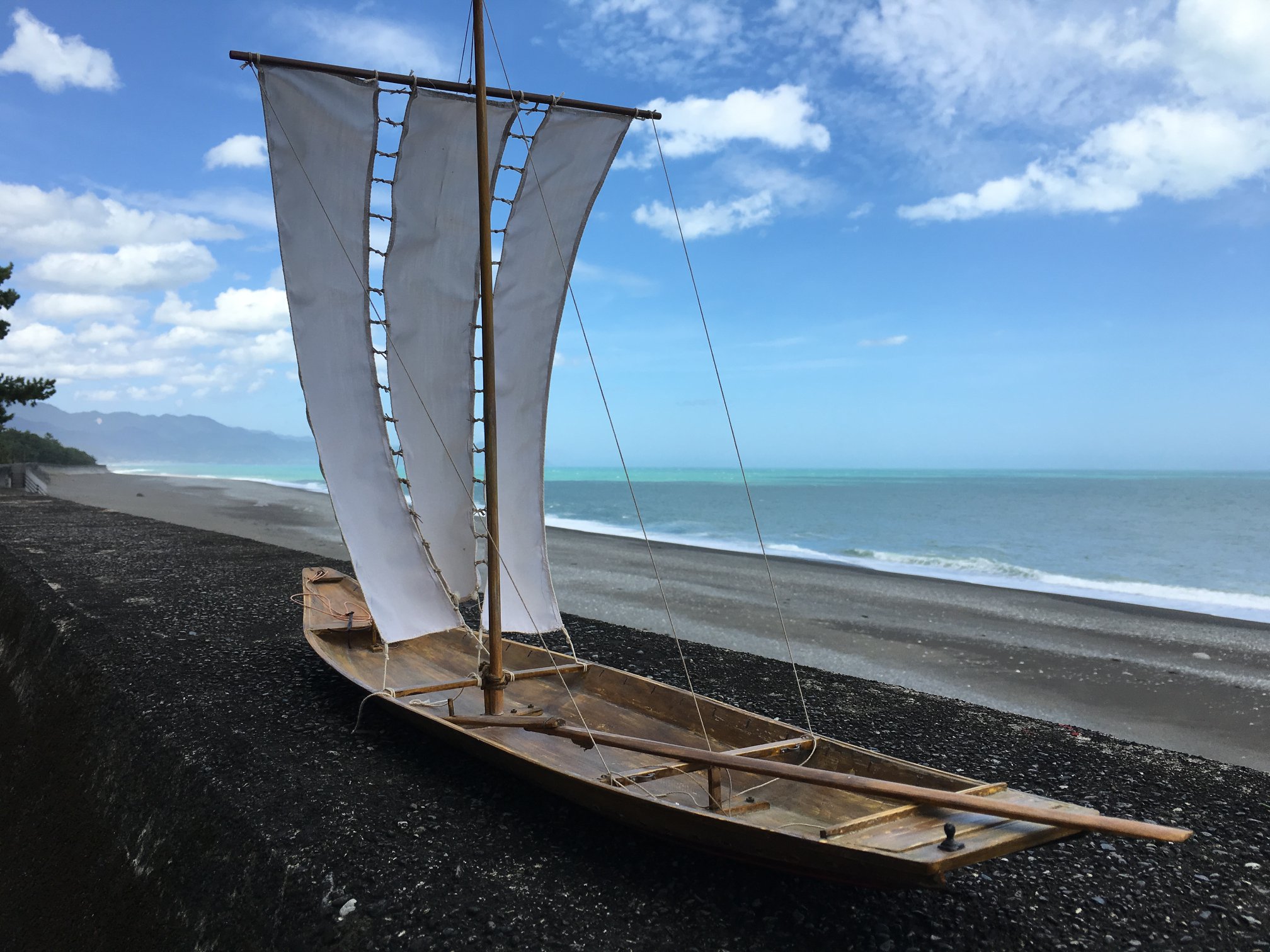
Sandanbo (三反帆) Kumanogawa Sailing Riverboat – Model by Kouichi Ohata

1/10-scale Sandanbo, Kumanogawa Sailing Riverboat model by Kouichi Ohata

Kouichi Ohata is a Japanese model builder who’s work I’ve featured here before. The last model of his that I posted here was his Kumanogawa Hayabune. Living in souther Mie prefecture, Ohata-san has the opportunity to see a number of unique tradional Japanese watercraft, and he has put his modeling skills to good use in reproducing them in miniature.

Continue reading