Traditional Japanese Boats through Prints

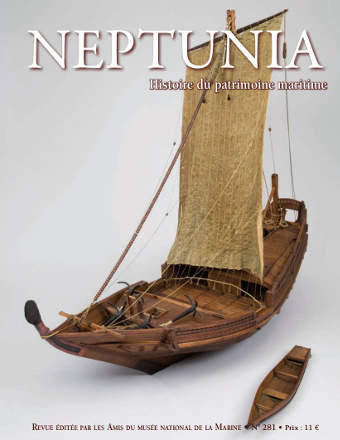
The second installment of a 4-part article on an examination of traditional Japanese boats through famous woodblock prints is in the September 2016 issue of the French journal Neptunia. The journal is a quarterly publication of the Association of the Friends of the National Maritime Museum of France.

couv283

I have yet to see the issue, but I have the March 2016 issue, which contains the first article. Being that it is an examination of the boats through art, the article is filled with some wonderful photos of Japanese woodblock prints. And, while my ability to read French is limited, a scan through optical character recognition software (free online), and Google Translate, make it possible to understand the majority of the text.

couv281

I’ve been in pretty close email contact with the author, Mr. Jean Pierre Mélis, since late Summer, and we have been exchanging and discussion the subject of Japanese watercraft pretty regularly. I highly recommend taking a look at the articles if you can. Check your libraries for availability or purchase single issues directly from the Association here. Ω

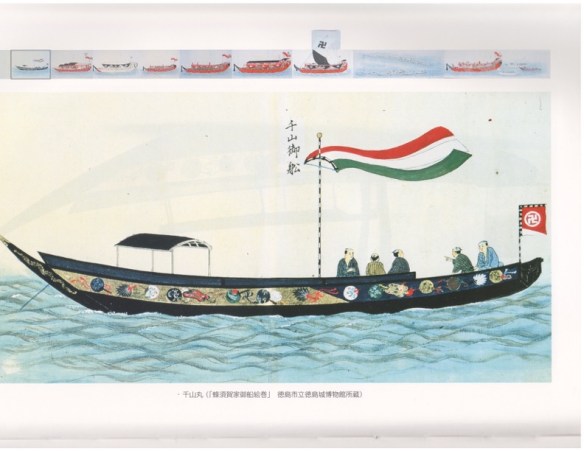
Looking at the Senzan-maru (千山丸), a Traditional Japanese Whaleboat

When I visited Japan in September, I found that I’d really hit the jackpot at the Toba Seafolk Museum. Not only are there numerous small boats on display, plus dioramas and a dozen or so models, but the gift shop is well stocked with books. I visited early in my trip, so I didn’t get as many books as I wanted to. Sadly, I didn’t see any of the books I was interested in at any other location I visited during the trip. One book I did pickup detailed a boat called the Senzan-maru, 千山丸.

img_2726

The Senzan-maru is the name given to a boat that was in the service of the Hachisuka clan. The boat was used to deliver messages and to help tow river barges, like the large decorative warship that served as the feudal lord’s yacht. The boat is a type called an Isanabune, a fast, seaworthy boat designed for whale hunting. Many whaleboats and fishing boats were decorated with painted designs on their hulls, but probably not to the same extent as Senzan-maru.

image-3

The highly ornamental hull painting on the Senzanmaru

Continue reading

Higaki Kaisen Build Article Submitted

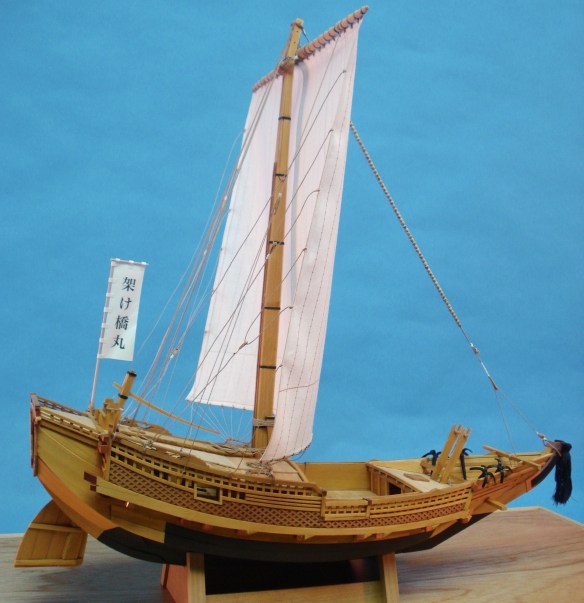
Those of you interested in building Woody Joe’s Higaki Kaisen kit, I just completed the final edits to my article and sent in the 29-page work to Seaways’ Ships in Scale magazine, and is accompanied by a selection of 44 photos and illustrations.

hk-photo-35

I’ve been working on this writing project for a terribly long time, at least 2-1/2 years, if I recall correctly, though the model only took a matter of a few months to complete. The big hold-up has been in trying to develop an accurate and informative background on these coastal Japanese transports.

This will be my sixth article submission to this magazine. And, while the last 4 articles I’ve written have been 3500-word kit reviews, this one is a good 25% larger than my 8500 word, 3-part article on scratch-building the pilot boat Mary Taylor, which probably means it will be a 4-part article. I would have preferred no more than a 3-part article, but the background on the type of ship is so unknown to ship modelers that I devoted one-quarter of the article just to that. Anyway, I think people will find it interesting.

I won’t know if the article will be accepted for certain. But, it is an unusual subject, and not your run-of-the-mill western-style ship. Hopefully, I’ll know more in a few weeks, so stay tuned.

In the meantime, if you want to purchase one of these kits, as always, I recommend purchasing from Zootoyz in Japan. Ω

New Glossary of Terms Added

I’ve just updated the Wasen Modeler site’s Resources menu and added a new glossary of Japanese boat types and terms. This is definitely a work in progress. As much as anything, it is a place for me to store my notes. But, it’s publicly accessible to you.

I’ve included the opening text for the page below…


This is a list of terms relating to traditional Japanese boats, or wasen, that I’ve collected in my notes. This is not even close to being a comprehensive list, and the descriptions given are really quite basic. I’ve compiled this list from my own studies, and with the help of many others who are more knowledgeable than myself.

Yubune 湯船 - a bath boat from the Edo period.

Yubune 湯船 – a bath boat from the Edo period.

Sources of information include the book Funakagami, books I’ve collected by Professor Kenji Ishii, the works of Douglas Brooks, information parsed from the Internet, and information I’ve gathered personally through visits to the Toba Seafolk Museum, the Urayasu Museum, the Edo Tokyo Museum, and the Ogi Folk Museum.

At some point, I hope to write more complete and detailed descriptions for each of the terms. Probably, this will happen one term at a time, as I learn about each one and study them in more depth. However, the list of boat types seems endless, and I have only a small number listed here. I have many more that are not in this list, so I will expand it over time.

I’ve grouped these terms in a way that seems most meaningful to me. I’ve sorted alphabetically where possible, but, more importantly, in order or relevance (to me). Note that this page is under construction and will be revised as time permits.

For the boat types and general terms, I’ve tried to include the terms written in kanji (chinese characters adopted for the Japanese language). However, in many cases, I’ve only found the names written in katakana (one of two phonetic alphabets used in Japanese). Boatbuilding terms, in particular, seem most commonly written using katakana.

I include the Japanese text in order to make it easier to search the web for images and information. Simply copy the characters and past them into your web searches and you’ll find a lot more than simply using the romanized words.

General Terms

Wasen 和船- meaning “traditional Japanese boat”. A general term for any wooden boat of Japanese style.

Bezaisen 弁才船- a class of large coastal transport, of which there are several types.

Kawabune 川船- a generic term for riverboat.

Sengokubune 千石船- meaning “1000 koku ship”. A common term for bezaisen

Boat Types

Aganogawa Kawabune – a long, narrow riverboat of the Agano river used in cast net fishing.

Bekabune ベカブネ – a one-person boat used in Urayasu for shell fishing or gathering seaweed. The term might be used in other regions, as are the terms Beka and Noribeka.

Chabune 茶船 – a general term for a small boat used for transport on rivers during the Edo period; the name refers to a small riverboat used for selling food and drink (Funakagami).

Chokibune 猪牙舟 – a small boat used as a river taxi during the Edo period.

Choro 丁櫓 – a small boat used for pole-and-line fishing and for the harvesting of wakame seaweed, net fishing of sea cucumber and octopus, and spear fishing of shellfish.

Godairikisen 五大力船 – a large, local seagoing transport.

Gozabune 御座船 – large boats used by aristocrats or high-ranking warriors. Often decorated for fesitvals. Built for use both on rivers and on ocean. Oceangoing Gozabune were essentially warships used to demonstrate a warriors prowess during peaceful times.

Hacchoro  八丁櫓 – an 8-oar boat used for pole-and-line fishing of bonito. At one time, boats of this type from Yaizu were commissioned as escort boats for the Shogun Tokugawa Ieyasu.

Higaki Kaisen 菱垣回線 – A bezaisen of the Higaki trade guild, operated between Osaka and Edo (e.g. Naniwamaru)

Hiratabune 艜船 – A large riverboat from 50 to 80 feet long, similar to takasebune. Long and narrow, flat bottom boat, used to transport freight. The largest had a capacity of 300 koku. (Deal)

Hobikisen – a side-trawling fishing boat used on Lake Kasumigaura

Isanabune – a fishing boat.

Kasaibune 葛西舟 – fertilizer carrying boat.

Katsuobune カツオ船 – a boat used for bonito fishing. 8-oared variant is sometimes also referred to as a Hacchoro 八丁櫓.

Kitamaebune 北前船- a northern port bezaisen (e.g. Michinokumaru, Hakusanmaru)

Kujirabune 鯨舟 – a colorfully painted whale boat used in whale spear fishing from Shiroura, Mie prefecture. Same type of boat was used for pole-and-line fishing of bonito, and was called a Hacchoro 八丁櫓. (13.7m, 2.3m)

Mizubune 水船 – a water carrying boat (from Funakagami)

Satsumagata サツマガタ – Literally, a Satsuma style boat used for mackerel and marlin fishing on the west coast of Satsuma.

Sedoribune 瀨取り船 – a small boat for loading and unloading cargo from larger ships.

Tabune – a ricefield boat

Takasebune 高瀬船 – long and narrow riverboat with a flat bottom, used to transport freight typically on the Takase River. (Deal)

Taraibune – a tub boat from Sado island

Taru Kaisen – barrel carrying bezaisen, usually carrying sake or miso.

Tenmasen – common term for a workboat or lighter

Tosen 渡船 – a river ferry (from Funakagami)

Utasebune – a side-trawling fishing boat

Uwanibune 上に船 – small boat for unloading cargo from a large anchored boat; lighter.

Yakatabune 屋形船 – a pleasure boat

Yanebune 屋根船 – a roof boat, like yakatabune, but smaller

Yubune 湯船 – a bath boat (from Funakagami). A floating public bath typically used by cargo ship crews and dock workers (Deal).

Zutta Tenma – “crawling” workboat, Himi name for tabune

Boatbuilding Terms

These terms are very regional, so they may differ depending on the boatbuilder and the locale. In some cases, I’ve listed more than one term together, but there may be others as well. I also listed the terms in katakana, as I often see them written this way in books and on drawings. However, you should be aware that there are probably kanji for these terms as well.

shiki シキ, kawara カワラ – bottom

kajiki カジキ – garboard planks

uwadana ウワダナ- shear plank

miyoshi ミオシ – stem

koberi コベリ- rubrail

uwakoberi ウワコベル – caprail

futabari フタバリ – beam

matsura マツラ – frame

shikiriita シキリイタ – floor timber

tana タナ – planks

nedana ネダナ –

todate トダテ – transom

toko トコ or ootoko オオトコ – stern beam

ro ロ – sculling oar

kai カイ – paddle

sekidai セキダイ or namigaeshi (波返し) ナミガエシ – boards used to improve stability in rough seas.

omoki-zukuri – carved log construction

ita-awase – fitted plank construction

suriawase – sawn plank fitting

tsubanomi – a sword-hilt chisel

Sagari 下り- a tassle decoration found on the bow of some larger boats

Nobori – a pole-mounted banner or flag, usually tall and rectangular

hobashira – mast

hogeta – yardarm

War Boats

Atakebune – Large war vessel

Sekibune – Used in the Warring States period, smaller and faster war vessel than the Atakebune (Deal)

Hayabune – Fast war boat

Kohaya – Small fast war boat

Wasen Display 5.0

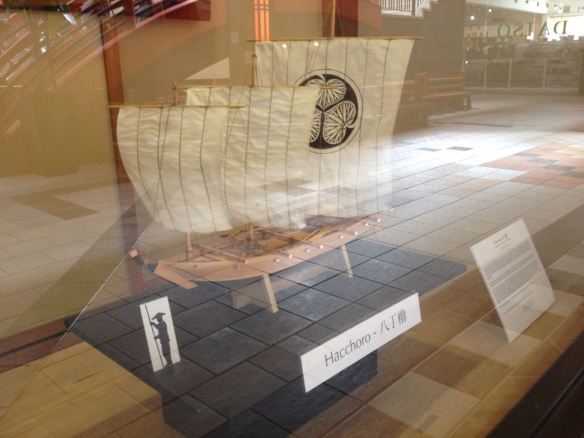
Wasen Display 5.0 is now set up at the Japan Center Mall in the window of the Union Bank Community Room inside the East Mall building. At least, I think, it’s display 5.0. I’m starting to lose track.

This time, the display is just slightly smaller than last time as I decided not to include my Urayasu Boatshop model. I actually partially dismantled it in order to make some progress on the boat model that was in the display and bring it to the Nautical Research Guild Conference in San Diego several weeks ago.
Hacchoro, built from a Woody Joe kit. If you've been following my blogs, you might recall I had a chance to see one of the Hacchoro replicas in the port of Yaizu in September.

Hacchoro, built from a Woody Joe kit. If you’ve been following my blogs, you might recall I had a chance to see one of the Hacchoro replicas in the port of Yaizu in September.

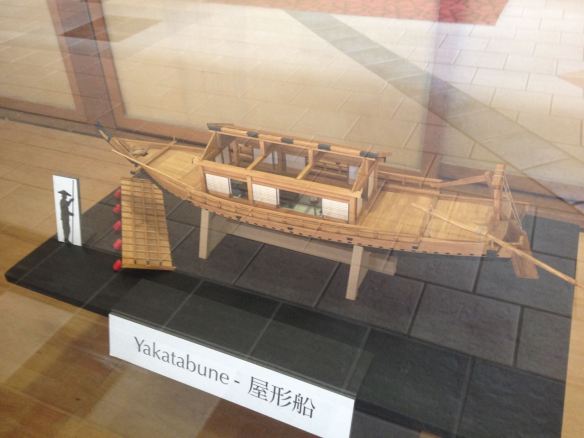
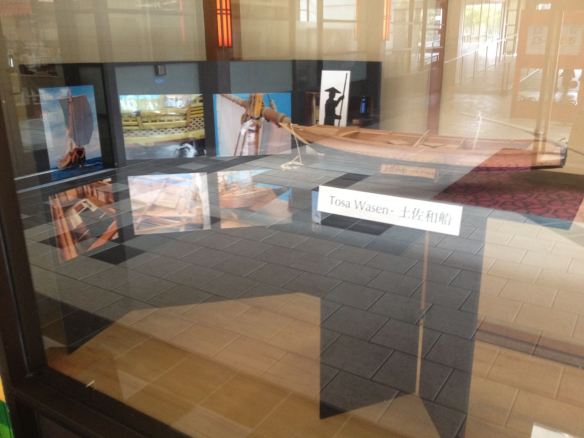
So, maybe this is more like Wasen Display 3.5. But, it’s the fifth one I’ve done now. It still features the Higaki Kaisen, Hacchoro and Yakatabune, all built from Woody Joe kits, and the Tosa Wasen from Thermal Studio.

This time, I took part of the roof off of the Yakatabune, so people can see the interior better.

This time, I took part of the roof off of the Yakatabune, so people can see the interior better.

I had hoped to include my own Urayasu Bekabune model as well as one that was given to me when I visited the museum near Tokyo. However, I just haven’t had time to work on my bekabune model or to build more display stands. So, they will have to wait for another time.

img_3154

The Tosa Wasen is now a regular feature and is the largest model in terms of length as well as scale (1/10). The inclusion of the boatman silhouettes helps the viewer understand the models’ differing scales.

For those interested in building any of these kits, they are all presently available. The Tosa Wasen kit is only available direct from the manufacturer. You can see their website at thermal-kobo.jp, but you will have to email them to place your order.

The Hacchoro, Yakatabune and Higaki Kaisen kits are all available from the Japanese online seller Zootoyz.jp. Their prices are reasonable, service is very good, and you won’t get gouged on shipping fees.

Instructions for all these kits are in Japanese, but all but the Higaki Kaisen are pretty straight forward.


The current Japanese boat models display will run from November 1st through the 31st.


Woody Joe Kits are Back at Zootoyz

This should make it easier to get your wasen model kit!

catopower's avatarShip Modeler

Those of you who are interested in kits from the Japanese manufacturer, Woody Joe, will be happy to hear that after more than a year, Zootoyz is now carrying Woody Joe kits once again. I received word from Zootoyz owner Kazunori Morikawa on Sunday. The purchase links for Woody Joe kits on his website, http://zootoyz.jp, are now active again.

Japan's Online Hobby Dealer Japan’s Online Hobby Dealer

He just made the announcement, so it may take a little time to make some corrections to the site, as there are several new Woody Joe kits that aren’t listed yet, like the new Kitamaesen, and the I400 submarine, etc. There are also some old items that may be no longer available that are still listed on the site. Finally, it looks like the exchange rate calculator may need to be updated, as the prices are off slightly.

So, give him a little time to fix things up…

View original post 29 more words

NRG Conference Follow-Up

I participated this year’s Nautical Research Guild conference in San Diego as a speaker with Douglas Brooks, and also ran one of the round tables. The topic of both was modeling Japanese traditional boats.

catopower's avatarShip Modeler

It’s now Saturday evening and the NRG Conference is essentially over. I’m now just waiting for the annual banquet. This year was at San Diego and this was the first year that I was one of the featured speakers and had my own sessions at the roundtable discussions. I feel vastly under qualified, but people were very kind and many stopped me to say that they really enjoyed my talk or my discussion session.

Because boatbuilder Douglas Brooks was my presentation partner, I did benefit greatly from the association, and feel very fortunate for the opportunity. Douglas Brooks has been studying actual Japanese boatbuilding through several apprenticeships in Japan and is also an accomplished American boat builder. He’s also an excellent speaker. We gave a combined talk on Japanese wooden boatbuilding and model building, my portion being on model building. As my portion of the talk followed his, I can…

View original post 870 more words

Speaking at the 2016 NRG Conference

Having been involved in Ship Modeling for more than 20 years, I’ve been a big admirer of the Nautical Research Guild and the work of its impressive membership. There have been so many great modelers involved in the Guild, I feel honored to be speaking together in a combined talk with boatbuilder Douglas Brooks at the opening talk of this year’s conference in San Diego. Douglas Brooks will be reprising his talk at last year’s conference on Japanese Wooden Boatbuilding, while I’ll be adding the element of modeling them.

IMG_1804

Douglas Brooks speaking at the 2015 NRG Conference in Mystic, CT.

Granted, my portion of the talk will the shorter segment. In the 15 minutes or so that I’ll have, I’ll only be able to scratch the surface of the subject, mostly talking about resources available to those who are interested in building a traditional Japanese boat. Pretty much, just enough to give folks a nudge toward attempting one.

The other part of my participation at the conference came as something of a surprise as I was told just last month that I was scheduled to do one of the round table sessions. These are 20-minute sessions that takes place simultaneously with 4 other sessions. People attend the session of their choice, and after 20 minutes, people then switch to another table. So, basically, I have a 20-minute demo, repeated a total of 4 times (with one 20-minute break).

Having no idea what I was expected to do, I’d considered a couple possibilities. The first thing that actually came to mind that I thought would work out, was to demo some of the details of paper modeling. Having completed only 1 paper model made it seem a bit odd, but I don’t think anyone else has done it, and I actually did have some interesting techniques to show.

But, talking with Kurt Van Dahm, the NRG Chairman, and others, it seemed that the idea was to give me more time to talk about modeling Japanese boats. So, I’ll be talking a mix of building Japanese kits and building from scratch. It seems a bit odd to me, as talking about kits seems a bit like a sales pitch. The only thing preventing it from being a complete conflict of interest, seeing as how I’ve done some work for Ages of Sail, is that Ages of Sail doesn’t currently carry any of the kits I’ll be talking about. And, my most highly recommended kit, the Tosa Wasen, will only be available direct from the manufacturer.

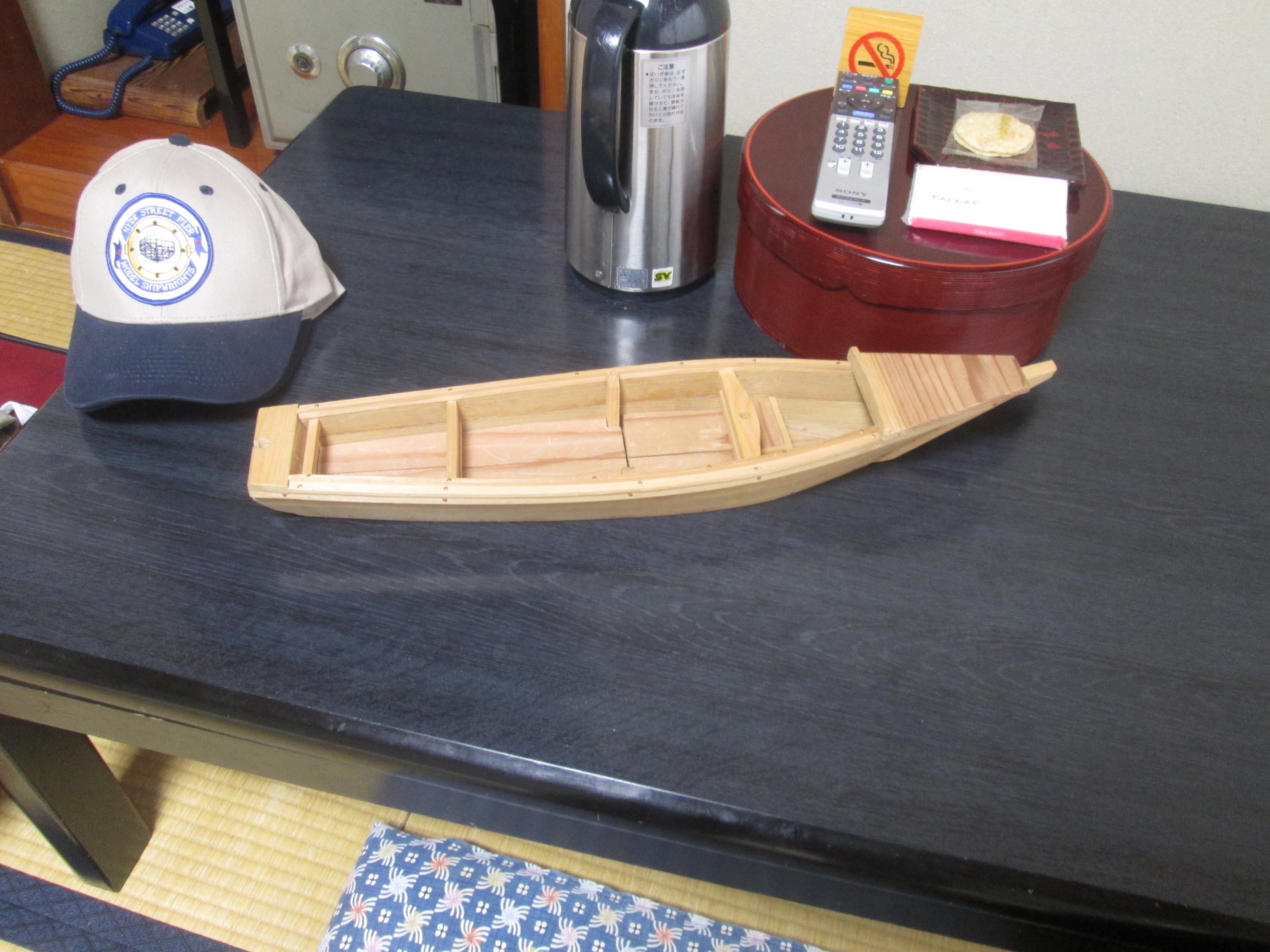
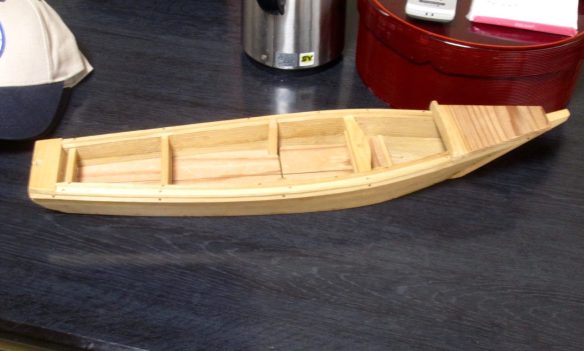
Bekabune model gifted to me from the Urayasu Museum.

Bekabune model given to me by the curator of the Urayasu Museum.

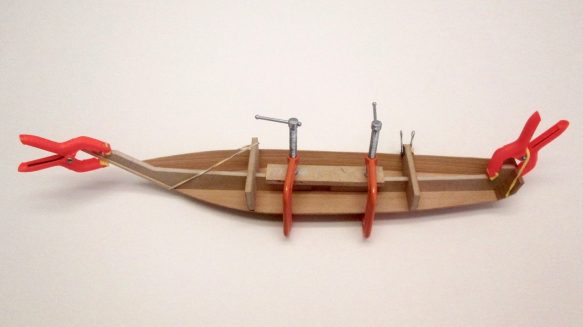
In any case, I’ll bring my in-progress Urayasu Bekabune models and a small supply of Japanese woods for people to sample themselves, giving them a chance to sand, cut and bend them. Show a couple in-progress kits, talk about how to read the Japanese language plans, etc. A 20-minute discussion should go by pretty quick, then repeat it three more times.

I really hope it won’t end up being the lamest NRG round table discussion in history, and people will find it interesting and useful. Wish me luck!

Japan Trip 2016 Wrap Up

Here it is, Wednesday, September 14th, and I’m back at home on day 2 of my recovery. I’ve had a great trip, made new contacts in Japan, met several existing contacts in person for the first time, seen a Bekabune, Hacchoro and Kitamaebune up close and personal, took tons of photos, rode countless buses and trains, and now I’m back and ready to put my experiences and collected information together and make use of it.

It will take me a while to get myself organized. Well, first it’s going to take me a while just to recover. The trip was great, but it was such a short one for covering so many interesting places. The amount of travel was actually fairly stressful. It would have been great to have been able to stay in each location a couple more days or even longer. But, I did manage to see everything on my primary list, and I’m really happy with the trip. It was a great experience, and I brought back a lot of information to share.

I’m really grateful to all those who supported me, financially, logistically, or otherwise. I wouldn’t have been able to do this without their help. And, now, it’s time for me to start sorting things out and putting the information together and to good use.

The first task is to finish putting together my part of a talk I’m doing at the Nautical Research Guild conference in San Diego early next month. The topic is Modeling Japanese Boats. As I’ve been scheduled for a roundtable discussion later on the same day, I’m also having to put that together on the same topic.

To support the discussion, I’m going to have to finish up my model of the Urayasu Bekabune. And, now that I’ve seen one in Toba and been to the Urayasu Museum and talked to people there, I should be able to have the model complete enough to use as a physical prop for the discussion. I also have a model given to me by the Urayasu Museum’s curator to help me out.

img_1826

The Bekabune Model from the Urayasu Museum

On my own model, I already had the the floor, transom and stem together (In Japanese, that’s the Shiki, Todate and Miyoshi, respectively), and shaped the lower planks (called the Kajiki). Having seen the models being built at the Urayasu Museum, I decided to move forward and glued together what I had, with my newly found confidence.

My Urayasu Bekabune under construction.

Finally, I have a 95% completed article on building Woody Joe’s Higaki Kaisen kit. I decided to hold off from submitting the article to Seaways’ Ships in Scale magazine until after my Japan trip, so I could reference some first-hand information in the article. I started working on finishing that up yesterday and will be sending that off soon.

By the middle of next month, all of the above with be completed and I will be working to complete any changes to my Japanese Watercraft Models Display, which will be going up again for the month of November, and should include my completed bekabune.

After that, I’ll leave open for now. But, I do have a lot of photos I took of the Hacchoro in Yaizu, and I recently ordered another Hacchoro model kit from Japan. So, expect to see something come of that in the near future.

img_0886

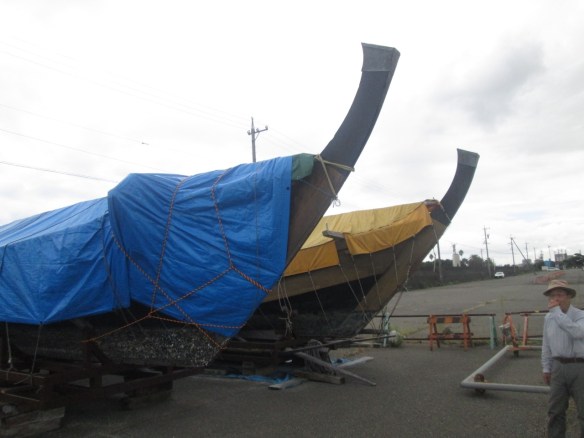
The two Hacchoro at Yaizu, wrapped up for the season.

In the meantime, I actually have several posts that I started on the trip, but were not complete enough to submit. Watch for those, as well as photos and other posts, in the very near future. Ω

Visiting the Edo Tokyo Museum

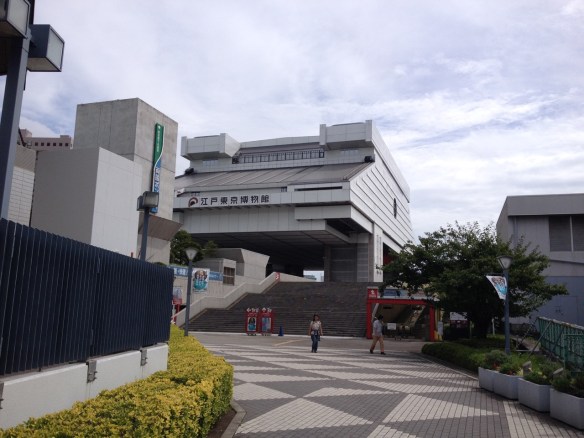
If you want to see what life in Edo period Japan was like (1603-1868), you might want to make a visit to the Edo Tokyo Museum, located in Tokyo’s Sumida ward. This is a neat place and it’s big. The building’s architecture is interesting and is said to be patterned after the shape of a type of Edo period storehouse.

img_2740

The Edo Period Tokyo (or Edo period, Edo) is on display as the museum’s permanent exhibit on the 5th and 6th floors of the building, but tickets are purchased on the first floor. The price of admission is 800¥ for adults and the ticket is good all day, so don’t toss it out, in case you might want to exit and come back later. There is, after all, a lot to take in.

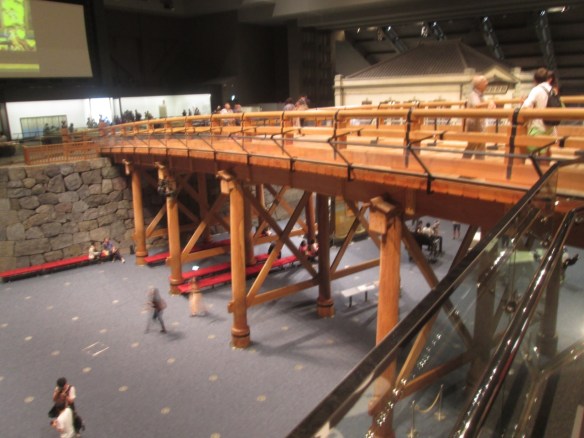
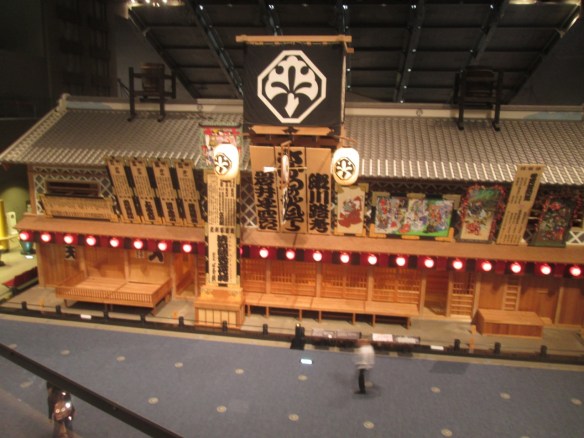
Walking through the museum, you get to see some life-size representations of life in old Edo. The first thing you run across is a reproduction of the Nihonbashi, which is one of the main bridges leading into the city, also there is a reproduction of the Nakamuraza theater, which was one of three Kabuki theaters in Edo.

img_1459

img_1464

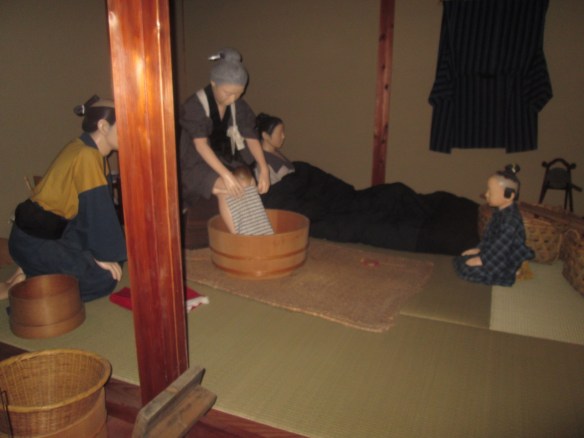
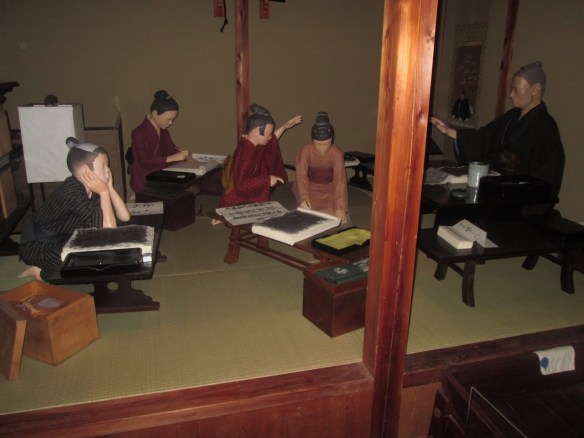
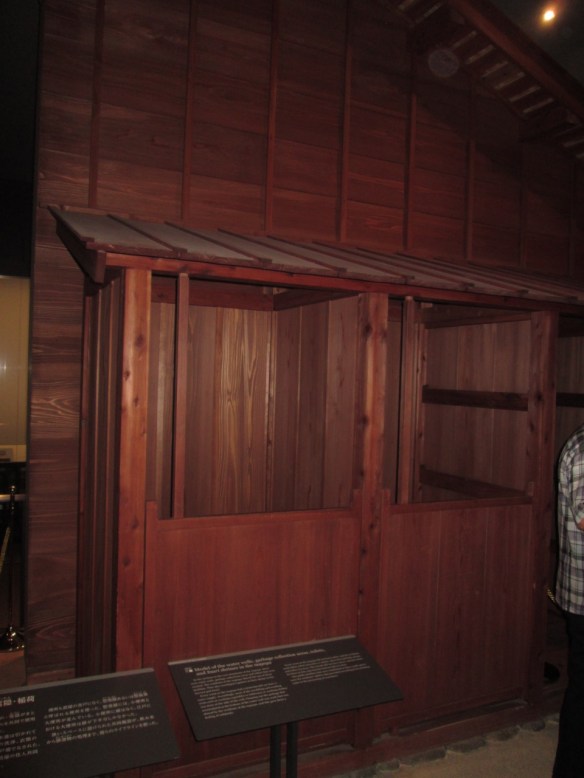
You will also glimpse how people lived and worked in Edo. This place provides a great opportunity to look at the buildings, tools, culture and lifestyles of Edo. Of course, it’s Japan, so the information provided is predominantly in Japanese. But, some of the signs are also written in English. Even so, docents abound at the museum, and you can request a docent, who will lead you through the museum and tell you about the things that were really special about old Edo and Japan.

img_1549

img_1556

Being that I was on my own personal search for obscure information, I didn’t bother with a docent guide. However, I kept running across the same groups of English speakers and their docent guides and couldn’t help but overhear some interesting information that I wouldn’t have gotten otherwise.

img_1551

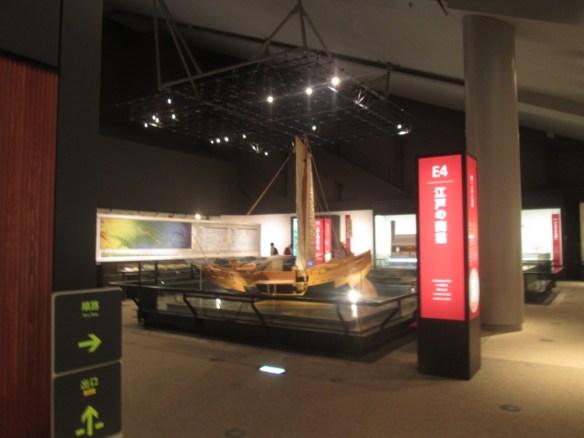
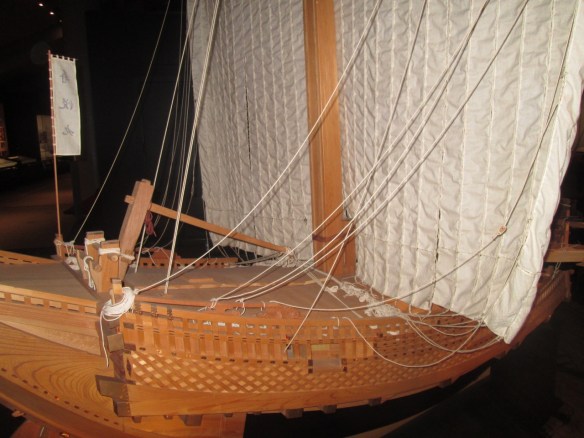
For the ship modeler, or someone interested specifically in Japanese watercraft, the museum doesn’t really have much. There is one large model of a Higaki Kaisen that is well worth seeing (I’ll post more photos later).

img_1562

img_1586

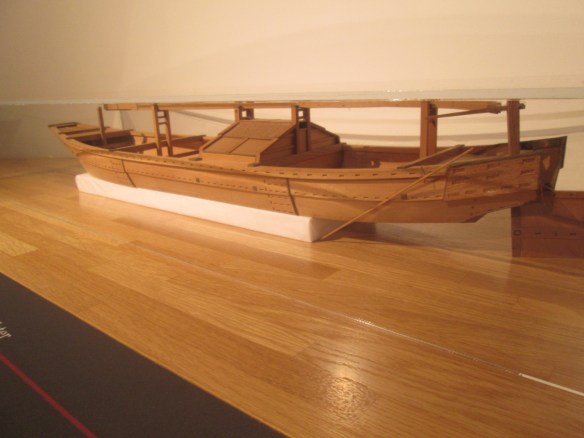
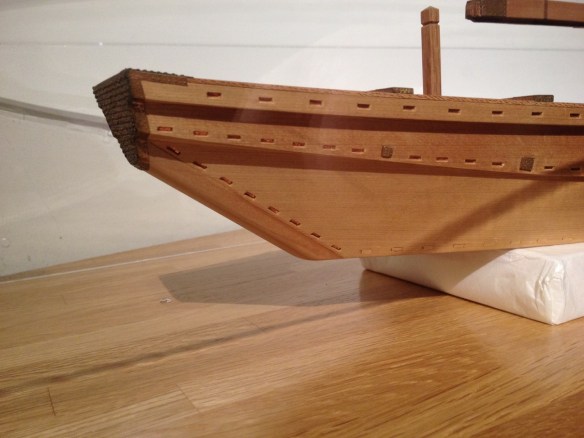
I also discovered the first model I’ve seen yet of a Takasebune, which is a basic riverboat transport. This is one of the types of boats I’d really hoped to see a model of. Sadly, the lighting in the museum is absolutely horrible, and the model is in a tiny case, barely bigger than the model, creating a lot of haze and glare, and the only light shining on it was from the front, from behind the viewer, so it was hard not to create harsh shadows.

img_1598

img_2764

img_1610

img_1607


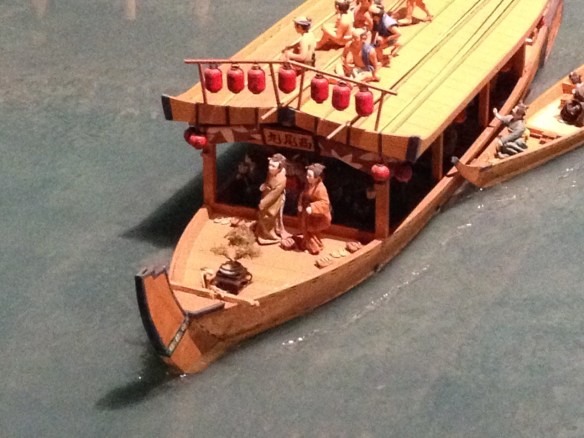
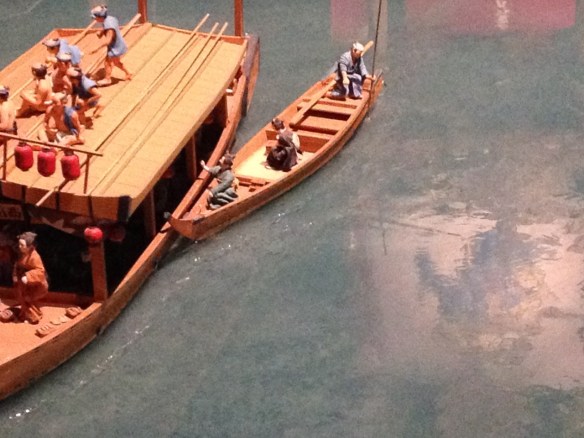
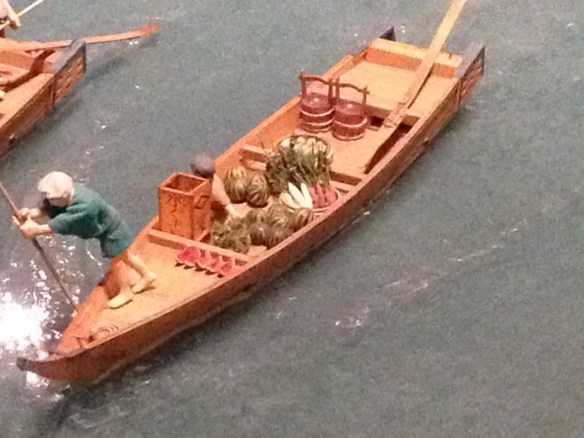
But, the biggest attraction for me, ended up being the large diorama of the Nihonbashi bridge and the activity on the water below. There are many small boats on the river, including chokibune (water taxis), large yakatabune (pleasure boats), and various other small boats who’s specific names I don’t know and/or don’t recall. I only know from the book Funakagami, that the boats are generically called chabune.

img_2777

img_2778

img_2781

For me, it was important to see these boats in the context of their daily work. Seeing the people on them, how they used them, etc.

Unfortunately, I couldn’t get better photos of anything due to the poor lighting. The whole museum is this way. Lighting is kept at a low level. As a result, most of my photos are fuzzy, underexposed, or overexposed (due to flash). Okay, some of that’s due to my lack of photographic skill and use of a simple point-and-shoot camera. But, the problem was exactly the same at the Toba Seafolk Museum, and makes for a very frustrating experience.

At the gift shop area, I found no books on Japanese watercraft, and I asked about any books that might have some good photos of the dioramas. The shop staff was very apologetic, but they apparently had nothing useful.

Still, a great experience if you’re in Tokyo, and well worth visiting. Ω