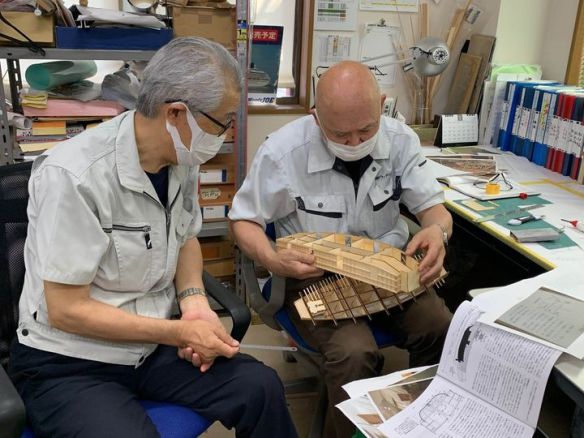
Utasebune 打瀬船 Fishing Boat – 1/72 Scale Model from Paris Drawings – Part 1

The Souvenirs de Marine is a multi-volume collection of drawings that are the basis for many of the models in the French National Maritime Museum. The book was put together by Edmond Pâris and originally published in the 1880s. Among the collection of drawings of watercraft from around the world are several Japanese boats that were recorded by French Lieutenant Armand Paris, mostly in the areas of Osaka and Edo in the 1860s.

These drawings provide the only detailed records of some of the watercraft depicted. These include large coastal transports, fishing boats, pleasure boats, a large yacht owned by one of the many feudal lords, a row galley in the service of the Shogun, etc.

Now, I’ve built a model of the row galley, which is referred to in Japanese as a Kobaya, though there are some features that I feel that the drawing is missing, as the ship was out of service for some time and in disprepair, following the fall of the Shogun’s government many years earlier. So, that model remains technically unfinished.

However, there is an intriguing looking fishing boat that’s detailed in the available drawings. The boat is only described as a fishing boat, but it is quite large at 17 meters long, a little over 55 feet. But, what stands out the most is the unusual downward turn of the bow. This is the first time I’d seen this kind of feature. But, it turns out that it wouldn’t be the last time.

Continue reading

The Tonegawa Takasebune (高瀬船) – a Model in 1/72 Scale, Part 6 – Final

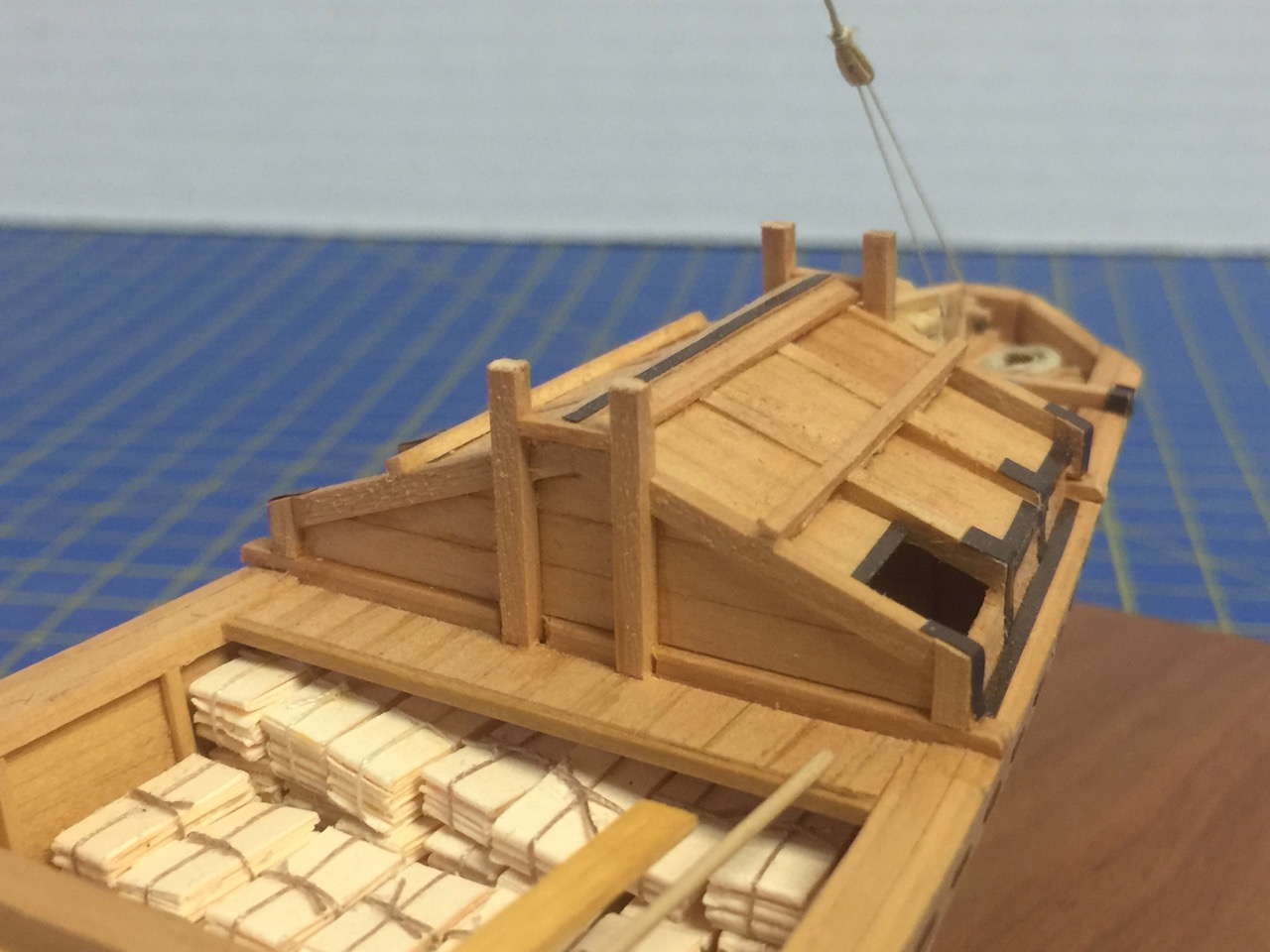
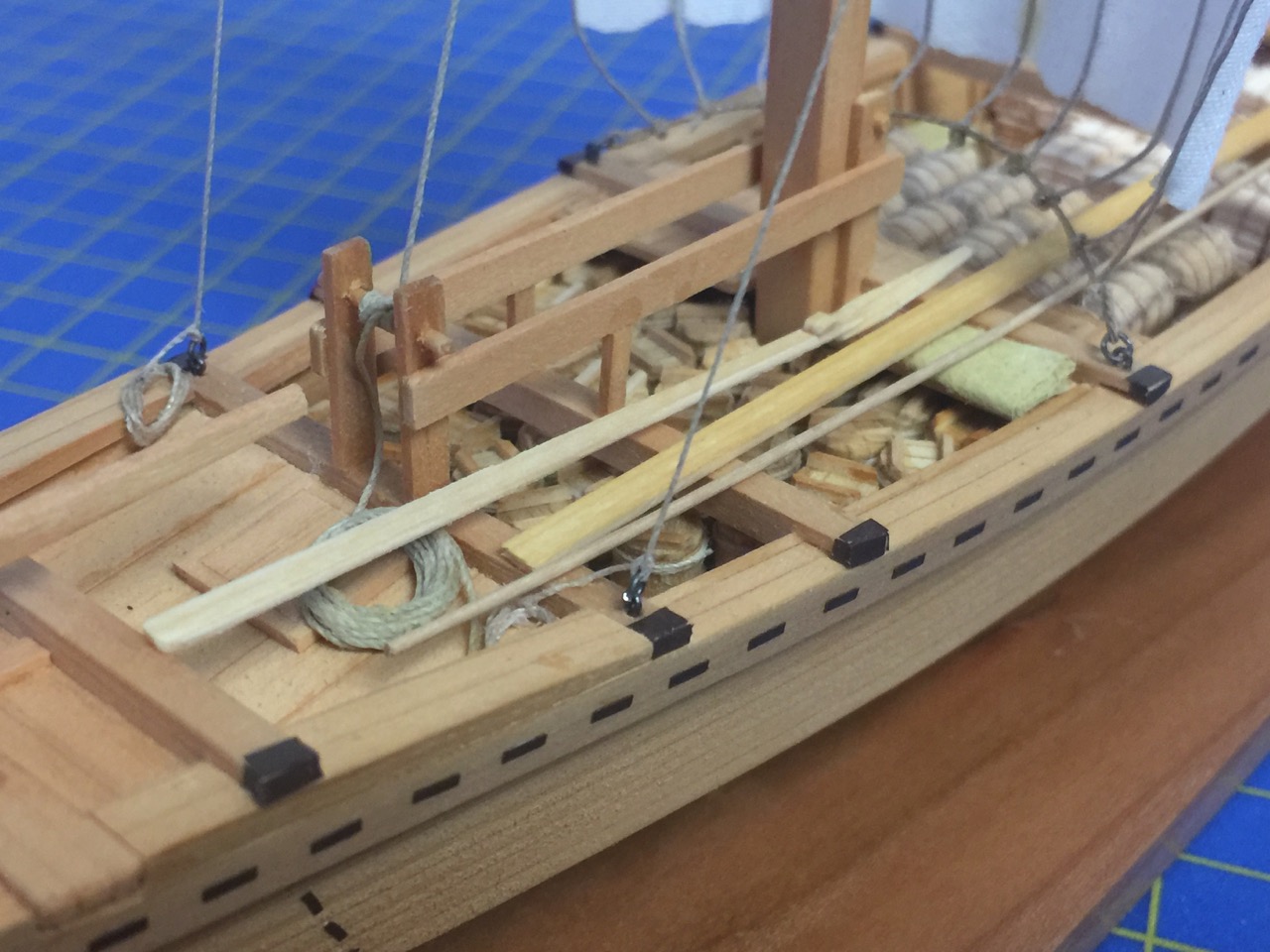
I finally managed to finish enough cargo to call that stage of the model complete… Or, at least as complete as it’s going to get for this model. As you can see in the photos below, I’ve come up with a third kind of cargo. Probably not a very accurate type, as it appears to be some kind of finished product.
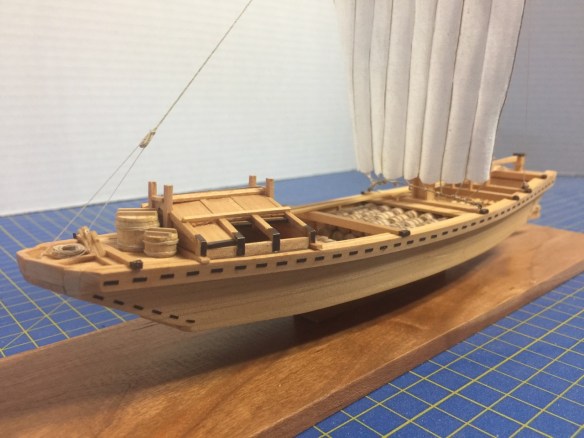
Perhaps the boat is carrying something downriver from one of the larger towns along the way where somebody produces a product that’s very flat. I think it might be somewhat unlikely that the boat should carry rice bales, some kind of vegetable in buckets, plus some kind of finished goods. But, I think it looks good, and keeps the viewers wondering what kind of goods those can be.

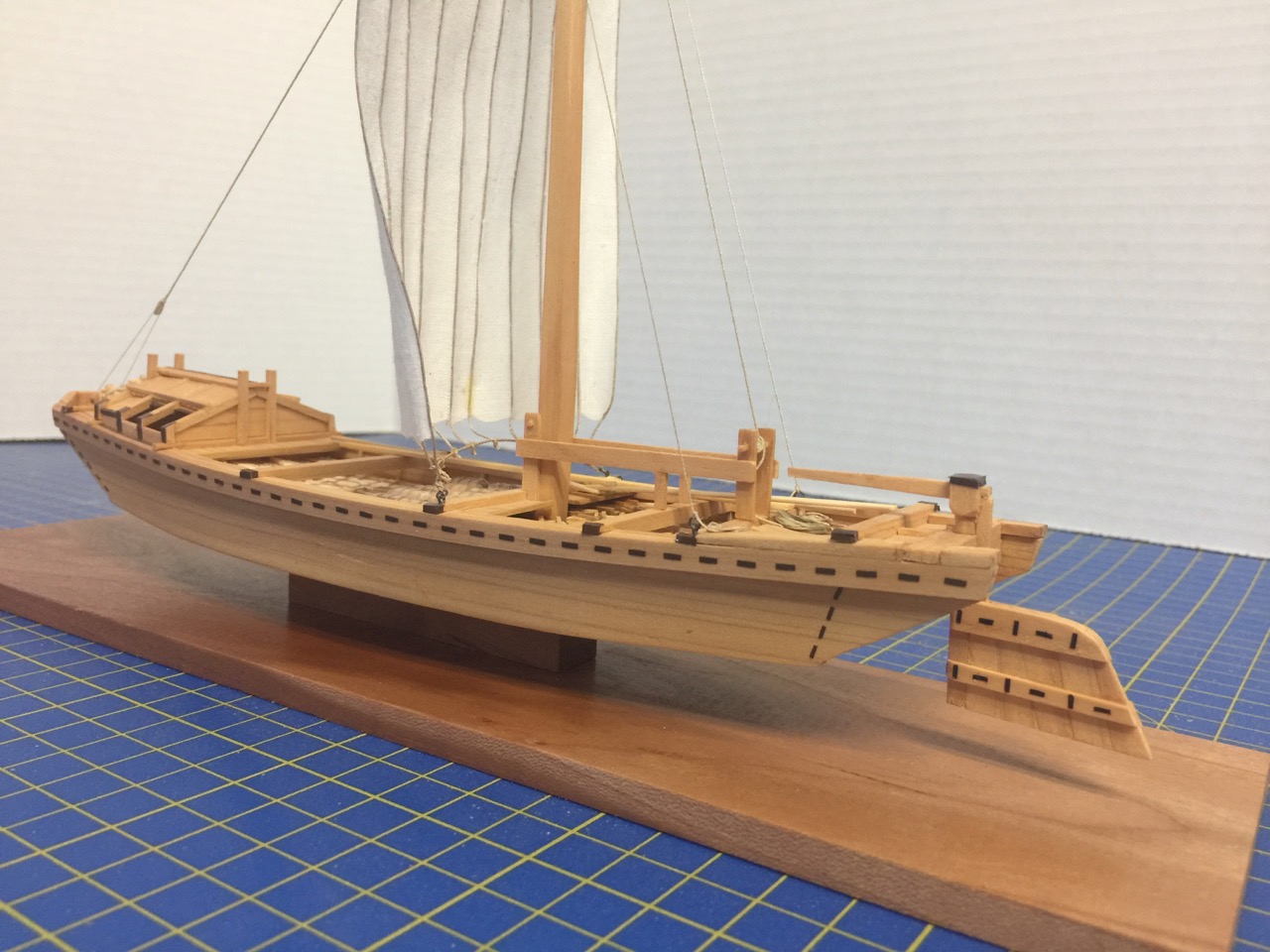
By the way, you’ll notice in the photo below, and the previous one above, that the main stay runs down to the deck and I had to make a small structure that’s effectively a pair of bits holding a simple winch. This was not on the drawings I was using, but appears on many of these boats. Without more knowledge of how the stay might be secured, this seemed to be reasonable.
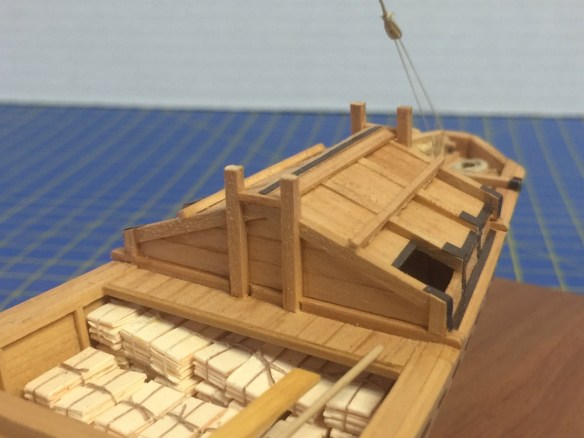
The stay leads down to a simple wooden block, which I basically copied from those on the Woody Joe Kitamaebune model. The block I made is a very simple teardrop shape with no sheave. I don’t know this for sure, but I believe early blocks in Japan did not have a sheave. This was suggested to me by someone I spoke with in Japan when I visited the Hacchoro in Yaizu harbor.

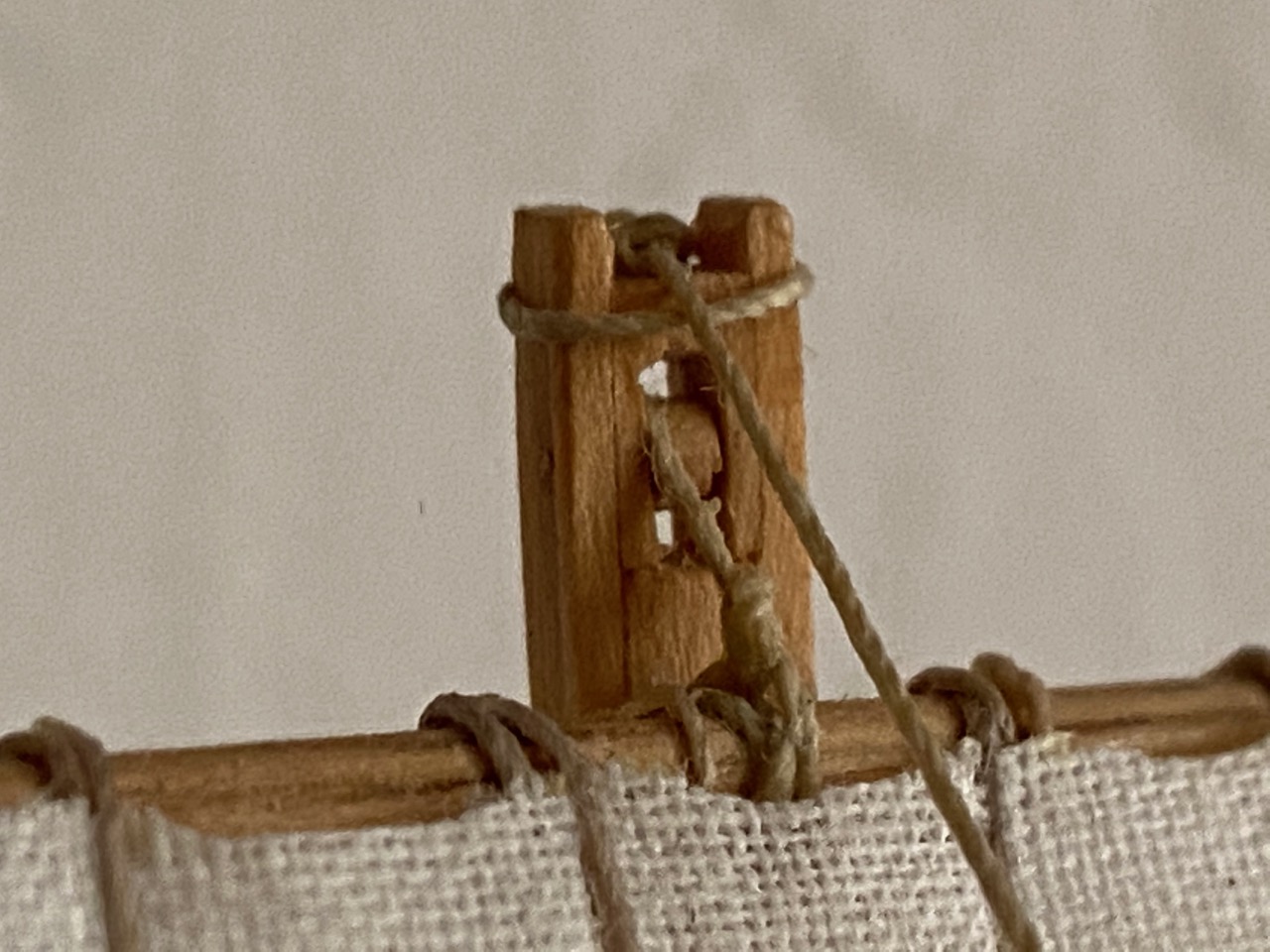
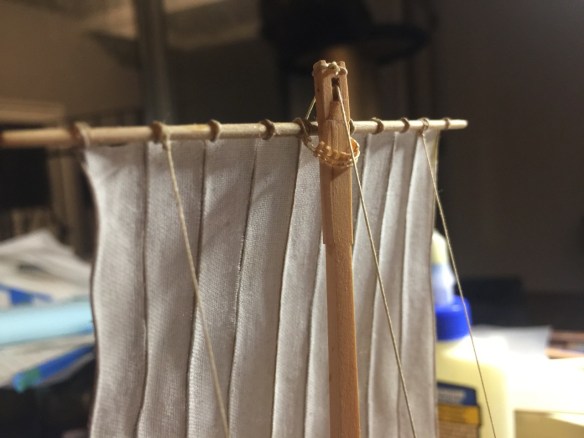
At the top end of the stay is a small loop that goes around the mast from the back side. The stay itself goes back over the loop and down the front side. In this way, the stay holds itself in place.
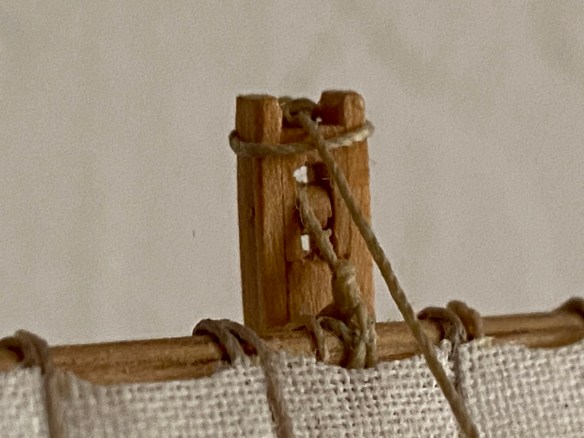
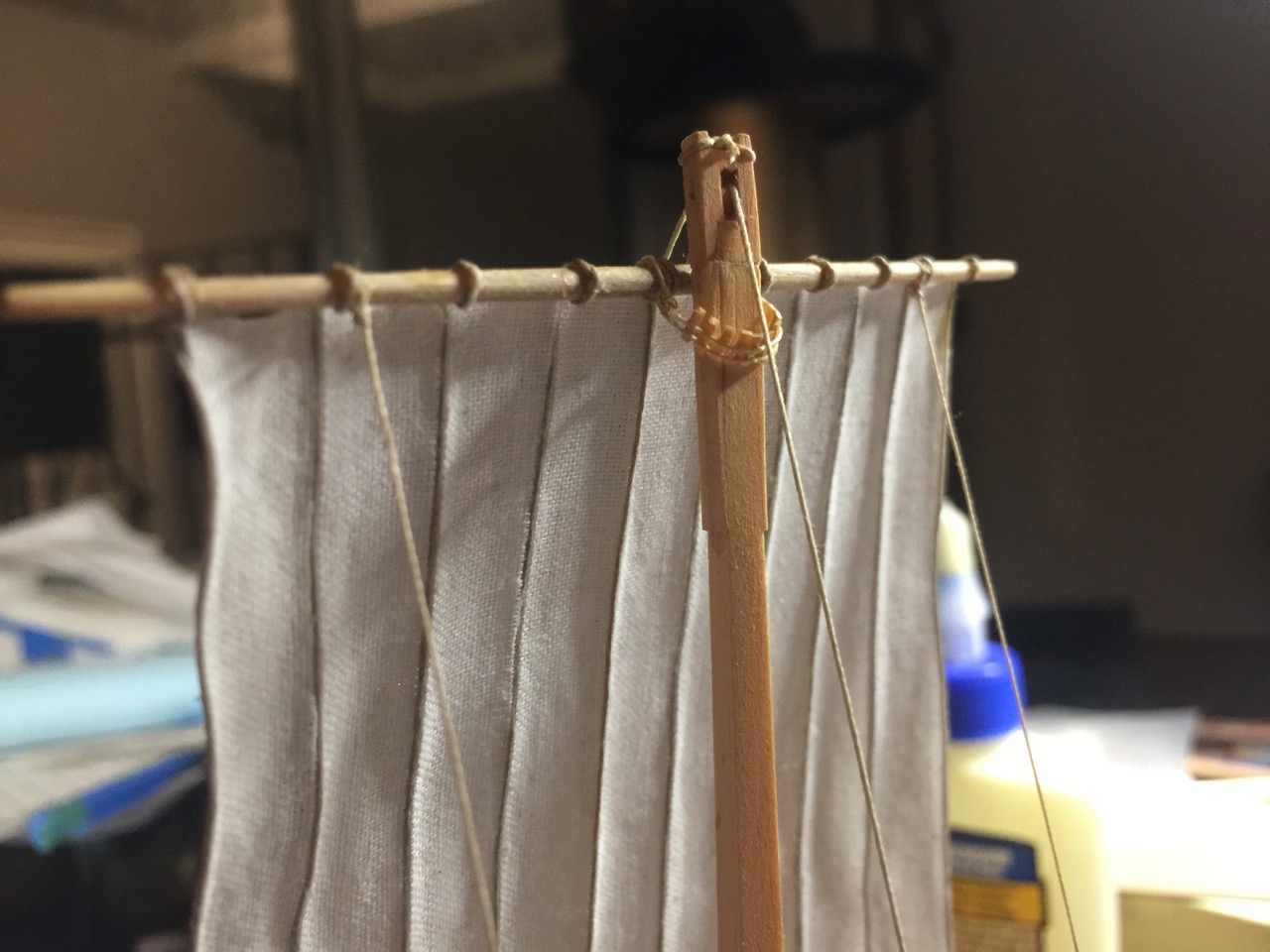
I completed the rigging by securing the halliard, and adding braces that hold the yard at a proper angle. I also added parrals that hold the yard to the mast.

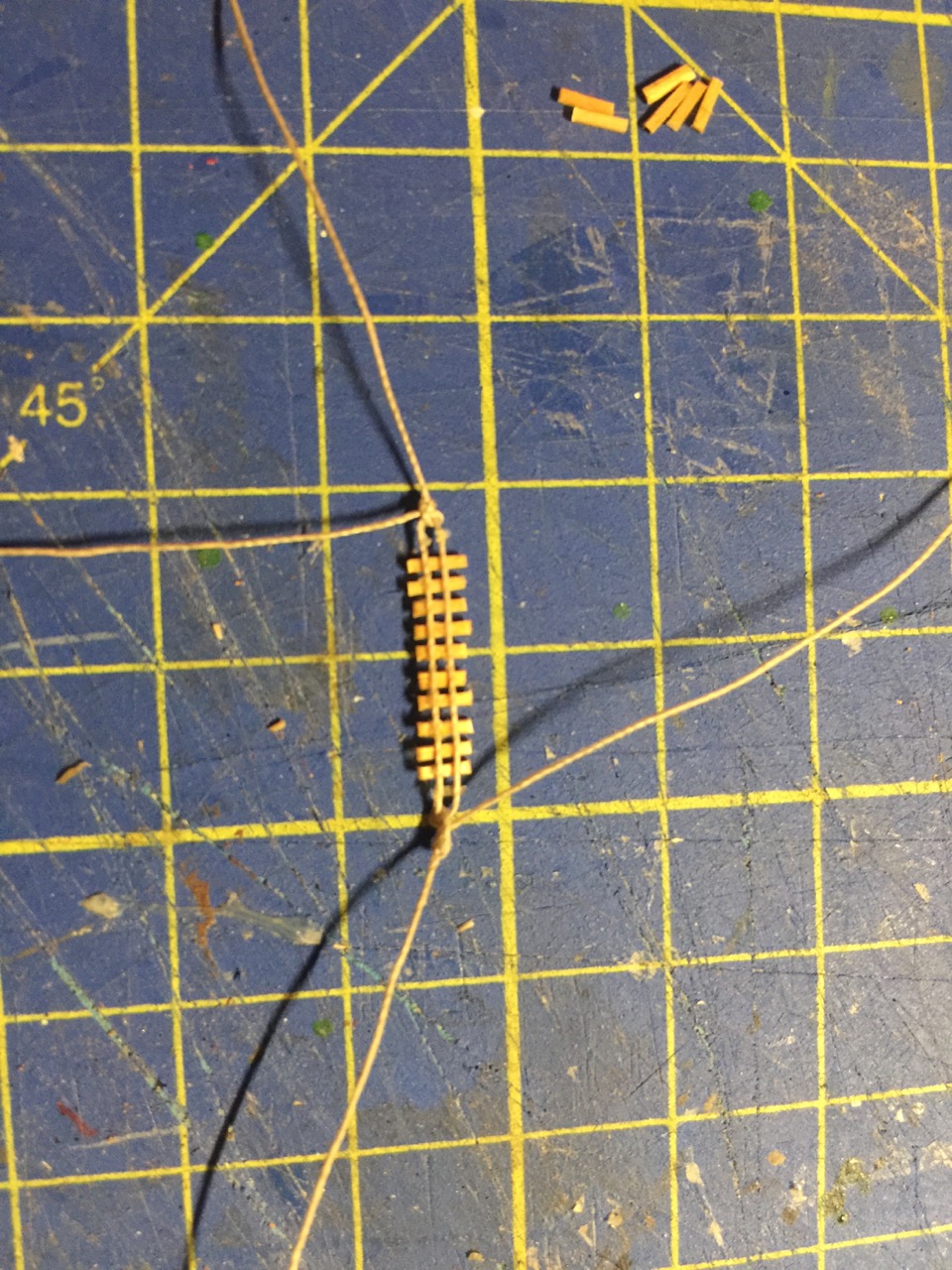
Larger Japanese boats basically had two loops around the mast with wooden battens attached that prevented chafing of the ropes. At 1/72 scale, this feature is pretty small, but still noticeable. I simply cut some tiny wooden strips to use for the battens and glued them a couple thin ropes across their backs. Some double-sided tape helped hold them into place on the work surface while the ropes were tape down across the battens as the glue dried.
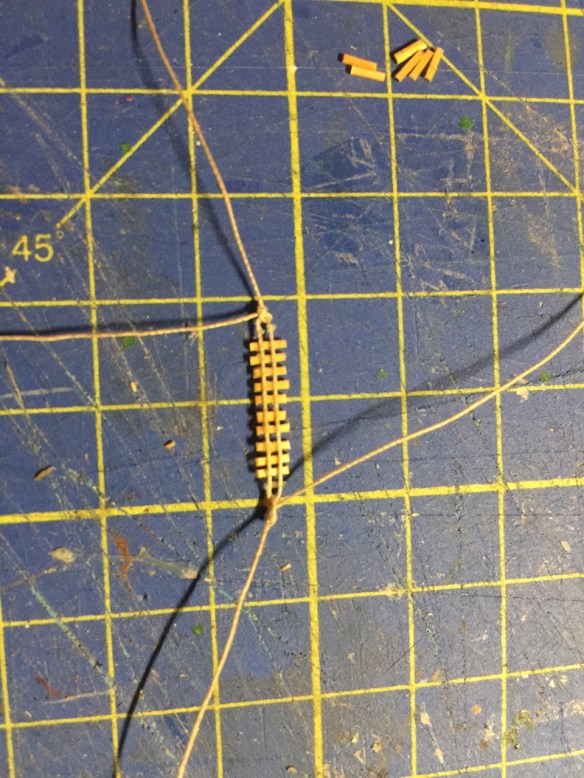
The final assembly was tied to the yard, and hung somewhat loosely around the mast. This feature appears on the larger coast transports as well, but I haven’t seen anything like this on small boats. I don’t know how large a boat would have to have been before it required something like this.
The last step in the construction of the Tonegawa Takasebune was to add some working “stuff” into place. I figured there needs to be a plank, which can be used for loading and unloading, as well as for walking over the top of the cargo, as well as a pole or too for pushing the boat along where necessary, and a sculling oar for the same.
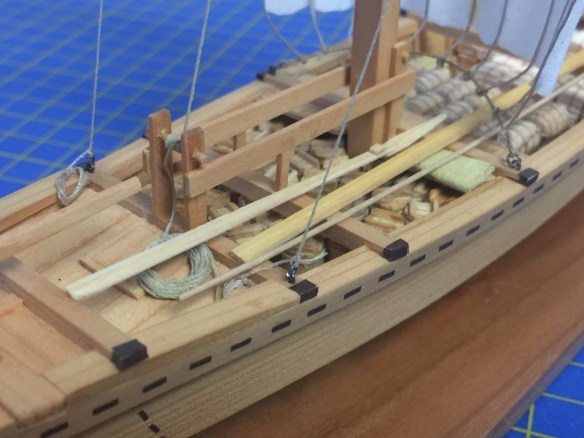
I also folded a piece of painted tissue paper to represent a matt or tarp that could be used to cover some of the cargo in bad weather. I say tarp here, but I suppose that really depends on when this boat is represented, as it was used up into the early 20th century, and probably back into at least the 18th century, but I really don’t know how far back it goes. Something to look into.

In any case, in early days, the tarp would have actually been more like a thin straw mat. Realistically, these boat probably would have been piled high with as much cargo as they could handle, and the straw mat would probably allow the boatmen to better secure the cargo, as they could tie the mat down over the cargo to help keep any from shifting loose off the pile of cargo.

Some woodblock prints depict canal boats loaded high and covered with a tarp or mat with planking riding on top so the boatmen could climb more easily over the mountain of cargo.
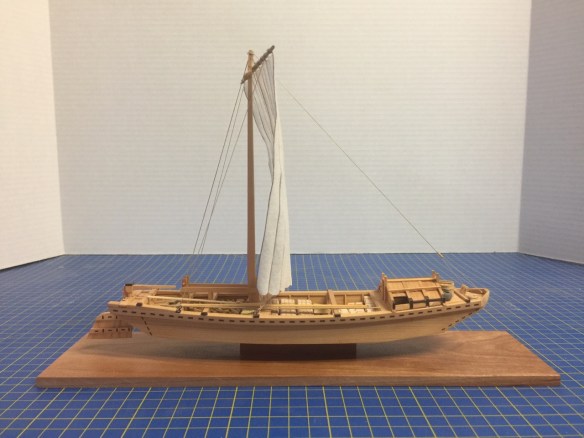
The final model was mounted with double-stick tape onto a very simple cherry wood display base I cut for it that I gave a simple satin lacquer finish. The model raised up on a cherry wood block, allowing the rudder to properly hang down.
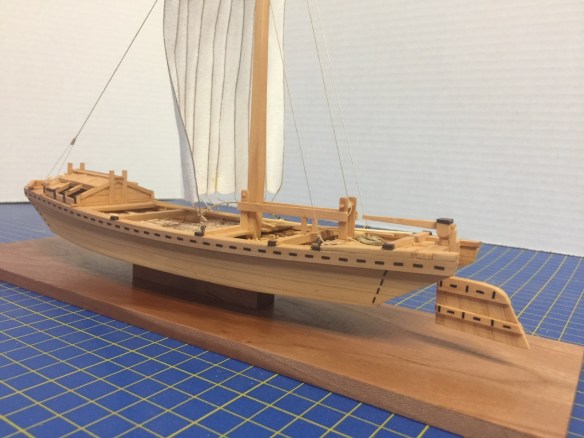
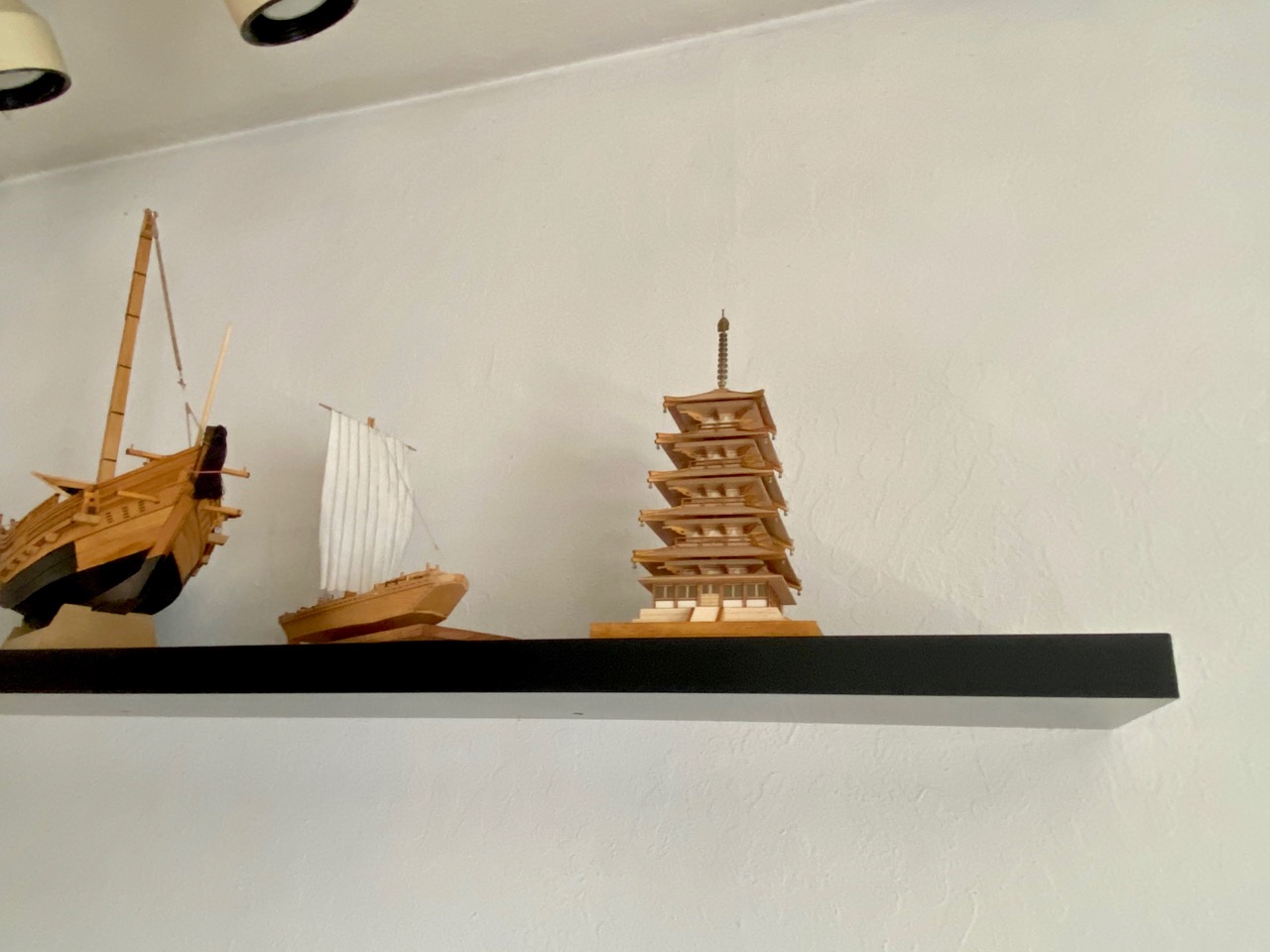
The 60尺 (60-shaku or about 60 foot) Tonegawa Takasebune model is only 10″ long at this scale. So, it’s a pretty small model, but perfect for scale comparison with Woody Joe’s Kitamaebune and Higaki Kaisen models, which are both also in 1/72 scale.
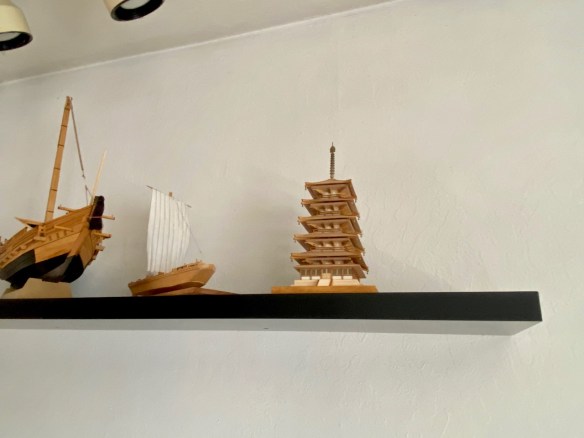
In the photo above, you can see the model sitting up on the shelf with the still incomplete Kitamaebune model on the left, for size comparison. The model on the right is a Woody Joe kit of the Horyu-ji 5-story pagoda, but that’s in a completely different scale of 1:150.

But the Tonegawa Takasebune is now complete. I will be including it at an upcoming display of my Japanese boat models at a Japan Day event next month at the Asian Art Museum in San Francisco. The date for that is October 17th, 2021, but I’ll post more info shortly. Ω

Sanjugokubune (三十石舟) Information Discovery

My apologies for not posting more information and updating my wasen modeling site very much lately. There are other things I’ve been trying to get done, and between this pandemic and the heaviness of having my mom in a nursing facility, I’m definitely not at my best. I did finally have a chance to play some traditional Japanese music with my music group at a couple events in Santa Rosa and San Francisco these past few weeks, but it’s not really enough.

It wasn’t until I set aside some things I’ve been trying to get done, and started paying attention to my wasen modeling, that things started feel so much better. So, I guess I’m going to have to make more time for wasen models, for mental health reasons, if nothing else!

The Sanjugokubune (三十石舟)

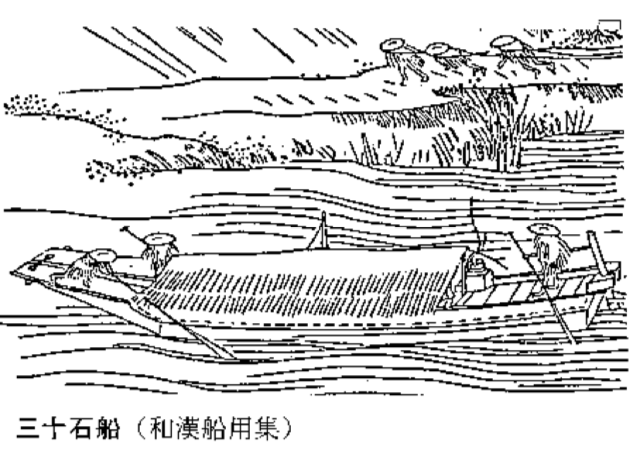
The most recent wasen topic that’s been on my mind is a type of riverboat transportation called the Sanjugokubune. These were large river boats that operated between Osaka and Kyoto during the Edo period. They are very famous for providing regular, scheduled, daily service for both cargo and passengers. I read somewhere that hundreds of these boats operated on this regular route every day.

In a recent post, I provided a link to a Youtube clip of a Sanjugokubune related story. More on that here.

Continue reading

Marukobune in Film Clip of Ishimatsu Sanjugokubune (石松三十石舟)

As a wasen modeler, how awesome is it to be able to see film footage that actually shows a Lake Biwa Marukobune (丸子船) under sail? Recently, someone posted a Youtube link on Facebook to a clip from an old Japanese movie. At the start of the clip, you can see a Marukobune setting out.These boats were used for carrying cargo and passengers on Japan’s Lake Biwa.

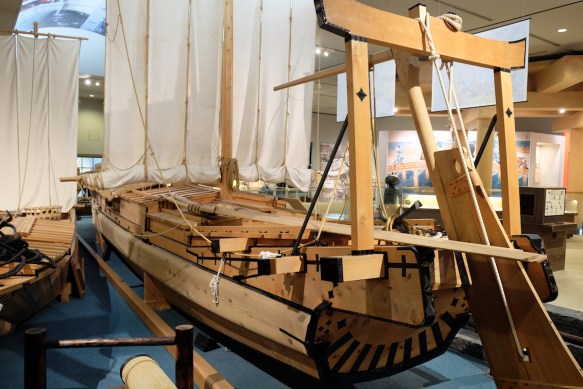
Late period Marukobune on display at the Lake Biwa Museum.

Continue reading

Wasen Model in Monterey, CA – Follow-up

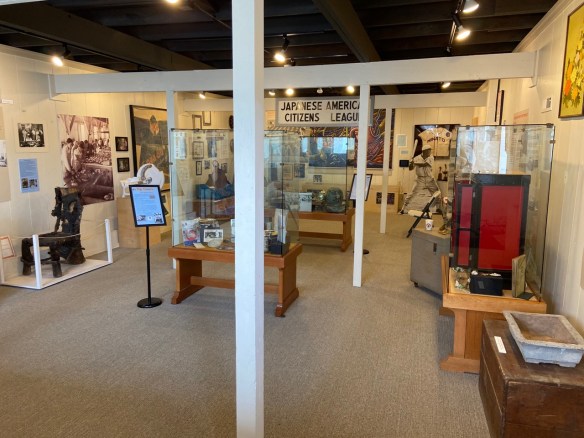
This week, I made the trip down to Monterey’s JACL Heritage Hall & Museum and met with curator Tim Thomas. He was waiting for me in front of the building when I arrived, and I was ushered into the museum room, where there were all sorts of displays of artifacts from the Japanese American community’s thriving past in Monterey.

The museum is small as it’s just the one room. But, the museum and the Heritage Hall apparently have their connections and access to a lot of knowledge about the Japanese American community, which was really thriving in Monterey before WWII. The curator has even given talks in Japan about the Japanese in Monterey.

Continue reading

Wasen Model in Monterey, CA

Earlier this Summer, I was in contact with a gentleman who is a former Historian/Curator for the old Monterey Maritime Museum. Apparently, part of that collection included some Chinese junk models as well as some Japanese wasen models. He didn’t have much information on the Japanese models, but commented that all the models were built back in the 1920s.

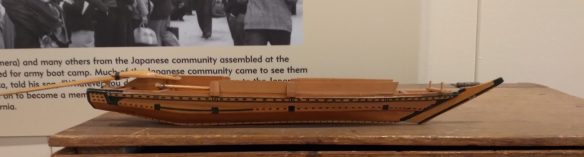
While the collection of Junk models has apparently been moved to the Pacific Grove Museum of Natural History, one Japanese boat model now resides at the Monterey JACL (Japanese American Citizens League) Heritage Center & Museum, where he now works as the Curator.

Wasen Model at the Monterey JACL Heritage Center / Museum

There is very little information on the model, except that it, along with the Junk models, is part of the Greatwood Collection. These were models commissioned by American oil company executive Royce Greatwood, working in the Far East in the 1920s. I’m sure there’s more to the story, but that’s all I know.

Continue reading

Wasen Model Table at the SF Asian Art Museum, October 17th

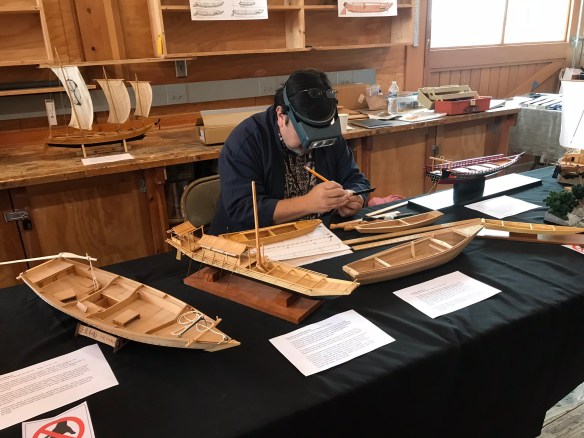
Sunday, October 17th, 2021, is Japan Day at San Francisco’s Asian Art Museum. A friend of mine is working with the museum on this and asked me to participate by displaying my wasen models. So, I will be setting up a table to display some models and, hopefully, have some room to do a little work on them – something like I did at the Wooden Boat Festival in Port Towsend a couple years ago.

Me, at the 3-day Port Townsend Wooden Boat Festival.

I’m hoping to have enough room to set up a few models in a nice, formal display with accompanying information. Since it’s at the Asian Art Museum, I’ll probably try to chose models that I can tie to artwork as much as possible. In general, I expect to make this a bit of a cross between the Port Towsend event above, and the Japantown display below.

One several (seven?) wasen model displays I’ve had at the Japan Center’s East Mall in San Franciso.

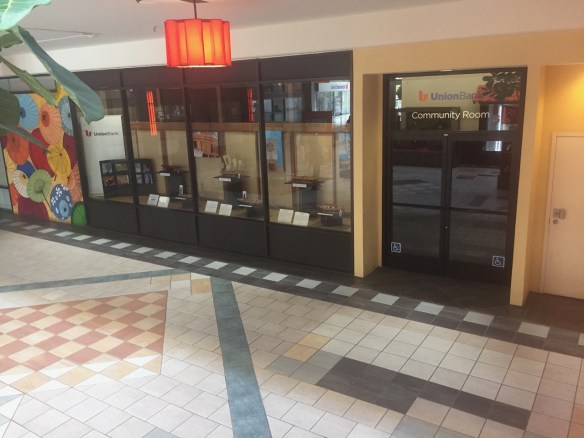
By the way, I haven’t been able to set up the Japantown display in over a year due to Covid related bank policies. Wouldn’t have gotten much in the way of visitors anyway. However, with this October event, and with so much having reopened, I’m reaching out to Union Bank, who operates this community room and its display window.

I’m hoping I can have something set up there maybe in September, leading up to the Japan Day event. We’ll see what I find out when I hear back from the bank contact. Of course, I’ll keep you posted.

As for the Asian Art Museum, my Japanese Boats Display is supposed to be set up from approximately 11am to 5pm on Sunday, October 17th, on the first floor of the museum. I won’t be alone there. Two other ‘stations’ are scheduled to be set up there as well, including a Origami Irises display and a Toro Nagashi Paper Lanterns display (floating lanterns).

Make sure to mark your calendars, so you can stop by and visit me if you’re in the area!

Ω

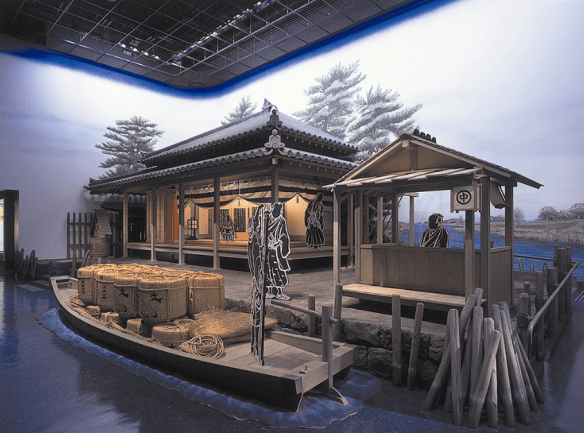
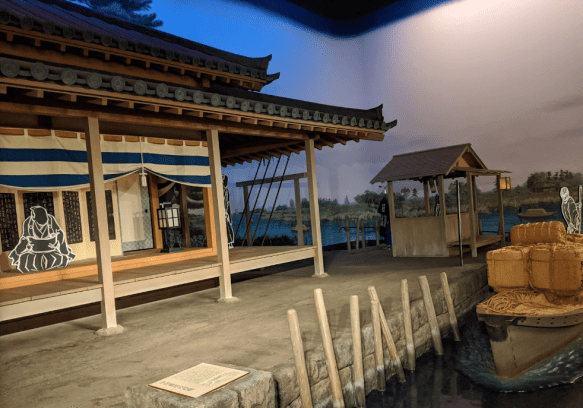
Tenma-Zukuri Chabune Display at the Nakagawa Bansho Museum (中川船番所博物館)

I ran across some images from a Japanese museum in Tokyo’s Koto ward in early May, and I feel like some of my work has been completely validated. This little museum is called the Nakagawa Funabansho Museum (中川船番所博物館), and I know absolutely nothing about this museum. I don’t even know if I’ve heard about it before, though I recognize the Nakagawa, or Naka river, or middle river in Japanese, which flows down from Saitama prefecture through Tōkyō.

A large display in the museum is a full-sized diorama of a small, fully loaded canal boat that looks like it’s pulling away from the dock. What surprised me was that I recognized this specific type of boat as one that I studied and created a set of drawings.

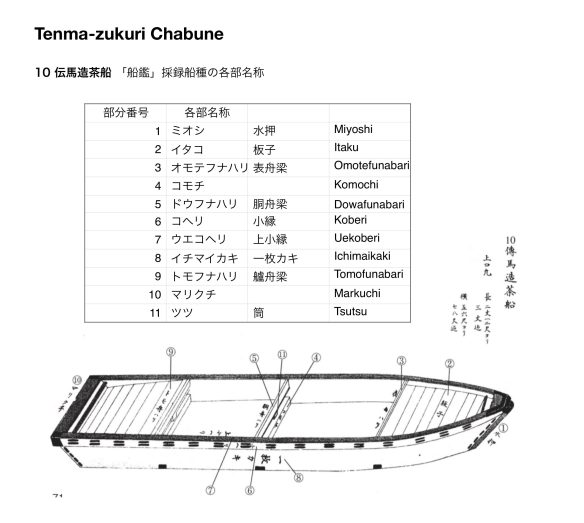
This is a tenma-zukuri chabune, a small general purpose boat from the canals of old Edo. I’ve seen very little about this boat, outside of a woodblock print in the Funakagami, an illustrated identification guide to river boats that was used to aid the government’s tax assessors.

Page from the Funakagami, with my annotations on the names of parts.

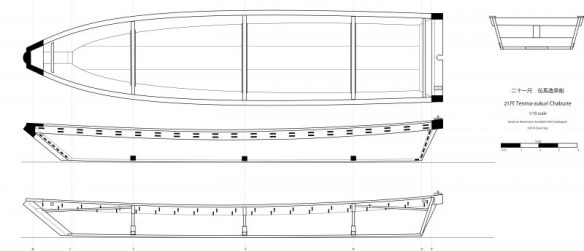
Using this illustration, plus some information provided in the book, I came up with a set of drawings that I created in Adobe Illustrator.

My own drawings based on the Funakagami illustration and provided dimensions.

There are some variations from the museum display, but all the details mostly seem to match. I will consider some modifications that I might make to the drawings, but I’m very confident with them, especially now that I’ve seen this museum display.

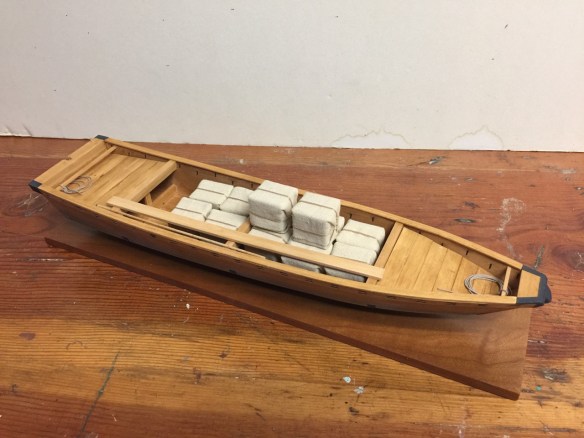
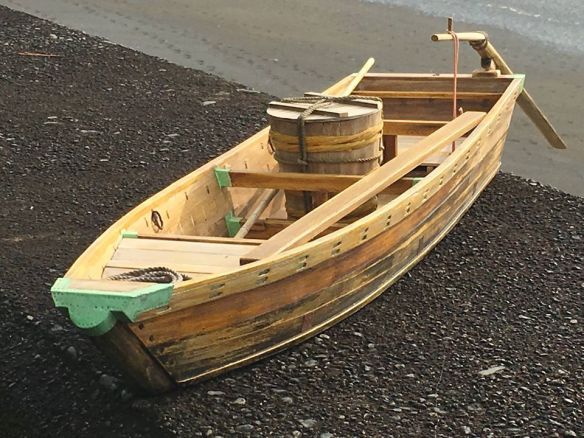
The drawings have been used to make at least two models: My 1/20-scale model and one by Japanese modeler Kouichi Ohata, who built a beautiful 1/10-scale model. Kouichi-san’s model actually came before mine, and he provided some great feedback that helped me improve the drawings from their original version.

My 1/20-scale tenma-zukuri chabune

1/10-scale tenma-zukuri chabune by Kouichi Ohata

This is the first time I’ve researched a particular boat type and created a set of drawings based mostly on the interpretation of a woodblock print. While I knew I had the basic dimensions right, I never really new for sure if my interpretation of all the details was correct.

Seeing this museum display is not proof that I got everyhing correct, but at least it shows me that whoever was involved with the creation of this museum display agrees with my interpretation of this boat. That means a lot to me, given how separated and independent my study of wasen has to be.

So, I look forward to visiting this display at some point after Covid concerns have lightened up. In the meantime, perhaps I should pick another subject to try to illustrate and model. Ω

The Making of a Man (in 1/20 Scale)

Time to start adding figures to my collection of wasen models…

catopower's avatarShip Modeler

Working with my Japanese boat models, after the tenth or twelfth model, I’ve felt that there’s now something missing. I enjoy modeling traditional Japanese boats, but up to now, there hasn’t been much context. So, I started experimenting with making cargo, which is a relatively easy, if not somewhat tedious, task. But, I’ve always felt that the cargo was just one step towards giving the models a better sense of what they were and how they were used. What the boats really needed were one or more figures, to give them a sense sense of scale, and a sense of the place and time when they were in their heyday.

Kawasaki: The Rokugō Ferry, from Hiroshige’s Fifty-Three Stations of the Tōkaidō
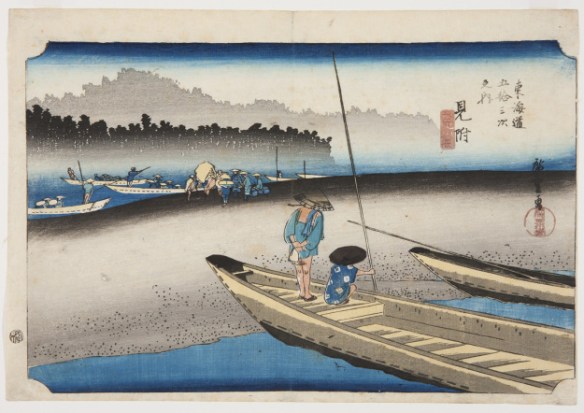
Mitsuke: The Tenryū River, from Hiroshige’s Fifty-Three Stations of the Tōkaidō
View original post 756 more words

Atakebune – Japanese Warship Kit in Development

At last, it’s happening. After some enthusiastic petitioning by Kazunori Morikawa, myself, and others to the Japanese wooden model kit maker Woody Joe, it appears the company is actively developing the prototype for an Atakebune.

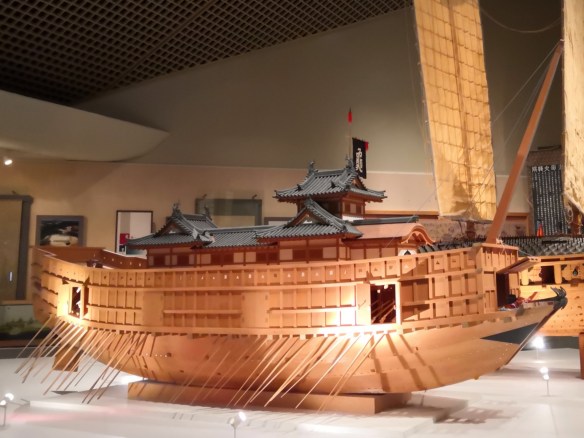
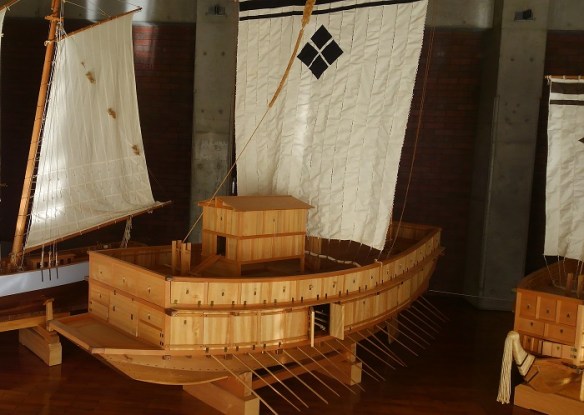
Museum model of an atakebune

For those who don’t already know, the Atakebune is the largest class of warship used by the Japanese feudal armies of the warring states period. These lumbering ships were effectively floating fortresses. While they were equipped with one large mast and square sail, as well as a  single bank of oars, they were often towed by smaller warships.

Museum model of a large atakebune

I’ve had a number of people ask me about the availability of an Atakebune kit. Up to now, there hasn’t been much  available in the form of a well researched scale model kit. But, yesterday, Woody Joe posted a photo on their Facebook page, announcing that they’ve started working on a prototype model.

The new model is 1/100 scale, and it’s only a prototype, so we won’t know if it’s going to go into production yet. I’m a bit disappointed that the model is not 1/72 scale, as that scale would then match Woody Joe’s Higaki Kaisen and Kitamaebune kits, plus it would then be compatible with 1/72 samurai figures that are currently available.

However, a 1/72 scale model would almost 40% larger than a 1/100 scale model. And, considering these were large ships, that would be a big kit that might be harder for company to manufacture. Also, such a large model may be less appealing in Japan, which is their primary market.

I don’t know any more details yet, but will post them as soon as I learn more. Ω