Modeling Japanese Boats – MESS Talk Follow-Up

My first webcast talk on the modeling of Japanese traditional boats is done. It was the first time I’d done anything like this. Though I’ve spoken on the subject before, this is the first time that I couldn’t see my audience, which was an interesting experience that more or less ended up going fine. Talking from the comfort of my own workshop garage also made it more relaxing.
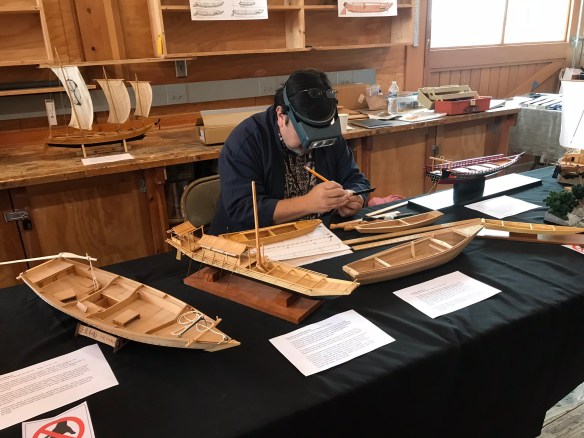
The even was only an hour long, and my talk was about 50 minutes or so, which isn’t a long time for this subject, particularly with my penchant for digression. So, there wasn’t a lot of time to get into anything very deeply, and it was really more of just an overview. But, considering it was aimed at a general audience, that was probably about right.

For those of you who wanted to attend the talk, but couldn’t, it was recorded and is now posted on the San Francisco Maritime National Park Association’s Vimeo page, which you can view here:

At the end I mention that the talk had gotten me thinking about doing actual wasen modeling workshops via Zoom, and I’m actually pretty serious about that. But, of course, there would need to be enough interest to make it worthwhile. Not sure about costs, materials I’d provide, etc., but I’ll have to see if there is much interest first. So, if you’d be interested in a workshop or, more likely, a series of workshops on building a model of a smaller wasen from scratch, email me at info@wasenmodeler.com.
 

Modeling Japanese Boats – MESS Lecture Series – This Thursday, May 27, 11am PDT

Here it is at last, my first webcast talk on the modeling of Japanese traditional boats, from research to construction. This talk is part of the San Francisco Maritime National Park Associations monthly lunchtime talks called MESS, for Maritime Education for Students of the Sea. Earlier this year, I was asked if I could participate, and I agreed, as long as I could talk about modeling Japanese traditional boats.

The talk will take place this Thursday, May 27th, at 11am PDT. The talk itself should last about 40 minutes. You can watch the livestream here: https://givebutter.com/MESS. There is no cost to attend, and you can ignore the banners that suggest you need to register for tickets, as there aren’t any.

This talk is aimed at a general audience, so it’s not going to be very technical. I’ll talk about how I manage the research and get into some of the basics of traditional Japanese boats and their design, and the general process of building them from scratch.

If you’re interested, I hope you’ll attend. Afterwards, if there is enough interest, perhaps I’ll organize my own web-based workshop on building one particular boat. If you’re interested in that, be sure to let me know. In the meantime, I hope to see you at the talk this Thursday. Ω

May 2021 Wasenmodeler Update

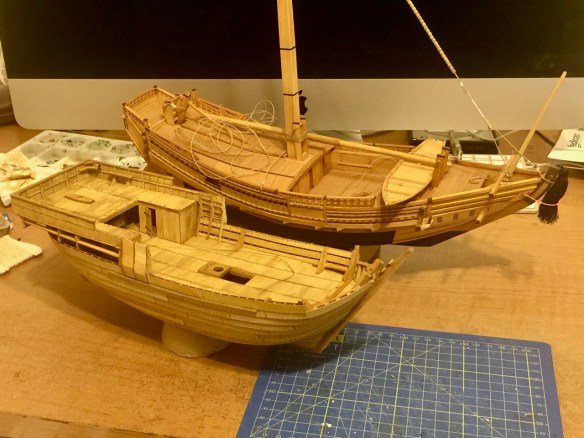
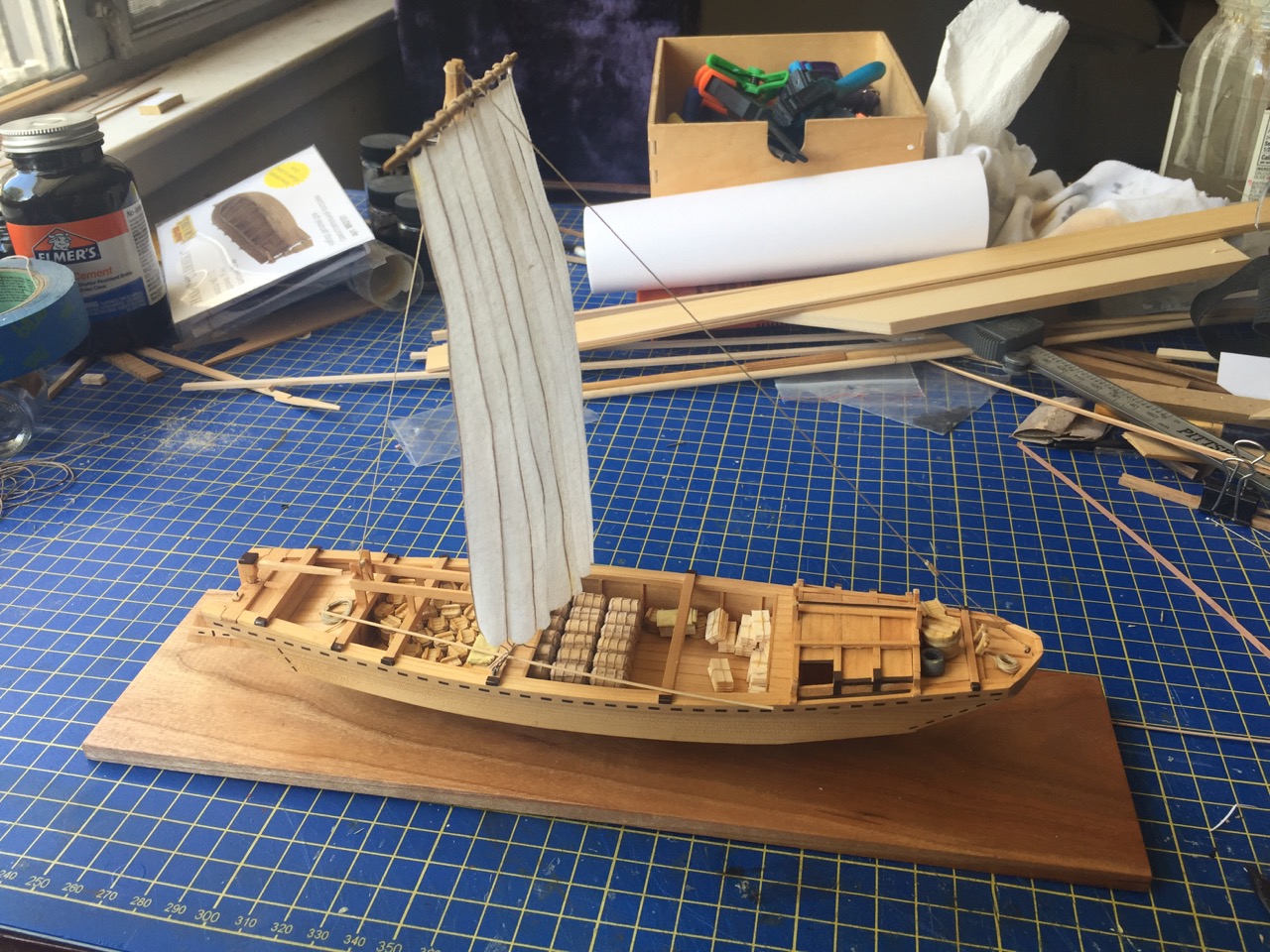
After some time off to finish a medieval European cog model and to gain some ground on a couple other ship modeling projects, I started working on wasen models again. It is interesting, though, to have the cog model and a sengokubune model (the Kitamaebune is a class of sengokubune, a common term for this type of coastal transport), sitting close together, as they are both in 1/72 scale.

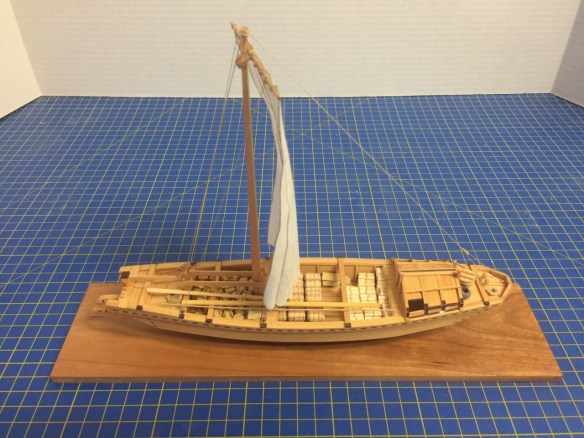
My models of a medieval european cog (foreground, left) and kitamaebune (background, right), both in 1/72 scale. Different eras and regions, but still interesting to see them side-by-side.

Continue reading

Japanese Boats in Wooden Boat Magazine

I just found out from Douglas Brooks that he wrote an article that was published in the current May/June issue of Wooden Boat magazine. In addition, there’s an accompanying article about Douglas Brooks and his apprenticeships with traditional Japanese boatbuilders in Japan.

If you’re not familiar with Douglas Brooks’ work and the status of Japanese traditional boatbuilding, you really need to read the WoodenBoat articles. It’s a good reminder of all the generations of knowledge that are about to be lost.

It reminded me that I want to do more to make people aware of the situation. During the Covid crisis, it’s been hard to do much. However, things are starting to open up, so maybe I can plan out a display or two for later in the year.

One thing I can do is mention the issue in a Zoom based talk I’ll be giving next month on modeling traditional Japanese boats, through the San Francsico Martime Research Center.   I’ll be posting more information shortly about this talk, part of the Center’s lunchtime MESS lecture series (Marine Education for Students of the Sea). More on that here: https://maritime.org/mess/

To purchase a copy of this month’s Wooden Boat magazine, you can get a single issue here for $7.95 plus S&H: https://www.woodenboatstore.com/collections/woodenboat-magazine/products/issue-280-may-june-2021?variant=39616365625512. Ω


Wasen Projects Status – March 25, 2021

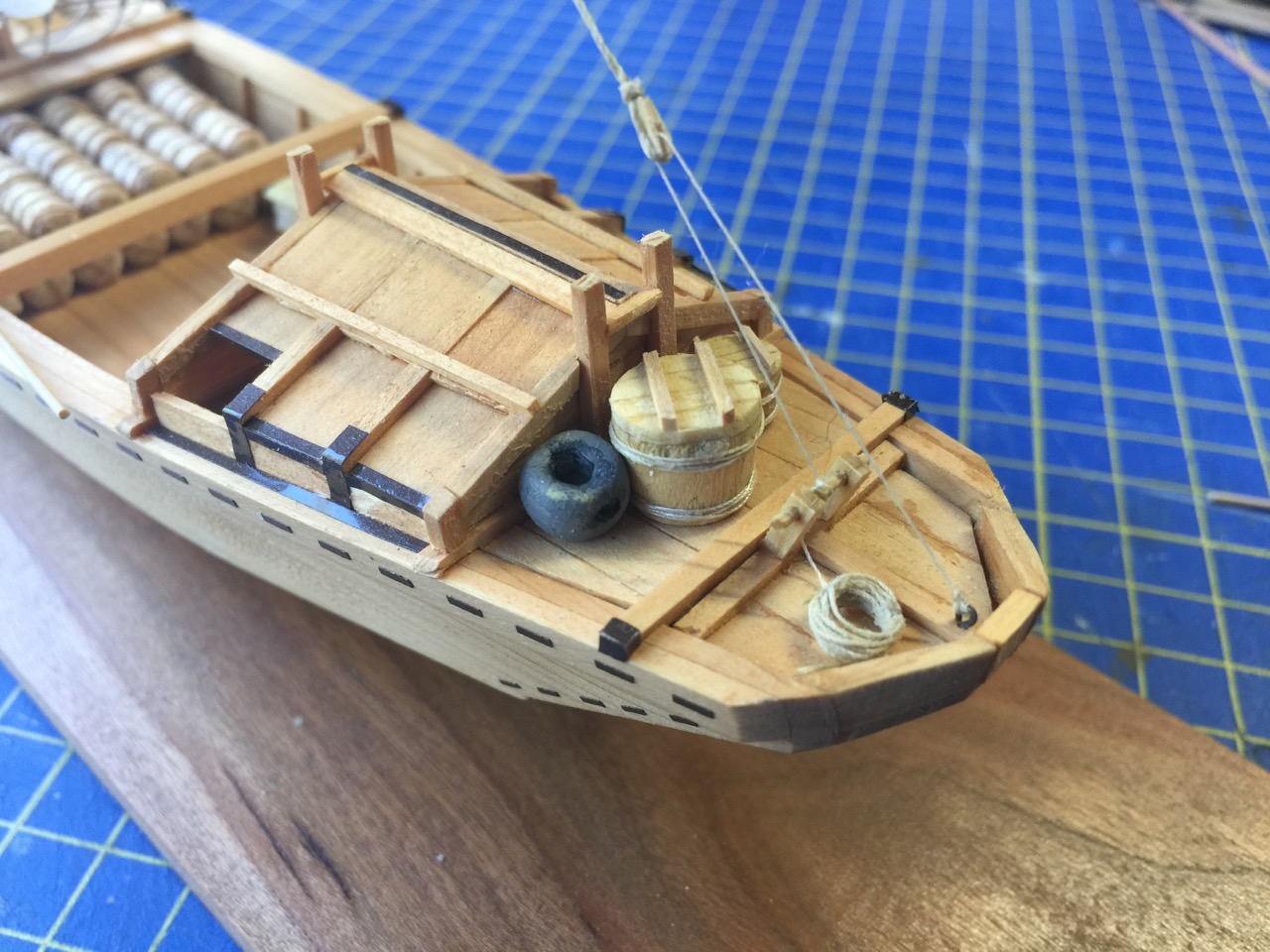
After taking a five-week break from wasen modeling, I’m back at it now, getting close to finishing up some more details on the Tonegawa takasebune, and soon the Kitamaebune, which still needs sails.

The break came about after I was asked to do a Zoom presentation as part of a series of lunchtime talks called the MESS lectures, for Maritime Education for Students of the Sea, a series organized by the San Francsico Maritime Research Center. The talk is not until the end of May – Thursday, May 27th, at 11am, to be precise. But, more on that later.

So, I kind of needed a break from my Japanese projects. Plus, for the talk, I think I need to keep some of the these models in various stages of completion, to serve as illustrations of the wasen model building process. So, I’ll probably leave the Senzanmaru and Nitaribune models where they are until after the talk.

Since it would be good to show the earliest stages of construction too, I’ll probably just get started on a couple other projects. Just not sure what the subjects will be yet. It’s all about what I think will be most interesting to illustrate or demonstrate. Again, more on that later.

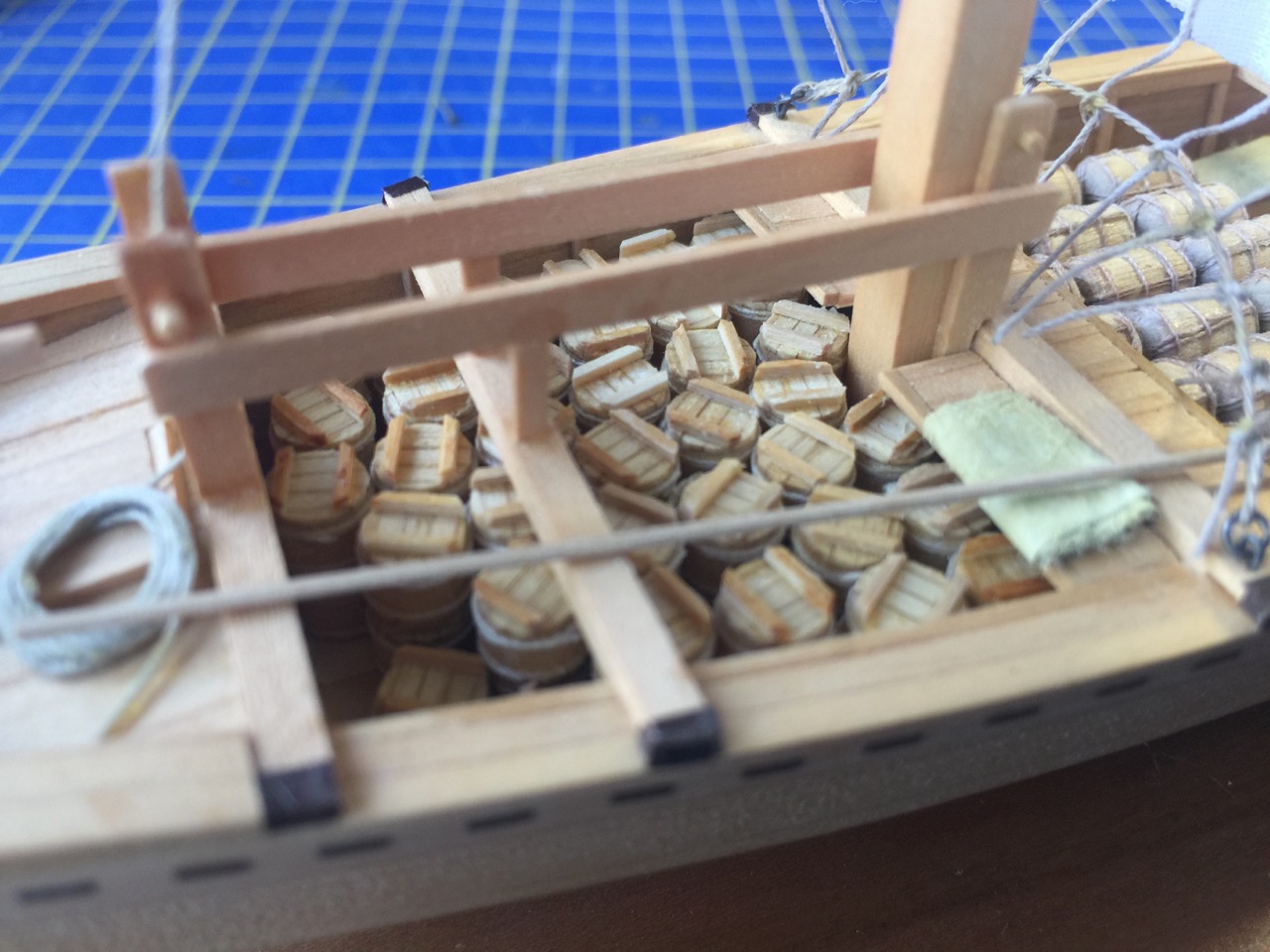
For now, I ‘m going to try to focus on the takasebune. I started adding cargo into its hold, so I really need to continue with it until it seems reasonably loaded down. I had made a couple different kinds of cargo and am now finishing up the third type, which are covered buckets, or oke (oh-kay). Each one is simply a short piece of dowel, with a lid constructed of 5 small pieces, then the body of the bucket is wrapped with two threads to represent hoops of bamboo.

Aside from the cargo, I still have some “copper” trim to finish up, as well as the addition of parrals and brace lines to the yard. I don’t know the Japanese terms for these off-hand. My only regret is making the sale so square to the hull. I’ll probably brace the yard at a slight angle, so it’s not so straight. Thinking about it now, I would like to make a model that shows the yard holding the sail in a position that makes it act like a lug sail, a fore-and-aft sail for sailing closer to the wind.

In the near future, I’ll post more details about the steps in the construction of the Tonegawa takasebune model.

Act Fast! Douglas Brooks Online Workshop – Saturday, February 20

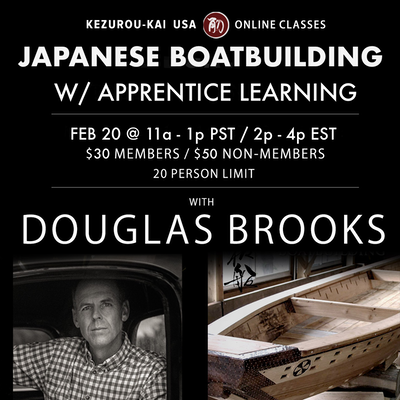
Sorry for the short notice, but there is an online workshop this Saturday, Feruary 20th, from 11am to 1pm PST. That’s 2pm to 4pm Eastern. The Zoom-based workshop is being hosted by Kezurou-Kai USA and there is a fee of $50 for non-members and $30 for members. Douglas will be discussing the building of Japanese boats under the traditional Japanese apprentice learning system.

For those who haven’t had a chance to attend one of his talks, this is a great opportunity. I have been fortunate to have attended his talks both in-person and online, and I’m always learning new things. But, the story of his apprenticeships is fascinating and entertaining and I’m sure you will feel that way too.

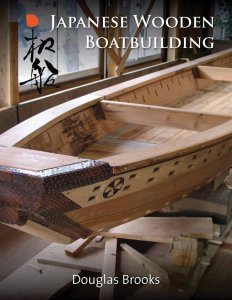
Whether or not he plugs his book, Japanese Wooden Boatbuilding, I strongly recommend it for anyone who is interested in building a real Japanese wooden boat, a model of one, or just looking for a fascinating read.

If you can, make sure to buy it direct from his website, as more of the proceeds to directly to him and help fund the next Japanese boatbuilding project. Also, it’s the only way to get a signed copy.

In any case, you should take the opportunity to attend his talk this Saturday. The workshop is limited to 20 attendees, and I understand it is just about half full as of this posting. Read about the details and sign up on the Kezuro-kai website here: https://www.kezuroukai.us/classes/japanese-boat-building-feb-20

Ω

Drawing Wasen Tomo no Kai’s “Kawasemi”

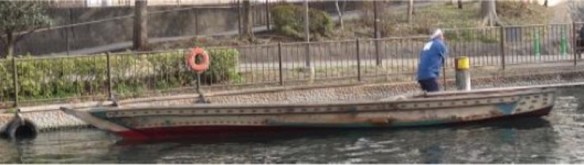
Just a few days ago, I mention in a blog post that I’d managed to acquire drawings of an Edo Nitaribune, a cargo boat used on the canals and rivers of old Edo. I also mentioned that it turns out that these drawings are a perfect match for a boat built by the late Mr. Kazuyoshi Fujiwara, a Japanese boatbuilder with whom Douglas Brooks studied under in his third apprenticeship.

Mr. Fujiwara built at least a couple boats that are now used by a group called Wasen Tomo no Kai, or Friends of the Traditional Japanese Boat. This is a group of volunteers that operate and maintain several wasen, giving rides to visitors in Tōkyō’s Kōtō ward.

Today, I spent some time working with the drawings to create an illustration to help me work out the details of my Nitaribune model. Now, I’m using the term Nitaribune and the name “Kawasemi” pretty interchangeably. But, just bear in mind that Kawasemi is just the name given to the boat used by Wasen Tomo no Kai. The name is just Japanese for  Kingfisher. The group pretty much names all their boats after birds.

Anyway, using the drawings I have, plus some photos I dug up on the Japanese pages of Wasen Tomo no Kai’s website (the English language pages don’t have as much info), I was able to do a pretty fair reconstruction of Kawasemi.

Continue reading

Wasen Projects for 2021

At the start of 2020, I wrote about an “Explosion of Wasen Model Projects” and I listed several projects, some have been long-time desired projects that were coming to life, and a few were new projects entirely. Here’s a rundown of those projects, followed be a look at what’s happening in 2021.


Himi Tenmasen – This was a project commissioned by boatbuilder Douglas Brooks. Though not a simple model, It was a quick project, as I had plenty of access to all the details of construction of the actual boat. This was something of a “full-time” build, which I started in mid-April of 2020 and finished by the end of the following month, about 5 weeks later.


Continue reading

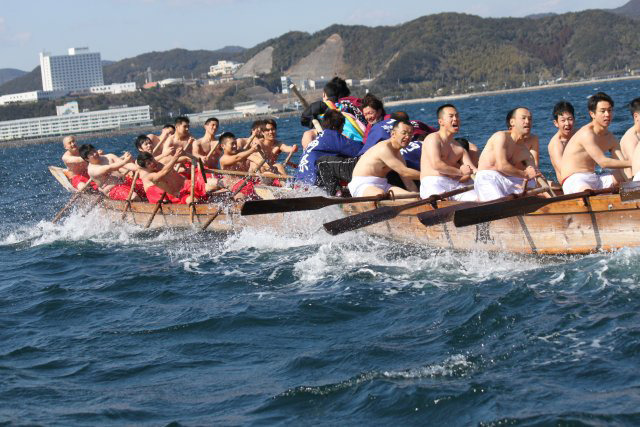
Oshima Port Festival’s Racing Boat Custom Model – Kaidenma (櫂伝馬)

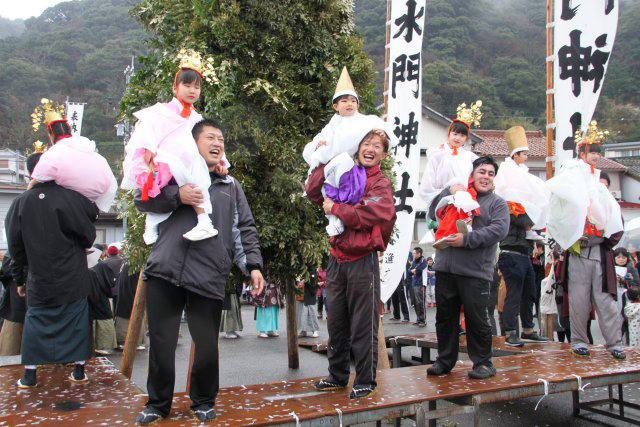
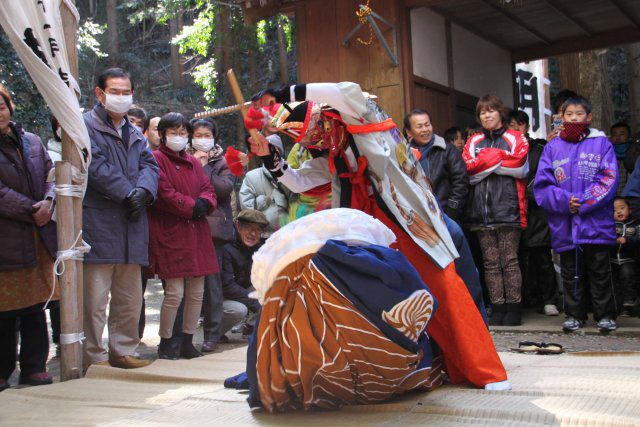
Kushimoto in Wakayama prefecture has the distinction of being the southernmost point of Japan’s main island of Honshū. The town is also the location of the Oshima Minato Matsuri, a traditional port festival held in early February every year. I don’t really know that much about the festival, except that it includes many Shinto rituals, lion dances (shishimai), and an ocean boat race using oar-powered boats called kaidenma.

The following photos, I took from the Kushimoto town website’s Minato Matsuri page, which you can visit here: https://www.town.kushimoto.wakayama.jp/kanko/event/minatomaturi.html

Continue reading

My Second Honryou (ホンリョウ) Model

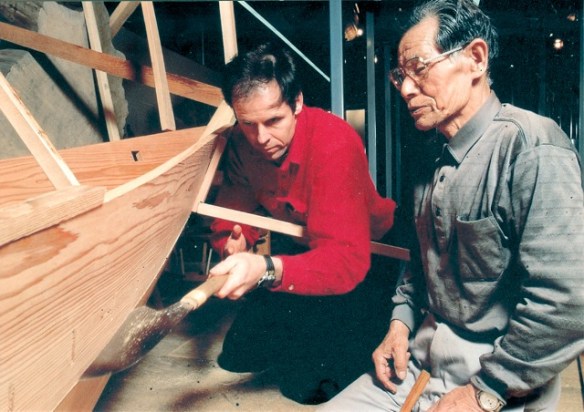
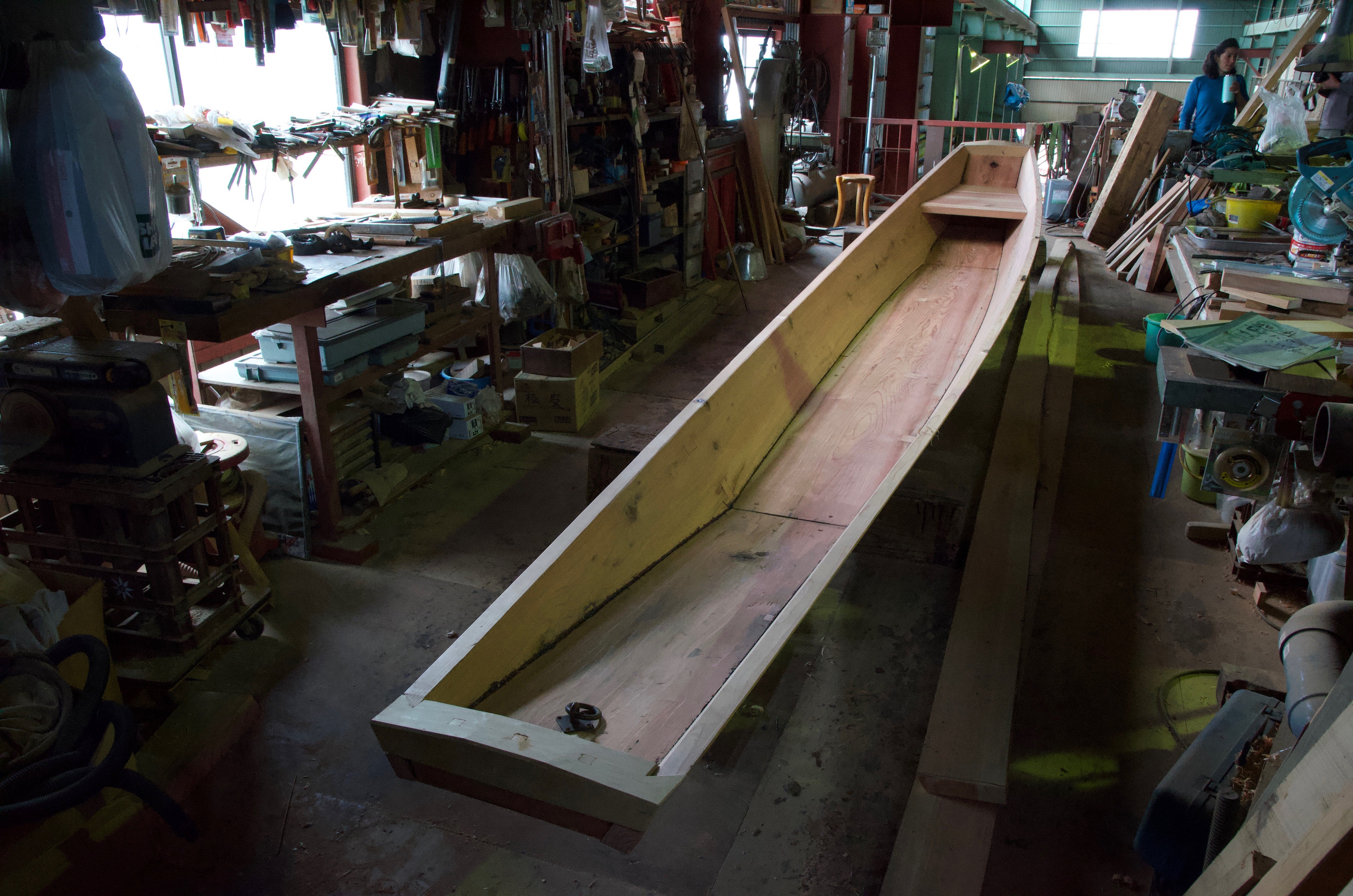
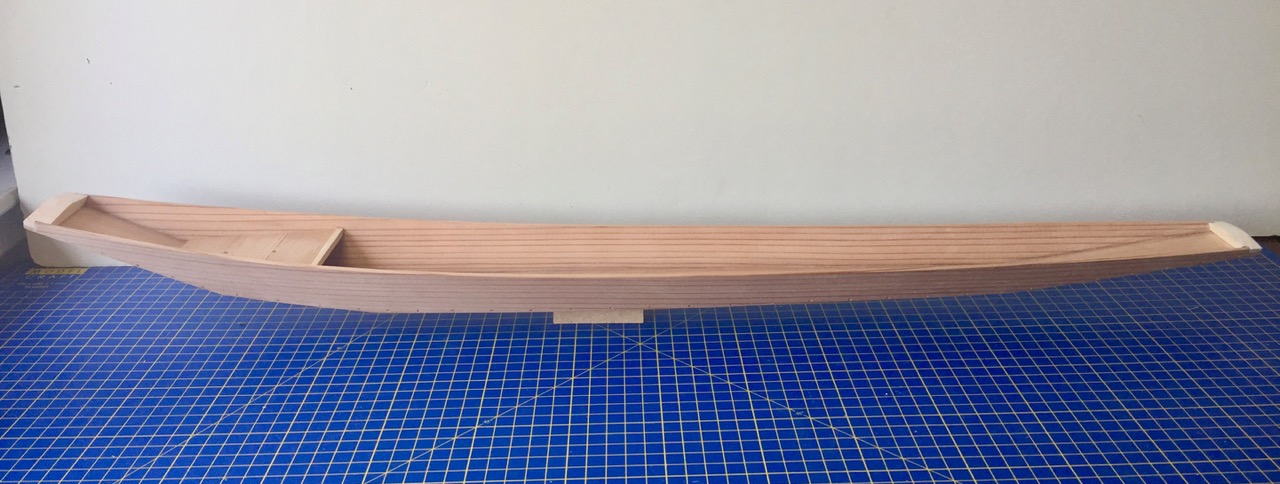
Last year, I built a model of a simple Niigata riverboat based on the one built by Douglas Brooks and Nina Noah with Japanese boatbuilder Mr. Nakaichi Nakagawa in the Fall of 2019. That model was a 1/10-scale version of the 25-foot boat.

The actual Niigata Honryousen in the workshop. Photo courtesy of Douglas Brooks.

That model was actually a commission, though I priced it really cheap to help support the project. At the same time, I figured I’d build a second one for myself. Both models were effectively at the same stage when I shipped the one off to its new owner. The other one I kept for my wasen model displays, and so that I’d have something to show at home.

The first Honryou-sen model.

Continue reading