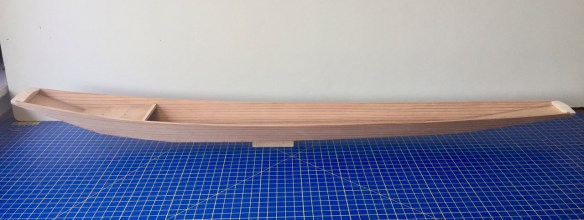
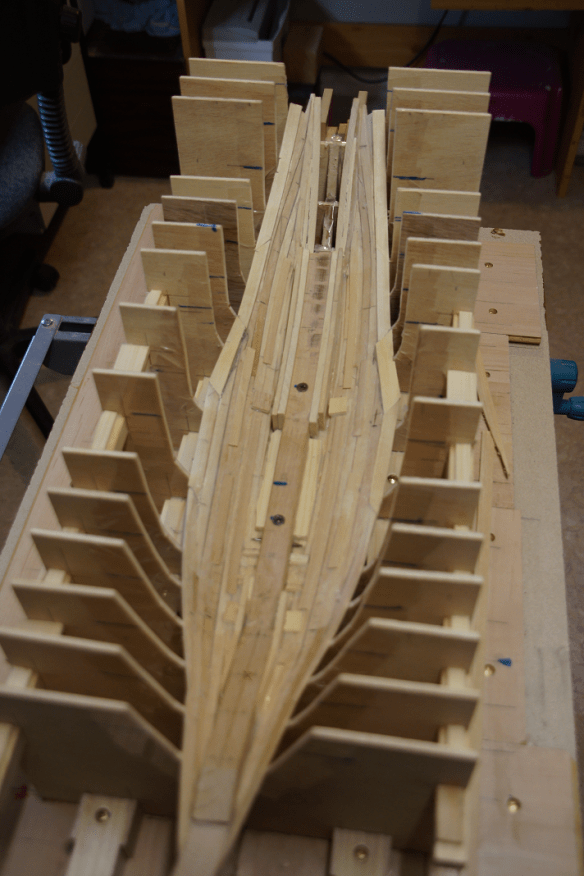
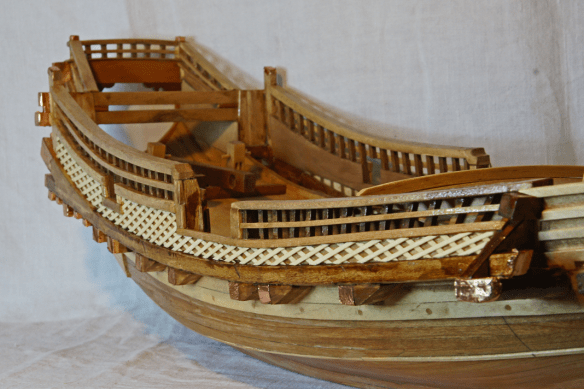
Oshima Port Festival’s Racing Boat Custom Model – Kaidenma (櫂伝馬)

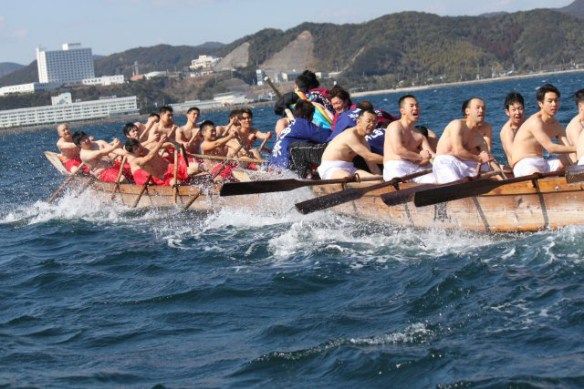
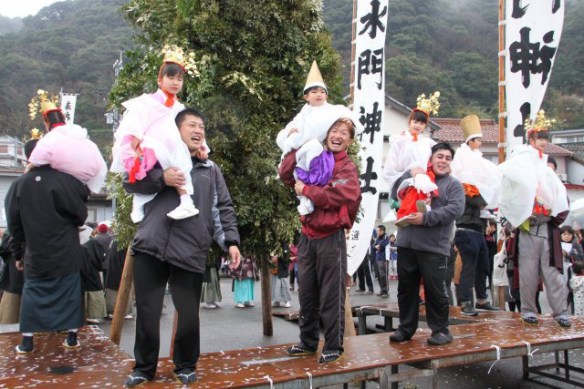
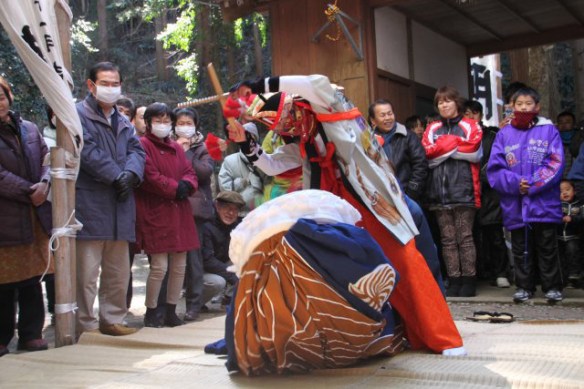
Kushimoto in Wakayama prefecture has the distinction of being the southernmost point of Japan’s main island of Honshū. The town is also the location of the Oshima Minato Matsuri, a traditional port festival held in early February every year. I don’t really know that much about the festival, except that it includes many Shinto rituals, lion dances (shishimai), and an ocean boat race using oar-powered boats called kaidenma.

The following photos, I took from the Kushimoto town website’s Minato Matsuri page, which you can visit here: https://www.town.kushimoto.wakayama.jp/kanko/event/minatomaturi.html

Continue reading

My Second Honryou (ホンリョウ) Model

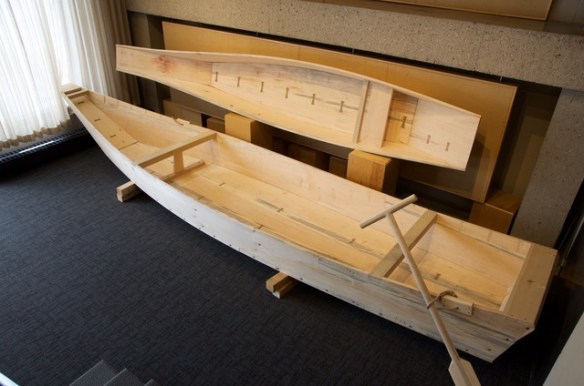
Last year, I built a model of a simple Niigata riverboat based on the one built by Douglas Brooks and Nina Noah with Japanese boatbuilder Mr. Nakaichi Nakagawa in the Fall of 2019. That model was a 1/10-scale version of the 25-foot boat.

The actual Niigata Honryousen in the workshop. Photo courtesy of Douglas Brooks.

That model was actually a commission, though I priced it really cheap to help support the project. At the same time, I figured I’d build a second one for myself. Both models were effectively at the same stage when I shipped the one off to its new owner. The other one I kept for my wasen model displays, and so that I’d have something to show at home.

The first Honryou-sen model.

Continue reading

Zoom Session with Douglas Brooks: Building a Boat the Japanese Way, January 20th

The North West Maritime Center in Port Townsend, WA, will be featuring an interview with boat builder Douglas Brooks in a Zoom-based session on Wednesday, January 20th, at 6pm PST. The interview will be followed by a Q&A session, with the whole session running 90 minutes.


Jan 20, 6-7:30 PM (PST): Douglas Brooks: Building a Boat the Japanese Way

A look into the inside world of Japanese boatbuilding and the apprentice system: learning silently, no written plans, secrets, and the differences between Eastern and Western techniques.


Boats built by the Winter-term 2018 class taught at Middlebury College by Douglas Brook on Building the Japanese Boat.

The interview is part of their Wooden Boat Festival’s ‘Ask and Expert’ Winter Series, which presents a total of eight sessions with various boatbuilding experts. These sessions take place between January 6th and April 7th. The cost to join any one session is only $5.99, or $30 for the entire series.

Tickets can be purchased here: https://www.eventbrite.com/e/ask-an-expert-series-tickets-131265746381

Ω


Kits Listed on Ebay

I’m doing some closet cleaning and raising some money for the holidays. So, if you’re interested, you might note the Hacchoro kit I’ve listed. Remember that you can download my build notes and instructions translations here on this site.

catopower's avatarShip Modeler

There are a lot of life changes going on for me right now, so I’ve decided to part with a portion of that ever-present stack of ship model kits. I’m still working out which kits I will never get to, and which ones I might want to take on some day. But, for now, I’ve managed to come up with a list of some of the simpler ones. So, if you’re interested in any of these, nab them off of Ebay, or send me a comment.

Model Shipways Phantom NY Pilot Boat 1868 Wooden Ship Solid Hull

Brigantine Newsboy, 1854 – Model Shipways Wood Ship Kit #2008 – Barely Started

Woody Joe 1/24 Sailing Japanese Fishing Boat Hacchoro 8-oar Wooden Model Kit

Chesapeake Bay Skipjack Midwest Products Wood Kit

Model Shipways Wood Ship Kit # 2016 – 1/64 scale Colonial Schooner Sultana 1767

Some of these are simple auctions to…

View original post 160 more words

Brief Blog Hiatus

I just posted this on shipmodeler.wordpress.com, and it applies here as well. However, I may be posting here sooner, as I do have a few more things to write updates about. Thank you for your patience.

catopower's avatarShip Modeler

Those following this blog may have noticed that I haven’t been writing much lately, nor have I done any ship modeling work. It is a temporary hiatus, but should last at least a couple more weeks as my 95-year-old mother was diagnosed as having had a mini-stroke.

After a night in the ER and a few days in the hospital for observation, she was transferred to a convalescent center, where she was quarantined, isolated from other patients for about 10 days. After she had sufficiently recovered, I was able to take her to her home. But, she is in need of full-time assistance and observation. So, that’s all I’m able to do for the time being, aside from posting this little update. Everything else is on hold until other arrangements can be made for her care.

So, I hope you are able to find enough on this site to keep…

View original post 28 more words

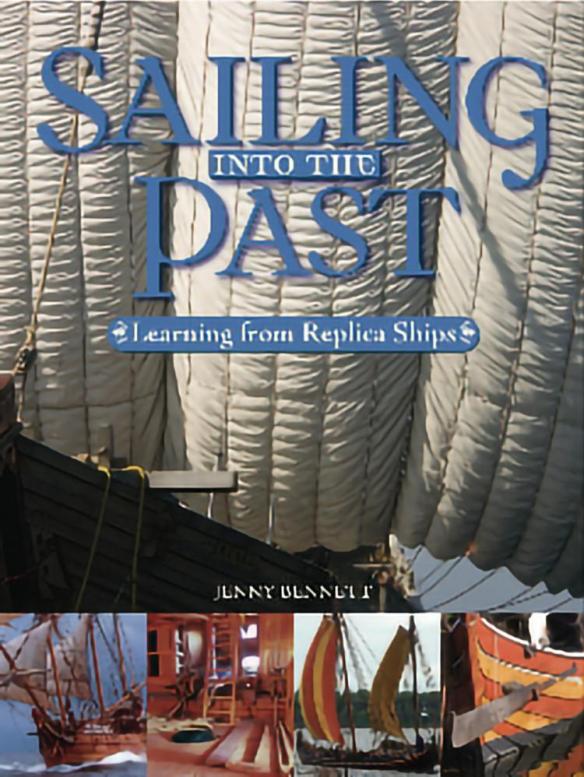
Sailing into the Past – A Book of Replica Ships

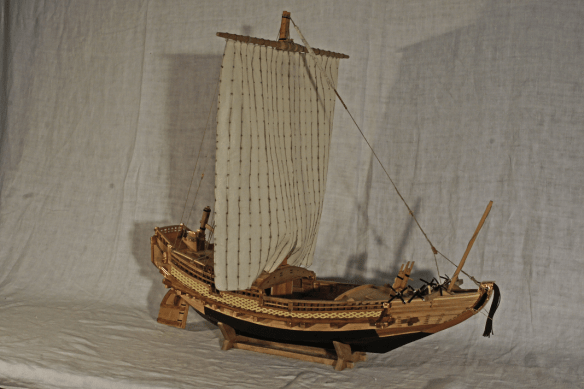
Douglas Brooks’s article on bezaisen, also known as sengokubune, was one of my first references on these big Edo period coastal transports.

It’s a very good article and has some nice photos in it. The cover photo was provided by Professor Kon, who heads the Wasen Research Society at Kanagawa University.

catopower's avatarShip Modeler

For those of you who might be interested, I just noticed that US Naval Institute has a nice sale price on the book Sailing into the Past. This book includes an article on bezaisen by Douglas Brooks, and features a photo of the replica bezaisen (also known as a sengokubune, or more specifically a kitamaebune) Michinoku-Maru.

The book is a compilation of articles about various replica ships around the world today, and it probably a very good general read. Of course, given my work with Douglas Brooks, I would love for everyone who might be interested to buy a copy.

I don’t know what the regular price is for this 200+ page hardcover book, but it’s only $11.49 at USNI.org. To me, Douglas Brooks’ article is worth the price of the book. Check it out here: https://www.usni.org/press/books/sailing-past

I think it was originally $45.95. So this is a very good…

View original post 2 more words

A Viewing of the Film Aru Sendō no Hanashi – The Story of a Boatman

Last year, almost exactly a year ago, I ran across a trailer for a Japanese film called Aru Sendō no Hanashi (ある船頭の話), or A Boatman’s Story, and I wrote a blog post about it that included a link to the film trailer.

Aru Sendō no Hanashi – The Story of a Boatman

I have waited and occasionally searched for a way to view this film or buy a copy of it. Then today, a friend of mine sent me a link to the New York Asian Film Festival, which is screening the U.S. premier of the film, subtitled in english! I thought it odd that it’s been retitled by its tagline to: They Say Nothing Stays the Same

Photo: © 2019 “They Say Nothing Stays the Same” Film Partners

This is a film about an old and lonely Meiji-era boatman in the midst of a changing world. According to the film festival site:

“Set in Meiji era Japan but timeless in its concerns —the sacrifices made in the name of progress, the loss of cherished traditions — it follows a lonely old ferryman (Emoto Akira), whose life is transformed when he rescues a mysterious young woman from drowning.”

I know nothing about Japanese film, but apparently there are many famous actors in it. You can read the rest of the description on the film festival site here: https://www.nyaff.org/nyaff20/films/they-say-nothing-stays-the-same

The film’s one-day screening takes place on Thursday, September 3. You have to purchase the tickets through their site, but the price is only $7.99 for one film.

The catch seems to be that you need to have an iPhone or iPad to watch it (I guess an Android device works too, but I don’t know much about them). If you have a current enough Apple TV box, you can then stream the movie to your larger TV.

I signed up on the website and then downloaded their viewer app to my iPhone, but I had a heck of a time trying to sign in to the newly created account. It finally worked out, but it was a very frustrating process that included a ridiculous race to enter a validation code and type a password on your phone in the 45 seconds they give you (they actually give you 60 seconds, but that includes the time necessary for them to send you the code and for you to retrieve it, which eats away at your diminishing available time).

If you sign up, just be persistent, and you’ll get your phone connected. I did not see a way to view the film on a computer’s web browser, which would be a nice and simple option. It might actually be easiest to download the app first and then purchase your ticket through the app instead of through the website.

For me, all is set up, and I’m looking forward to the movie now – I hope you are too. Ω

A Naniwamaru Build in German

Not sure how I missed this, but back in 2012, a ship modeler on an Austrian website researched and built a model of the Naniwamaru, one of four replica Japanese coastal transports at the time.

Naniwamaru model by Heiner Luh

Mr. Luh had contacted American boatbuilder Douglas Brooks, who had written an article on these ships, generally called bezaisen or sengokubune, in the the Shipwright annual for 2011.

Mr. Luh’s model under construction.

The construction of the model is detailed on the modeler’s website here: http://www.googlehupf.at/shipwright/?page_id=276

I’m always very impressed by ship modelers who build models of Japanese watercraft with limited information. The only thing odd in the model is the narrow strip planking of the lower hull, but this is covered by the paint job anyway.

I couldn’t find mention of the scale of the model, but it’s pretty big. I’m guessing it’s about 1/50 scale, as the 30 meter long ship (give or take) looks to be about a 2 foot long model (give or take).

Anyway, it’s a very nice model and there are a lot of great construction photos on his website. Definitely worth checking out. Ω

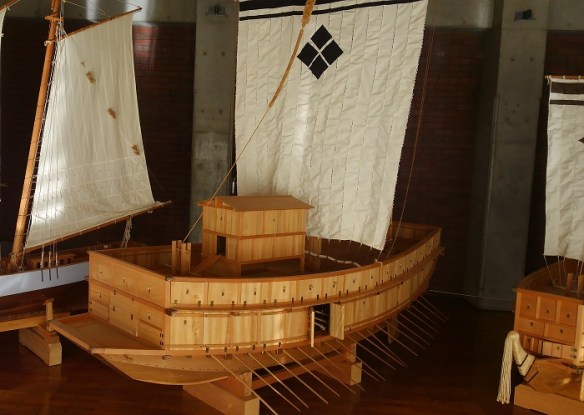
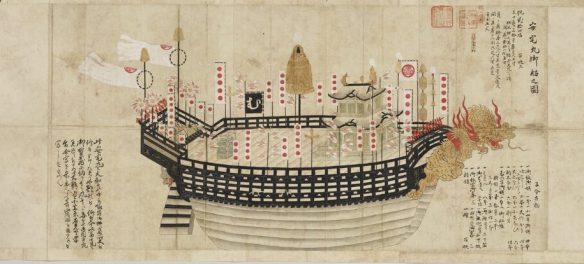
Hunting for the Elusive Atakebune (安宅船)

Atakebune were the largest class of purpose built warships that were used by the Japanese clans during the Sengoku period, or the Warring States period. These ships ranged from around 30 to 50 meters in length, were equipped with a large, box-like structure. Inside were the oarsmen, foot soldiers and samurai, protected by the wooden walls. The structure had two or three levels, with the top level being the roof of the structure. Firing and viewing ports were cut out and may have been closable with a hinged cover.

Atakebune model at the Verkehr Museum in Shizuoka.

In addition to a single-bank of sculling oars, the ship carried a large square sail hung from a single mast, usually mounted near the center of the ship. In bad weather, or when otherwise not in use, the mast could be un-stepped and lowered across the top of the ship. Usually, the ships were equipped with three sets of supports that the masts laid across.

Some ships carried a heavily constructe deck cabin that sat of the roof level of the ship. Some unusually large atakebune, referred to as an o-atakebune, carried castle-like structure atop.

Image courtesy of the University of Tokyo General Library – Atakemaru ship illustration / image edited

Continue reading

Interview with a Japanese Wooden Boatbuilder

Mr. Masashi Kutsuwa, whom I had the pleasure to meet at the Port Townsend Wooden Boat Festival in 2019, recently posted an interview on Youtube tat he had with one of Japan’s last traditional wooden boat builders, Mr. Seiichi Nasu. Mr. Nasu is now 89 and is no longer actively building boats, but he is still involved in teaching Japanese wooden boatbuilding.


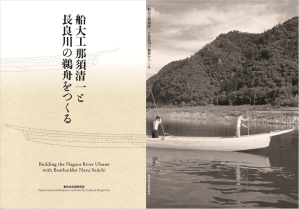
American boatbuilder Douglas Brooks worked with Mr. Nasu in 2017 to build an ubune or ukaibune, which are used in the practice of cormorant fishing. Recently, a publication written in part by Mr. Brooks on the building the ubune was released, which is only available to the public in the form of a downloadable Japanese language pdf (see my July 17, 2020 post here: https://wasenmodeler.wordpress.com/2020/07/17/cormorant-fishing-boats-book-by-douglas-brooks-japanese-free-download/).

Nasu-san lives in Gifu prefecture, where Kutsuwa-san also lives. The 10 minute interview is in Japanese, but Kutuswa-san has added english language subtitles. Not all the conversation is translated, but enough is translated to explain it. In the video, you’ll see a river boat that’s being built called a ryousen. The subtitles have it written as ryosen, but ryousen (漁船) means fishing boat in Japanese, and this particular boat is a 26-foot, double-ended river fishing boat.

This is a very nice video and it would interesting to see more, and longer, interviews of these disappearing traditional Japanese boatbuilders. Ω