Building the Kamakura Period Umi-Bune, Part 1


ship2-kitanotenjin

I’m no expert on Japanese history. In fact, my interest in traditional Japanese boats is a way for me to learn more about it. Up to this point, I’ve primarily been interested in watercraft from the Edo period, which was from 1603 to 1868. This era began with the rise of the Shogun Tokugawa Ieyasu who established the capital of Japan at Edo (now called Tokyo). But, there are some interesting, large watercraft that I’ve been intrigued by as well, and many of these date back to earlier times.

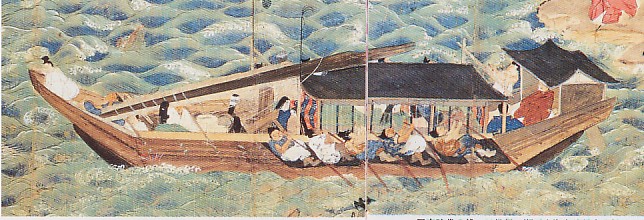
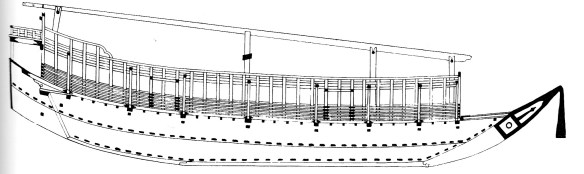
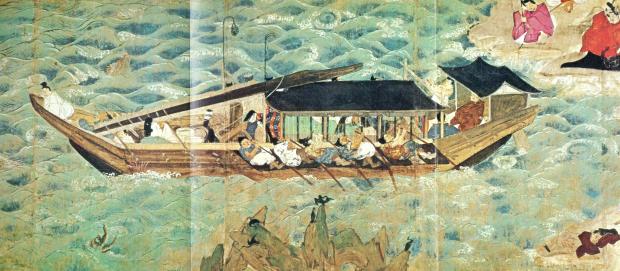
Some of the ships I’ve been looking at were fairly complicated, and my information on them is clearly incomplete. But, there was one that stood as a simple design, with enough information available for me to feel that I could scratch build a model. This ship, referred to only as a large umi-bune or sea ship, dated back to the Kamakura period, which lasted from 1185 to 1333, and saw the rise of feudalism, the establishment of the Shogunate government, called the bakufu, two invasion attempts by the Mongols, and the spread of Buddhism. Continue reading

The Nippon Foundation Library

One of the handiest sources of online information for the wasen modeler is the online library of the Nippon Foundation, or the Nippon Zaidan Toshokan – 日本財団図書館. I’ve made great  use of this resource, but of course, it requires sufficient knowledge of the Japanese language. With my limited knowledge, it’s a bit like walking through a maze with no map and wandering through long dark corridors. But, when I do stumble across something, it can be a great find.

h02-2

I don’t know the full extent of the library, but I have found some interesting information, photos, diagrams, and such. It is helpful that the site is easy to navigate using Google Translate, in which you can translate entire web pages in real time. But, you do have to start somewhere.

If you don’t know any Japanese, just open up Google Translate in a web browser page and copy the text from the Japanese site and paste into the translator. Here are some articles you can do this with. Note that some of these articles include some english text at the bottom, but the text I have read clearly is just a basic summary of some of the information on the page. The following articles came up when doing a search on wasen, or tradition Japanese boats, using the Japanese text, 和船.

Overview of Japanese Sailing Ships – This is from the Osaka Port Promotion Association. It appears to be a good primer on Japanese sailing vessels and their development. There is some great info here about coastal transports, how they were built, how and where they operated, etc. Great information about bezaisen or sengokubune: kitamaebune and higakikaisen.

A Japanese Boat from Start to Finish – This looks to be a log of the construction of a Japanese boat put together by the University of Tokyo (at least the log is). I haven’t read it all, but it begins with the gathering of lumber and follows construction through launch. I don’t know what type of boat it is yet, but it reminds me of the bekabune because of the flush seam between the upper and lower planks.

Maritime Science Museum – I’m not sure, but this appears to be a book, or maybe just a big article, on maritime science from the Maritime Science Museum, which is essentially closed for now (though there is a small annex that is open to the public with some limited displays). This is a GREAT resource that seems to cover the gamut of Japanese boats. With 36 web pages, it’s enough material to write dozens of posts.

Boat Building Handbook – Wow. I just saw this for the first time while writing this post. This is a major find. It’s like a boat building handbook. It covers later period boats, but primarily goes into a tremendous amount of fine detail on wasen construction of all types. This is a real find, again worthy of multiple posts. If you put your browser into a “reader” mode, you can export this as a 140-page pdf, making it a lot easier to search through. Lots of great diagrams.

Well, that should be enough material to keep you going for a while. While writing this, I’ve discovered so much that I never knew existed. This is pretty amazing. I’ll post a follow-up soon as I’ve just made a discovery that I need to look into before I say anything more.

Remember, if you don’t read Japanese, just copy the text and paste it into Google Translate. It’s not a perfect translation, but you can figure out the important stuff when combining with the illustrations.

Good luck!

What I Learned Today – Wasen Names

Last night, I finished writing a post about the set of books published in the late 19th century called Souvenirs de Marine, which contain drawings of ship from around the world, and specifically contain several examples of traditional Japanese wooden ships and boats.

Afterwards, I was inspired to do some hunting around for images on the Internet of a specific type of ship I was looking at called a gozabune (Goh-zah-boo-nay). This is a type of large river or coastal ship that was highly ornate and used as official yachts by daimyo and other aristocracy. Many are simply warships, sekibune, dressed up during peacetime.


seto-ryu-sekibune

A Sekibune

In order to get the best hits on Internet search engines, I went to my Glossary of Terms page and copied the Japanese text for the gozabune to use for the search. This, by the way, is the reason I added the Japanese text to the page. If you’re looking for something specifically Japanese, the best way to find it is to do the search in Japanese. So, I searched for images using the text, 御座船, for gozabune. 

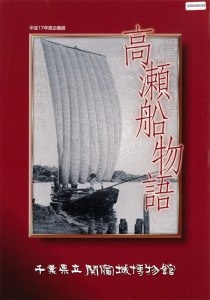
I found what I was looking for: lots of images of gozabune. But in my search, I stumbled across many things. One drawing, in particular, got my attention and it led me to a great article in the Nippon Foundation’s online library on the story of the Takasebune. To the best of my understanding, this was a book published by the Chiba Prefecture Tsukigaki Castle Museum in 2005.

h02

I don’t know if it’s still in print or available somewhere, but this appears to be the contents of that book: https://nippon.zaidan.info/seikabutsu/2005/00589/mokuji.htm

There was one image in particular in this article that showed various types of Takasebune and on what rivers they were used. Click on the image if you want to see the full-sized version on the Foundation site.

008

Now, I recognize some of these boats and their names, and specific information is great. But, what I’ve come to realize, more than anything else, is that the specific names of these boats may be irrelevant unless you are looking at a specific river system. This article is about Takasebune, but all the boats shown here have different names and are still Takasebune, even though some are called Hiratabune.

I think the issue may be that academics, and in this case I think I have to put myself under this group, attempt to classify these boats by names, but the names were given to them by the local people. They didn’t plan out how they were going to name them, they just named them.

So, I learned that when you hear or read the name of a boat, don’t think you know anything about the boat or what kind of boat it is unless you know the location it was used and have actually seen one or a drawing of one. There is much to learn!


Looking at the Senzan-maru (千山丸), a Traditional Japanese Whaleboat

When I visited Japan in September, I found that I’d really hit the jackpot at the Toba Seafolk Museum. Not only are there numerous small boats on display, plus dioramas and a dozen or so models, but the gift shop is well stocked with books. I visited early in my trip, so I didn’t get as many books as I wanted to. Sadly, I didn’t see any of the books I was interested in at any other location I visited during the trip. One book I did pickup detailed a boat called the Senzan-maru, 千山丸.

img_2726

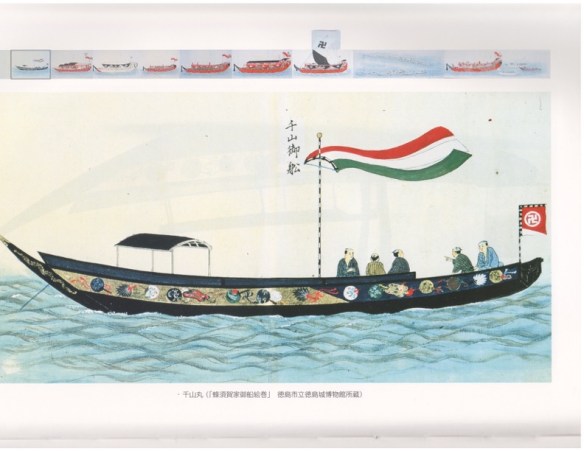
The Senzan-maru is the name given to a boat that was in the service of the Hachisuka clan. The boat was used to deliver messages and to help tow river barges, like the large decorative warship that served as the feudal lord’s yacht. The boat is a type called an Isanabune, a fast, seaworthy boat designed for whale hunting. Many whaleboats and fishing boats were decorated with painted designs on their hulls, but probably not to the same extent as Senzan-maru.

image-3

The highly ornamental hull painting on the Senzanmaru

Continue reading

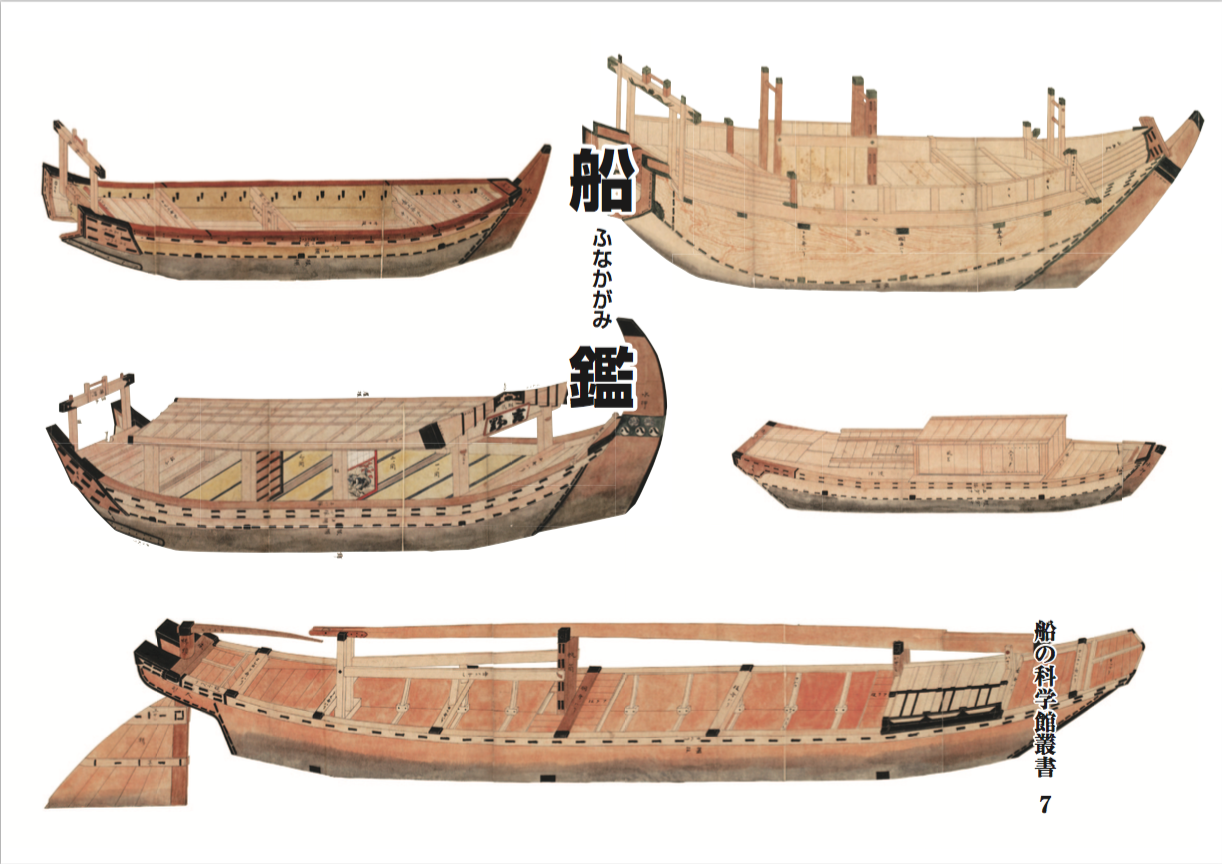
Funakagami – A PDF Book on Japanese Boat Types

As I’m preparing for my study trip to Japan in, I’ve been checking on museum websites and such. The Maritime Science Museum is closed, except for a small museum annex, their website still lists the museum publications.

I don’t see any place to actually purchase these, but there are a couple books that you can download as a pdf. The one that immediately caught my interest had a number of Edo period boats on the cover. So, I immediately downloaded it and started looking through it.

Funakagami cover

Funakagami cover

I’m still working to understand the text, but the first part of the book is mostly old illustrations. Apparently, this is taken from a book called a Funekan, which was used by the Bakufu, or Shogunate government, to aid in identifying the many types of small boats on the rivers of the Kanto district, which is the region of old Edo (Tokyo) and its surroundings. The identification was necessary for taxation purposes.

Such a book is a boon to anyone who is trying to learn about different types of Japanese boats. There is little information about the boats themselves, but there is a nice large illustration of each boat type, and an index which classifies the boat. In the back of the book is a section which identifies the names of the parts of each boat. In the end, the text gets very meaty with, as far as I can tell, discussion about taxes, etc.

The book can not be printed as it is a password protected pdf. But, I discovered I can still copy text and take screen shots of the images to compile into my own notes. The copied text can be pasted into Google Translate or similar service. I’ve found that the translation is sometimes not as useful as the pronunciation/romaji spelling that is shown – For those who are familiar with Google Translator, just look under the box on the left, which is where you paste in the original text.

Click here to download the pdf

For me, the book has confirmed things I’ve already learned, taught me a number of new things, allowed me to see things I’d only read about, and raised a number of questions that I will be researching answers to. Ω