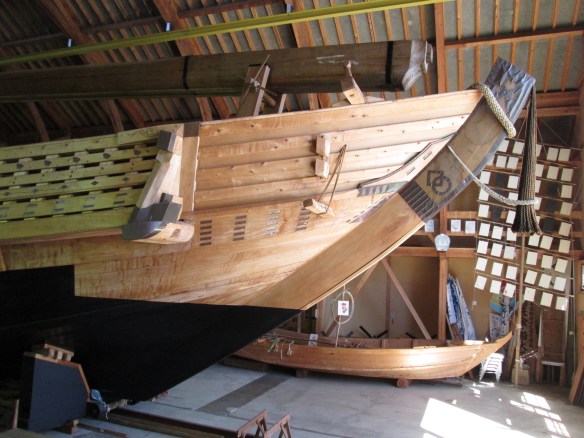
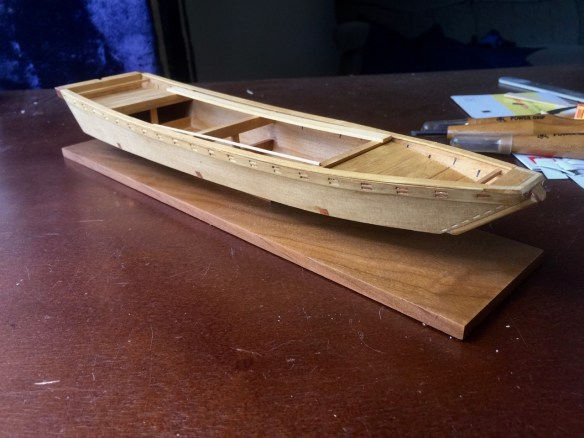
Hozugawa Kudari Bune in 1/40 scale

If you’ve been following my blog, you might have read this one about the Hozugawa downriver boats: Wasen Models in Miniature – A Hozugawa Downriver Boat

I’ve since added a few details to the model, modernizing it slightly, with the addition of iron reinforcement brackets and a full complement of poles and oars.

I also added the loops to the hull which hold the paddles and steering oars in place when running down the river.
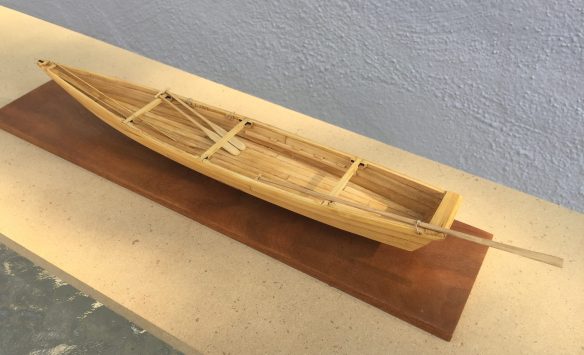
I wasn’t able to get official measurements on these, so I had to rely on photos and estimate the sizes. These are the sizes I came up with:

Sao (pole) – 18 shaku

Paddle (2) – 9 shaku, 7 sun wide blade

Steering Oar – 20 shaku, 7 sun wide blade

Pushing Pole – 9 shaku

Recently, I got myself a miniature shaku square about 3 sun long, so I didn’t actually need to convert to metric, like I sometimes do. Scaling down to 1/40, these come out as:

Sao – 4.5 sun

Paddle – 2.25 sun, 1.75 bu wide blade

Steering Oar – 5 sun, 1.75 bu wide blade

Pushing Pole – 2.25 sun

Since the poles are very thin, less than 1mm diameter at scale, I had to resort to using brass rod, which I sprayed with Tamiya Surface Primer, then finished off with a mix of acrylic paints.
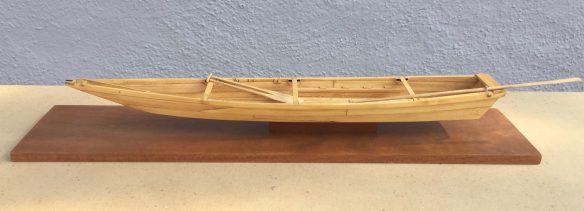
At one time, before the arrival of motor vehicles, the boats ran down river and were manually hauled back up the river by the boatmen, who wore harnesses attached to long ropes. I’ve considered adding rope coils, but my model, with it’s iron fittings and fittings for seating clearly suggests it’s from a later period. So, it probably wouldn’t make sense to add them.

Earlier boats had removable beams to make storage easier. These had a more unfinished, rounded look, and did not have iron fastenings. Douglas Brooks suggested to me that the iron fastenings were likely added to the beams so that they could be used to more easily lift the boats onto trucks for their return journeys.
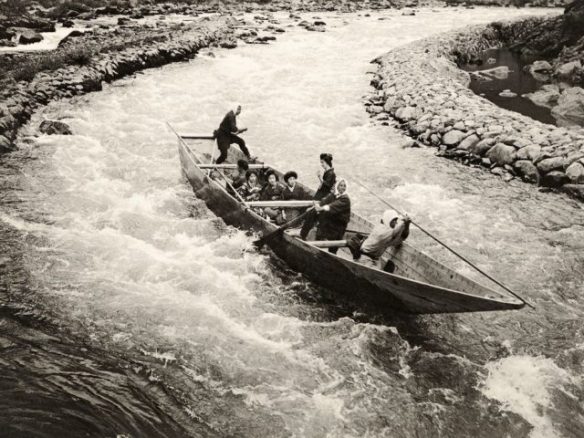
Historical photo I found on the Internet. I do not know what date this was taken.
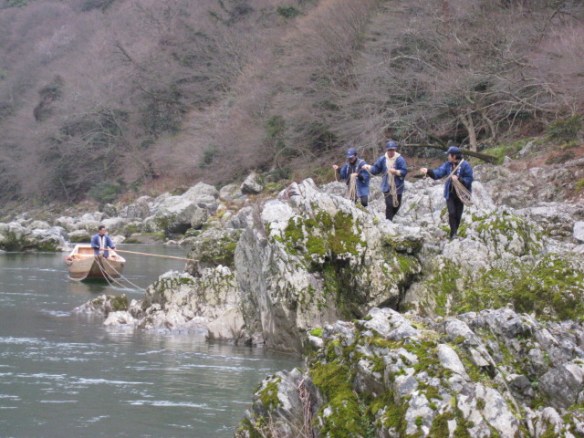
A successful attempt in 2009 to recreate the task of hauling a kudaribune back upstream, a task known as hikibune. More details at http://hozugawa.cocolog-nifty.com/blog/2009/11/post-9f96.html

So, short of adding a platform to the inside bottom of the boat, which would be removable anyway, the model is done. The path is now clear to move on to finish another project in the wasen mokei boat shop!
October 2019 Wasen Mokei Update

Progress on my Kitamaebune slowly continues while the rest of my wasen models are on display through the end of October, though I may talk to the bank about extending the display, just to save me from having to pick up everything just yet.

In my model wasen “boat shop” I still haven’t finished the final details on my Tenma-zukuri chabune, as I’m still contemplating the darkening of the copper trim on it. On my Kitamaebune, I solved this by using brown vinyl, but I do want to try to make this work with copper on the smaller model.

Also in my boat shop is a partially started Hozugawa Ayubune, which I want to be able to make as a gift, since it’s a simple contruction. However, it’s not so simple that I just make myself sit down and get it done. It probably has to do with the fact that I’ve already built one, so the challenge isn’t quite there.

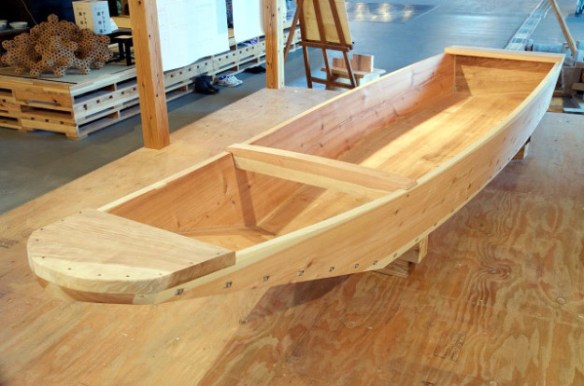
Finally, I’ve cut the parts and created some drawings and a mold for a 1/10-scale model of a Himi rice field boat called a Zutta Tenma. This is something that Douglas Brooks built in Japan in early 2016 (click here to see his blog).

A Zutta Tenma, a rice field boat, built by Douglas Brooks in Himi, Japan, in early 2016.

Continue reading

Building Woody Joe’s 1/72-scale Kitamaebune Kit – Part 6

Details, Details…

Hull construction is done on the Kitamaebune, the rudder has been added, and it’s time to turn my attention to the small details.

The kit, like all of the larger Woody Joe wasen model kits, includes a sheet of photo-etched copper, which covers many of the beam ends and such. But, while these pieces cover all the major features, there are many more, smaller details on the real ships that aren’t dealt with in this or the Higaki Kaisen kit.

I took these photos of the Hakusanmaru on Sado Island in 2016. In them, you can see all the brown colored copper coverings as well as the black iron bands and fasteners.

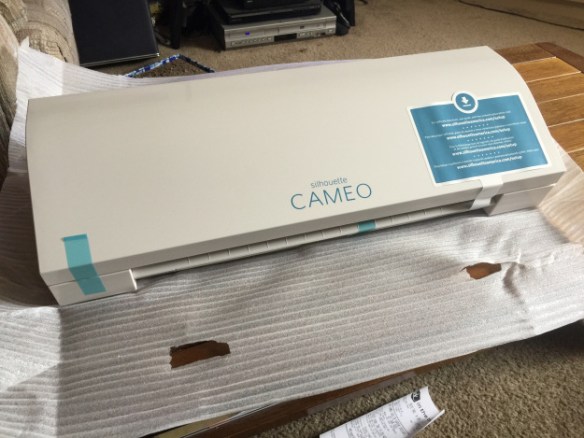
I considered trying to make these details in copper, but it wouldn’t match the copper in the kit, which actually appears to be some kind of copper alloy, as it doesn’t tarnish like regular copper. The solution I came up with, was to use brown colored adhesive vinyl. So, it was time to re-introduce my vinyl cutting machine, the Cameo Silhouette 3.

Here’s a link to the blog post where I used the Cameo to make the ornamentation on my Kobaya model: https://wasenmodeler.wordpress.com/2019/05/27/building-a-gozabune-kobaya-from-paris-plans-part-13/

Continue reading

9th Japanese Boat Models Display, October 2019

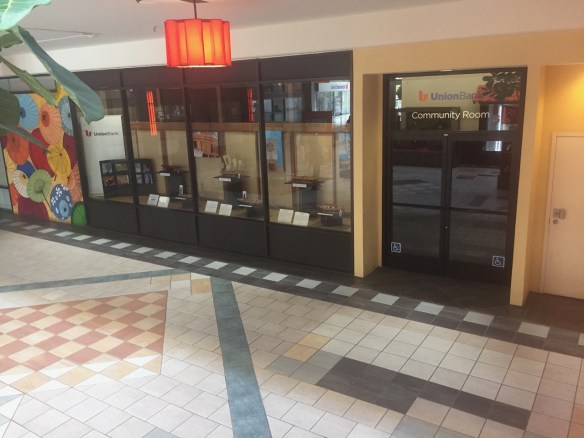
I just finished setting up Japanese wasen model display 9.0 yesterday. I was a bit late setting it up, which I had planned to set up 3 days earlier, but it was difficult for me to arrange my time this week for various reasons. But, it’s up now in the display window of the Union Bank community room inside the Japan Center’s East Mall in San Francisco.

Due to the sale of my Higaki Kaisen model, and to keep things manageable, I ended up scaling back to 6 models, plus a panel of photos. This fills up the display window just fine and allows me to set up more easily.

In fact, I have traditionally set aside 2 hours to handle the setup, but I must have become more efficient at it, as it only took me an hour to get the key from the bank, carry everything from my car, and set up the display.

The display includes:

  • Hacchoro – 1/24-scale Woody Joe kit of a Yaizu bonito fishing boat.
  • Yakatabune – 1/24-scale Woody Joe kit of an Edo period pleasure boat.
  • Tosa Wasen – 1/10-scale Thermal Studio kit of a Tosa fishing boat.
  • Kamakura period Umibune – a 1/50 scale model of a trade boat, c. 1300AD
  • Urayasu Bekabune – 1/10-scale model of a Tōkyō Bay seaweed gathering boat.
  • Kobaya – 1/32-scale model of a boat belonging to the Shōgun’s government.

Noticeably missing, at least to me, is a model of a bezaisen, or Japanese coastal transport, as I sold my Higaki Kaisen model last month and haven’t completed the Kitamaebune model yet.

The Kitamaebune will be ready for the next display, I’m sure. And, I do have another Higaki Kaisen kit. So, by that time, mabye I’ll have the second Higaki Kaisen model ready too.

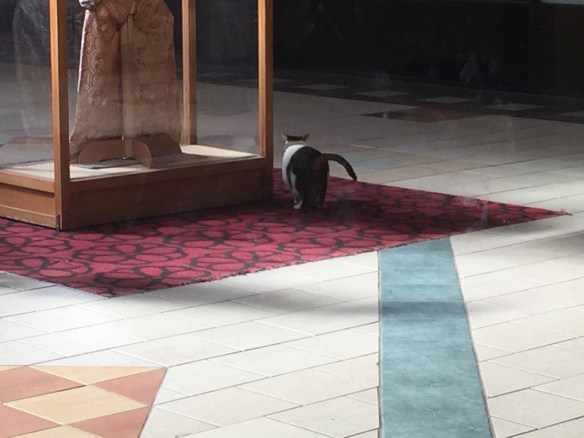
One thing different about this display is that while I was setting up the display window, a cat wandered through the East Mall and sat out in front by the bunraku puppet display. While the cat didn’t specifically come and look at the display, I like to think that he or she brought by some good luck to the display.

The display will run through at least the end of October. Given that I was several days behind schedule on the setup, perhaps I’ll leave it up a little longer if the window space is available. Ω