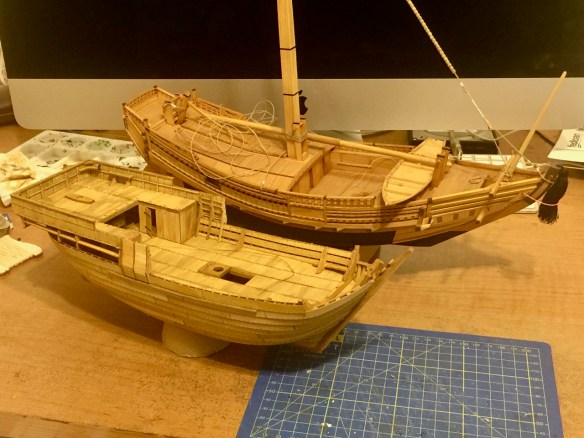
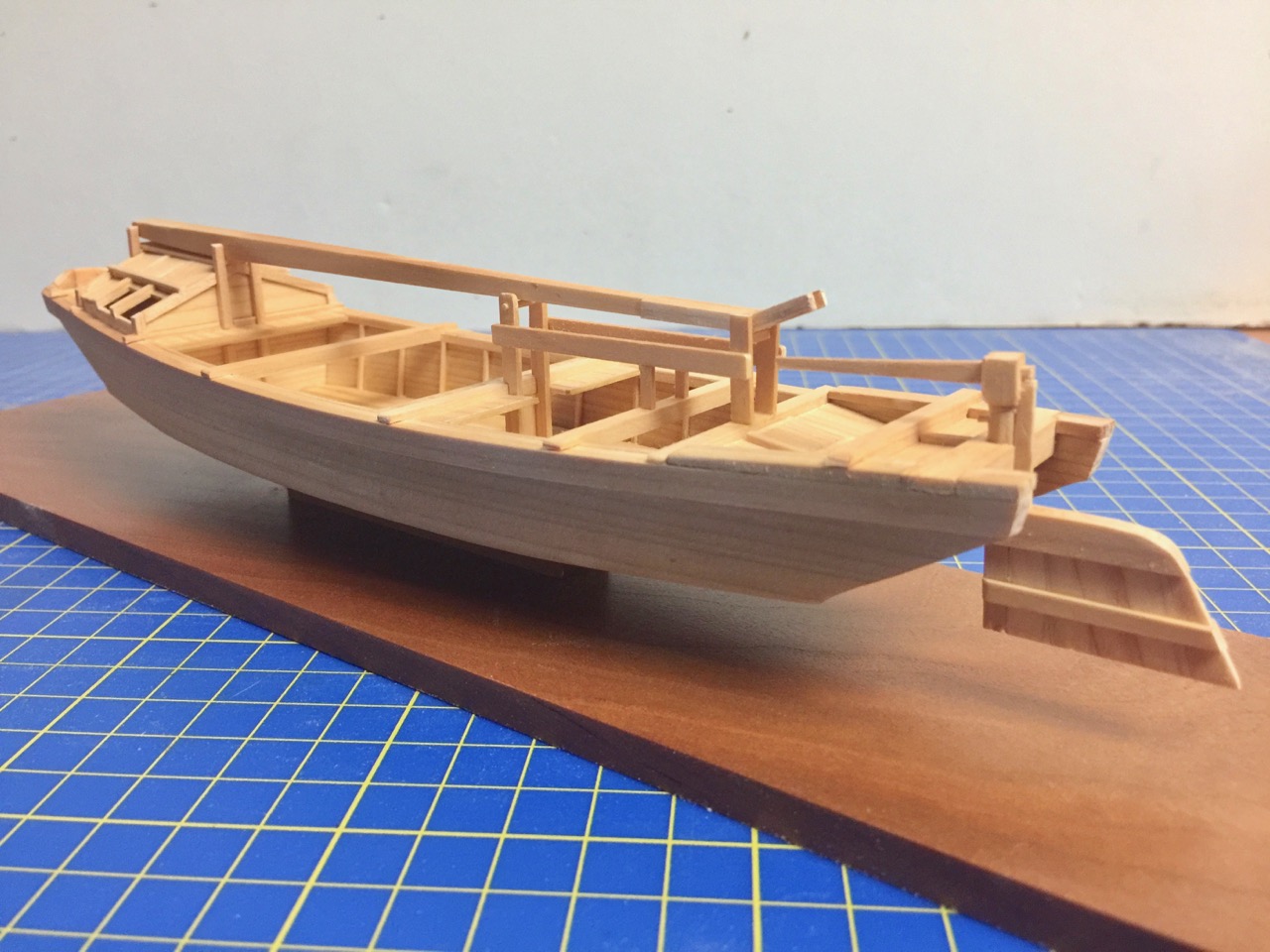
The Tonegawa Takasebune (高瀬船) – a Model in 1/72 Scale, Part 5

In my last post on the building of the Tonegawa Takasebune, I got a bit overwhelmed with the making of the rice bales, or Tawara. I would have loved to configure the boat model with a full load of rice, but to do that would have required a lot more rice bales than what I’d made. My model has 39 of them, and I would have ideally wanted them filling the boat and stacked a couple layers higher. But, to do that would have required probably at least another 200, and that was more than I could handle.
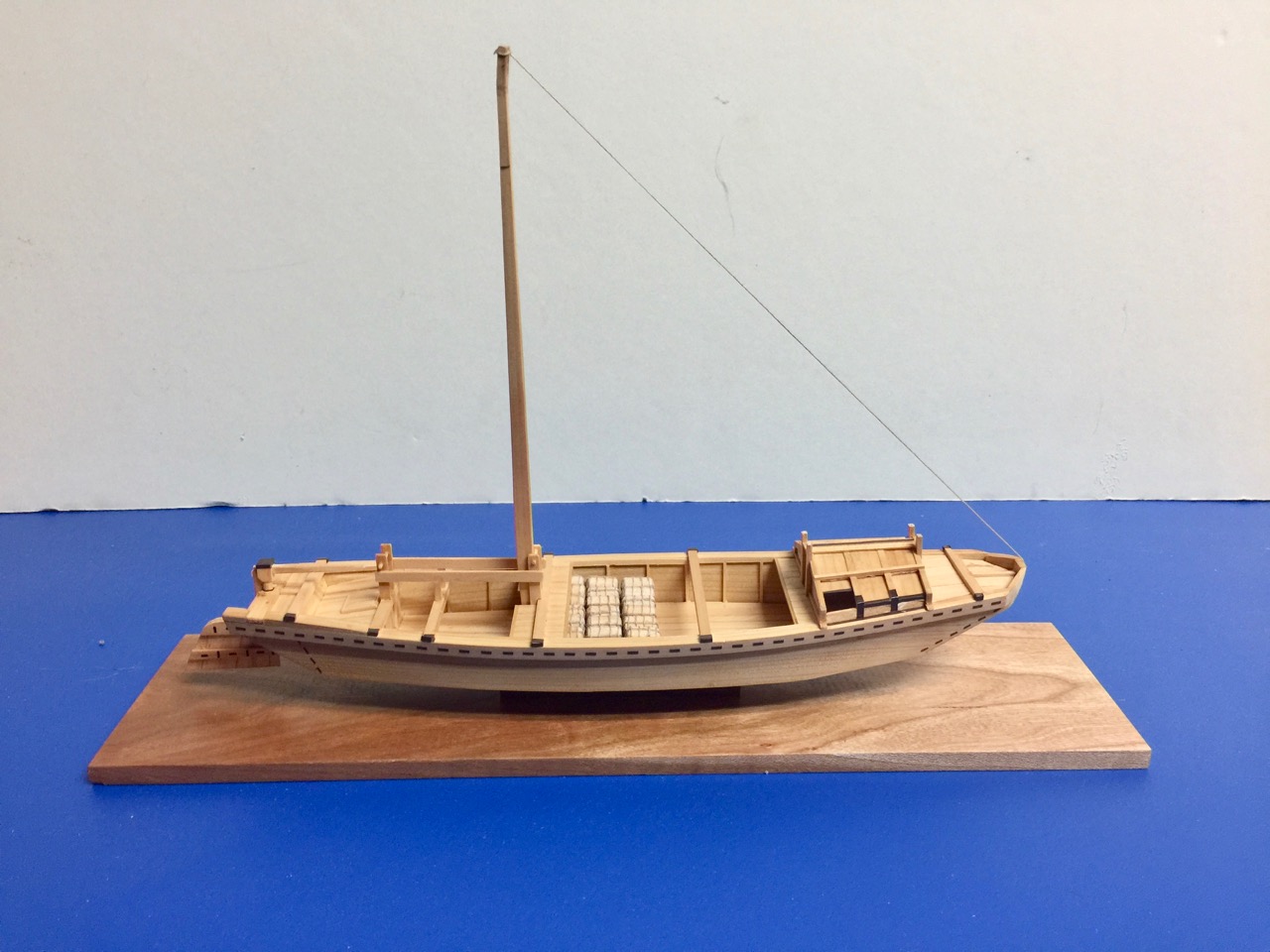
So, my idea was to mix it up a little. I’d experimented with making simulated, covered buckets, or Oke (oh-kay), and this certainly turned out to be easier to make that the rice bales with all the rope wrappings. There was still a bit of a process, but a little production line made the construction simpler. I’d experimented with a couple sizes, but opted for the larger size, partly because it meant needing fewer of them. Continue reading
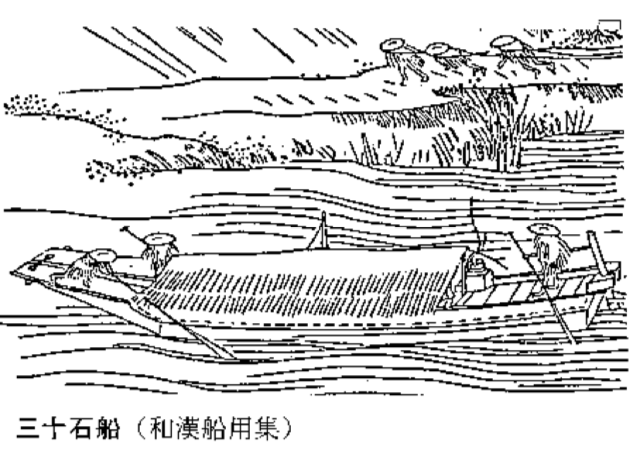
Sanjugokubune (三十石舟) Information Discovery

My apologies for not posting more information and updating my wasen modeling site very much lately. There are other things I’ve been trying to get done, and between this pandemic and the heaviness of having my mom in a nursing facility, I’m definitely not at my best. I did finally have a chance to play some traditional Japanese music with my music group at a couple events in Santa Rosa and San Francisco these past few weeks, but it’s not really enough.

It wasn’t until I set aside some things I’ve been trying to get done, and started paying attention to my wasen modeling, that things started feel so much better. So, I guess I’m going to have to make more time for wasen models, for mental health reasons, if nothing else!

The Sanjugokubune (三十石舟)

The most recent wasen topic that’s been on my mind is a type of riverboat transportation called the Sanjugokubune. These were large river boats that operated between Osaka and Kyoto during the Edo period. They are very famous for providing regular, scheduled, daily service for both cargo and passengers. I read somewhere that hundreds of these boats operated on this regular route every day.

In a recent post, I provided a link to a Youtube clip of a Sanjugokubune related story. More on that here.

Continue reading

The Tonegawa Takasebune (高瀬船) – a Model in 1/72 Scale, Part 4

Last time I left off on the construction of the Tonegawa Takasebune model, I had completed the rudder, or kaji, and had shaped the mast, or hobashira. I’m not positive on the exact appearance of the top of the mast, so I based it upon what I’ve seen on other models, and also on my experience with the masts on the Higakikaisen and Kitamaebune models I’ve built. It actually went through a slight change during construction.

I originally built the mast with a pretty strong crook at the top end. But, I ended up modifying this so it’s a lot straighter. The mast top is notched to allow me to secure a forestay to it to hold the mast in place by looping it around the mast top. There is also a slot at the top for the main sail halliard, with a brass rod simulating a sheave.

Continue reading

Building Woody Joe’s 1/72-scale Kitamaebune Kit – Part 12

I took something of a break from the Kitamaebune project again while I tried developing techniques for making the Japanese-style sails. It’s held me up for quite a while, and I’ve actually started the process of sailmaking at least five times, never satisfied with the results. It’s partly a matter of coming up with a good idea, but it’s also a matter of my skill, or lack of skill, in making the idea work.

At the same time, I finished up a card model of a European medieval period ship called a cog. Like the Woody Joe Kitamaebune kit (and Higaki Kaisen too), it’s a 1/72-scale model that features, almost exclusively, laser cut parts. Cogs, like Japanese boats, also featured edge-fastened hull planking, and a single large mast with a square sail. If you’re interested, you can read about it on my shipmodeler blog.

Bremen Cog and Kitamaebune niswk comparison.

Continue reading

Marukobune in Film Clip of Ishimatsu Sanjugokubune (石松三十石舟)

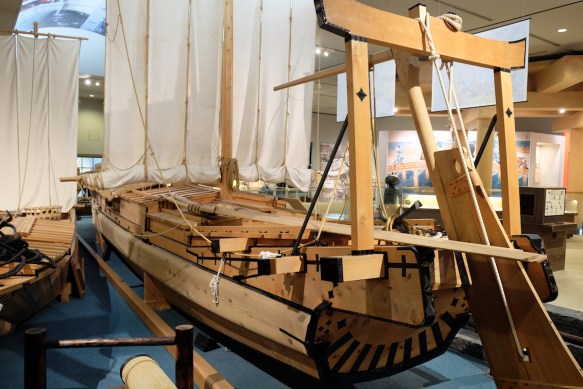
As a wasen modeler, how awesome is it to be able to see film footage that actually shows a Lake Biwa Marukobune (丸子船) under sail? Recently, someone posted a Youtube link on Facebook to a clip from an old Japanese movie. At the start of the clip, you can see a Marukobune setting out.These boats were used for carrying cargo and passengers on Japan’s Lake Biwa.

Late period Marukobune on display at the Lake Biwa Museum.

Continue reading

Wasen Model in Monterey, CA – Follow-up

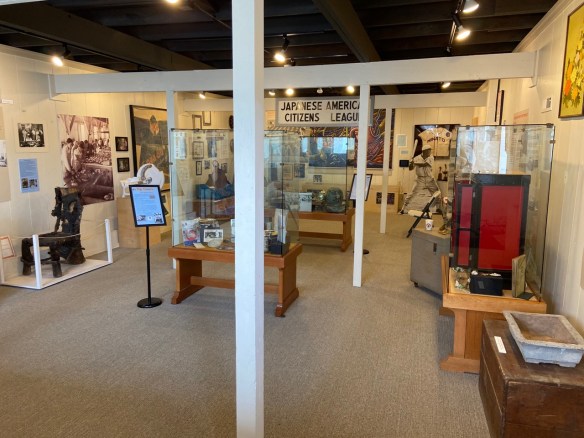
This week, I made the trip down to Monterey’s JACL Heritage Hall & Museum and met with curator Tim Thomas. He was waiting for me in front of the building when I arrived, and I was ushered into the museum room, where there were all sorts of displays of artifacts from the Japanese American community’s thriving past in Monterey.

The museum is small as it’s just the one room. But, the museum and the Heritage Hall apparently have their connections and access to a lot of knowledge about the Japanese American community, which was really thriving in Monterey before WWII. The curator has even given talks in Japan about the Japanese in Monterey.

Continue reading