Unknown's avatar

About catopower

Ship modeling since 1993.

Building Woody Joe’s Shinmei-zukuri Shrine – Part V

I’m just about half way through the model of a Japanese shrine. The model construction may not be exactly accurate, but the features of the building are interesting, and I’m thinking about how working on the roof structure may help with some wasen model construction.

catopower's avatarShip Modeler

Continuing on, Step 5 is the last step on the first side of the instruction sheet and deals more with the roof construction.

Step 5 << Assembling the Roof  1>>

This time, I was able to divide up this step into left and right halves, so the above is the left side of the instruction sheet for step 5.

View original post 916 more words

An Interview with Boat Builder Douglas Brooks

American boatbuilder Douglas Brooks has been working hard to study and document the craft of traditional Japanese boat building. He’s off again to Japan this month to study the construction of the cormorant fishing boats of Gifu prefecture.

An interview with him was just appeared on the Merchant & Makers website: http://www.merchantandmakers.com/the-craft-of-japanese-wooden-boatbuilding-with-douglas-brooks/

For more information on Douglas Brooks, visit his website at: http://www.douglasbrooksboatbuilding.com


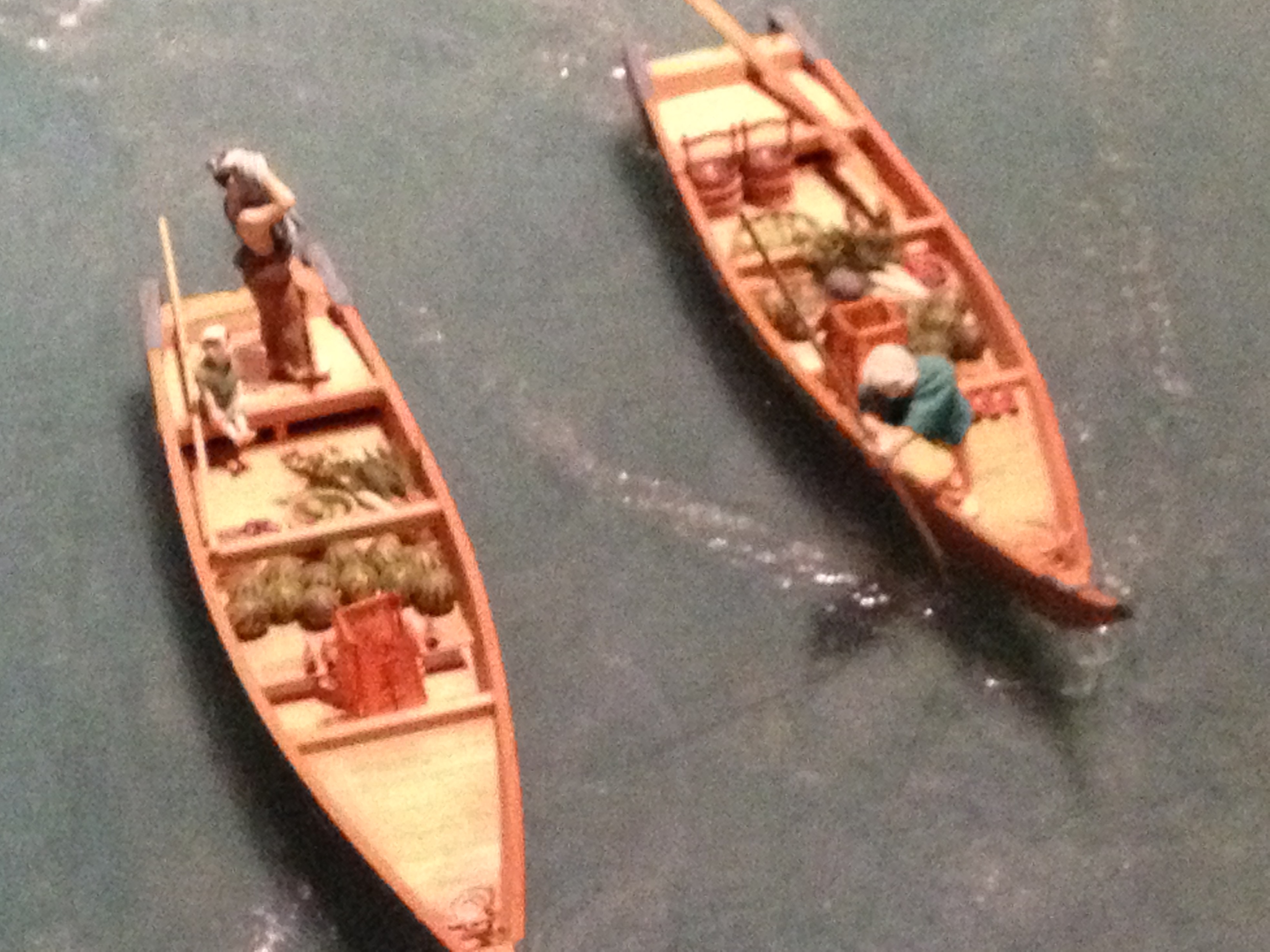
Japanese Boats Diorama Exhibit in Tokyo, April 29 – May 14

I just learned that there is a special exhibit taking place at the Tokyo Museum of Maritime Science of a diorama of late Edo period Japanese boats. The exhibit will be in the museum lobby from April 29th through May 14th, 2017.

Continue reading

Sengokubune Model (千石船模) – Toba Seafolk Museum

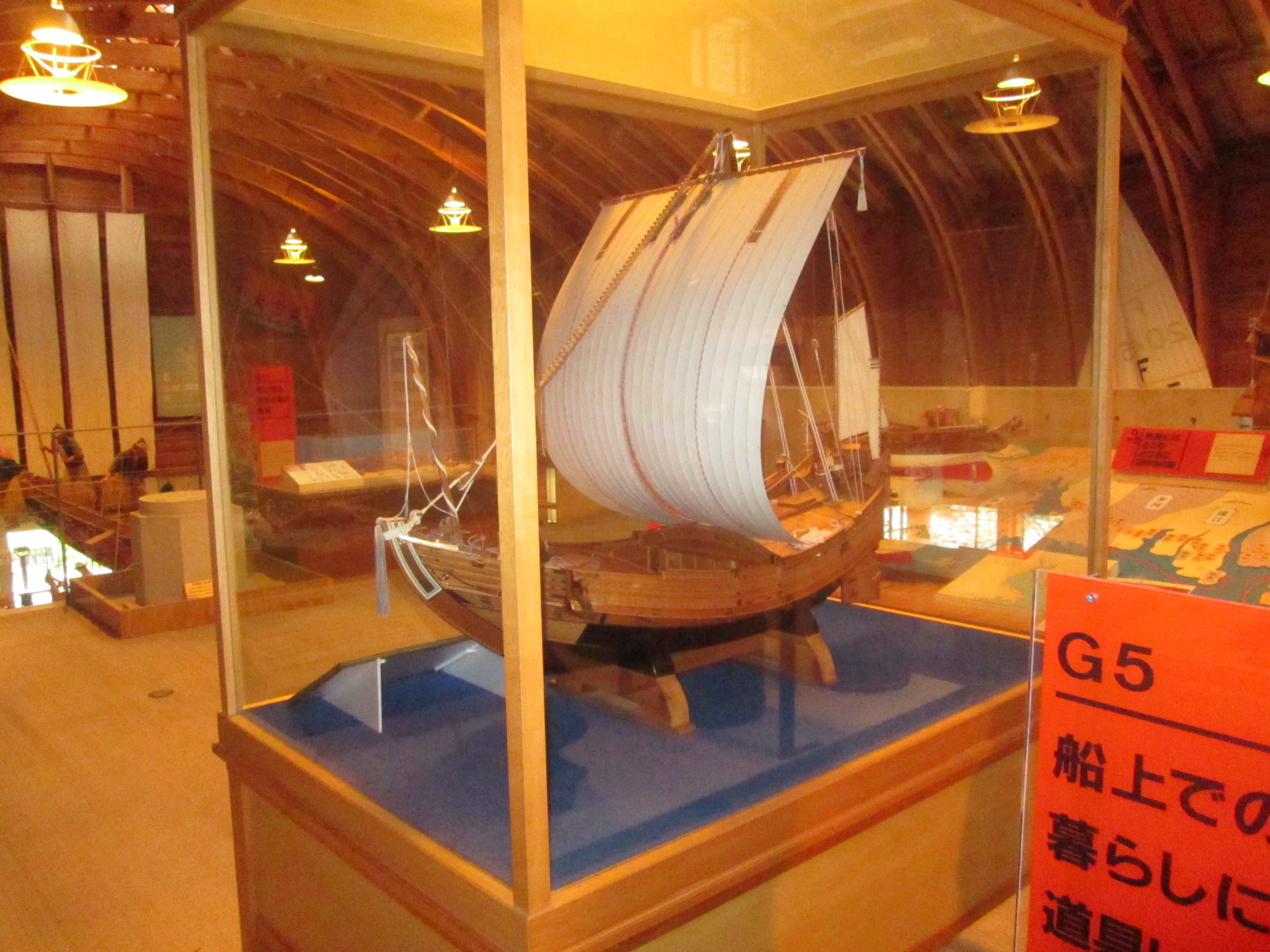
The subject of the first of my Japan boat/model posts is a Sengokubune model (千石船模型) located upstairs in the Toba Seafolk Museum. Sengokubune, or 1000 koku ship, is a common term for the large coastal transports that were more formally referred to as bezaisen (弁才船).

Continue reading

Posting Japanese Boat and Model Photos

It has come to my attention that I haven’t posted much on Wasen Modeler lately. At the same time, I have a large collection of photos of Japanese boats and their models that I took while in Japan last September. So, I think it’s time to finally start organizing them and posting them here. These photos were taken in Tokyo, in Toba, and at the Hakusan Maru Museum on Sado Island. These locations are all in central Japan, and most of the subjects will probably also be from central Japan.

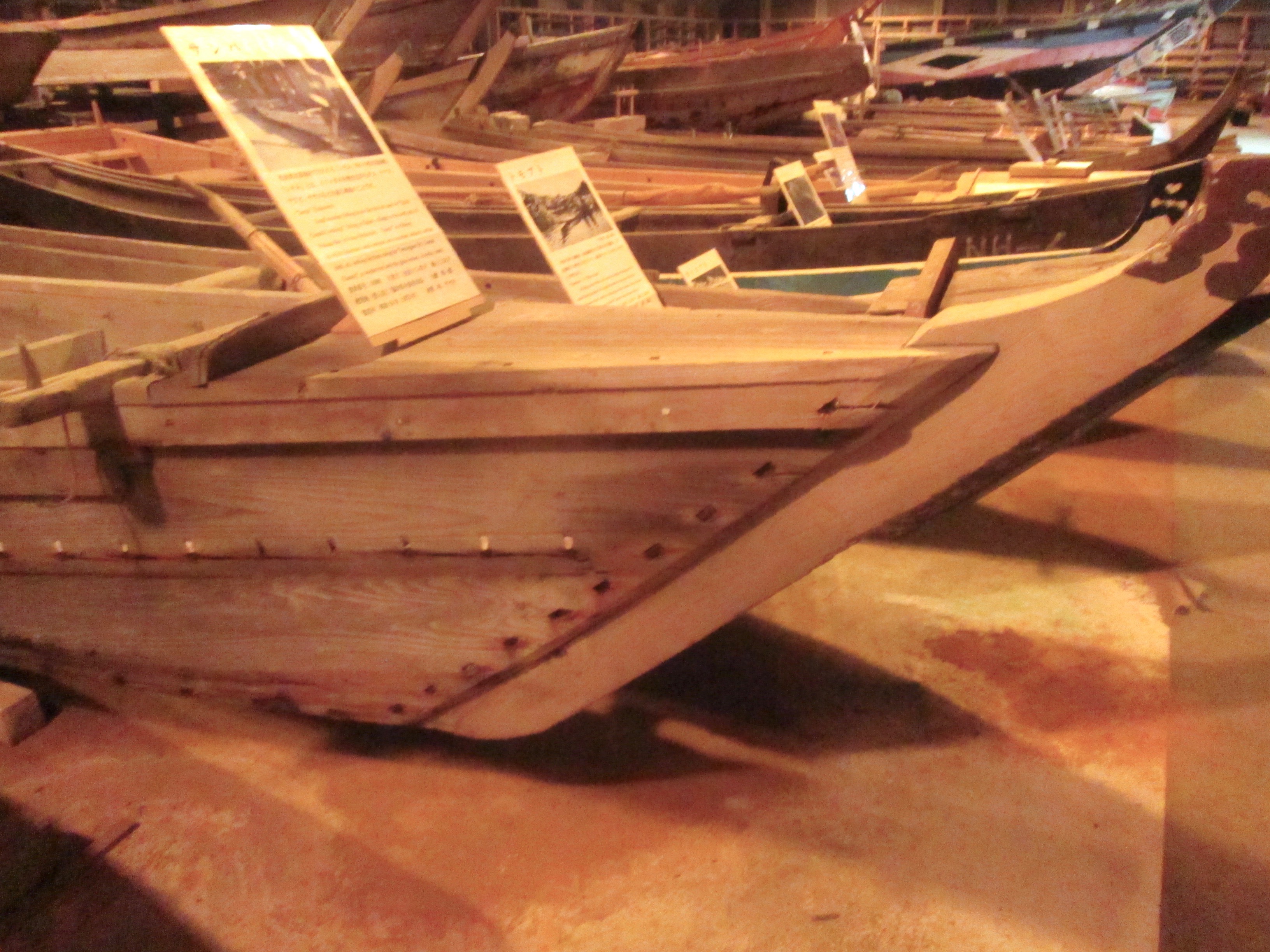
Boat repository at the Toba Seafolk Museum.

I plan on periodically posting photos of individual model or actual boats, or small groups of related items, particularly if I don’t have much information on them.

Displays at the Toba Seafolk Museum

I’ll probably focus first on those boat types that I know about and can explain. But, I have to warn you that there are far more types that I do not know about and can not explain. It’s all a learning process, and that’s what this site is really all about.

From the diorama at the Edo Tokyo Museum.

Be forewarned, perhaps by the photo examples you see here, than lighting conditions in Japanese museums are notoriously poor in order to help preserve the subjects, and my photography skills and equipment does not compensate well.

Shinmei-zukuri Shrine from Woody Joe

This is not a wasen project, but it is Japanese related, and I think the aesthetic is important to anyone who is interested in modeling wasen, so I’m re-blogging this from my ship modeling blog. And, yes, it’s not a ship modeling project either! But, I needed a simple project to distract me from my other work, and I had to write about it somewhere.

catopower's avatarShip Modeler

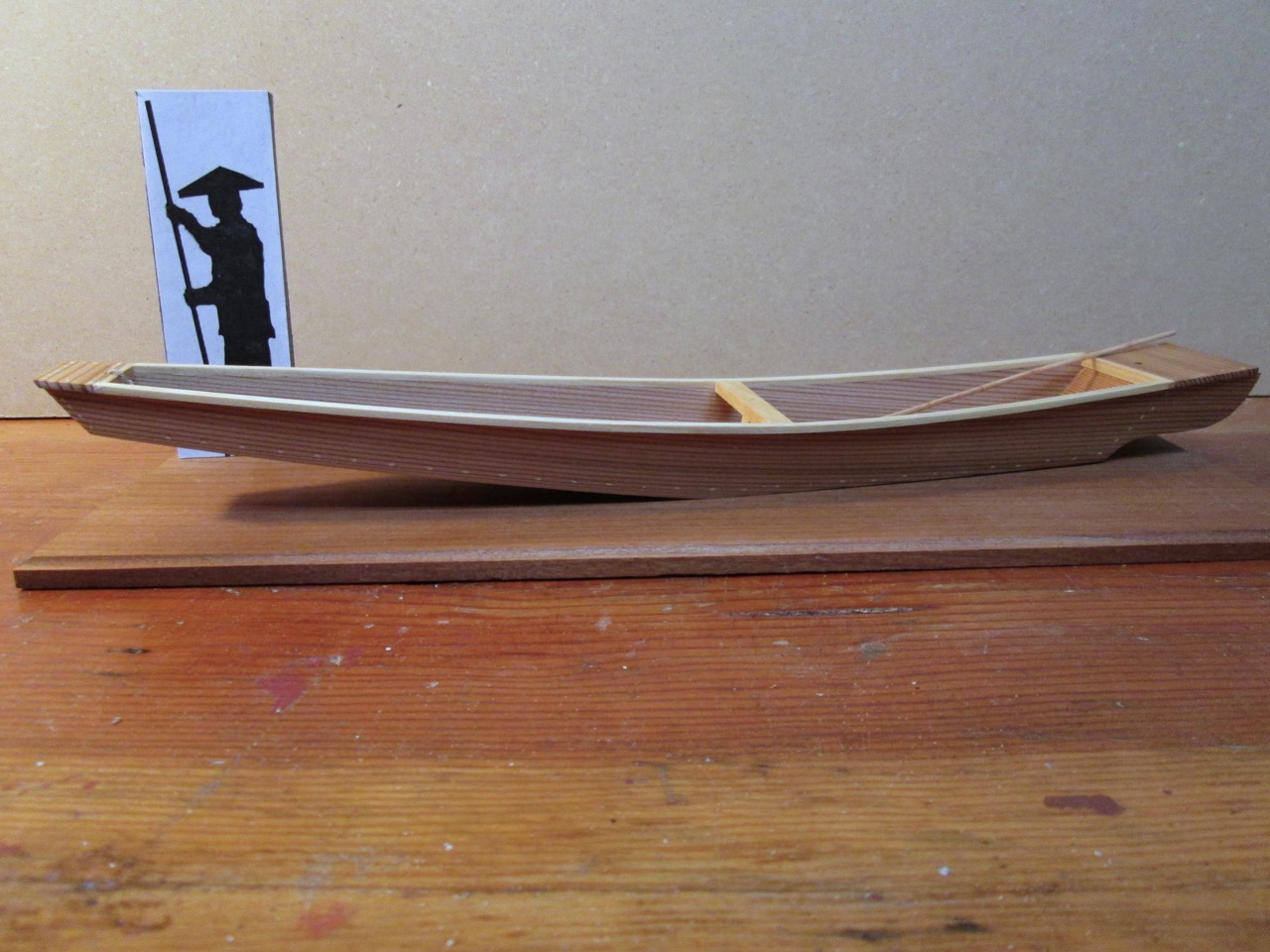
I’ve recently found myself spinning my wheels on the ship modeling front. This happens from time to time with my projects when I get a bit overwhelmed or stuck. My scratch model of a Japanese rice field boat, the Gifu Tabune, was one kind of distraction to work on. That took only a couple days, but there was a lot of thinking that went into that build, since it was from scratch, and I’m still learning a lot about Japanese traditional boats. The ideal would be a simple kit, where I can just build it and not spend a lot of time on it or have to put a lot of brain power into it, as I’m in short supply these days.

As it turns out, I’d purchased a collection of simple Woody Joe kits from Zootoyz. If you follow my blog at all, you’re already aware that I am…

View original post 804 more words

Modeling a Gifu Tabune – Adding Details

I added some details to my 1/20-scale rice field boat since my last post, so I took some new photos.

Continue reading

Modeling a Gifu Tabune

When I was writing my recent post about Douglas Brook’s upcoming work in Gifu, Japan, building an Ukaibune, or cormorant fishing boat, I noticed another boat and some drawings on his blog site. The boat was one of three tabune (田舟), or rice field boats, that boatbuilder Seichi Nasu had just completed.

One of Nasu-san’s tabune built in 2014. Photo courtesy of Douglas Brooks.

Continue reading

Douglas Brooks Building Cormorant Fishing Boat in Gifu

Boatbuilder, and my personal Japanese boatbuilding mentor, Douglas Brooks will soon be returning to Japan to begin working on the construction of an Ukaibune (鵜飼船), a cormorant fishing boat, in Gifu. In mid-May he will be working with Mr. Seichi Nasu, who may very well be the last builder of these famous Japanese boats.

The 85 year old Mr. Nasu has built over 700 boats of various types in his lifetime. But, unlike with Brooks’s past apprenticeships in Japan, Mr. Nasu will not be directly involved in the construction, and will instead direct, while Brooks provides the physical labor.

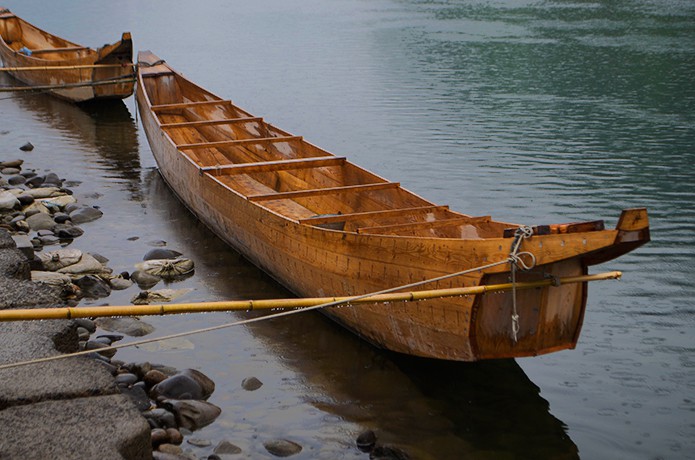
Ukaibune on the shore of the Nagara river. Image courtesy of Douglas Brooks.

Continue reading

Neptunia – Traditional Japanese Boats Through Prints

I have had the good fortune of having been in many email exchanges with French author Jean-Pierre Mélis and our mutual friends in Japan for about the last year or so. Mr. Mélis has been writing a three part series of articles in Neptunia, the Journal of the Friends of the French National Maritime Museum.

The series explores different types of Japanese watercraft as depicted in  Japanese woodblock prints. The journal is in French, but with modern translation tools, it’s not too difficult to read in English. This is how I was able to read the first issue, and it was a very interesting read. Plus, it was the first time I’d seen many of the prints.

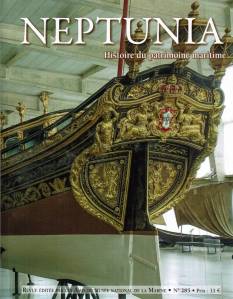
It may seem odd that the subject of Japanese boats appears in a French journal, but it was Admiral Paris’s book Le Souvenirs de Marine, first published in 1888, with the most recent reprint that I know of being in 1962, that gives westerners the earliest detailed look at Japanese watercraft. A model based on this work also appears in the French National Maritime Museum, and is featured on the cover of the first issue above.
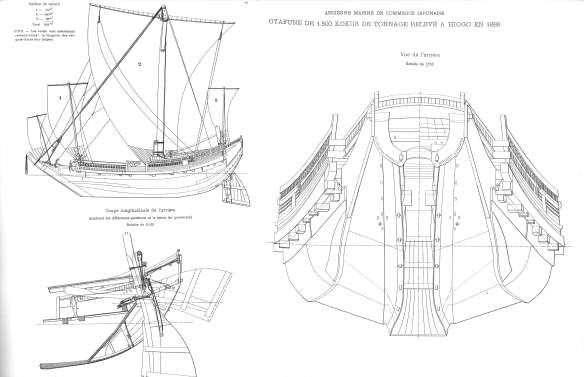
From Le Souvenirs de Marine

Mr. Mélis informed me the other day of the publication of his final article, which looks at the boats used to navigate the rivers and canals of Japan during the final years of the Shogun period.

If you are interested in reading the articles, you can purchase copies from the publisher’s website: http://www.aamm.fr/neptunia/derniers_numeros 

Specifically, the issues are numbers 281, 283 and 285.

The articles should be interesting and informative, and I am looking forward to seeing the artwork as well.