Books from Japan

When I visited the Toba Seafolk Museum on Tuesday, I took a lot of photos. In fact, I killed off a camera battery, but luckily had purchased a second battery before leaving for Japan. I also made sure to purchase a larger SSD card for my camera. A 32GB card wasn’t all that expensive, and literally allows me to take 1000’s of pictures before filling up the card.

But probably the biggest find for me was in their gift shop. Okay, first biggest find was the cold, bottled water (The temperature was in the 80’s with something like 86% humidity). But the next biggest find was that they had several books on Japanese boats. Some of them I was aware of, but I was surprised to find titles I was not aware of.

It was difficult looking through all these books, because I really wanted them all, and their not available in the U.S., and, as I verified later, they are very hard to find on the Internet in Japan. Of course, I couldn’t get everything I wanted to buy, and not just because of the cost, but also I’d be lugging them around Japan for the next several days.

So, I selected a few titles. A couple that I passed up, I had thought I’d seen though Japanese online sites, and a few others, I figured I’d find in other museums I’d be visiting, so I might still be able to pick them up. As for lugging them around Japan, well I could just send them to my Tenso.com account, which is a forwarding service I signed up for that gives me a Japanese mailing address, and that will package up anything I send them, and they’ll ship it to my home. Of course, books are a bit heavy and shipping won’t be cheap. So, I’m lugging around what I can for now.

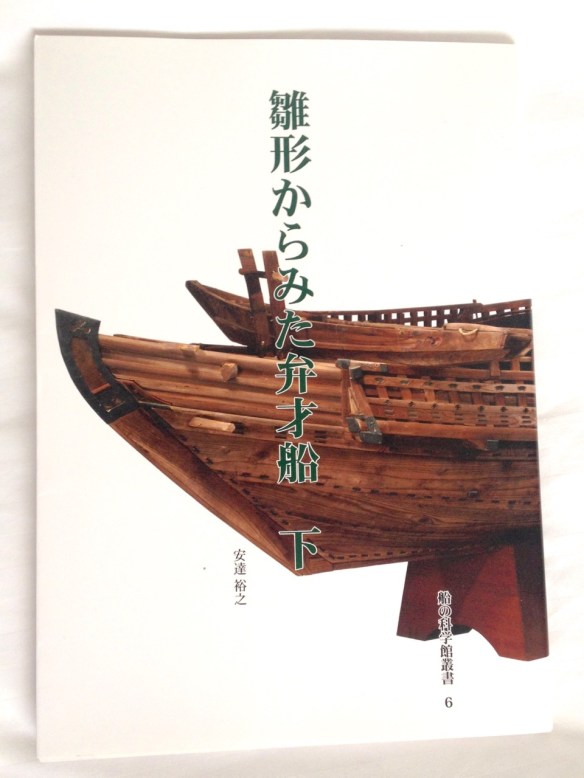
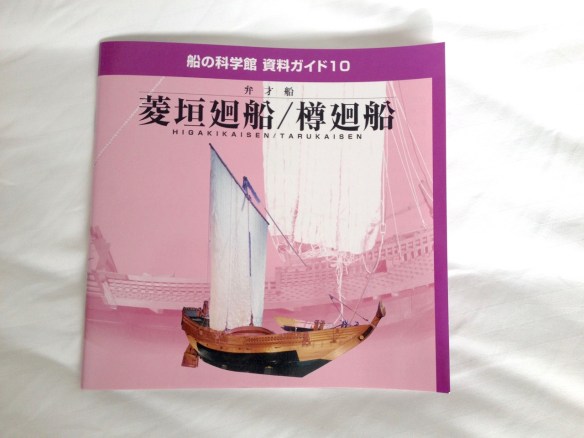
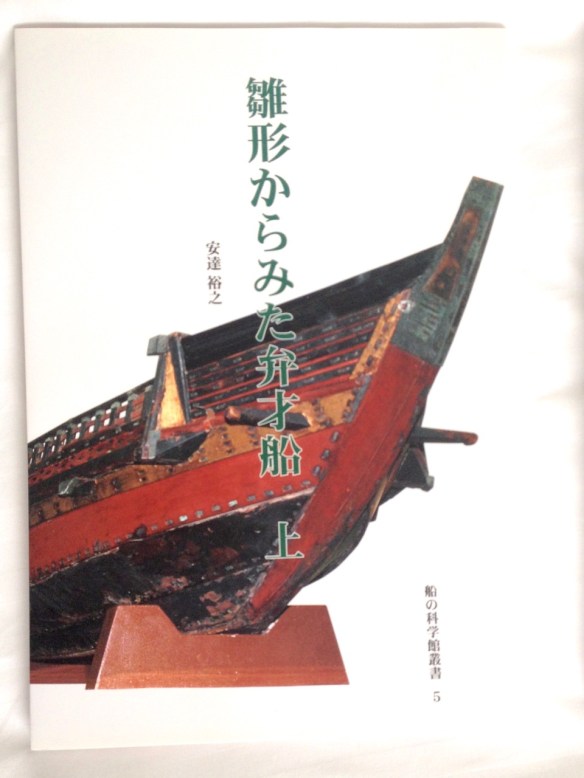
I can’t tell you anything about these until I’ve had a chance to sit down and do some translation and study, but you can see what they are:

img_2724 img_2725 img_2726 img_2730

The last book was a “no brainer”. It’s a small format publication from the Tokyo Museum of Maritime Science. It’s just a 40-page book and cost a whopping $3 (300¥).

The other three books were $15 each, except for that third book, which included a set of drawings. I thought it was $35, but I think they only charged me about $26, as best as I can figure.

As you can see, the first three are numbered. They’re part of a series of books that appear to be connected to the Nippon Foundation. But, the publication information in the books all reference the Museum of Maritime Science. There looked to be some 9 books in the series, though some of them looked to be on subjects I wasn’t interested in.

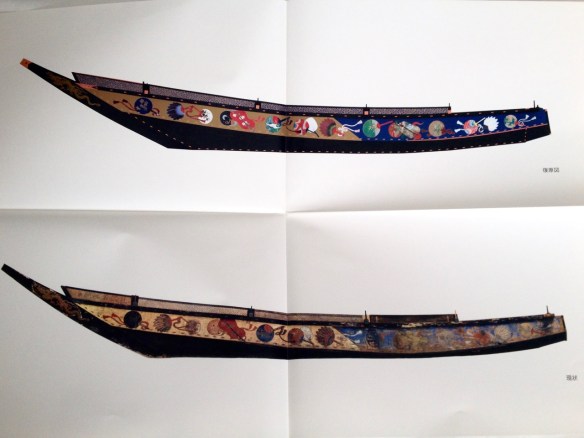
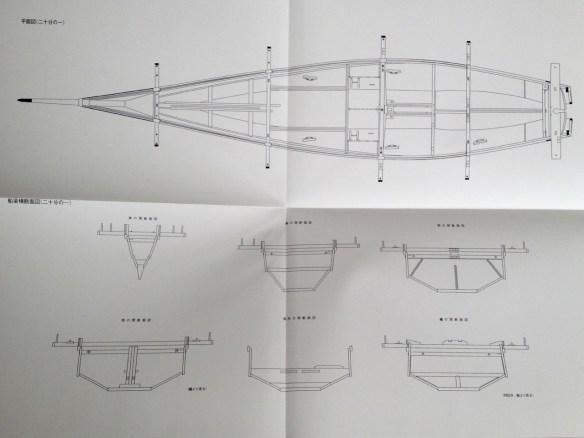
The third book, I believe the title refers to a boat named the Senzanmaru, I got mostly because it was the only book I’d seen that included a set of plan drawings. I know nothing of this boat, but hey, the drawings make it build-able. So, I bought it in kind of a “shoot now and ask questions later” mentality (I have to say that phrase now has become incredibly awkward to write). Here are a couple of the sheets.

The top one shows the actual Edo period boat below and an artists rendering of the original boat above.

img_2734

The plan drawings are really done in a modern style, which is a good technical drawing, but a model builder will have to loft a lot of the hull planking details from one of the sheets which shows station lines and hull contour.

img_2733

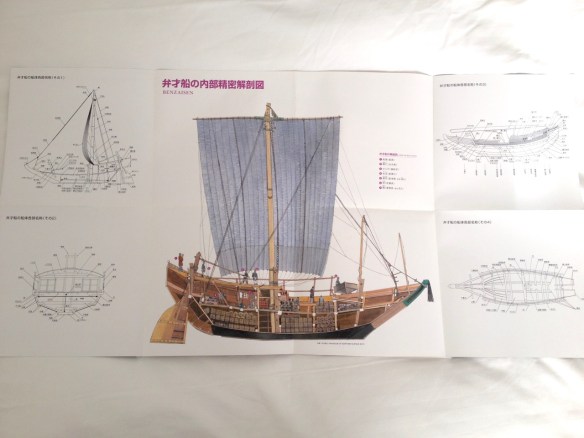
Meanwhile, the little book on Higakikaisen and Tarukaisen included a nice fold-out (centerfold sounded weird)

img_2727

Today, I’m off to the Edo Tokyo Museum and will try to get to the Urayasu Museum as well. There’s a Typhoon passing by this afternoon. With luck it will mostly stay away, but I might get the first rain of my trip today.

Visiting the Umi no Hakubutsukan

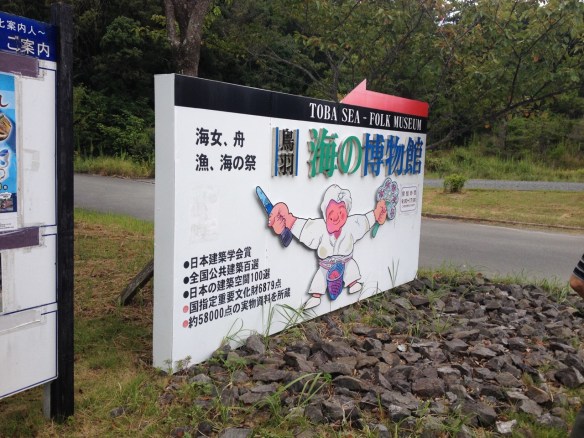
That’s what the Toba Seafolk Museum is called here in Japan. While there are some signs in english on occasion, if you ask anybody for directions or about the museum, it really helps to say it in Japanese: Umi no Hakubutsukan (oo-mee-noh-ha-coo-boo-tsoo-kahn).
IMG_2688

After a really long first day in Japan, which included visiting Woody Joe in Shizuoka and then getting a good look at the Hacchoro in the port of Yaizu, I was a bit burned out and decided to just relax in my room in the morning. The museum opens at 9:00am, but I didn’t get there until a little before noon.

First, a note about using Google Maps, which I used heavily during trip planning. If you look on the web about the museum, it would appear that the museum is open daily except for a small handful of holidays. Well, Google Maps, has a neat feature where you click on a public place like the museum, and it will tell you how popular the place is over the hours of the day. This would help you figure out when to avoid crowds. Well, I had a last minute freak-out before I left home when Google indicated that the museum was closed on Tuesdays, the main day I was to be in Toba.

So, I made contingency plans, and when I arrived at Toba, I asked about the issue at the hotel, but they said it was open. Could the hotel owner not know the museum is closed on Tuesdays? Seems unlikely. And, in fact, the museum is open on Tuesdays. Google lied, so just beware of that online feature.

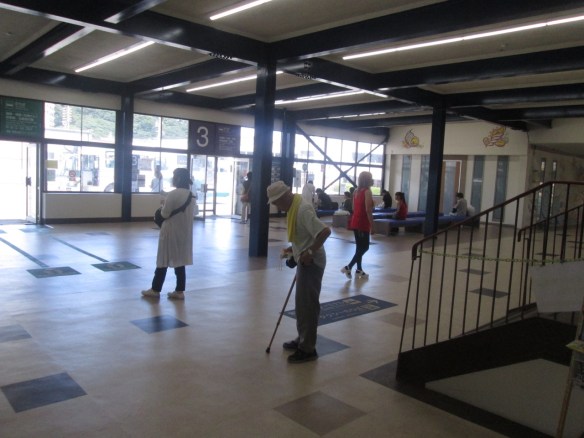
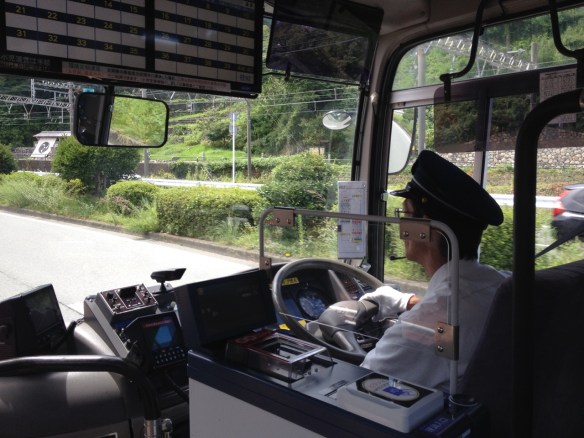
Getting to the museum from town is very easy. There is a great local bus system here that you want to use called the Kamome Bus (kah-mow-may). The bus center is attached to the Toba JR station. Just be aware it’s on the ocean side of the tracks. The bus to Umi no Hakubutsukan is the No. 4 bus and it picks up at station number 2. The person at the ticket window can indicate which door the bus arrives at.
IMG_0946

The round-trip is 500¥, but you don’t have to pay until you arrive at the museum. As you enter the bus, grab the little return ticket that’s sticking out of the machine just inside the bus door. You’ll give this to the driver when you exit the bus on your return to the bus center.
IMG_2648

At the Museum

I read something that indicated it was a 10 minute walk from the museum bus stop to the museum itself. Another lie. The bus stops directly in front of the museum entrance. Just be sure to push one of the stop request buttons when you get close so the bus driver knows to stop there. Maybe he’d stop anyway, but why chance it?

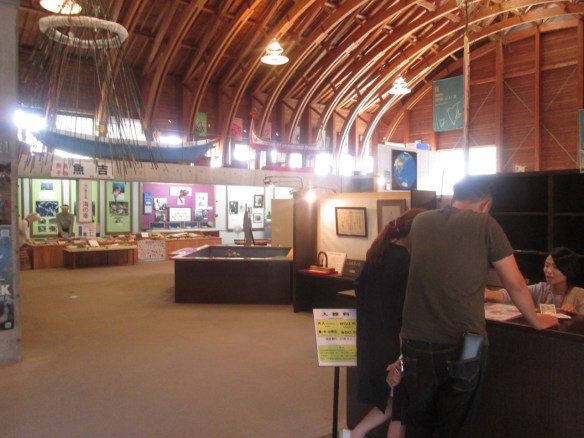
Admission to the museum is 800¥ for adults and 400¥ for children under 17. If you want a refreshment, there is a little café right across from the museum entrance. It appears to be staffed by the museum people, so you may have to let them know at the front desk that you want to sit in the café. If it’s a hot day, you might take a respite from the heat as the café is air conditioned. Note that the rest of the museum is not, with the exception of movie viewing theater, where you can watch some film about Ama, the female divers of Japan.
IMG_0953

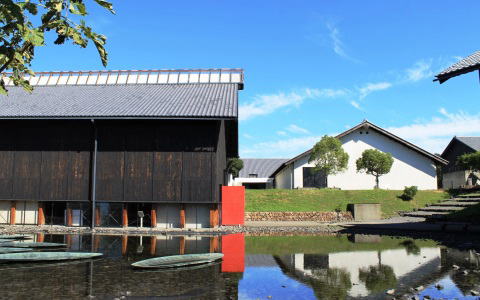
Museum entrance and main building.

If I had more time, I would have take more time to learn about the Ama, as there is a great deal of information about them at the museum. There is also “Pearl Island” in Toba, where I believe you can learn more about the Ama.

As it was, I spent about 3 hours looking at boats, fishing history, models of boats, the history of Toba, boats, and more boats. I did my best to learn and collect as much information as I could. I ended up burning up one camera battery, filling up my iPhone (doesn’t take much), and collecting more than 500 photos throughout the day. Of course, some were just countryside photos, a few selfies, and views of the bus, etc. But, for the most part, they were boat pictures.
IMG_2676

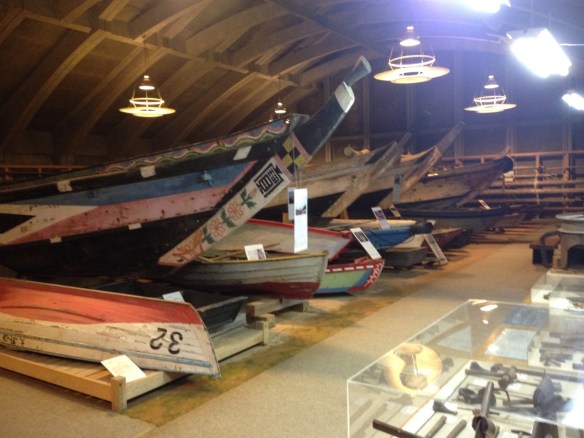
Inside the boat repository building.

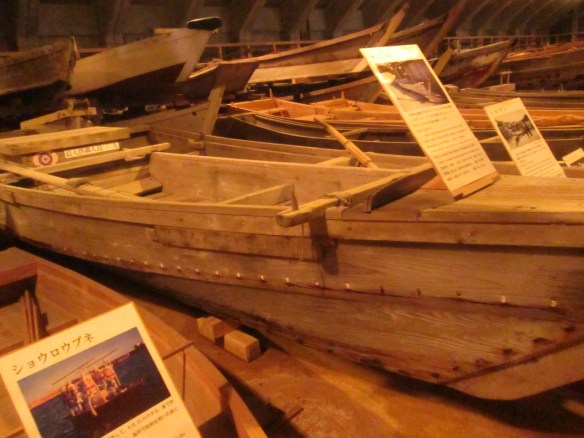
I will have to admit that the value of most of the photos may be somewhat less than might be expected. There are so many boats in the repository that you can’t even get close to most of them. Also, the lighting is so bad that it’s hard to get good shots. Some are blurry and when I used the flash, it over exposed some of the pics.
IMG_1385

Not a lot of room to get close to the boats.

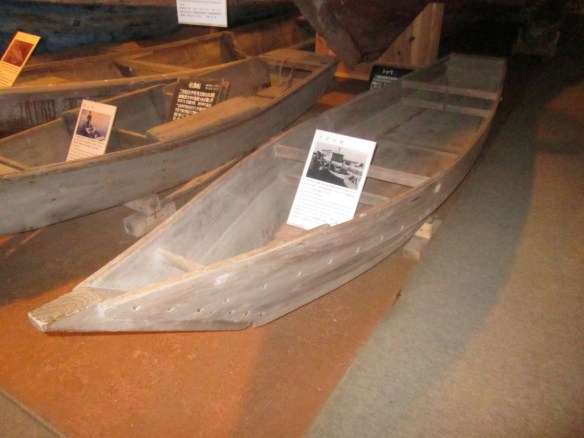
One subject that was really hard to shoot because it was in a dark corner, in the shadow of a bigger boat, was a small score for me. The boat is a nori gathering boat called a Bekabune, and I happen to be currently modeling one of these. So, this was a particularly nice find.
IMG_1298

Bekabune, once used on Tokyo Bay for harvesting seaweed.

Besides the full-sized boats, there’s a nice assortment of models in the main building. Again, there was a problem with lighting. But some in a glass case were well lit. Others that were not well lit suffered further by being in a glass case, where glare was a bigger issue.

Amazingly, some models were not in a case, and one European style galleon model made me nervous because I was carrying a backpack, and if I was careless, I could have easily stepped back or turned around and broken some of the rigging. The Japanese visitors must be amazingly careful around this stuff!

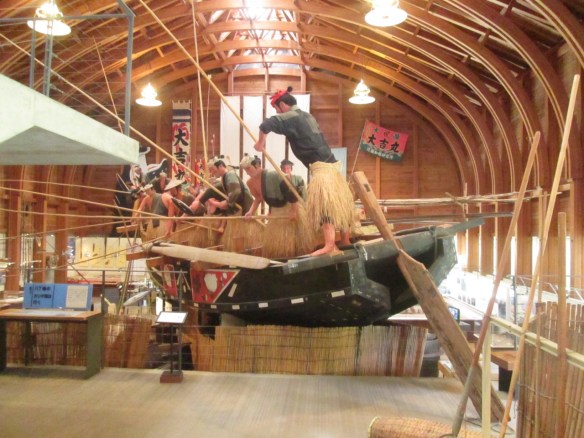
One of the things I found the most interesting were the dioramas showing how fishing was carried out. One was a full-sized boat suspended above the floor, with fishermen wearing what is most easily described as grass skirts, pole fishing over the side. It looked very dynamic, and I think it must have been a very accurate image, as there was a video playing in one part of the museum below the boat where a the bow of a modern day fishing boat was lined with fishermen with long poles just hauling up fish after fish. One fisherman pulls up a big fish and flings the line overhead and behind him with a big catch. He then throws the line back in and it looks like within seconds he’s caught another. So, the boat display seems authentic.
IMG_1179

But, the big score for me, turned out to be the museum store. I found a whole section on Japanese boats, most of which were from the currently closed Maritime Science Museum in Tokyo. It took me a while to decide what to get, but I ended up buying about 6000¥ on books. Sadly, there were many others I wanted to get too, as they are really hard to order and have shipped to the U.S. But, I figure I’ll have an opportunity to find the same books when I’m in Tokyo or in the Ogi Folk Museum on Sado Island in a few days.

Well, after about 3 hours, I was pretty well spent given the 80 degree weather and 87% humidity. I cooled off in the café while waiting for the bus. I almost decided to just hang out there around the museum and in the café until closing time, 5:00pm. But, at the last minute, I figured I’d better head back and get to work writing.
IMG_2687

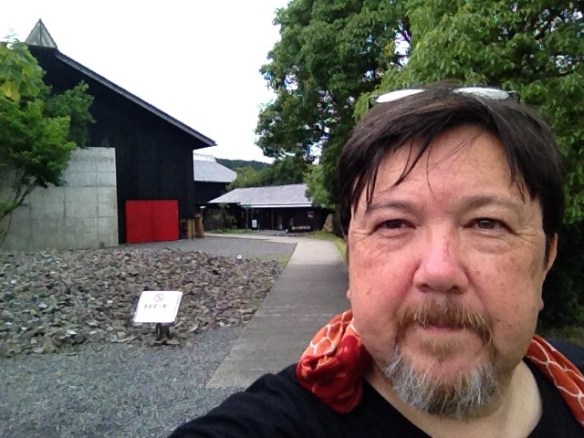
Hot, tired, wet, stuffed brain, but satisfied.

Tomorrow, I could go back to the museum in the morning for a bit, but I don’t think I’d get that much more out of it if I did. At least not so soon after, and without specific goals in mind. So, I’ll be leaving for Ise-shi station tomorrow. Not sure if I will stop at Ise now or not. It’s a beautiful place, but, I have been there before, and there’s so much to see everywhere that it might be better to get settled in Tokyo, where I’ll be staying the next two nights.

Sometime in the future, when I have more time to sort through things I’ll start posting more of the photos from the Toba Seafolk Museum. Ω

Japan Boat Research Trip 2016 Update

For those who don’t know anything about this trip and why I’m making it, please check my page: Japan Research Trip under my Japan Trip Blog menu.

Note that I’ve been fundraising for a few months now to try to gather up the resources to make the trip happen. Thanks to very generous friends and family, I’ve been able to fully fund this trip. It’s still going to be a pretty “lean” trip in many ways, and it’s way too short for visiting Japan. But, it’s going to have to do.

Toba Sea Folk Museum

Toba Sea Folk Museum

There may be some obstacles once I’m there as it’s typhoon season and trains may be delayed and that may put a real hamper on some of my plans. But, life is what it is, and I’ll just go  with the flow as best as possible.

My flight leaves out of SFO late Saturday night and, mostly, I’m prepared to go. Passport is in order, accommodations are booked, got a friend to stay with my cat, I’ve gathered the things I need to take, gifts to present to people I’m meeting, etc. I just need to finalize my rail pass, possibly obtain a “Pocket WiFi”, and it might be a good idea to reserve my tickets for the ferry to Sado Island.

The flight and some of the hotel stays were booked months ago through Travelocity. I actually got a tremendous deal on the flight, which is how all of this got started in the first place. Most of the hotels were booked through Booking.com, and together, those two sites seemed to do a decent job of securing my accommodations.

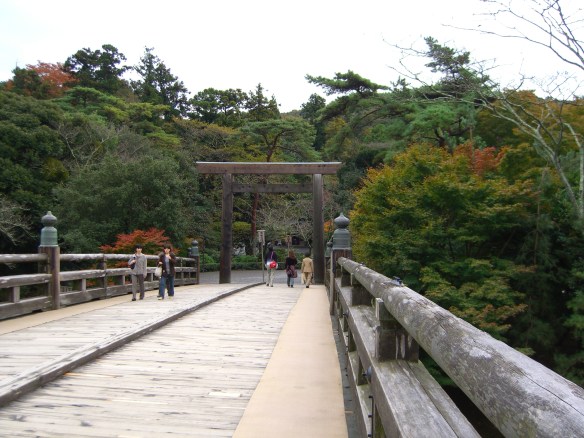
Bridge at the Ise shrine in 2006

Bridge at the Ise shrine in 2006

So, here are the places where I’m going with the major items / points of interest. Asterisk* indicates overnight stay.

  • Shizuoka
    • Visit Woody Joe
    • Hacchoro at port of Yaizu
  • Toba*
    • Toba Seafolk Museum (Warehouse of boats)
    • Ise-jingu Shrine
  • Tokyo*
    • Edo Tokyo Museum
    • Urayasu Boat Museum
    • Visit Wasen Tomo no Kai
    • Dinner with friends from The Rope, Tokyo
  • Ogi village, Sado Island*
    • Ogi Folk Museum
      • Hakusan Maru (Kitamaebune replica ship)
    • Taraibune Excursions / Taraibune maker
  • Tokyo*
    • Final Day of sightseeing, visiting people


Google Maps

I have to say that in the last couple weeks, I’ve made very heavy use of Google Maps. Actually, I’ve been using it for months to make sure place I’m staying at are actually in convenient locations. But, the last couple weeks, I’ve been going crazy working out how to get to various places, looking for convenience stores, places to eat on the cheap (most of my money will be tied up in travel and accommodations), etc.

Something that has been invaluable is the “Schedule Explorer”. My first day in Japan is going to be a bit tricky. I land at Haneda around 5:00 am, need to take the airport monorail  to Tokyo Station to get to the JR Office. But, that doesn’t open until until 7:30 am, at which time I need to pick up my Rail Pass (I’m planning on getting a 7-day pass with Green Car access), hop on the Shinkansen toward Nagoya, but get off at Shizuoka Station. There, I will take a cab to Woody Joe, meet my long-time contact Mrs. Yukari Gojo, the president (her father), Mr. Tsuneki, and the staff. Aftewards, Yukari has offered to drive me in her car to the port of Yaizu, where we will meet with Mr. Hiroyuki Kobayashi, who is a member of the group that operates the Hacchoro boats, who will show us the boats and let me examine them.

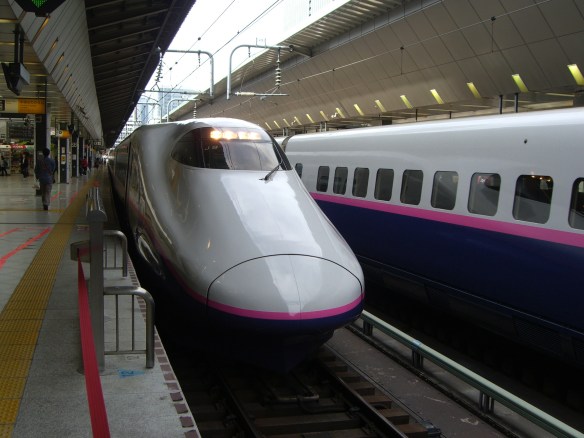
Shinkansen

Shinkansen to Tohoku in 2008

Afterwards, they will drop me off at Yaizu Station. This station is not on the Shinkansen line, so I have to take this regular train either back to Shizuoka Station or  onward to the next Shinkansen station. Then, I will continue on to Nagoya and switch to another train, possibly one called the Rapid Train Mie (mee-eh), which I can then take all the way south to Toba, where I will stay for a couple nights.

So, all of this is to point out that there’s a lot of travel planning on the first day, and Google Maps seems to have made it very simple for me to figure out how much time I will have in Yaizu. Of course, there will be some glitches and things it can not predict. But, I’m not going to be any better at predicting issues myself.

Also, being able to “walk” around the places has allowed me the opportunity to figure out that my initial accommodations in Ise, while homey and inexpensive, are too hard to find from the train station, especially if I’m running late and don’t get there until after dark. So, I found some alternative places that were actually in Toba and again did a virtual walk around and found the places very easy to get to.

Of course, I haven’t physically been there yet, so I won’t really know how successful this has all been until after I’ve gotten there. I’ll let you know how it turns out.

For now, it’s all pretty well planned out and so I’m setting it all aside and it will be what it will be!

The Wasen Modeler Launch

I’ve finally decided to bite the bullet and launch my wasenmodeler site. I’ve been posting my work on my shipmodeler blog for a while now, but there have been stretches when I’ve been working a lot on Japanese traditional boats, or Wasen. So, I started a page on my site, Japanese Watercraft.

Since I began my first Japanese wooden boat, my work has matured a lot, and I’m giving a talk together with boatbuilder Douglas Brooks at the 2016 Nautical Research Guild conference in San Diego in October (my segment is on modeling Japanese boats, and it will be very short). In addition, I’ve been scheduled to do one of the roundtable discussions there on modeling Japanese boats. And, now that I’m finally heading to Japan for a week of research and networking, it seems that the time has come to spin off wasenmodeler as a stand-alone blog site.

Woody Joe’s Yakatabune kit

Of course, this is just getting off the ground, so I’m just beginning to build content and create new site pages. Now, visitors who are interested in Japanese boats and their models no longer have to wade through my ship modeler posts about building english sailing ship models in paper, etc.

I do want to point out that this is actually a massive topic. Even though I’ve been building Japanese boat models for a couple years now, I’m only just now scratching the surface. The more I learn, the more I discover how limited my knowledge is. The amount of available information in English is minimal, and it really helps not only to be able to read Japanese, but to actually be in Japan to access information first-hand. I neither read much Japanese (just a few words and can read the phonetic alphabets), or speak much Japanese (better than I read). Nor do I live in Japan.

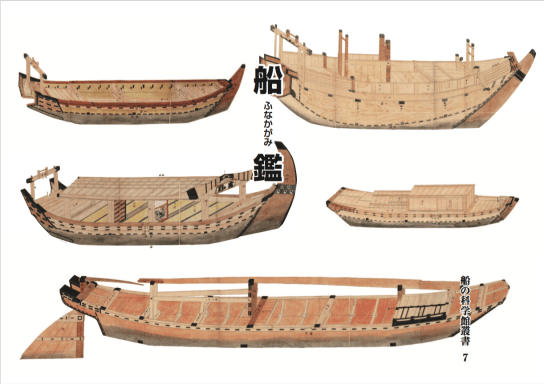
Cover of the Funakagami

Cover of the Funakagami

But, heavy use of scanning and OCR, the trackpad handwriting recognition technology and Japanese language input system on my Mac, and a good network of helpful friends and associates (ship modelers, maritime experts, Japanese boat builders, and native Japanese speakers) helps to overcome some of these obstacles.

So, please bear with me while I work my way through the subject and building up the content here. In the meantime, make sure to check out these links:

English sites

Japanese sites/links

Speaking at the Northern California Japanese Sword Club

On Sunday, June 19th, I was at the monthly meeting of the Northern California Japanese Sword Club as a guest speaker, talking about Japanese boats, their construction and history. Their meetings take place at the Japanese Cultural and Community Center of Northern California, which is located in San Francisco’s Japantown.

Now, I’m not a particularly comfortable speaker, but it’s something I’d like to be better at doing, and this seemed like a really good opportunity. Now, I’m no expert on the topic of Japanese boats, and even less so on their history. But, the subject is one that I’m very interested in, and have been spending a lot of time actively studying  this past year, so I wasn’t totally unprepared for it.

The speaking engagement came about as a direct result of my Japanese boat models displays that I set up in the window of the Union Bank Community Room in the Japan Center Mall. Their member who organizes the themes for each meeting saw the display and thought the club members would enjoy a talk on the subject.

In all honesty, I was a bit worried about what I could talk about that a group of sword collectors would want to hear about. My knowledge of Japanese history is limited, particularly about the early use of boats by warring armies or about the warships of the Sengoku period. But, I agreed to do it, with assurances from Tom that the group would enjoy the talk regardless.

I ended up delaying my participation for a bit to brush up on my Japanese history and did some intensive study on the development of Japanese boats. Most of the available material was in Japanese, so it took a bit of an effort. But, I managed a basic level of competency in the subject.

In the end, the talk went swimmingly, and I really had a great time talking to the club about Japanese boats. I started off by talking about the four models I brought and then using that to lead into how boats developed over time, how they were constructed, talked about how they were used in battle and about purpose-built war vessels.

It helped that I was really familiar with the meeting place, having met there on many occasions with my shamisen teach, who also happened to be in the room next door giving lessons, which we could hear during the meeting.

But, most importantly, the members of this group were some of the nicest people I’ve met. They were a very receptive, very appreciative, and a very supportive group. I couldn’t have asked for a better audience!

I can’t imagine how the next talk I give could go any better than this one, but at least I’m better prepared for it now. Ω

Hacchoro – Notes for building the Woody Joe kit

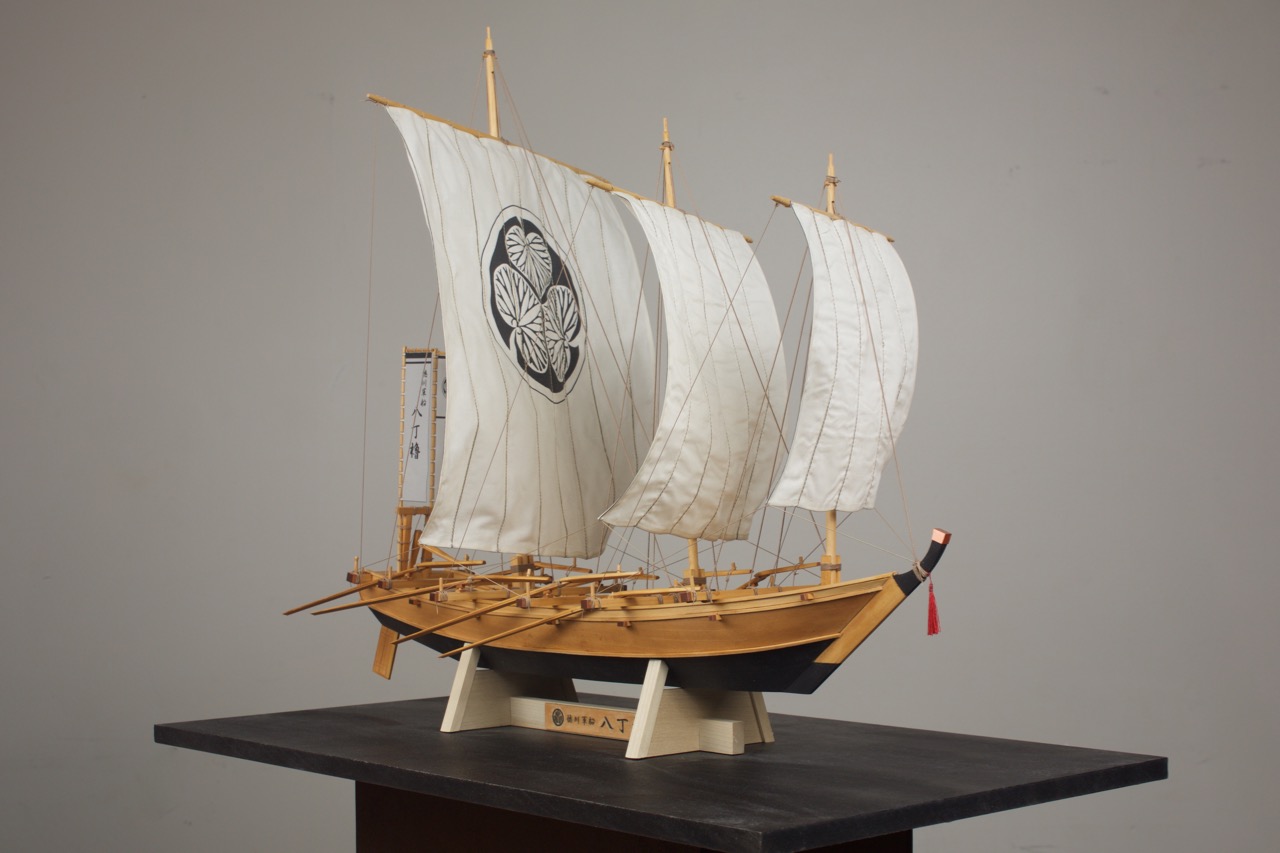
I have completed an initial draft of notes I compiled on building the Hacchoro kit by Woody Joe. The kit is a model of an 8-oared Japanese finishing boat from the area of Yaizu, Japan, which is on the coast, roughly about 100 miles southwest of Tokyo. The boat is a traditional type boat, following the classic 5 sided Japanese construction. That is, bottom, garboard strakes and shear strakes in a hard-chine hull configuration.
994A9695

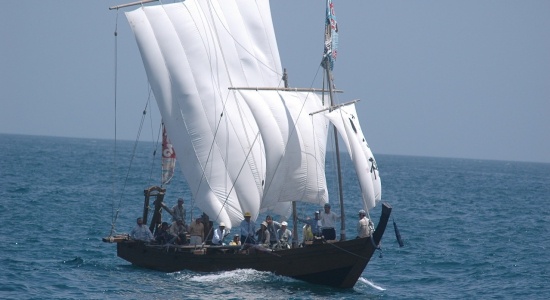
The real boats were roughly 45 feet long and could carry 3 square sails on masts that could be stepped as needed. There are still Hacchoro in existence today, though I don’t know what the total number is like. I also don’t know how they are used today, except that there are Hacchoro races where teams man the boat’s oars to race each other on a short course.

DSC_0077

I am aware of two operating Hacchoro in Yaizu. With the help of a wasen authority in Japan, I have made contact with a gentleman in Yaizu who has offered to show me the Hacchoro there. So, I am now making arrangements to see them in order to record some of their finer details for later use in modeling them. This is part of my Japanese Boat Research Trip that I’m trying to raise some funds for. If all works out, I will take lots of photos and record the details.

For now, anyone who is building Woody Joe’s Hacchoro kit can download a copy of my notes.

But, in using these notes, you must accept that these are just suggested guidelines and there are always the possibility of errors in the document. Also, the document includes my own translation of the text of the Woody Joe instructions. I am not an expert in translating Japanese into English. Use them to give you more confidence in using the kit instructions, but you must agree not to hold me responsible if you end up gluing a part into place wrong. The kit is pretty well buildable using just the illustrations in the instruction book. But, sometimes it helps to know what the text says. Also, note that there are a lot of labels in the instructions, and I’m only translating the descriptional text and not all the individual labels.

Download Hacchoro Notes and Translated Instructions

Of course, if you have any questions about the document, just send me a comment with your email address and I’ll answer as best I can. Ω

Douglas Brooks’ Japanese Boatbuilding Class Project

American boatbuilder Douglas brooks recently finished teaching a one-month class on building a traditional Japanese wooden boat at Middlebury College, in Vermont. The subject was a boat that was once used on the Agano River in Niigata Prefecture.

DSC_0005 (28)

What an awesome class to be part of! The students did an amazing job. I can only wonder if they realize how fortunate they are to have been part of this experience.

DSC_0089 (14)

You can see more photos and description on Douglas Brooks’ blog here. Ω

Japanese Wasen Model Display in San Francisco

This week has been a kind of crazy week of dealing with the display of ship models. I now have 4 models out on display. Two of them are part of a display at the San Mateo County Fair headed up by the South Bay Model Shipwrights club. The other two are part of my own display that I’ve put together in the big window of Union Bank’s community room in Japantown, San Francisco.

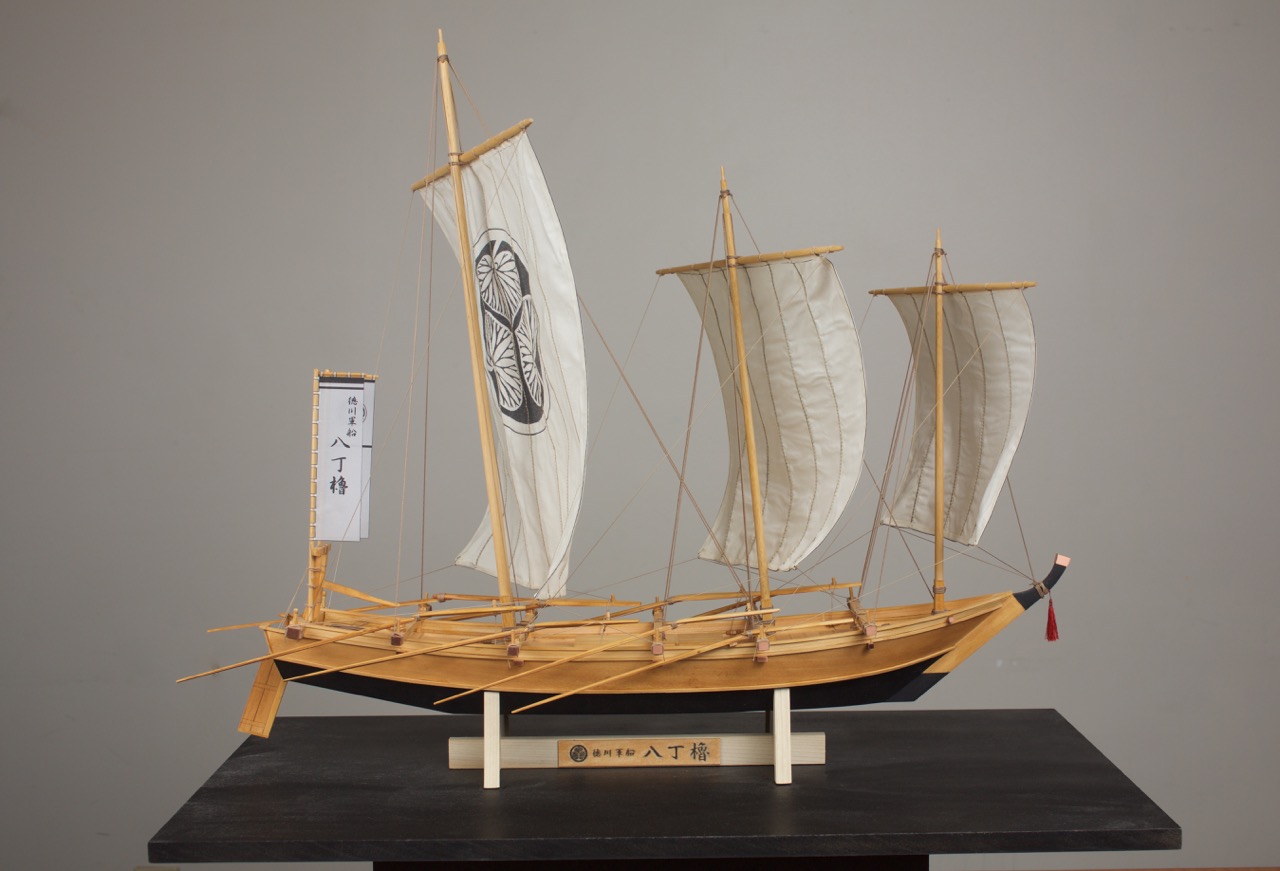
The models are my Higaki Kaisen and Hacchoro models that I built from Woody Joe kits. The display is my second now, and I’ve learned a lot from my first display that I put up earlier in the year. That display was small for the window area and the models were hard to see and the display was not very attention grabbing.

This time around, I’ve had posters printed up using some new photos I’ve taken. I mounted these on foam core poster boards and also set up a large display board with 8″x10″ photos showing details of the models. To make the models easier to see, I removed them from their cases and raised them up closer to eye level by placing them on some pedestals I made from MDF board.

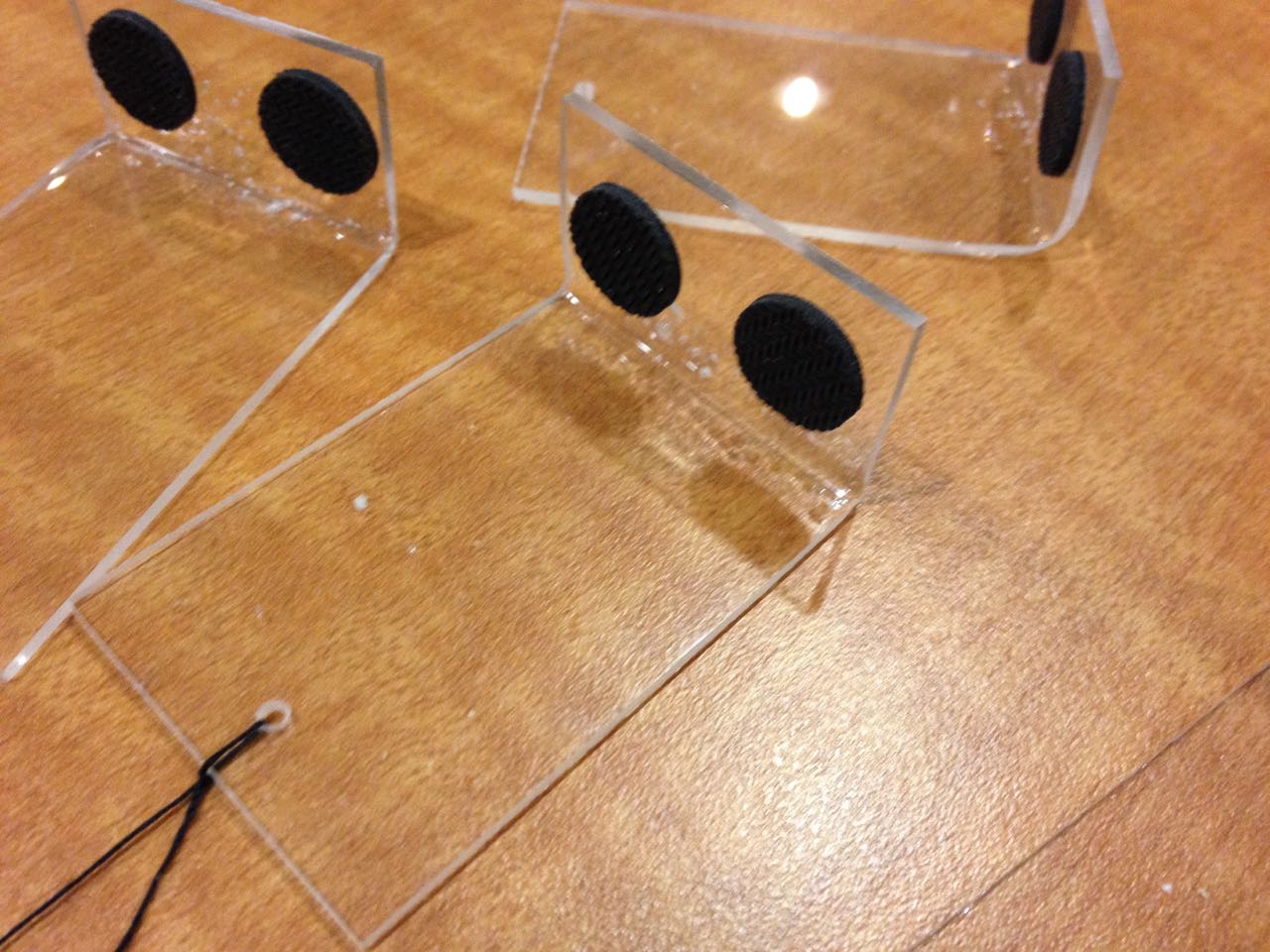
At the last minute this morning, I cut some acrylic sheet into strips and made some plastic clips to hang the posters from. The strips were cut to size and drilled and then heat bent to shape using a small torch. They aren’t perfect, but they work.

Late this morning, I crammed everything into my car and drove to San Francisco to set it all up.

IMG_1091

Models set up and ready to put on display.

IMG_1088

Homemade clips for hanging the posters.

This time, with all the display elements, it took me a lot longer to set up than I’d expected. I could imagine what it’s like to work setting up displays in department store windows. Overall, it was a good 45 minutes to bring everything up from the parking garage and to set it all up. The posters and the hangar clips took the most time to set up so that the posters hung at the right heights.

I felt I was kind of rushing the layout. It would definitely be helpful to get a second person to help with this so that one person can look at it and recommend adjustments while the other put the display elements into place.

In the end, I think it all worked pretty well and I’ve definitely got thoughts of Wasen Display 3.0 starting to develop. Having the third model will be good, which will most likely be Woody Joe’s Yakatabune as that’s a nice looking model and a quick build.

IMG_1093

Higaki Kaisen model.

IMG_1092

Photo Board and Hacchoro model. Note the hanging posters.

One thing I realized was that every time I’m in the mall where I have time to take photos, it’s roughly noonish and the sun comes streaming straight down through the skylights in the mall. So, I mostly get a lot of glare in these photos. I think at other times of the display, it is much easier to see the models and photos. I’m going to have to check out that theory and take some photos maybe late in the day or evening early evening. Maybe I can get some decent photos of the display then.

IMG_1096

A much improved display over the last one.

Wasen Display 2.0 will run from Friday, June 5th through Friday, July 10th. I hope you will stop by to see it and let me know what you think!

Higaki Kaisen Display at San Francisco’s Japan Center

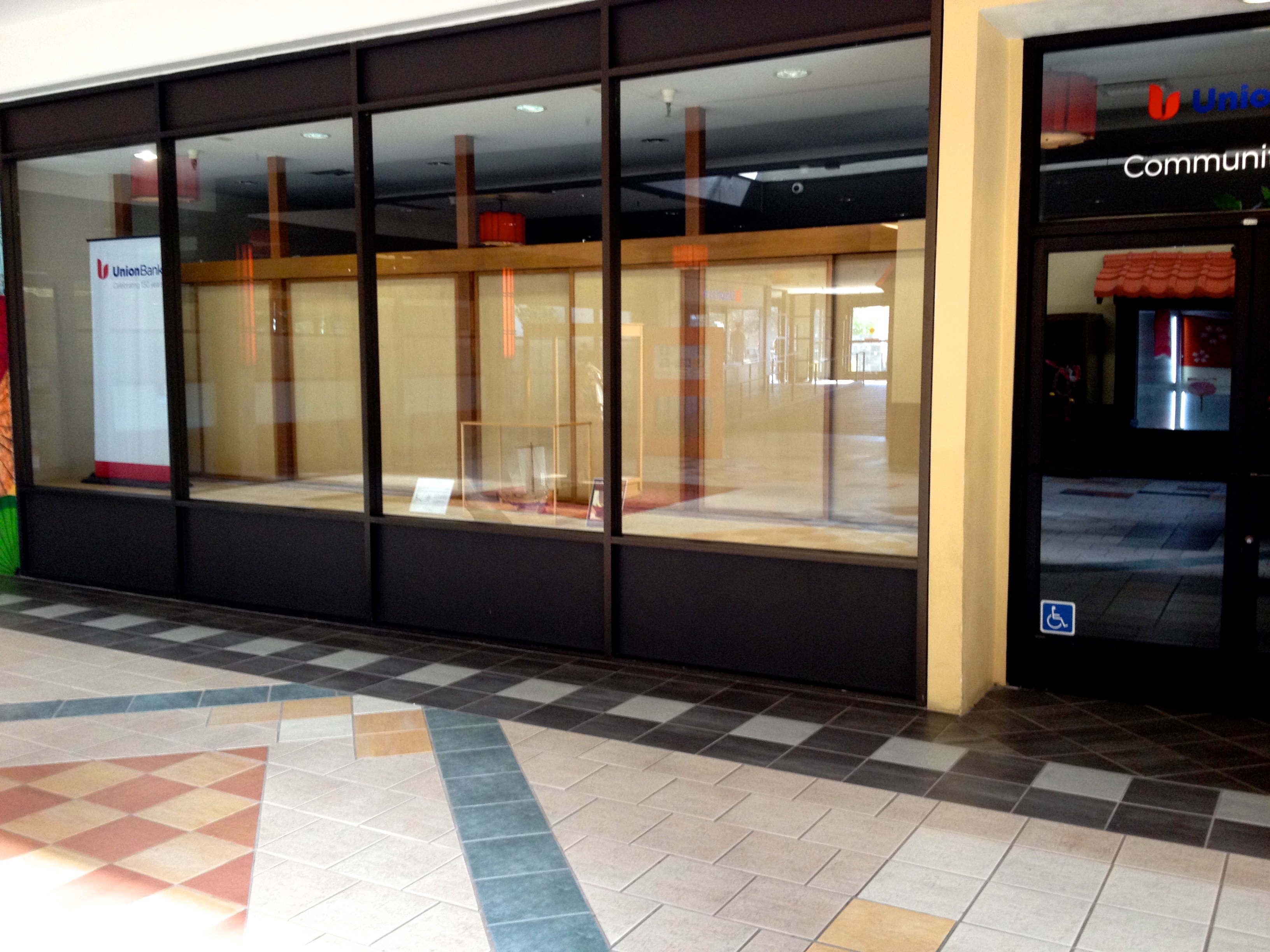
It’s official, my Higaki Kaisen model is now on display in the East Building of the Japan Center Mall in San Francisco’s Japantown. The model is in the window display of Union Bank’s Community Room.

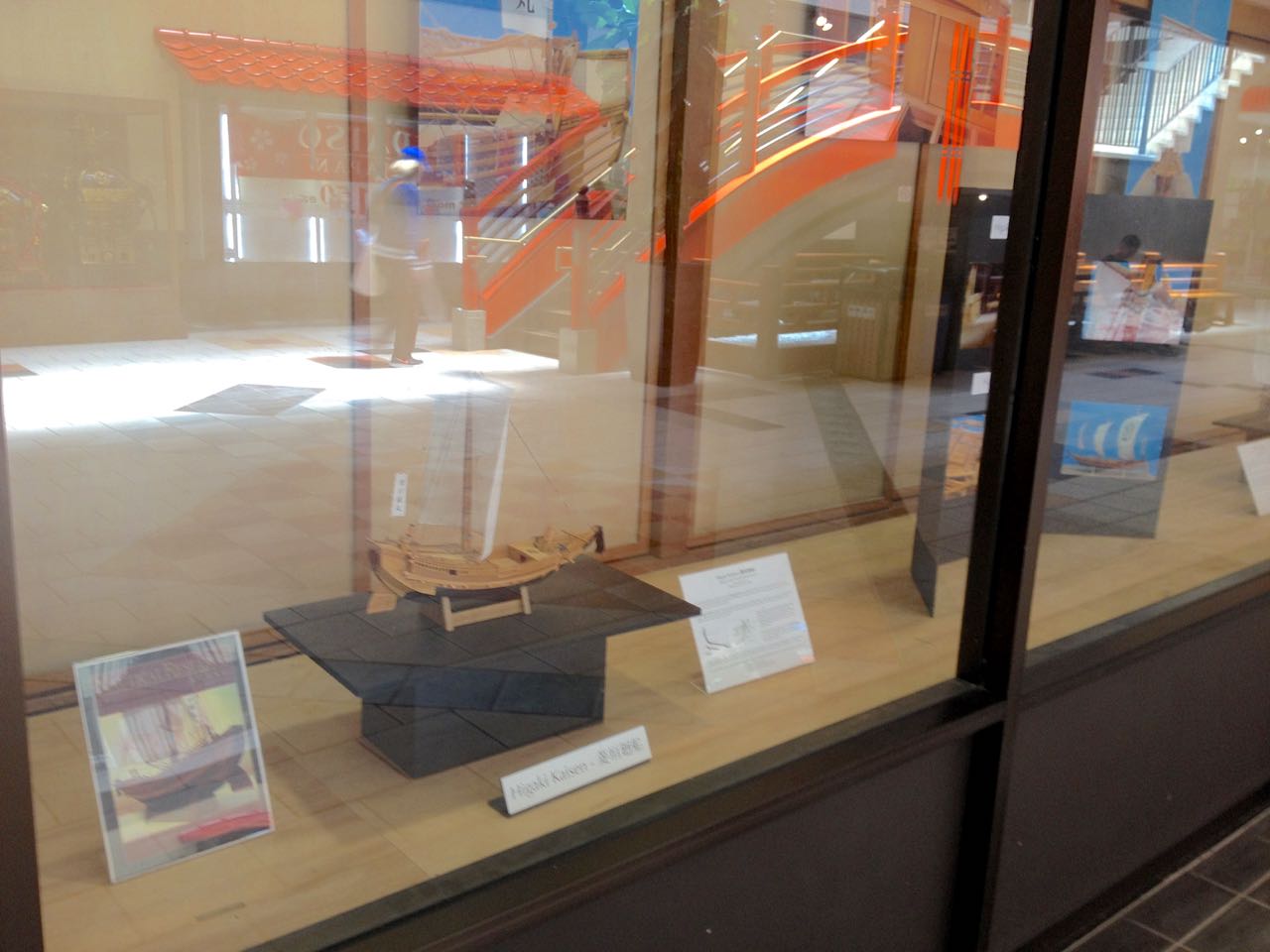
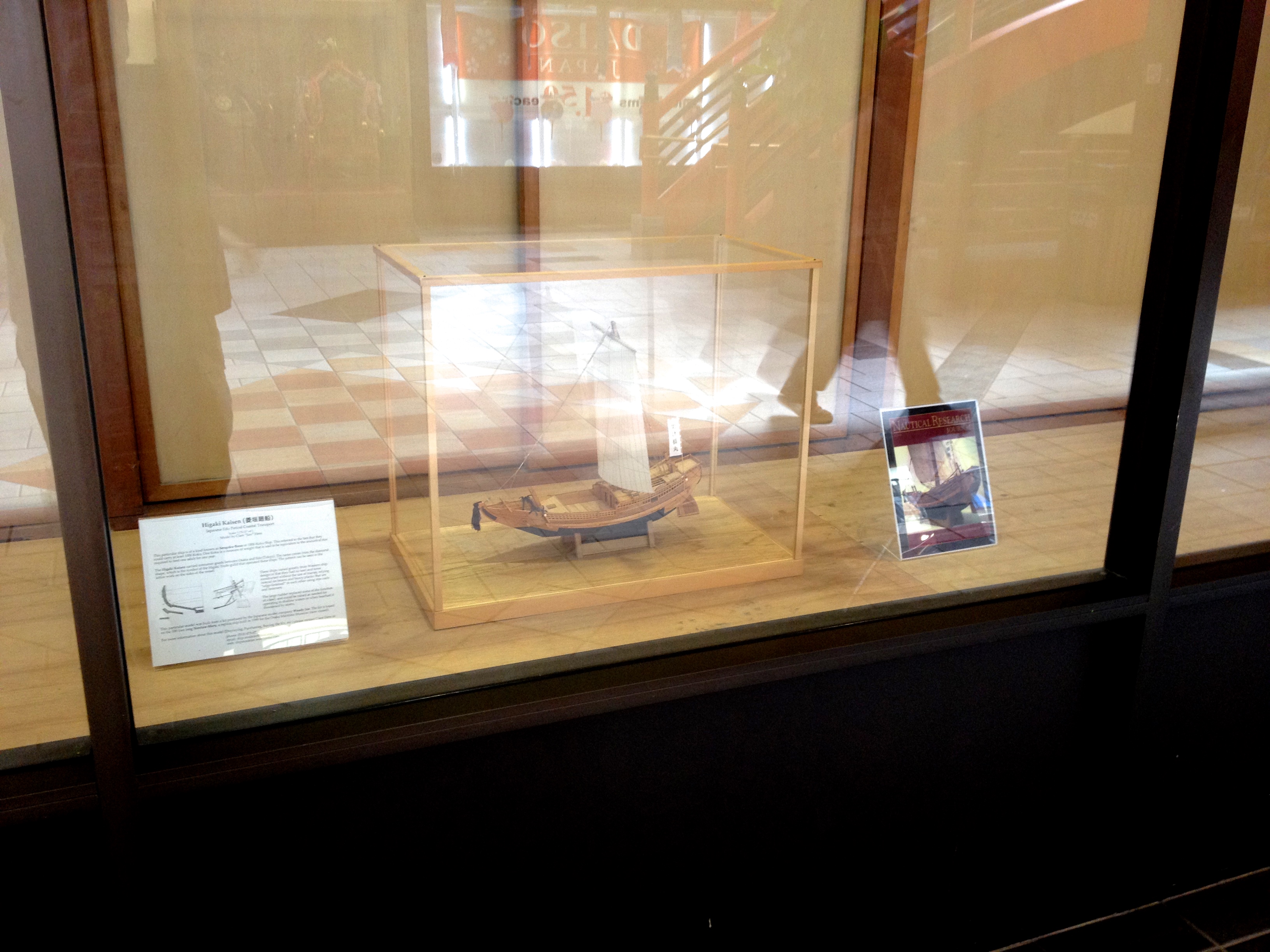
The model is in a case made using a Woody Joe case kit. I made a couple informational displays to go with it. Sorry about the quality of the photo. Shooting through glass in brightly lit open area doesn’t work out so well. Maybe with a polaroid filter – do they make those for iPhone cameras?

IMG_0764

My Higaki Kaisen model in the window display at Union Bank’s Community Room in San Francisco’s Japantown.

The bank administrator was very happy with the display and cleared out all the general promotional bank stuff that’s normally in there. The model will be on display from now until about April 3rd, when SF Cherry Blossom set up takes place and a Japanese doll display goes in. We’ve already discussed the possibility of bringing the model back after some time in May when the display case may become available again.

IMG_0762

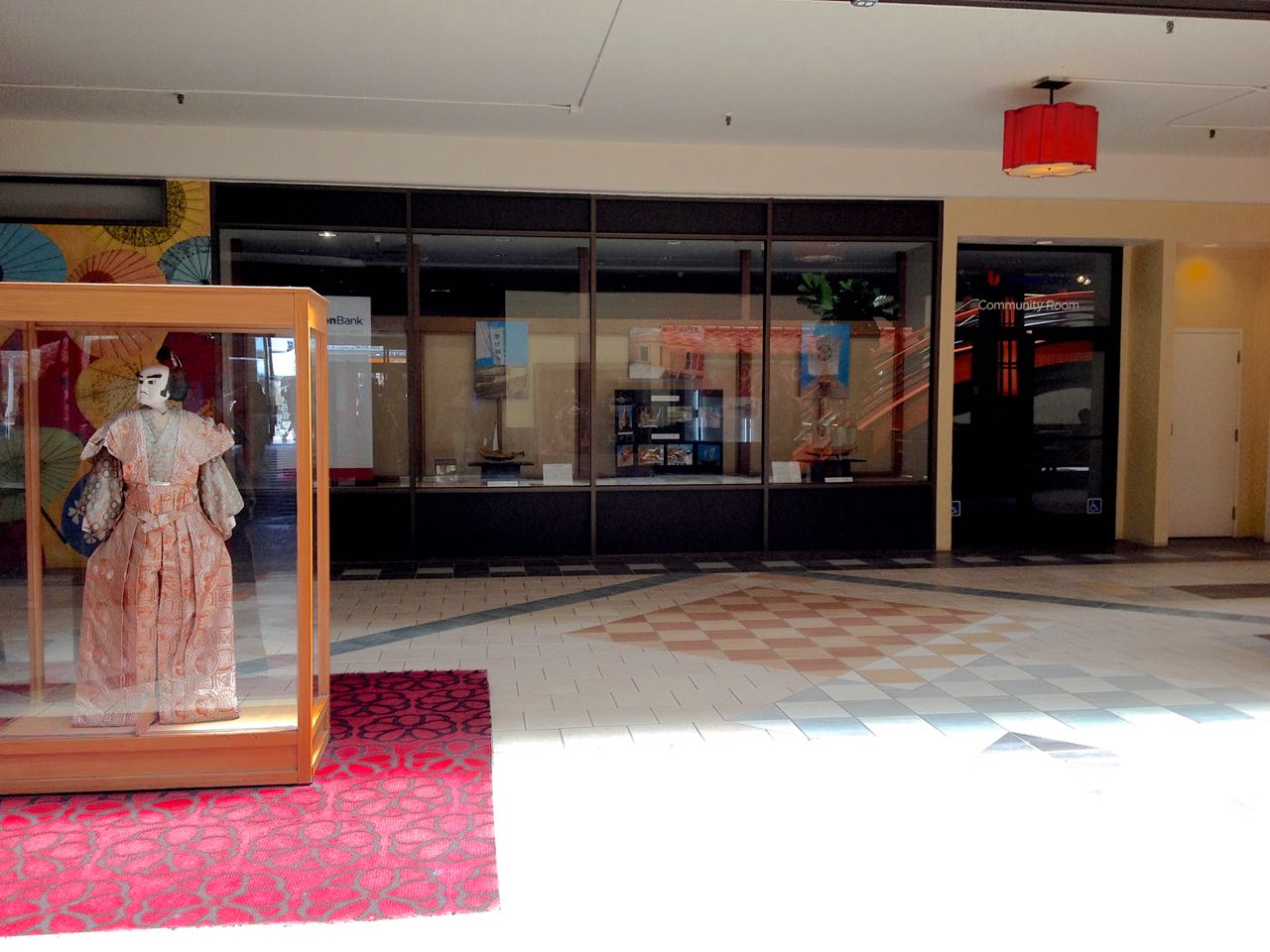
The display is right off this open courtyard. What looks like a bridge is actually a stairway.

The only thing is that the model looks awfully lonely in the big display window. We both agreed that there should be two other models to accompany it – the display window is just laid out perfectly for that.

IMG_0767

My model seems sad to be all alone in the big window.

Now, I do have a partially completed Hacchoro model, which will actually be larger than the Higaki Kaisen model since it is at 1/24 scale. I just need to finish it and get another display case. Not sure what to do about the empty third spot. I have the large Sengokubune kit, but it’s unstarted, and there’s no way I can justify taking the time to build it with all these other projects waiting for me.

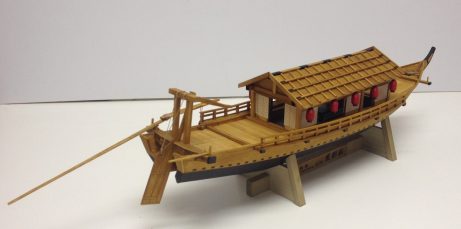
Woody Joe’s 1/24-scale Yakatabune kit is a possibility as it’s almost identical to the Hacchoro in construction except that instead of all the oars and sails and accompanying details, it just has a deckhouse. That would be a pretty quick build and it would fit the theme very well.

Lastly, because of the low position of the floor of the window display, a friend of mine was suggesting maybe putting in some kind of box stand. I suppose anything would work. Lot of possibilities here. Almost screams for some kind of diorama.

Thinkin’, thinkin’…


Higaki Kaisen in NRG Journal

I got a nice surprise a couple months ago when the editor of the Nautical Research Journal, Paul Fontenoy, asked me to submit a short article on my Higaki Kaisen model. So, a while back, I sent him some photos to use and a very short write-up with some captions to accompany the photos. Then, I got an even nicer surprise when I was told the model would appear on the cover.

Cover NRJ 59-3 for Web-1

Having been an NRG member/supporter and having long admired the models that have graced the pages of the Journal, this was a really tremendous honor. Now, I’ll have to admit, it really the model subject and the uniqueness of the kit that got the model on the cover and not my artistry or craftsmanship. But, still it’s pretty nice to see it there.

Of course, being that I’ve been advocating Woody Joe kits here, it’s great to get people’s attention this way. I got an extra copy of the issue and sent it Woody Joe and they should be receiving it any time now. I’m sure they’ll be very happy to see their kit receive such attention.

The timing of this article probably couldn’t be any better, as I just submitted the proofs for my Higaki Kaisen kit review article, which will appear in Seaways’ Ships in Scale in the next few weeks. As for my history/build article for Ships in Scale, I’ve been getting pretty distracted with all the projects I’m trying to get done. But, with these articles both out in August/September, I’ll need to get back on it very soon.

But, while I’m mentioning the NRG here, I would like to say that this is a really fine organization, dedicated to ship modeling, and it deserves and needs your support. It’s not all academic and it’s not about being “purists” or anything of the like. The tagline “Advancing Ship Modeling Through Research” is just to say it’s about making better models, it’s about helping the modeler make better models, it’s about getting help to build better models.

Seeing my own model on the cover, I can’t help but wonder when the last time was that a kit build was featured on the cover? Times really do change. So, join the NRG. It’s a great organization, you’ll be supporting a great cause (ship modeling) and you’ll get your quarterly issue of the Journal!