Urayasu no Bekabune (浦安のべか舟)

The bekabune, sometimes referred to simply as a beka, is a small, one person, flat-bottomed boat used for gathering seaweed. In the city of Urayasu, which was once on Tokyo Bay until landfill projects left it far from shore, there were two types of bekabune used. A smaller one, sometimes called a noribeka, that was used strictly for gathering seaweed, and a slightly large oner which was also used for catching shellfish. Large numbers of these boats operated out of Urayasu, while similar boats operated out of the rival port to the west at Ōta.

Many of these boats were designed to allow the use of a mast with a single spritsail. Others, which I believe were expected to be towed or carried aboard the large net fishing Utasebune, were only designed to be paddled.
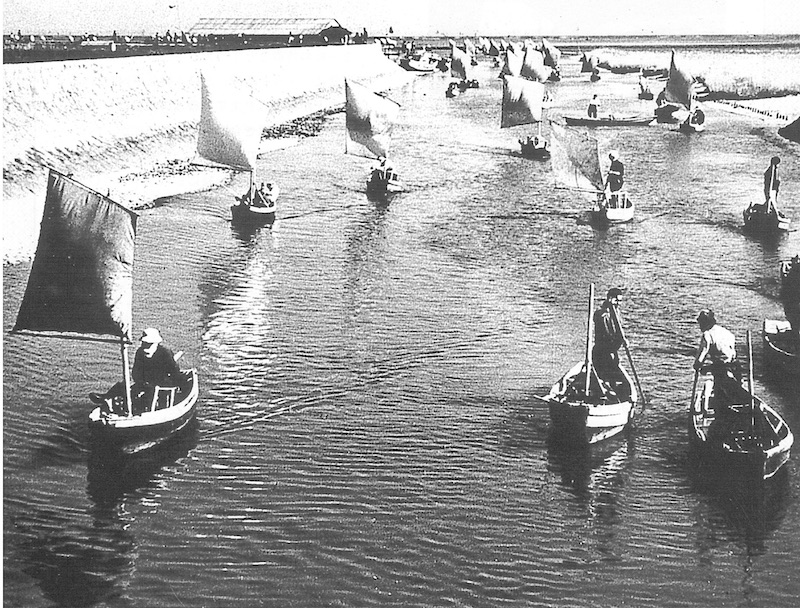
At one time, large numbers of bekabune operated out of Urayasu on Tokyo Bay. Photo courtesy of the Urayasu City Regional Museum.
Continue reading →

Kujirabune (鯨船) – Report from the Taiji Museum

While I received a digital copy of the Japanese whaleboat replica plans from the Taiji Museum curator, Mr. Sakurai, I never got the museum catalog he had offered to send. I didn’t worry about it, because I did have the plans, and I wasn’t charged anything, so I didn’t want to bother Mr. Sakurai about it.

Then, just yesterday, I received an email from Mr. Sakurai about it. He apologized and said he would be sending it out to me right away. Apparently, he was reminded of this, as my shipmodeling friend, Sekiguchi-san, just made a trip all the way to Taiji to visit the museum. He spoke with Mr. Sakurai briefly and asked him some questions that I think we both had about the whaleboat’s design.

He apparently also studied the full-size whaleboat replica on display there. I’m hoping he took some photos as well. Anyway, I’m looking forward to getting the museum catalog, which I believe is what we would more commonly refer to as an exhibition guide. I’ll report more when it arrives. Ω


Kezurou-Kai 2017 Follow Up

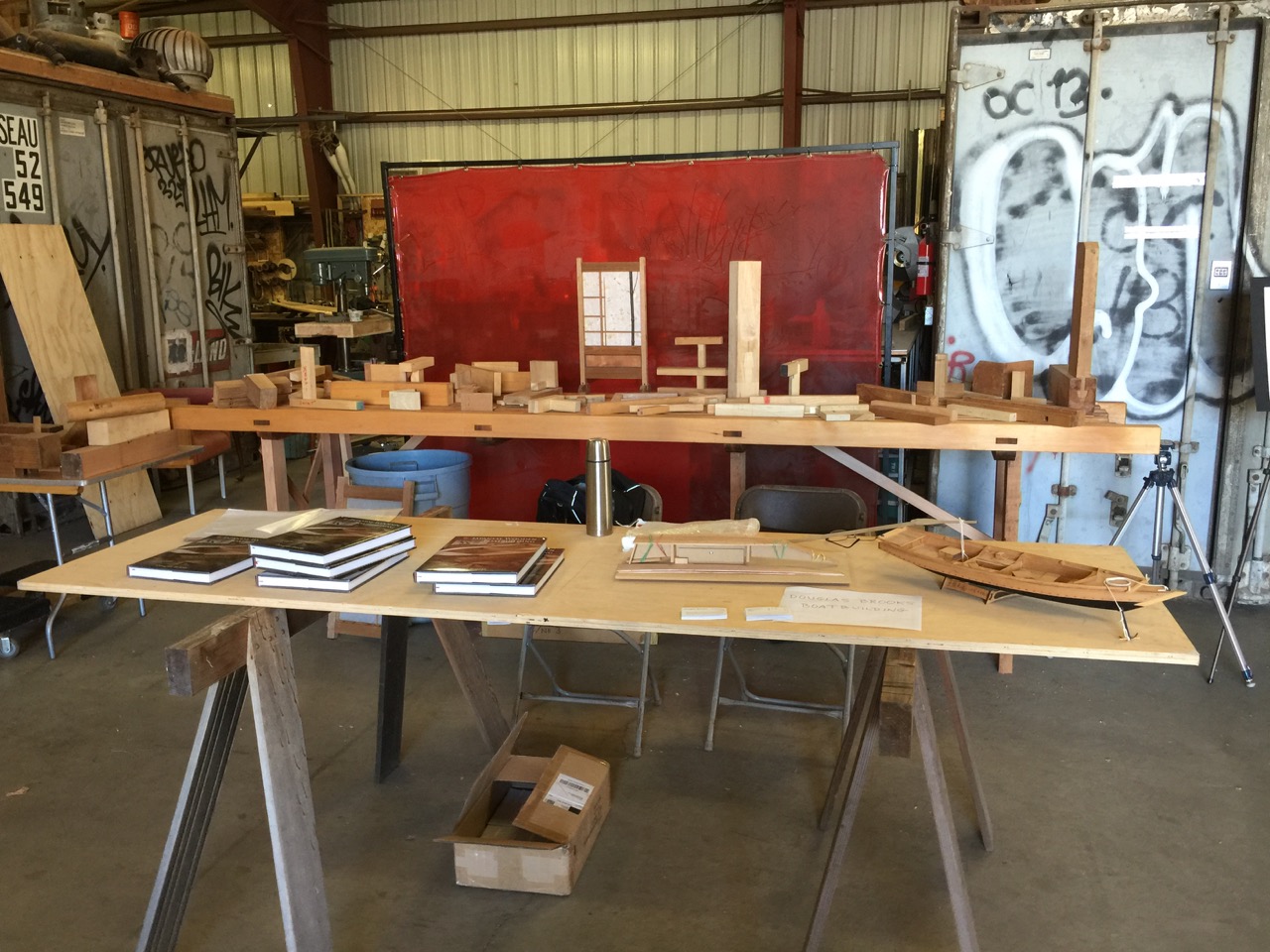
The 2017 Kezurou-Kai USA event is over and I had a very long day manning a book selling table for Douglas Brooks. It was a lot of fun meeting and talking with enthusiasts of Japanese carpentry. Many were local, but a number of people had flown in the the East Coast and elsewhere. I only worked the second day of this 2-day event, but I did manage to sell some copies of Douglas’s book, Japanese Wooden Boatbuilding.

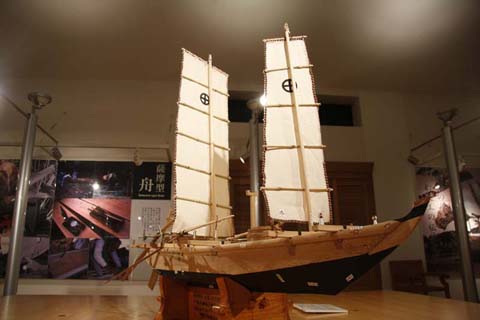
My makeshift book sales table with my models on display.

It was nice to be able to talk to people about Douglas Brooks and Japanese wooden boats, as well as about the pair of models I brought. They were supposed to attract attention, which they did.

Continue reading →

Kezurou-Kai in Oakland, Oct 20-22

While it doesn’t relate directly to modeling wasen, there is an event of coming up in Oakland, California this weekend, the annual gathering of Kezurou-Kai USA. This is a 2-day event of enthusiasts of Japanese carpentry.

I don’t really know much about the group except for what I’ve heard from others in past months. And, the only reason I know about it now is really because of Douglas Brooks, who apparently gave a talk at the Kezurou-Kai event, which I believe was in New York last year, from what I recall.

Well, Douglas asked me if I would be willing to spend a day at the event to sell his book Japanese Wooden Boatbuilding. Of course, I welcome any opportunity to pay him back for all the help and information he has given me, so I agreed to run a vendor table on the Sunday of the event.

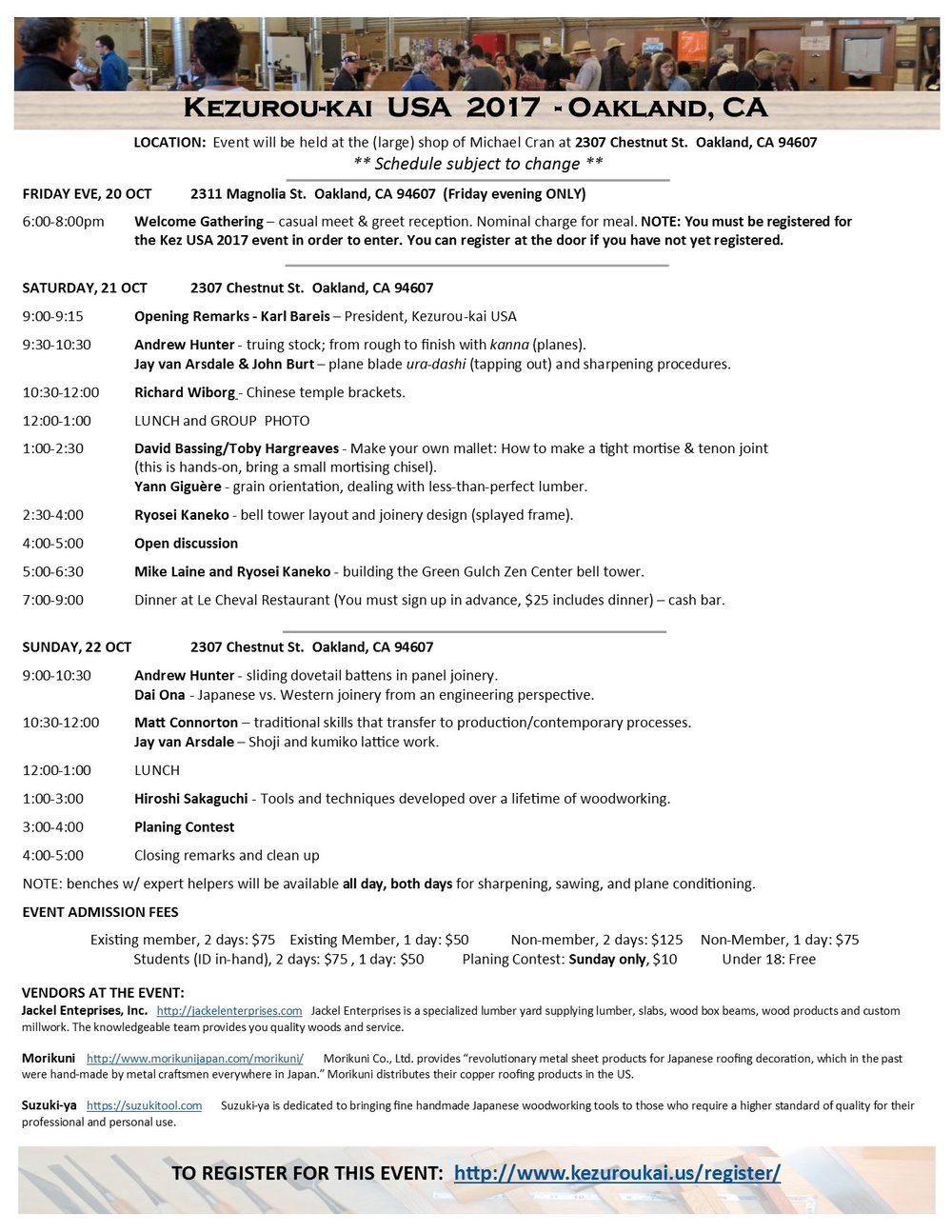
Here’s a copy of the event schedule that I copied from their website.

Continue reading →

Satsuma-gata Wasen (薩摩型和船) – Toba Seafolk Museum

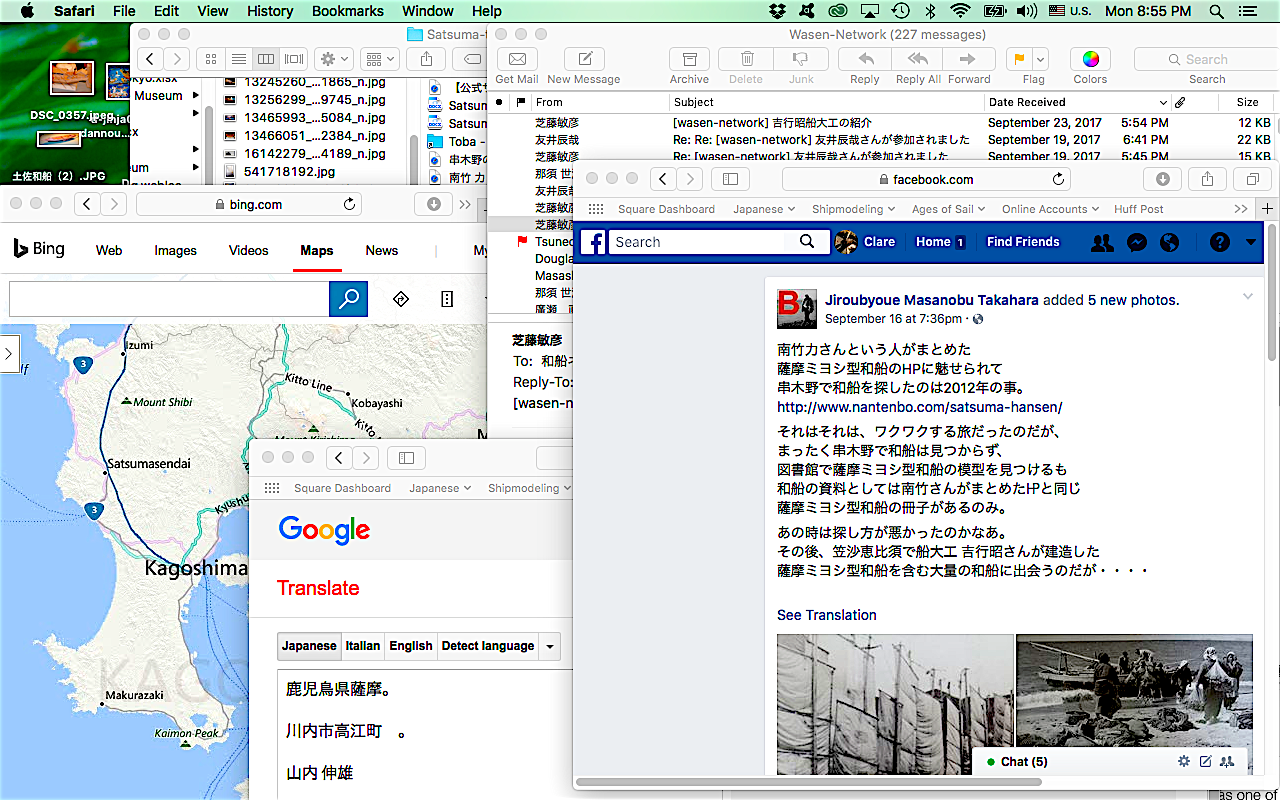
Recently, there were several posts on Facebook regarding boats from the southwestern end of the island of Kyūshū. It took me some effort to review the posts and linked pages to figure out that the boats described were of the same general type, as the terms used to describe the type seemed to vary a bit. The boat is a Satsuma-gata, or Satsuma-type boat.

Satsuma is an old feudal domain that makes up part of what is now Kagoshima prefecture on the island of Kyūshū. I didn’t know much about this area or about this boat until the recent Facebook posts.

Continue reading →

Kujirabune (鯨船) – Japanese Whaleboat Plans Arrived!

Yesterday, I received an email from Mr. Hayato Sakurai, who is the curator of the whaling museum in Taiji, Japan. Interestingly, Mr. Sakurai also lists himself as Advisory Curator for the New Bedford Whaling Museum, which I didn’t know, though it only makes sense.

Scene from a 150 year old screen painting of whaling along the Kumano Coast, Kishu region

Continue reading →

Computer Translation of Japanese Text, Part 1 – Translation from the Internet

Recently, I wrote a blog post about Researching Wasen Remotely, but it was mostly a follow up about the general difficulty of sorting through research information that’s primarily in Japanese and gathered from wide ranging sources. But I’m thinking it might be helpful to go over some of the resources and tools I use in research. This could be pretty involved, so I may need to do this in a few parts.

The most obvious sources of information are going to be books, drawings, photos, web pages, etc. Drawings and photos aren’t language dependent, but books, websites and any text in the drawings and photos, are going to be written in Japanese. If you don’t read Japanese, that’s a big problem, but there are tools that can help.

While I was born in Japan, am half Japanese, and know a small amount of spoken Japanese, my own knowledge of the written language is limited. Here’s how I overcome this limitation.

Continue reading →

Researching Wasen Remotely

Today was one of those days where I am reminded of how much work it takes to research wasen, or traditional Japanese boats, from here in the U.S.

Continue reading →

Wasen Model Display at the Museum of Maritime Science, Tokyo

Exhibition of models of Edo period Japanese boats by Mr. Yukio Nakayama.

The display is at the Maritime Science Museum in Tokyo from Saturday, September 30th, through Sunday, October 15th. The display consists of approximately 200 beautifully handmade Japanese boat and ship models in 1/70 scale, with about 50 Edo period buildings, including shrines, temples, shops, warehouses, etc.

Mr. Nakayama will be on-hand on September 30th, October 1st, October 7th through the 9th, and October 13th through the 15th.

~ Session: September 30th (Sat) – October 2017 Sunday (Sunday) Place: Ship’s Science Gallery (Odaiba) About 200 precision handmade Japanese model models of scale 1/70 with about 50 buildings at the time including shrines, temples, town shops, warehouses, The diorama will be exhibited abundantly in the scene. On September 30th, October 1, 7, 8, 9, 13, 14, 15, the author himself visits, and will explain the work and the production demonstration. ※ “Funenki” is an identification chart of boats created in the late Edo period, with 33 kinds of riverboat of Kanto 1 yen and Daikawa combined ship are drawn.

I wish I could be in Japan when this is taking place, I have many photos of Mr. Nakayama’s models on display, and the work and variety of models is incredible. I can only hope to see this some day.

Catch the exhibit if you can!


企画展示 江戸木造和船細工 「船鑑(ふなかがみ)」を中心に… Part.2 ~江戸木造和船細工師 中山幸雄の世界~ 会期:2017年9月30日(土)~10月15日(日) 場所:船の科学館(お台場) 縮尺1/70の精密な手作り和船模型約120種200隻を、神社、寺、町屋、蔵、灯明台等当時の建物約50棟と共に情景豊かにジオラマ展示します。 なお、9月30日、10月1、7、8、9、13、14、15日は、作者本人が来館、作品解説や製作実演を行います。 ※「船鑑」とは、江戸時代後期に作成された船の識別図鑑で、関東一円の川船及び海川兼用船33種が描かれている。

via 船の科学館で展示 — 木造和船 中山幸雄の世界

Making Progress on Kujirabune (鯨船) Research

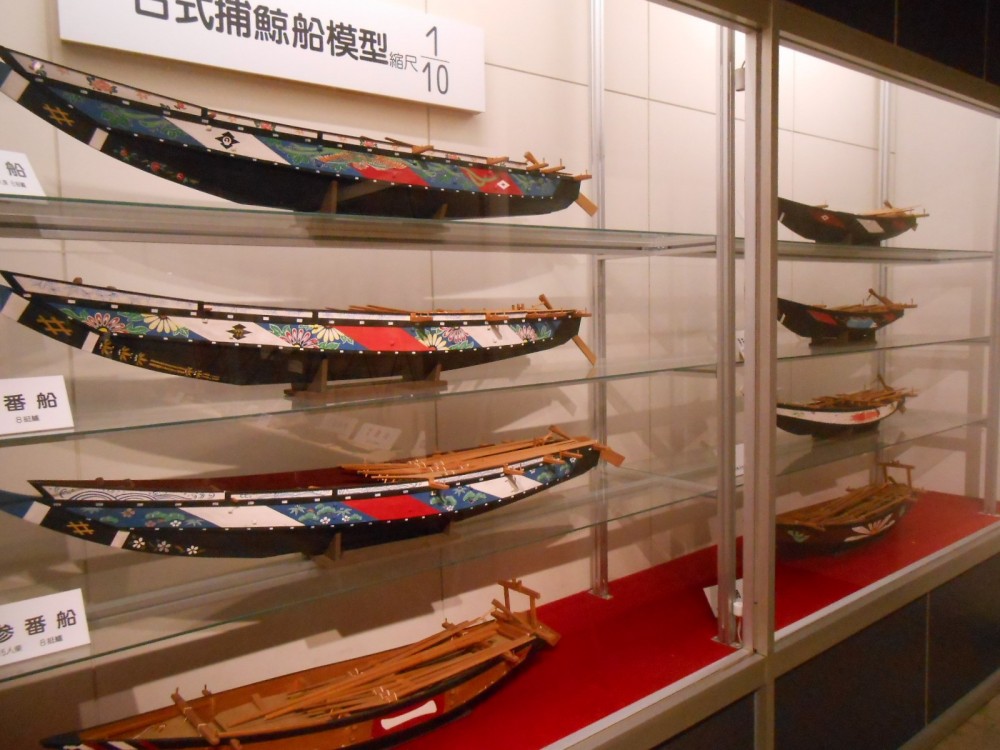
I recently had some very good new regarding my research of Japanese whaleboats, or Kujirabune. After finding the Taiji museum website and seeing a post of some whaleboats from Muroto, which is in Kōchi prefecture on the south eastern corner of Shikoku, I had mentioned these things to my ship modeling friend in Japan, Mr. Masami Sekiguchi, and also to Douglas Brooks. As it turned out, Douglas Brooks knew the curator of the Taiji museum and put me in touch with him.

Shortly after, my friend Sekiguchi-san had called the museum and spoke with the curator, Mr. Hayato Sakurai. It was nice to hear from Sekiguchi-san that the website I told him about, http://taiji.town, and the many colorful illustrations of whaleboats was something he wasn’t aware of, and he really appreciated my finding them. I think he enjoyed his conversation with the curator, and as it turned out, the Taiji museum building was designed by a friend of his, who has since passed away. So, I was happy to be able help him make some connections too.

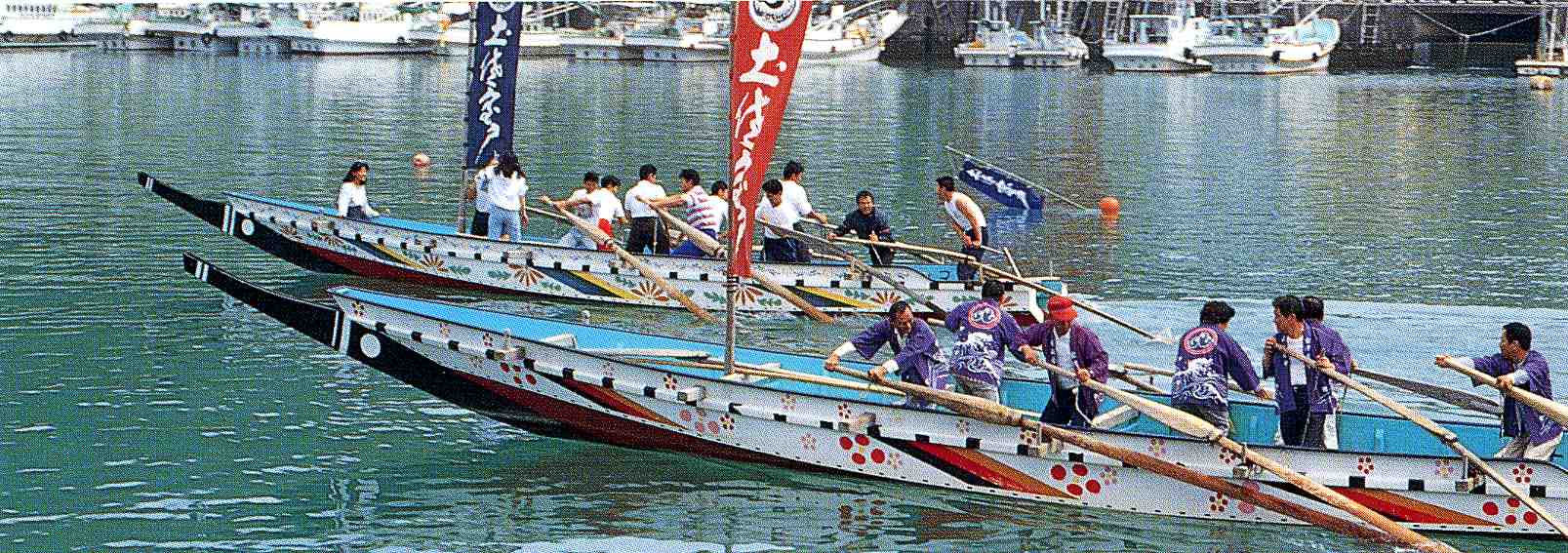
Modern fiberglass-hulled kujirabune replicas racing.

Continue reading →