Atakebune – Japanese Warship Kit in Development

At last, it’s happening. After some enthusiastic petitioning by Kazunori Morikawa, myself, and others to the Japanese wooden model kit maker Woody Joe, it appears the company is actively developing the prototype for an Atakebune.
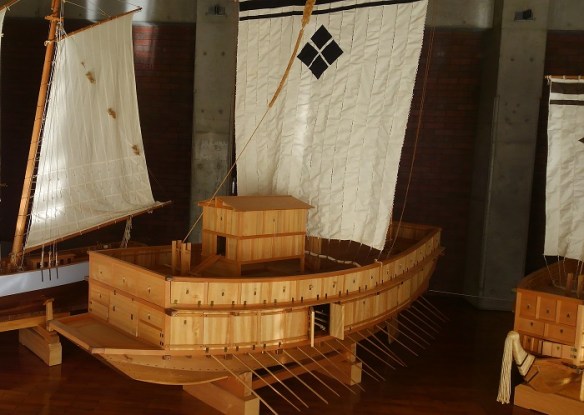
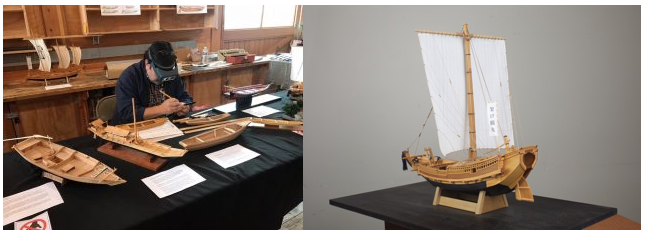
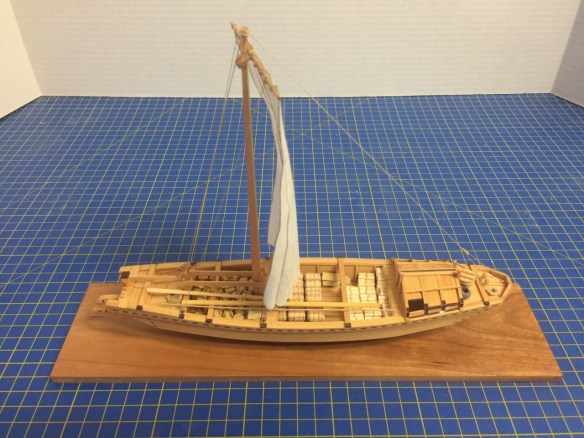
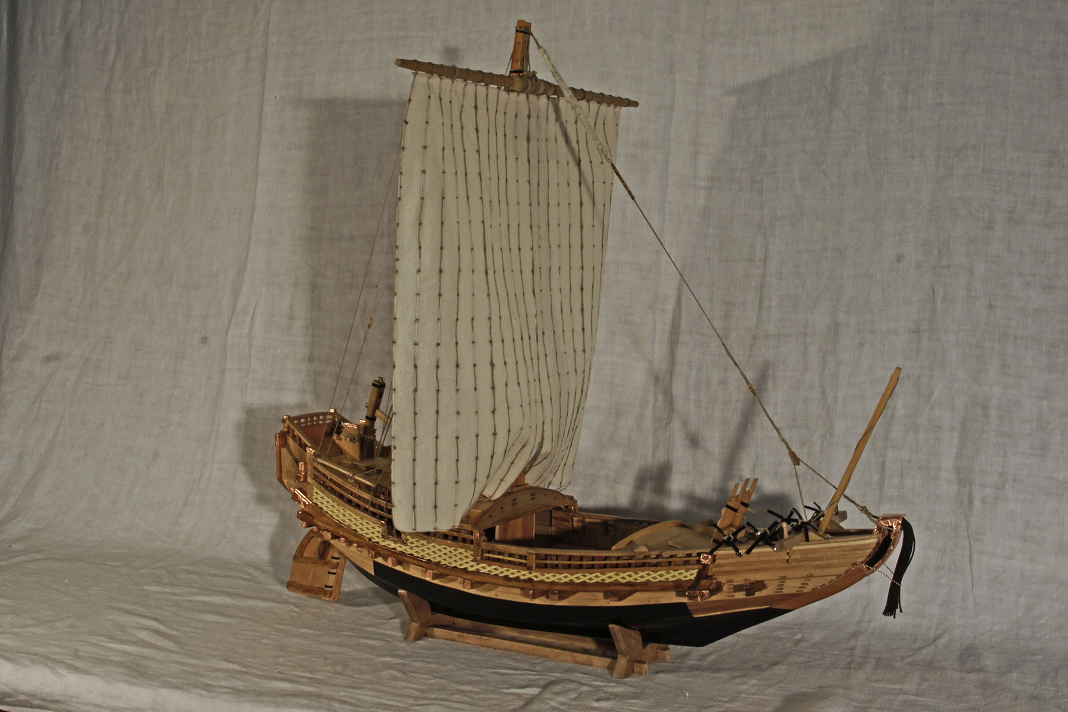
Museum model of an atakebune

For those who don’t already know, the Atakebune is the largest class of warship used by the Japanese feudal armies of the warring states period. These lumbering ships were effectively floating fortresses. While they were equipped with one large mast and square sail, as well as a  single bank of oars, they were often towed by smaller warships.
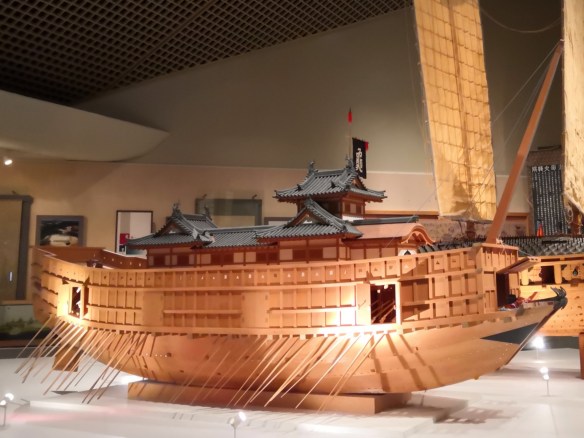
Museum model of a large atakebune

I’ve had a number of people ask me about the availability of an Atakebune kit. Up to now, there hasn’t been much  available in the form of a well researched scale model kit. But, yesterday, Woody Joe posted a photo on their Facebook page, announcing that they’ve started working on a prototype model.
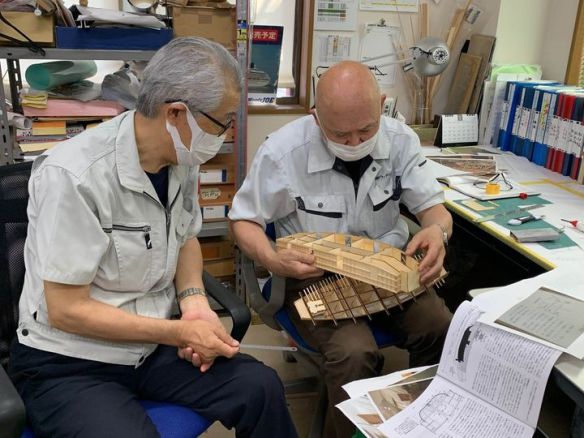
The new model is 1/100 scale, and it’s only a prototype, so we won’t know if it’s going to go into production yet. I’m a bit disappointed that the model is not 1/72 scale, as that scale would then match Woody Joe’s Higaki Kaisen and Kitamaebune kits, plus it would then be compatible with 1/72 samurai figures that are currently available.

However, a 1/72 scale model would almost 40% larger than a 1/100 scale model. And, considering these were large ships, that would be a big kit that might be harder for company to manufacture. Also, such a large model may be less appealing in Japan, which is their primary market.

I don’t know any more details yet, but will post them as soon as I learn more. Ω
Modeling Japanese Boats – MESS Talk Follow-Up

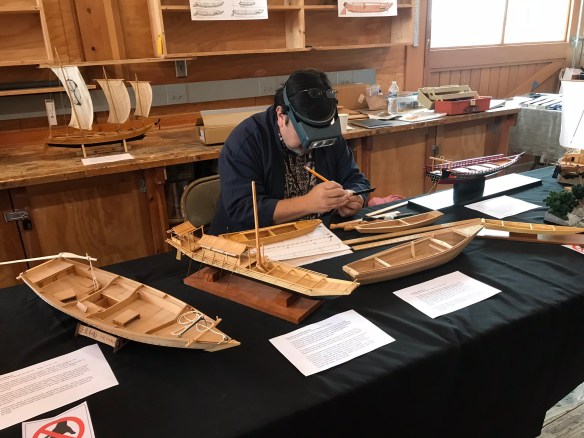
My first webcast talk on the modeling of Japanese traditional boats is done. It was the first time I’d done anything like this. Though I’ve spoken on the subject before, this is the first time that I couldn’t see my audience, which was an interesting experience that more or less ended up going fine. Talking from the comfort of my own workshop garage also made it more relaxing.

The even was only an hour long, and my talk was about 50 minutes or so, which isn’t a long time for this subject, particularly with my penchant for digression. So, there wasn’t a lot of time to get into anything very deeply, and it was really more of just an overview. But, considering it was aimed at a general audience, that was probably about right.

For those of you who wanted to attend the talk, but couldn’t, it was recorded and is now posted on the San Francisco Maritime National Park Association’s Vimeo page, which you can view here:

At the end I mention that the talk had gotten me thinking about doing actual wasen modeling workshops via Zoom, and I’m actually pretty serious about that. But, of course, there would need to be enough interest to make it worthwhile. Not sure about costs, materials I’d provide, etc., but I’ll have to see if there is much interest first. So, if you’d be interested in a workshop or, more likely, a series of workshops on building a model of a smaller wasen from scratch, email me at info@wasenmodeler.com.


Modeling Japanese Boats – MESS Lecture Series – This Thursday, May 27, 11am PDT

Here it is at last, my first webcast talk on the modeling of Japanese traditional boats, from research to construction. This talk is part of the San Francisco Maritime National Park Associations monthly lunchtime talks called MESS, for Maritime Education for Students of the Sea. Earlier this year, I was asked if I could participate, and I agreed, as long as I could talk about modeling Japanese traditional boats.

The talk will take place this Thursday, May 27th, at 11am PDT. The talk itself should last about 40 minutes. You can watch the livestream here: https://givebutter.com/MESS. There is no cost to attend, and you can ignore the banners that suggest you need to register for tickets, as there aren’t any.

This talk is aimed at a general audience, so it’s not going to be very technical. I’ll talk about how I manage the research and get into some of the basics of traditional Japanese boats and their design, and the general process of building them from scratch.

If you’re interested, I hope you’ll attend. Afterwards, if there is enough interest, perhaps I’ll organize my own web-based workshop on building one particular boat. If you’re interested in that, be sure to let me know. In the meantime, I hope to see you at the talk this Thursday. Ω

May 2021 Wasenmodeler Update

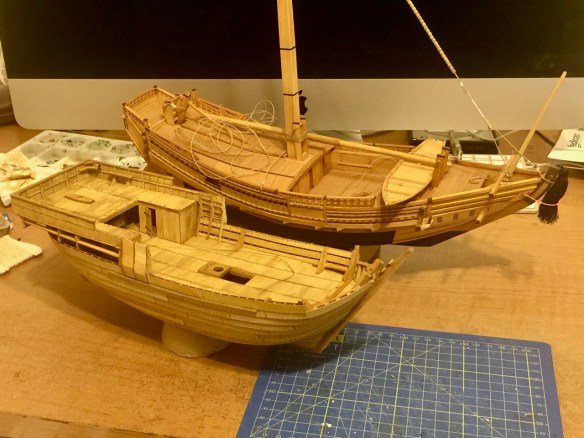
After some time off to finish a medieval European cog model and to gain some ground on a couple other ship modeling projects, I started working on wasen models again. It is interesting, though, to have the cog model and a sengokubune model (the Kitamaebune is a class of sengokubune, a common term for this type of coastal transport), sitting close together, as they are both in 1/72 scale.

My models of a medieval european cog (foreground, left) and kitamaebune (background, right), both in 1/72 scale. Different eras and regions, but still interesting to see them side-by-side.

Continue reading

Wasen Projects Status – March 25, 2021

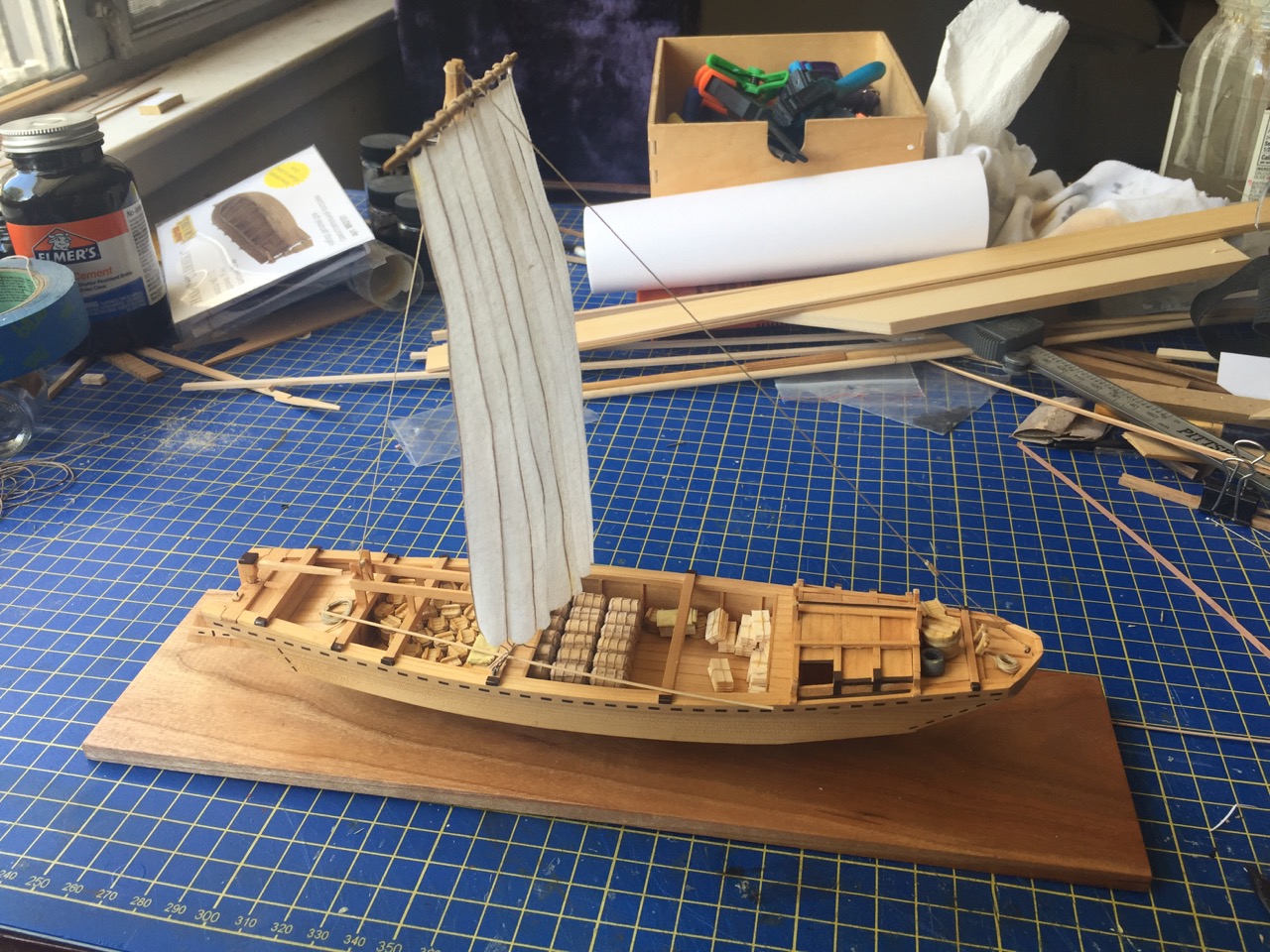
After taking a five-week break from wasen modeling, I’m back at it now, getting close to finishing up some more details on the Tonegawa takasebune, and soon the Kitamaebune, which still needs sails.

The break came about after I was asked to do a Zoom presentation as part of a series of lunchtime talks called the MESS lectures, for Maritime Education for Students of the Sea, a series organized by the San Francsico Maritime Research Center. The talk is not until the end of May – Thursday, May 27th, at 11am, to be precise. But, more on that later.

So, I kind of needed a break from my Japanese projects. Plus, for the talk, I think I need to keep some of the these models in various stages of completion, to serve as illustrations of the wasen model building process. So, I’ll probably leave the Senzanmaru and Nitaribune models where they are until after the talk.

Since it would be good to show the earliest stages of construction too, I’ll probably just get started on a couple other projects. Just not sure what the subjects will be yet. It’s all about what I think will be most interesting to illustrate or demonstrate. Again, more on that later.

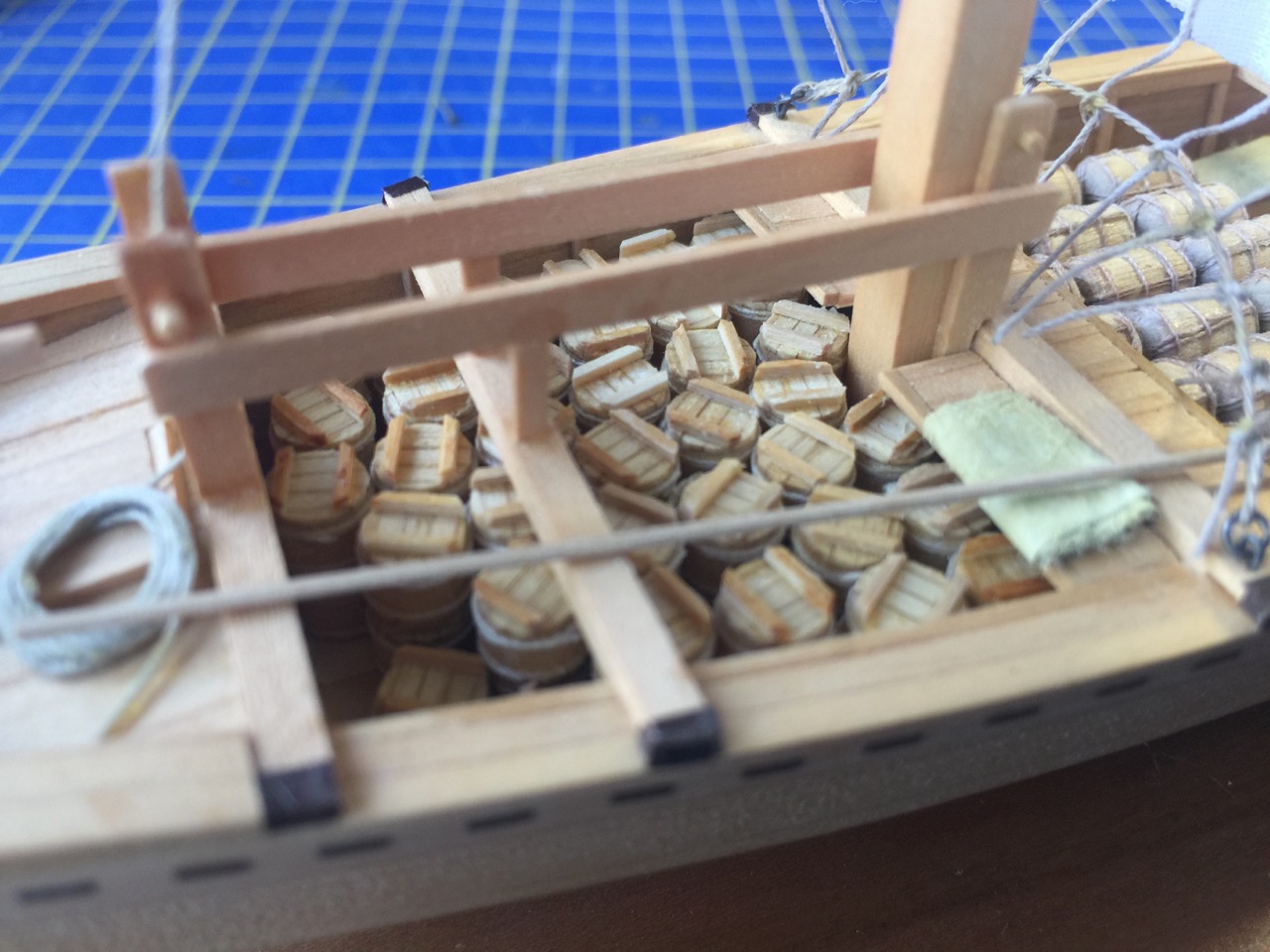
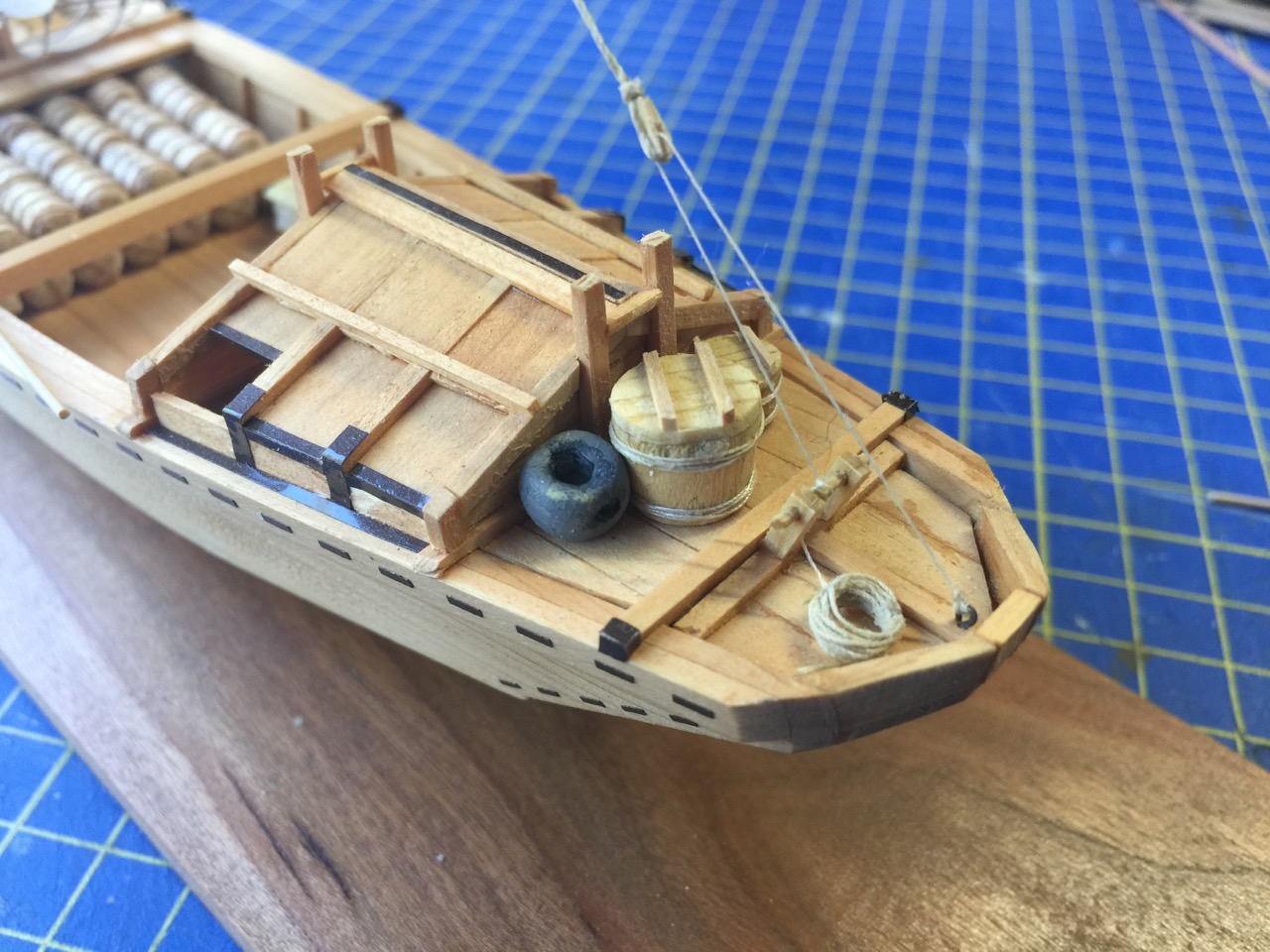
For now, I ‘m going to try to focus on the takasebune. I started adding cargo into its hold, so I really need to continue with it until it seems reasonably loaded down. I had made a couple different kinds of cargo and am now finishing up the third type, which are covered buckets, or oke (oh-kay). Each one is simply a short piece of dowel, with a lid constructed of 5 small pieces, then the body of the bucket is wrapped with two threads to represent hoops of bamboo.

Aside from the cargo, I still have some “copper” trim to finish up, as well as the addition of parrals and brace lines to the yard. I don’t know the Japanese terms for these off-hand. My only regret is making the sale so square to the hull. I’ll probably brace the yard at a slight angle, so it’s not so straight. Thinking about it now, I would like to make a model that shows the yard holding the sail in a position that makes it act like a lug sail, a fore-and-aft sail for sailing closer to the wind.

In the near future, I’ll post more details about the steps in the construction of the Tonegawa takasebune model.

Drawing Wasen Tomo no Kai’s “Kawasemi”

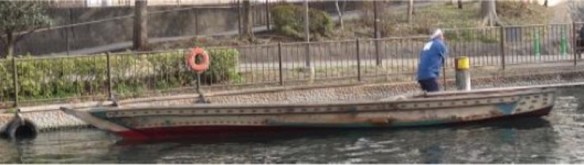
Just a few days ago, I mention in a blog post that I’d managed to acquire drawings of an Edo Nitaribune, a cargo boat used on the canals and rivers of old Edo. I also mentioned that it turns out that these drawings are a perfect match for a boat built by the late Mr. Kazuyoshi Fujiwara, a Japanese boatbuilder with whom Douglas Brooks studied under in his third apprenticeship.

Mr. Fujiwara built at least a couple boats that are now used by a group called Wasen Tomo no Kai, or Friends of the Traditional Japanese Boat. This is a group of volunteers that operate and maintain several wasen, giving rides to visitors in Tōkyō’s Kōtō ward.

Today, I spent some time working with the drawings to create an illustration to help me work out the details of my Nitaribune model. Now, I’m using the term Nitaribune and the name “Kawasemi” pretty interchangeably. But, just bear in mind that Kawasemi is just the name given to the boat used by Wasen Tomo no Kai. The name is just Japanese for  Kingfisher. The group pretty much names all their boats after birds.

Anyway, using the drawings I have, plus some photos I dug up on the Japanese pages of Wasen Tomo no Kai’s website (the English language pages don’t have as much info), I was able to do a pretty fair reconstruction of Kawasemi.

Continue reading

Wasen Projects for 2021

At the start of 2020, I wrote about an “Explosion of Wasen Model Projects” and I listed several projects, some have been long-time desired projects that were coming to life, and a few were new projects entirely. Here’s a rundown of those projects, followed be a look at what’s happening in 2021.


Himi Tenmasen – This was a project commissioned by boatbuilder Douglas Brooks. Though not a simple model, It was a quick project, as I had plenty of access to all the details of construction of the actual boat. This was something of a “full-time” build, which I started in mid-April of 2020 and finished by the end of the following month, about 5 weeks later.


Continue reading

A Naniwamaru Build in German

Not sure how I missed this, but back in 2012, a ship modeler on an Austrian website researched and built a model of the Naniwamaru, one of four replica Japanese coastal transports at the time.

Naniwamaru model by Heiner Luh

Mr. Luh had contacted American boatbuilder Douglas Brooks, who had written an article on these ships, generally called bezaisen or sengokubune, in the the Shipwright annual for 2011.

Mr. Luh’s model under construction.

The construction of the model is detailed on the modeler’s website here: http://www.googlehupf.at/shipwright/?page_id=276

I’m always very impressed by ship modelers who build models of Japanese watercraft with limited information. The only thing odd in the model is the narrow strip planking of the lower hull, but this is covered by the paint job anyway.

I couldn’t find mention of the scale of the model, but it’s pretty big. I’m guessing it’s about 1/50 scale, as the 30 meter long ship (give or take) looks to be about a 2 foot long model (give or take).

Anyway, it’s a very nice model and there are a lot of great construction photos on his website. Definitely worth checking out. Ω

A Blog Site on Illustration of Historical Japanese Ships (和船図譜)

I was digging around on Youtube a few weeks ago and discovered an interesting 3D walk-around video of a traditional Japanese boat. In the description, I found a link to a Japanese website called Wasen Zufu (和船図譜) or Illustration of Historical Japanese Ships. This is apparently a blog site of someone in Japan who has created some virtual 3D models of a few wasen. Some of these are shown as a textured image, with a couple shown in walk-around video clips of them.

Many people might not take much notice, but I saw that a couple of these reminded me of boats I had seen in a book on boats of Toyama prefecture. Looking more closely, sure enough, three of the boats from Toyama are included.

3D digital models are interesting, as you should then be able to view then from any angle, and thus get a better sense of what they look like. I suppose they’re really no different from physical models, though these digital models lack some details, such as planking and fastening. But, on a small enough scale, my own wooden models may lack some of these features. So, that does cause me to rethink those smaller models of mine.

But in any case, the site, as I say, is interesting. One of the most interesting things to me, was to discover a link to the text of a talk given by Mr. Naoki Hirose, the curator of the Himi City Museum, and someone I actually know. I already wrote about the details about this in a previous post here: Funabashi – Boat Bridges in the Edo Period (船橋).

Anyway, you can check out the site here: https://blog.canpan.info/wasenn-zufu/

I’ve written to the owner of the site and he indicated he was going to keep making illustrations. So, while the site doesn’t seem to have been updated in a while, perhaps we’ll seem some new information there in the future. Ω


Building a Tenma-Zukuri Chabune (伝間造茶船) – Part 5 – Final

First off, my apologies for taking so long to post an update on this project. The Tenma-zukuri Chabune is actually done. It sat for a long time with all the construction work done, needing only the coppering detail. I finally got the nerve to get back to it and it is now finished. But, when I last posted, there was still work to do, so let me take a step back to go over what was done.

Last we left off, the nail mortises had been cut and I was ready to add the decks at the bow and stern, or the omote and the tomo.

I don’t know if the boards that make up these decks were removable. Underneath, I left the ends open, so things could be tucked in there for storage, but only for smaller things, as the support posts of the beams cut the openings in half. If the deck beams were removable, there should be finger holes in at least some of the deck boards, so they could be easily lifted up. Sometimes, there was also a V-shaped pattern inscribed across the boards to make it easier to identify which boards go where. This is less important at the bow, where the boards lengths vary greatly, making them more easily identifiable as to which one goes where.

At 1/20 scale, I decided to keep things simple and didn’t add either finger holes or the alignment inscription. This would be more important on a larger scale model, like 1/10 or 1/15. So, adding the deck boards was just a matter of laying them down.

Continue reading