Building a Gozabune (Kobaya) from Paris Plans – Part 4

More progress on the model and I’m on something of a roll now, as the trickiest questions I had I’ve now managed to pretty well answer. Let me begin by posting a translation of the French text that accompanied the drawings in Le Souvenirs de Marine. This is something of my own interpretation based on direct translation of the text using Google Translate and my own knowledge of French, and of a Japanese translation of the text that I found on the Internet, which I then translated into English, again using Google Translate. Correlating the translation, and the translation of a translation, I then went and rewrote the description based on the drawings and on my knowledge of Japanese watercraft. The notes in square brackets are my own clarifications.

From Paris:

No.15-1

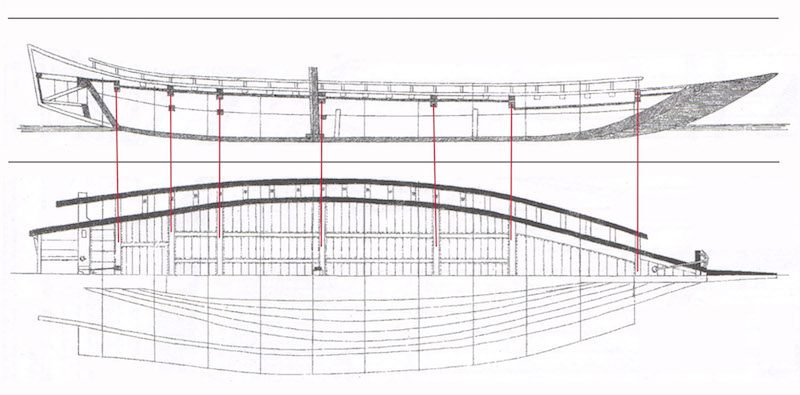
Japan, Small Galley Measured in Yokohama in 1868 by Mr. Armand Paris, Ship’s Lieutenant.(Drawing No. 15-1)

This kind of small galley belonged to the Taikun [ “Great Prince,” the Shōgun Tokugawa]. The construction of extreme lightness is very careful and the method of assembly of parts is the same as that of other boats with a single layer of planks. The stern differs in that it is closed by a panel [false transom], and it has bulwarks raised at the back. The beams are in pairs and placed one on top of the other the lowest one carries the joists, on which rest the deck planks.

The upper beam protrudes and carries the galleries, which are supported by the beams. Between these are short hanging beams mounting the oars like aboard the great galleys [sailing ship], but at their short length, only one rower is on each oar.

On the deck near the bow is a lowered section, above which is placed a flying hut [a framework covered over by an awning]. In the galleries on the side there are no oars here. Instead, boards for walking are placed.

The mast is square and set up as on other boats. Sails are not known, but they must be of little use for a boat so well made for rowing.

In Yokohama there were three such ships, but the dimensions of the largest ship are shown in the layout diagram.

 The dimensions of the two smaller:

    Maximum length             12 m 81             12 m 62

    Ship width                        2 m 96              2 m 52

    Maximum width               3 m 80                3 m 30

    Mold depth                     0 m 93                0 m 79

These ships were abandoned and in poor condition, like other Japanese ships, the days of these ship have passed. Continue reading
Building a Gozabune (Kobaya) from Paris Plans – Part 3

If you look at the Paris drawings, you will see that there are seven pairs of main beams across the hull, not including the otoko, or great beam, at the stern. In each pair, there is one beam above and one below. The lower beam runs between hull planks. The upper beam goes through the hull planks and supports the rail assembly, which supports the yokes for the sculling oars.

Below, you can see a general cross-section of the hull. There are actually three beams running the width of the hull. Since I already have the internal framework, I don’t need the lowest most beam, so I’m calling the one just under the deck the Lower Beam.

There are also several short longitudinal beams show in cross-section below, but I’ll be dealing with these later when I begin dealing with the deck.

Continue reading

Building a Gozabune (Kobaya) from Paris Plans – Part 2

I have seen the coastal transport replica on Sado Island, the bezaisen Hakusan Maru, up close, inside and out. The construction seemed much different from the smaller hacchoro, the bonito fishing boat replica that I visited in Yaizu. This gozabune is about 17 meters long, the hacchoro of yaizu was about 13 meters long, and the Hakusan Maru, about

Lower Planks

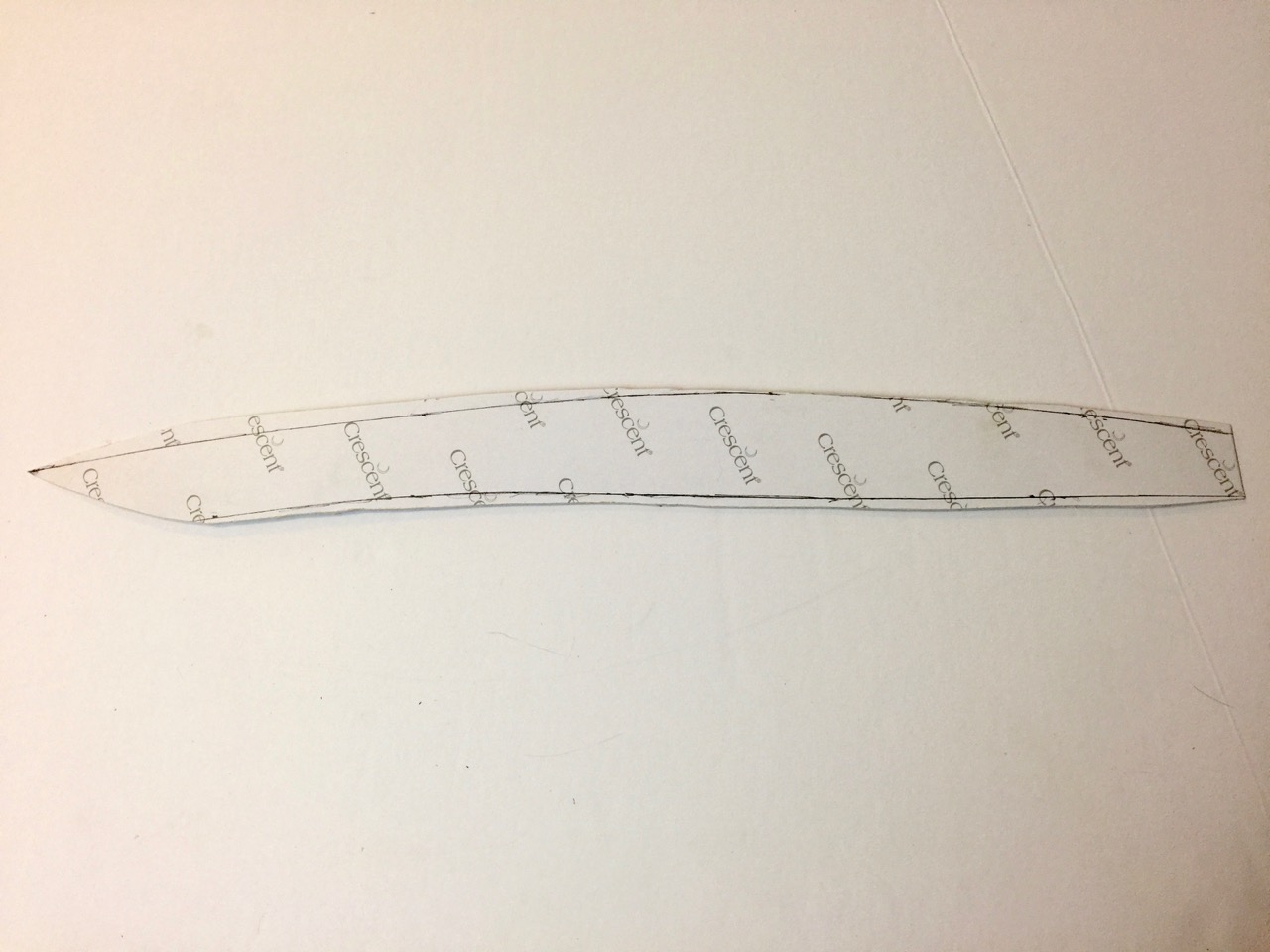
From building the Hozugawa-bune and the Bekabune, I learned that a card stock pattern is the best way to get the shape of the lower edge of the lower plank. Taping the cardboard into place, I used a pencil to mark the outer line where the bottom and the lower plank came in contact. Then, measuring the width of the station lines in the Paris drawings, I marked out the points on the cardboard template and drew in the curve of the upper edge of the plank.

Continue reading

Can a Kobaya be Built from Paris Plans?

Kobaya is a term for a type of smaller military style vessel that is fast and maneuverable. Highly ornate versions of these and larger military vessels called sekibune were used by daimyo and their clans for ceremonial and other official purposes. I don’t know about the smaller ones, but the larger ones were called gozabune. In my limited experience, smaller gozabune are often referred to by their military name, kobayabune or simply kobaya, which means “small and fast.”


Photo of a 30-oar kobaya, of small fast-boat, from a display of models built by Yukio Nakayama. Photo is courtesy of The Rope.

Ship modelers building American or European subjects are accustomed to finding detailed drawingsfor the more popular of these vessels. There are even large numbers of plans made specifically for ship modelers. But, unlike with western subjects, there is a dearth of plans of Japanese watercraft. I’ve found plenty of sketches and there are basic line drawings that might be used, but these commonly don’t have the information needed to build a proper model.

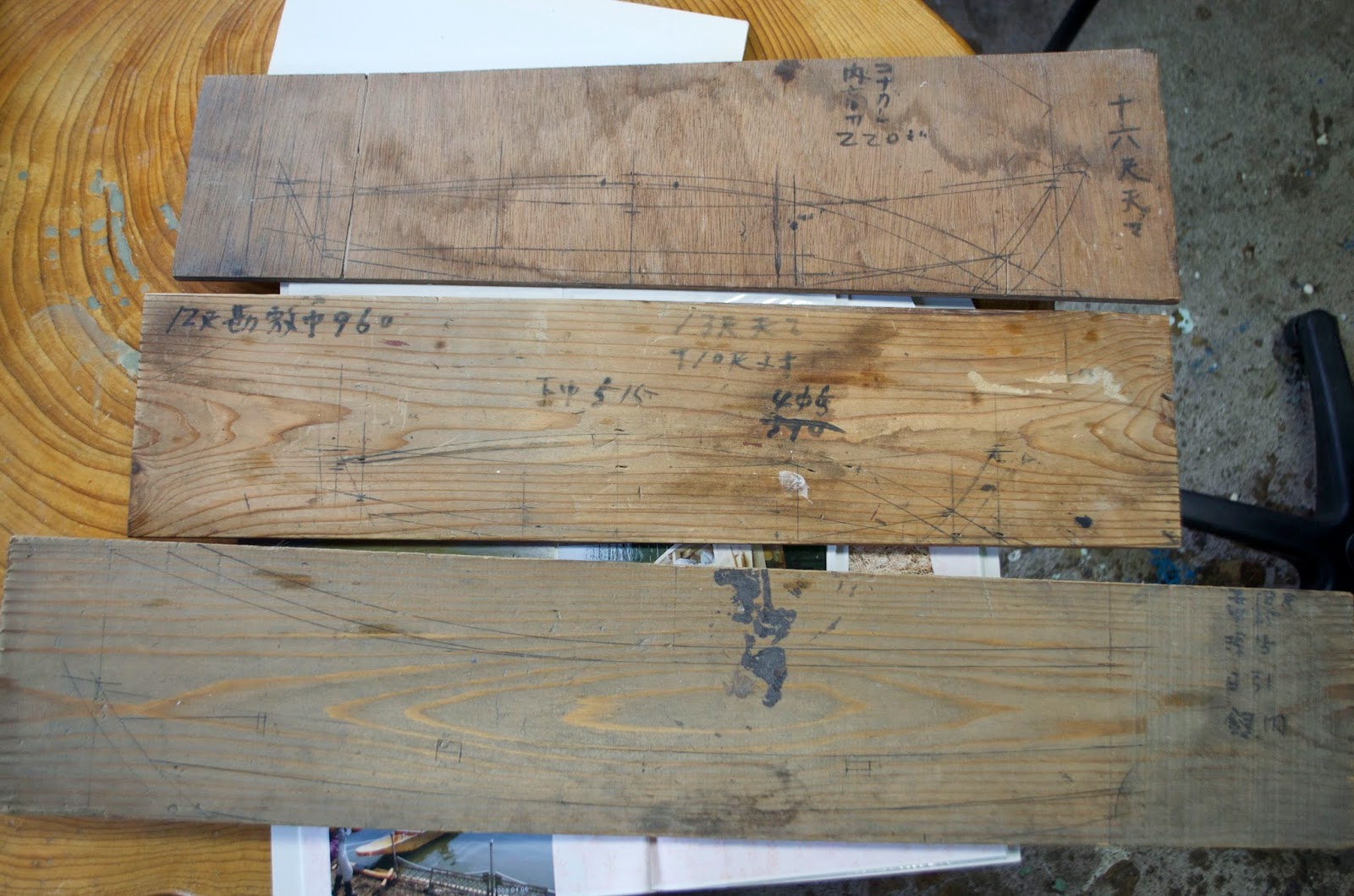
One reason for this is that Japanese boatbuilders don’t have a tradition of recording their work, and they generally only make temporary drawings on wood, sometimes destroying them when done.

Japanese boatbuilder’s plank drawings. Photo courtesy of Douglas Brooks.

Continue reading