End of Year Sale at Hida Tool

Hida Tool (pronounced Hee-Dah) is an American seller of Japanese hand tools, and as many followers of this site may have read, I commonly use Japanese carving chisels when building my wasen models. Well, for the month of December, Hida Tool is having a sale, so it’s a good time to buy.

Continue reading

Building Woody Joe’s 1/72-scale Kitamaebune Kit – Part 13

When I look at how long this project has sat, while I’m off working on other things, it just seems crazy. Fortunately, I’ve found an impetus for finishing up. Before COVID, I used to have displays of Japanese traditional watercraft at a display window in Sand Francisco’s Japan Center Mall. Well, I finally reached out to the bank which has that display window, and I’ve got the display area reserved for late October. So, it’s time to wrap this up, one way or another.

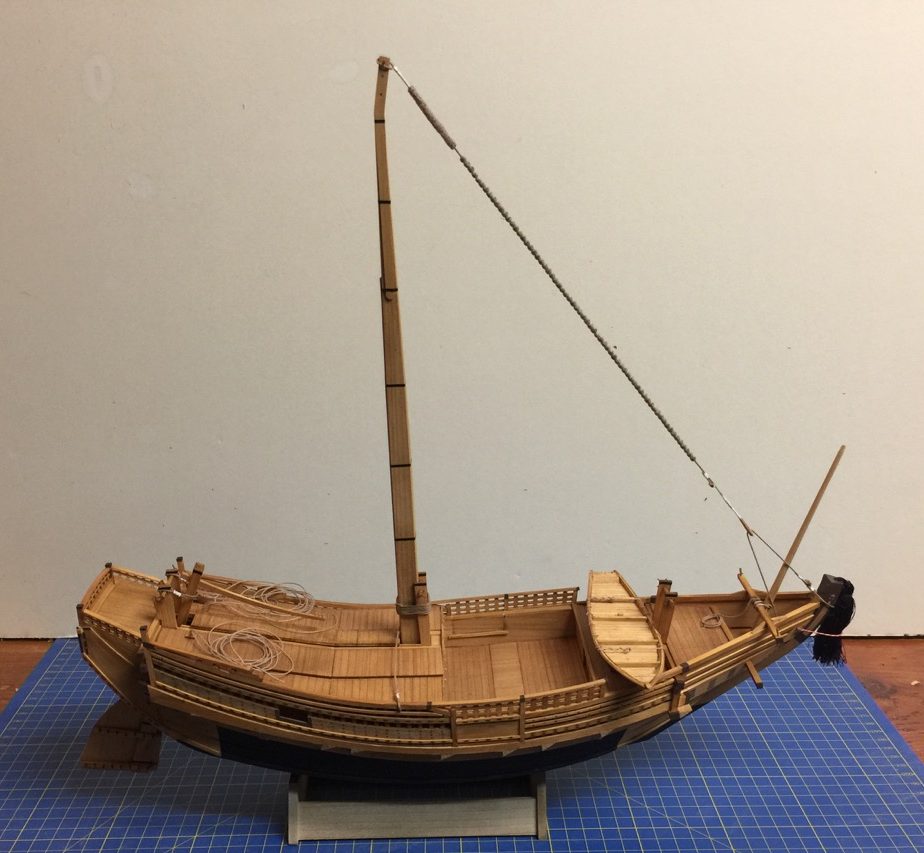
The model itself looks the same as it ever did, but I’m now back to working on the sail. I’ve gone around in circles on this feature and I’ve written enough about ideas and steps I’ve tried taking, considered taking, and so on. So, now, I’m just going to show where I’m at with it.

The model, as we last left it.

Continue reading

Wasen Modeler Update for Summer 2025

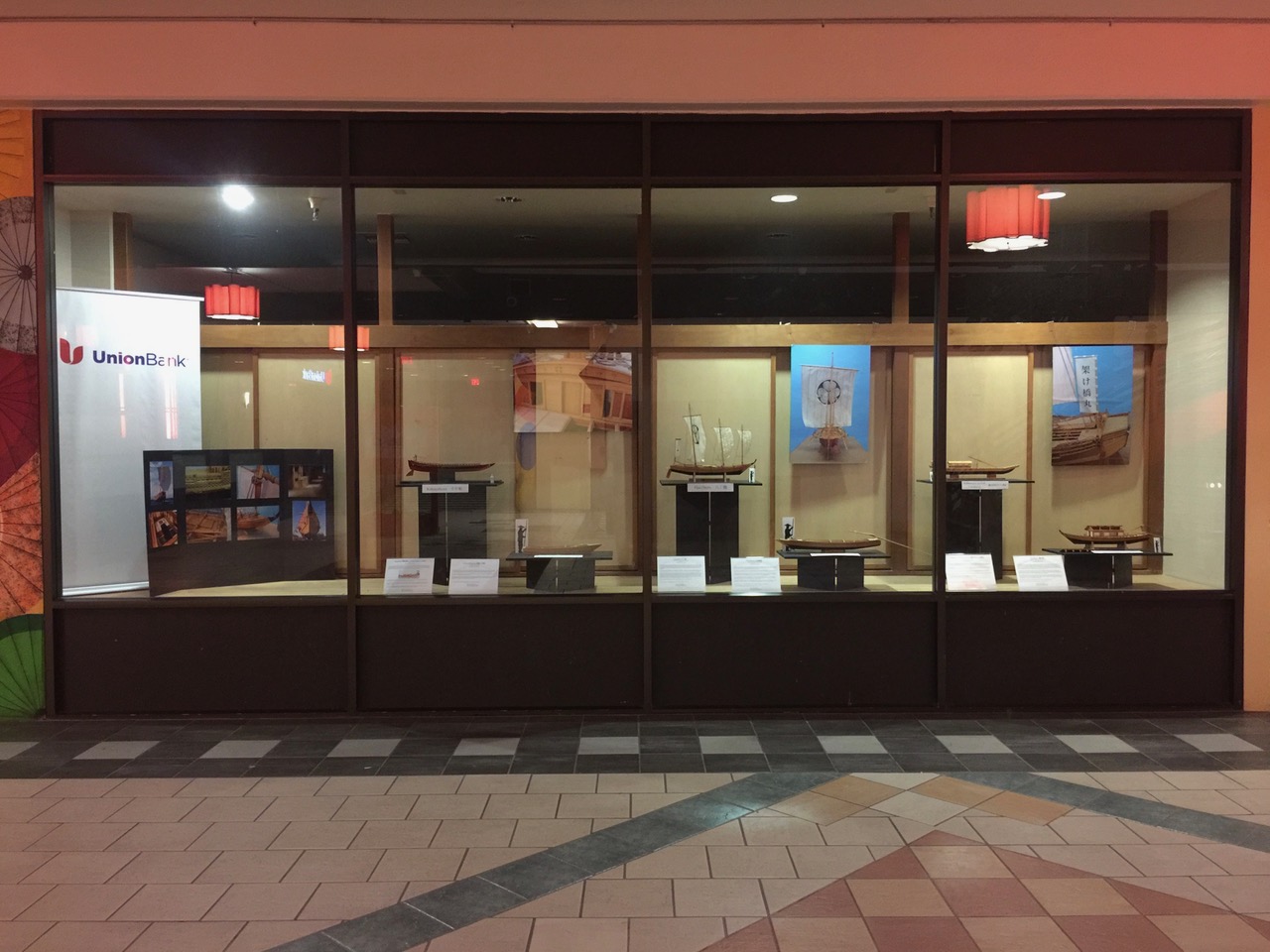
I’ve been pretty idle in terms of modeling Japanese watercraft or updating this site, some might even say I’ve been remiss. But, I was recently contacted by my old mentor Douglas Brooks to build a model of the Shinanogawa boat that has been the subject of his full-size Japanese boatbuilding workshops. So, I’ve been revisiting my wasen modeling supplies, notes, tools and all. I even started thinking again about the wasen model displays I used to set up at the bank in the Japan Center Mall in San Francisco. Last time I displayed there was nearly 7 years ago. I used to display two or three times a year there until Covid put an end to that.

My wasen model display at Union Bank in the Japan Center Mall, San Francisco, in November of 2019

Continue reading

Building a Gozabune (Kobaya) from Paris Plans – Part 14

An update on this model is long overdue. While I hadn’t really been working much on the Kobaya model, it is a model that I’ve been very happy with. With the release of the new Shōgun TV series (more on that in another post), I’ve found something of a renewed interest in working on my wasen models, particularly in my kobaya model, as I knew the next steps I wanted to deal with. So, I brought the model down from the shelf, cleaned it up, and immediately started working on it again.
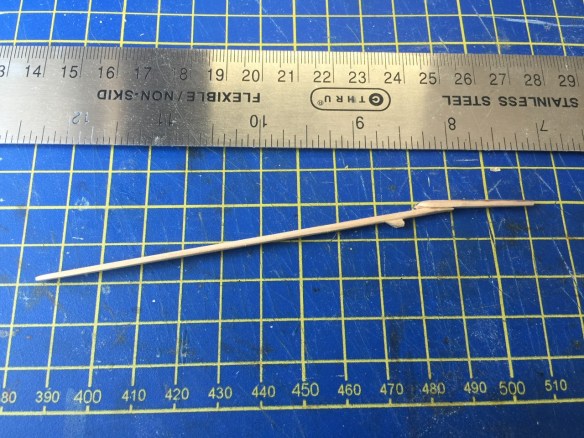
The model is inching closer to completion now, with the biggest hold-up being the making and mounting of the ship’s 28 sculling oars. Given the size of a person on the model, the deck would have been crowded with oarsmen. With such a sharp hull and relatively small size (17m) in comparison with the largest of ships at the time (30m, give or take), those 28 oars must have made her very fast.
Below is an one of the sculling oars, which in Japanese is called a “ro”. It’s not complete as it need a rope wrapping where the head and the body overlap. It also needs a small handle that should stick up near the end of the oar’s head.

Continue reading

Japanese Sailing Ships and Boats on The Rope Website

It’s been developing slowly over the years, but The Rope Tokyo, has been updating their website with an increasing amount of material on traditional Japanese ships and boats and their models. Over the years, they’ve added some material from presentations given at their regular meetings. But, more recently, they’ve added a section showing types of ships and boats, based on model built by members, as well as a section showing models of boats preserved at the Ota ward local museum (a collection that I was actually involved in discovering).

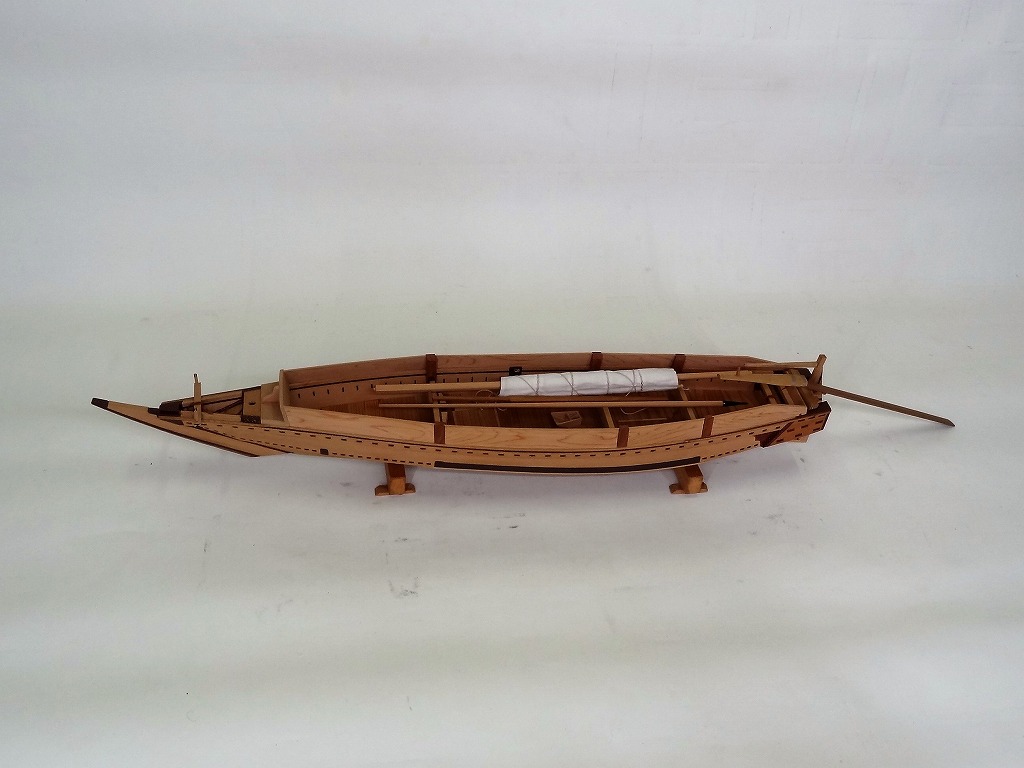
Model of a Normeri-bune in the Ota ward city museum. Photo courtesy of The Rope Tokyo.

Continue reading

The Watercraft of the New Shōgun Series

If you’re visiting this site now, there’s a good chance that you seen the new FX series Shōgun, based on the novel by James Clavell. You’ve then also seen some of the watercraft that appears and may be wondering how accurately they are depicted. I’ve only seen the first couple episodes, and I haven’t had a chance to study them too closely yet. And, honestly, I was too engrossed in the story line, characters, and imagery to spend a lot of time studying the accuracy of the boats too closely yet. But, at first glance, things looked very good.

Screenshot from FX’s Shōgun Viewer’s Guide

By the way, I got the above image from FX’s Shōgun Viewers Guide, which you can link to here. Continue reading

Traditional Japanese Wooden Boat Website

I just discovered that an acquaintance, Mr. Tomohiko Ogawa, a boatbuilder and artist in Japan, has set up a new wasen website about Traditional Japanese Wooden Boats. The site is primarily in Japanese, but does include some english language text to accompany most of the titles. You can find it here: https://traditionalwoodenboat.jpn.org/

This is mostly an overview of his own works, but he has done quite a bit. You may recall that he provided the information for me to model the Hasumibune, Ogura Pond boat.

He’s currently working on a full-sized version of this boat. Sadly, I don’t believe there any living boatbuilders that can clear up some of the questions about the construction of this boat type. After building this model, I have some thoughts as to how the full-sized boats were built, but I haven’t talked to him about it lately. However, he did mention my work on his website: https://traditionalwoodenboat.jpn.org/n-20220801/

You can also follow Ogawa-san’s work on Instagram here. Ω


Discontinued Woody Joe Sengokubune (千石船) kit on Ebay

I was recently alerted by Glenn Schuster that there is currently an Ebay auction for an old Woody Joe kit from the days before laser cutting, where all parts were still made from milled wood. The kit is a Edo period Japanese coastal transport similar to their current Higaki kaisen and Kitamaebune offerings and goes by the common name for these ships, Sengokubune or 千石船, as it is written in Japanese.
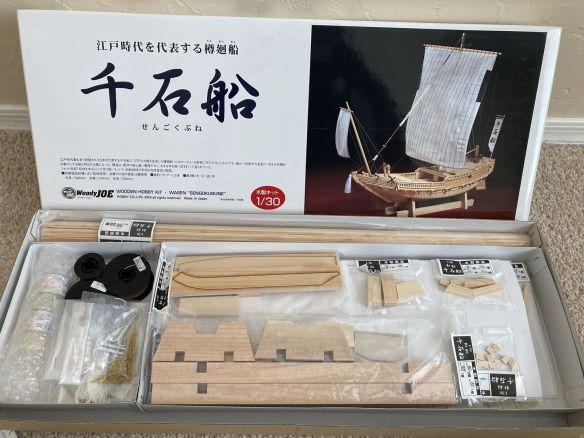
The kit is made in 1/60 scale, so the model is slightly larger than the current 1/72 scale offerings at about 22.4″ long and 19.7″ high. I know there’s a sign on it that says it’s 1/30 scale, but I confirmed long ago with Woody Joe that this is an error and it’s actually 1/60.

Bidding starts at $120 plus shipping, and I’m hoping someone out there will bid on this kit. If not, I may end up bidding on it, and I don’t really need to be spending money on this kit, as I already have one. I’ve been hesitant to build the kit I have, as once I start building it, there will be no more Sengokubune kits available.

The model is not as detailed or as accurate as the current Woody Joe kits, but it’s big and makes a nice display model. Plus, it can be detailed up a bit if desired.

If you’re interested, bidding ends on Saturday, 5/6/23 at 6:10pm. As of today, 5/1/23, there have been no bids placed on it. You can find the item on Ebay here: https://www.ebay.com/itm/125910896848

If you win the bidding on this, let me know. Maybe I’ll be encourage to pull mine out of storage and we’ll build them together and share notes. Ω

 

1/20 Scale Nitaribune (荷足船) Progress – Mortises

I moved ahead with the small nitaribune model, a 1/20-scale model of a cargo boat based on drawings by the late Mr. Seichi Fujiwara, who was one of Douglas Brooks’ teachers in Japan.

The boat is about the right length, but somewhat narrow for a traditional nitaribune. This one would be about 5′ wide in real life. But, according to the Funakagami, these boats were about a foot wider and possibly a little shorter, making the actual boats a little less sleek looking as this. I tend to attribute the sleek lines to represent more of a modern evolution of the traditional Japanese boat.

Continue reading

This Week in Wasen Model Making – October 15, 2022

Last weekend, I had a number of models on display at the Good Sam Showcase of Miniatures, which consisted mostly of my wasen models. This was the first time I’d had any of my Japanese watercraft models on display since January, and it seems to have spurred me to get back to work on some wasen model projects. While I have the two Woody Joe kits to finish up, those being the Kitamaebune and Atakebune kits, I also have two scratch models I stated long ago, the whaleboat-style Senzanmaru, and the small Nitaribune based on the late Fujiwara-san’s boat Kawasemi.

Small Nitaribune, or cargo boat, based on the boat built by the late Fujiwara-san for Wasen Tomo no Kai.

The Senzanmaru, a whaleboat-type boat use by the Awa clan.

Continue reading