Computer Translation of Japanese Text, Part 1 – Translation from the Internet

Recently, I wrote a blog post about Researching Wasen Remotely, but it was mostly a follow up about the general difficulty of sorting through research information that’s primarily in Japanese and gathered from wide ranging sources. But I’m thinking it might be helpful to go over some of the resources and tools I use in research. This could be pretty involved, so I may need to do this in a few parts.

The most obvious sources of information are going to be books, drawings, photos, web pages, etc. Drawings and photos aren’t language dependent, but books, websites and any text in the drawings and photos, are going to be written in Japanese. If you don’t read Japanese, that’s a big problem, but there are tools that can help.
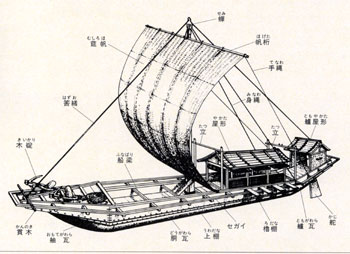
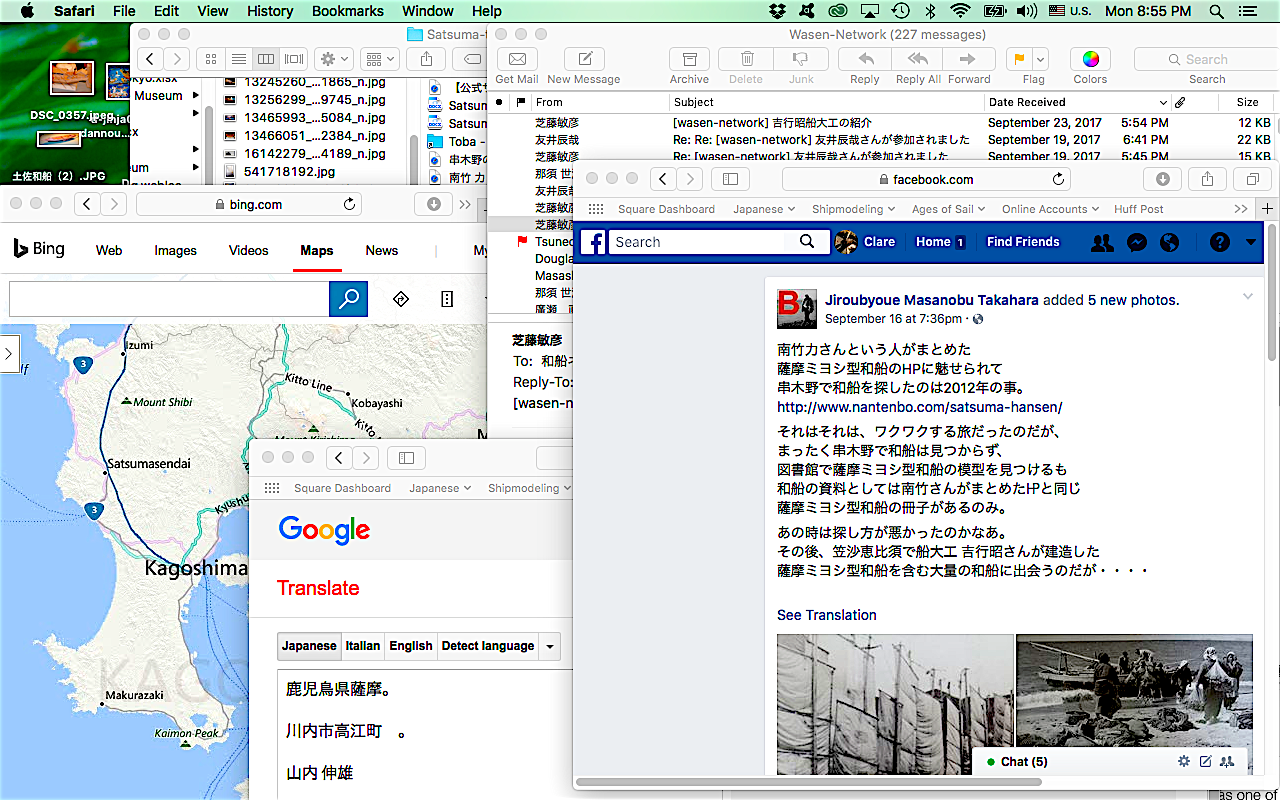
While I was born in Japan, am half Japanese, and know a small amount of spoken Japanese, my own knowledge of the written language is limited. Here’s how I overcome this limitation.
Continue reading

Researching Wasen Remotely

Today was one of those days where I am reminded of how much work it takes to research wasen, or traditional Japanese boats, from here in the U.S.

Continue reading

Wasen Model Display at the Museum of Maritime Science, Tokyo

Exhibition of models of Edo period Japanese boats by Mr. Yukio Nakayama.

The display is at the Maritime Science Museum in Tokyo from Saturday, September 30th, through Sunday, October 15th. The display consists of approximately 200 beautifully handmade Japanese boat and ship models in 1/70 scale, with about 50 Edo period buildings, including shrines, temples, shops, warehouses, etc.

Mr. Nakayama will be on-hand on September 30th, October 1st, October 7th through the 9th, and October 13th through the 15th.

~ Session: September 30th (Sat) – October 2017 Sunday (Sunday) Place: Ship’s Science Gallery (Odaiba) About 200 precision handmade Japanese model models of scale 1/70 with about 50 buildings at the time including shrines, temples, town shops, warehouses, The diorama will be exhibited abundantly in the scene. On September 30th, October 1, 7, 8, 9, 13, 14, 15, the author himself visits, and will explain the work and the production demonstration. ※ “Funenki” is an identification chart of boats created in the late Edo period, with 33 kinds of riverboat of Kanto 1 yen and Daikawa combined ship are drawn.

I wish I could be in Japan when this is taking place, I have many photos of Mr. Nakayama’s models on display, and the work and variety of models is incredible. I can only hope to see this some day.

Catch the exhibit if you can!


企画展示 江戸木造和船細工 「船鑑(ふなかがみ)」を中心に… Part.2 ~江戸木造和船細工師 中山幸雄の世界~ 会期:2017年9月30日(土)~10月15日(日) 場所:船の科学館(お台場) 縮尺1/70の精密な手作り和船模型約120種200隻を、神社、寺、町屋、蔵、灯明台等当時の建物約50棟と共に情景豊かにジオラマ展示します。 なお、9月30日、10月1、7、8、9、13、14、15日は、作者本人が来館、作品解説や製作実演を行います。 ※「船鑑」とは、江戸時代後期に作成された船の識別図鑑で、関東一円の川船及び海川兼用船33種が描かれている。

via 船の科学館で展示 — 木造和船 中山幸雄の世界

Making Progress on Kujirabune (鯨船) Research

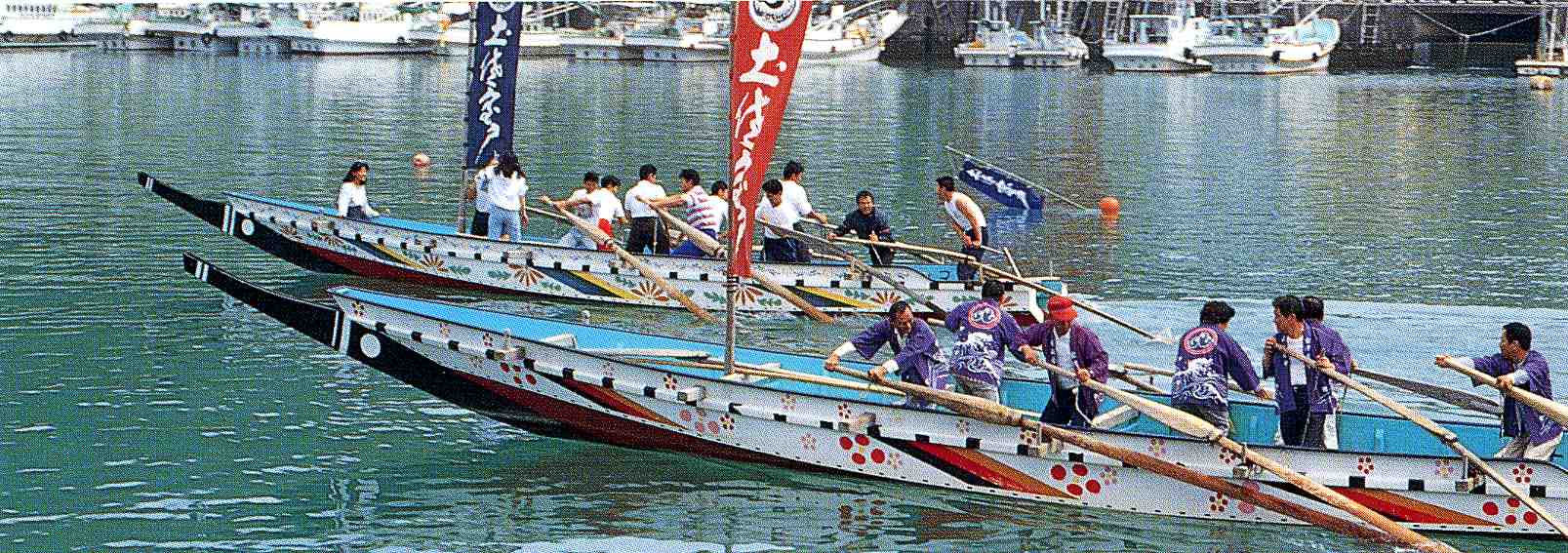
I recently had some very good new regarding my research of Japanese whaleboats, or Kujirabune. After finding the Taiji museum website and seeing a post of some whaleboats from Muroto, which is in Kōchi prefecture on the south eastern corner of Shikoku, I had mentioned these things to my ship modeling friend in Japan, Mr. Masami Sekiguchi, and also to Douglas Brooks. As it turned out, Douglas Brooks knew the curator of the Taiji museum and put me in touch with him.

Shortly after, my friend Sekiguchi-san had called the museum and spoke with the curator, Mr. Hayato Sakurai. It was nice to hear from Sekiguchi-san that the website I told him about, http://taiji.town, and the many colorful illustrations of whaleboats was something he wasn’t aware of, and he really appreciated my finding them. I think he enjoyed his conversation with the curator, and as it turned out, the Taiji museum building was designed by a friend of his, who has since passed away. So, I was happy to be able help him make some connections too.

Modern fiberglass-hulled kujirabune replicas racing.

Continue reading

Wooden Japanese Traditional Boats – The World of Yukio Nakayama

木造和船 中山幸雄の世界

Yes! I managed to stumble across Mr. Yukio Nakayama’s wordpress blog site by pure chance today. I’ve know about this man and his work for about a year now. One of my Japanese ship model contacts even sent me some photos of the man’s work at an exhibition several months ago, but he never put me in contact with him.

I wasn’t too worried because my Japanese language skills are not good and I figured it would just be either frustrating or annoying for Mr. Nakayama if I tried to communicate with him, though I did find someone else who offered to put me in touch with him. Now that I’ve found his blog, I may just have to try.

In the meantime, you can visit his site and poke around and see some of his work on his blog. You’ll find a few drawings, plus photos of several of his models.

All his models are the same scale, 1/70 I believe.

江戸木造和船細工師

Source: 木造和船 中山幸雄の世界

The above link will take you to his blog, but here’s the URL: http://edowasen.wordpress.com

Higaki Kaisen and Tosa Wasen Build Logs

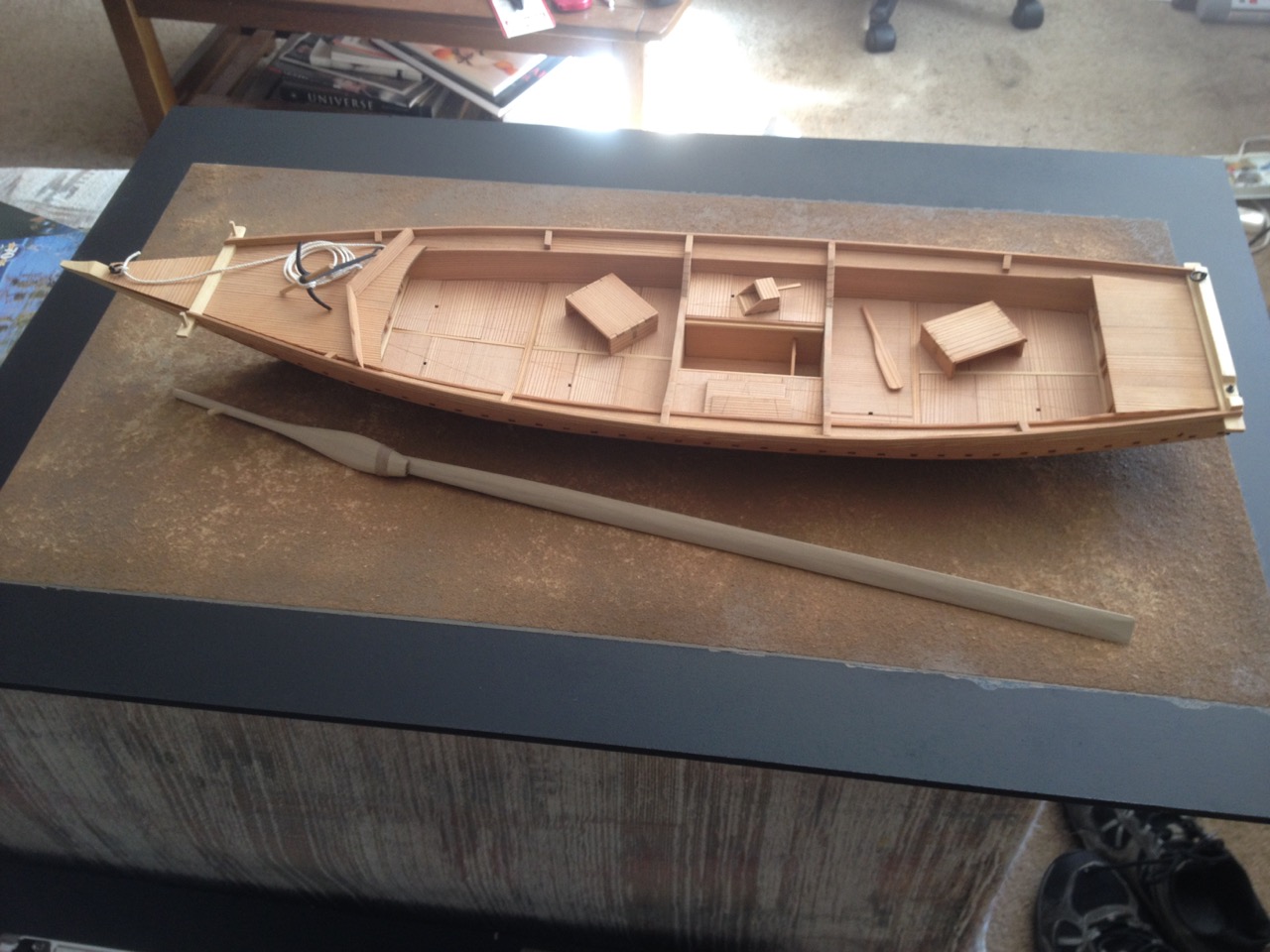
Today, I finally got around to migrating two important build logs from my shipmodeler blog over here to wasenmodeler. The blogs cover the building of Woody Joe’s Higaki-kaisen model kit and Thermal Studios’ Tosa wasen kit.

My Higaki-kaisen model built from a Woody Joe kit

My Tosa wasen model built from a kit from Thermal Studio

While the blogs are not step-by-step instructions, it’s my hope that they may prove helpful to someone building the kits or interested in them. The original build logs are still on shipmodeler, but I’ve managed to use the WordPress system to export them from the other blog and import them here. Quite easy, actually.

The only other build logs that I would consider moving from shipmodeler are for the two Woody Joe mini-kits, the Hobikisen and the Yakatabune. Since these are just simple mini-kits that aren’t particularly accurate, I’ll probably just leave them where they are. After all, there is plenty write about and post here.

To access the newly migrated build logs, simple choose them from the Wasen Model Blogs menu above.

The Rope: Photo Gallery of Japanese Sailing Ships and Boats

I only just discovered that there is a page on the website of the Japanese ship model society The Rope that features models of Japanese ships. These include some modern era ships, but several Edo period ships are represented. This group does some really beautiful work, which I recommend checking out.

Here’s a link to the page, which is on the English language section of their website: https://theropetokyo-en.jimdo.com/japanese-ships-1/photo-gallery-of-japanese-ships/


Building the Kamakura Period Umi-Bune, Part 6

As I mentioned in my last post on this model, I’d been wrestling with the configuration of the roofs. The 1/20-scale museum model that I often see reference on the web, differs from Professor Ishii’s 3-view illustration that I’ve mostly been basing construction on. Those drawings are more of a match to the early scroll paintings. Oddly enough, none of the models I’ve seen match them exactly. Is it possible that the builders had access to more updated information? Or did they just decide that the Ishii-san was wrong? But, then what about the scroll paintings? Are they simply written off as being wrong?

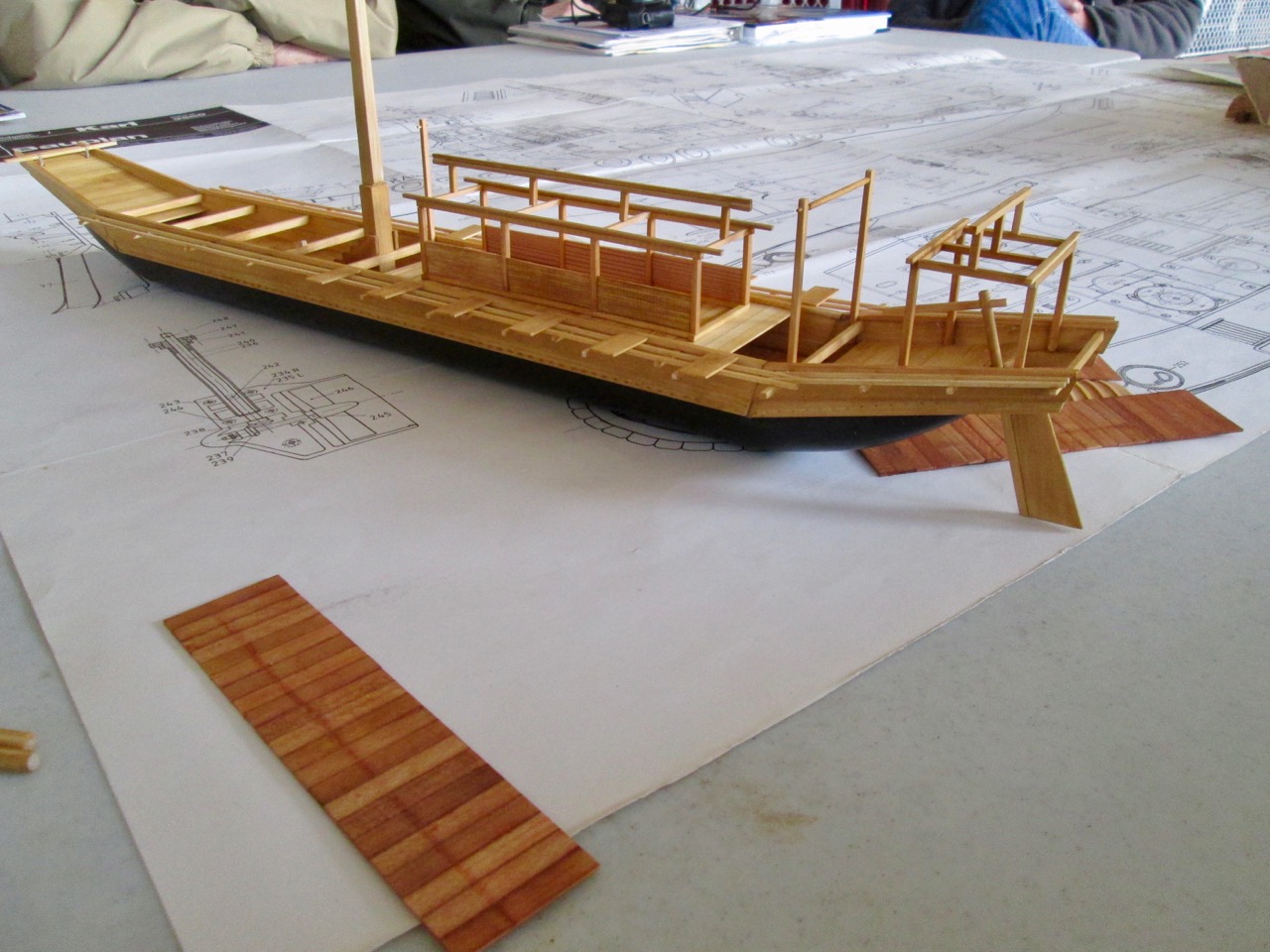
As you can see in the photo below, which was taken at a ship model club meeting, I initially made flat roofs panels. If I could justify them, they would certainly be the simplest to construct.

Flat roof panel initially constructed is seen in foreground.

Continue reading

New Tool Additions – Mini Block Plane and Carving Chisels

These have already been put to use on my wasen modeling projects.

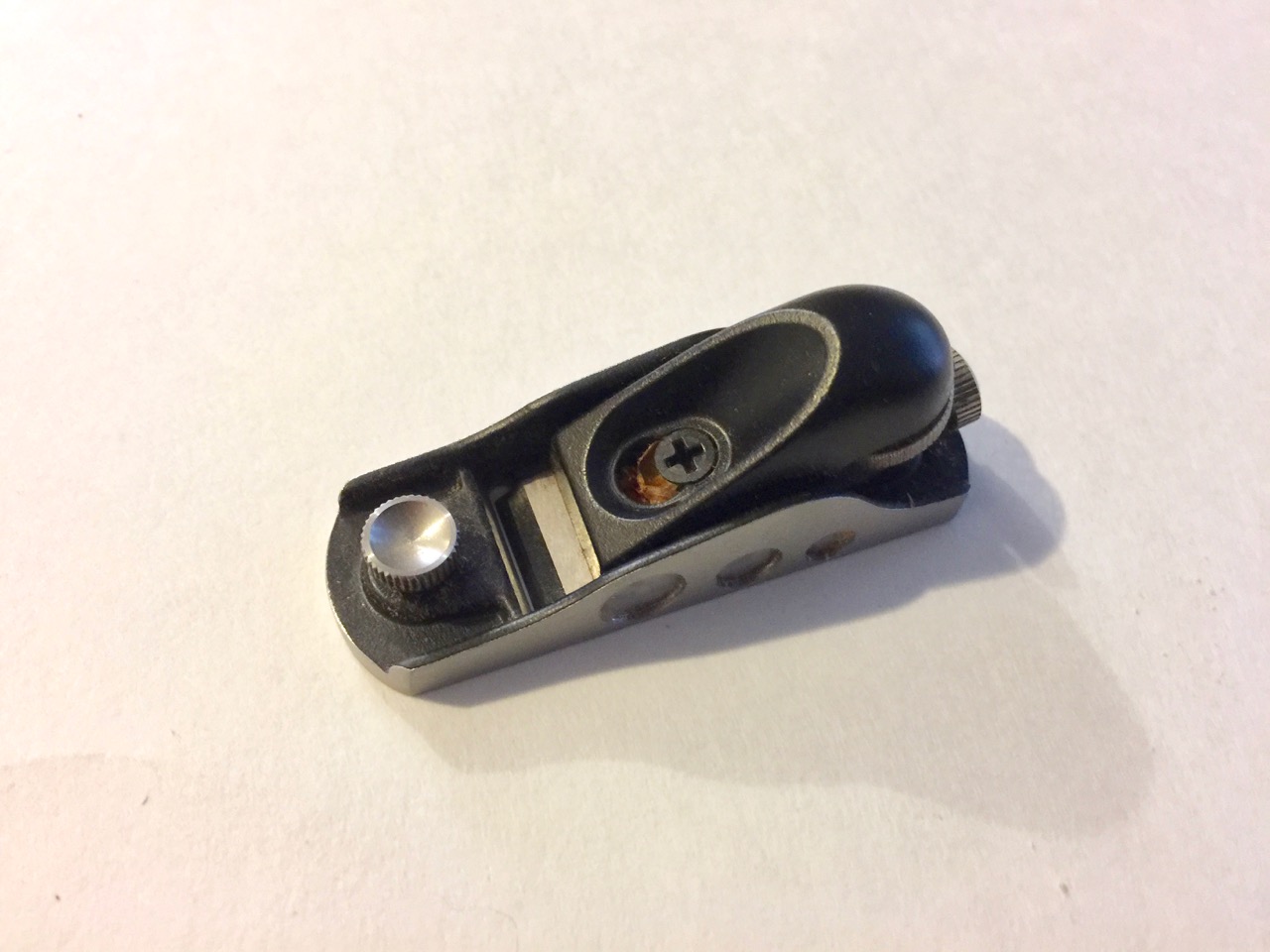
The block plane is great when working with Japanese cedar. The wood grain is so hard, it’s difficult to work it with cutting tools. But, I think the miniature block plane will handle it well.

Of course, the carving chisels are great for cutting mortises. But, I will have to work to keep them sharp.

catopower's avatarShip Modeler

I don’t really write about tools much. I know a lot more about ship models than tools. But, I  acquired a few new tools that I thought I’d share here.

Miniature Block Plane

A few weeks ago, I was looking through a Lee Valley Tools catalog. They’re a Canadian based manufacturer and retailer of woodworking and wood restoration hardware. I get their catalog periodically after a fellow ship modeler recommended one of their products.

One thing that I’ve been trying to do more in ship modeling is using a plane in shaping square stock for masts and spars. But, regular hand planes seem overly large and bulky. There are razor planes made for hobbyists, but they are pretty low quality and I haven’t found them to be very useful in ship modeling work. Then, I spotted some miniature planes in the Lee Valley Tools catalog and decided to order one.


This…

View original post 463 more words

Tosa Wasen Youtube Video

This is my second youtube video, which is again actually a slide show. The first one was of the Shinmei-zukuri shrine model from Woody Joe that I built a few months ago. This time, I went back to my Tosa Wasen model from Thermal Studio.

I’m still learning how to use the Youtube editor, but I just found out that it’s going away on September 20th of this year. That’s actually okay, because it works very similarly to Apple’s iMovie software, which I’ve used before, and will just have to go back and use again. Also, iMovie has more control over audio tracks. With the Youtube editor, I’m mostly trying to fit the video to exact length of the audio, which is kind of a drag.

In any case, you can view the Tosa Wasen video below.

Again, I’m happy to hear from anyone with suggestions. Please check it out.