Building a Hozugawa Ayubune Model in 1/10 Scale

There are a lot of potential wasen subjects to model, but good plans are difficult to come by. Also, when decent drawings are found, it’s often difficult to find or to understand the details of the subject. I’ve been toying with a lot of different possible model building subjects, but would usually run into some issue that kept me from pursuing it further.

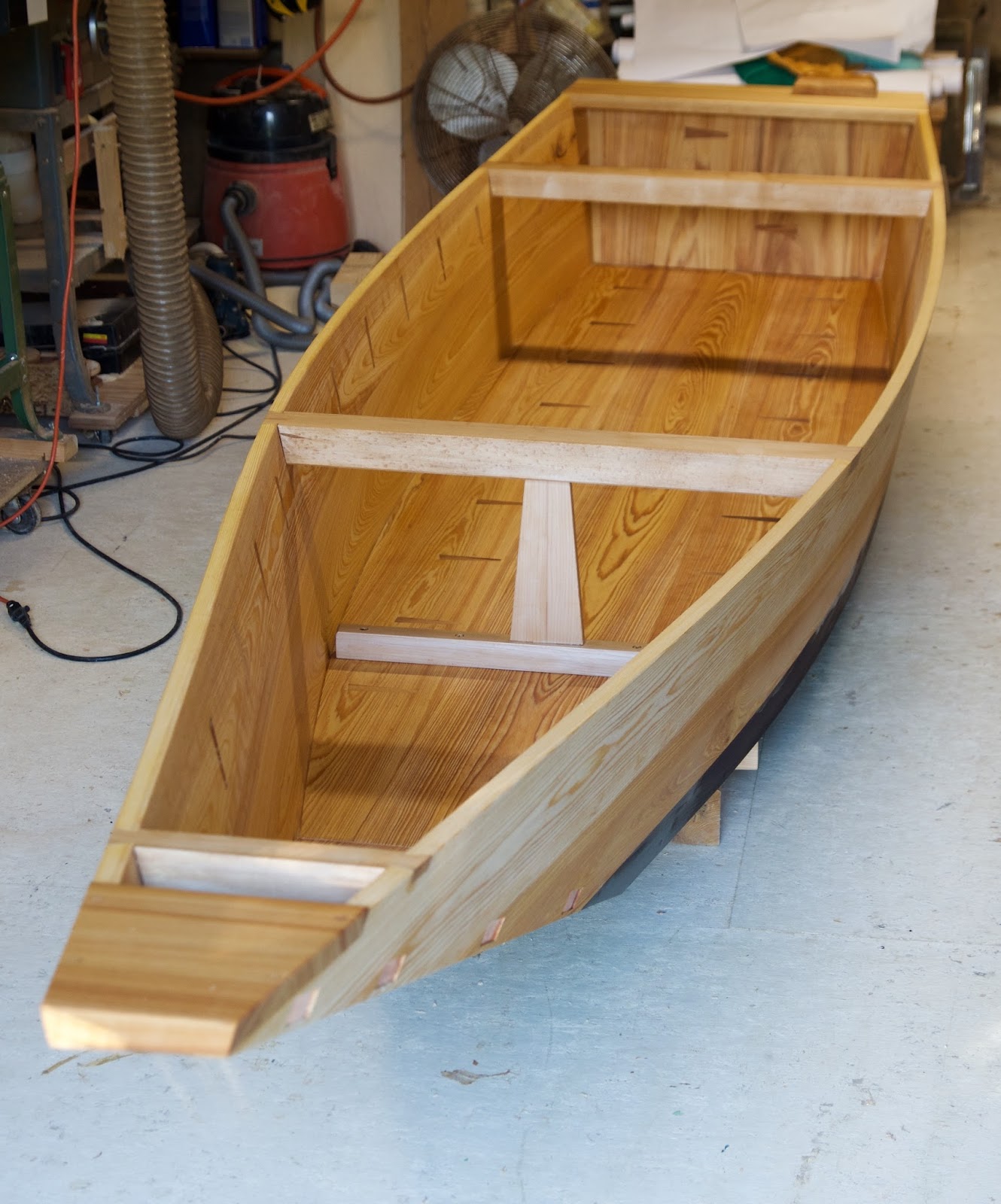
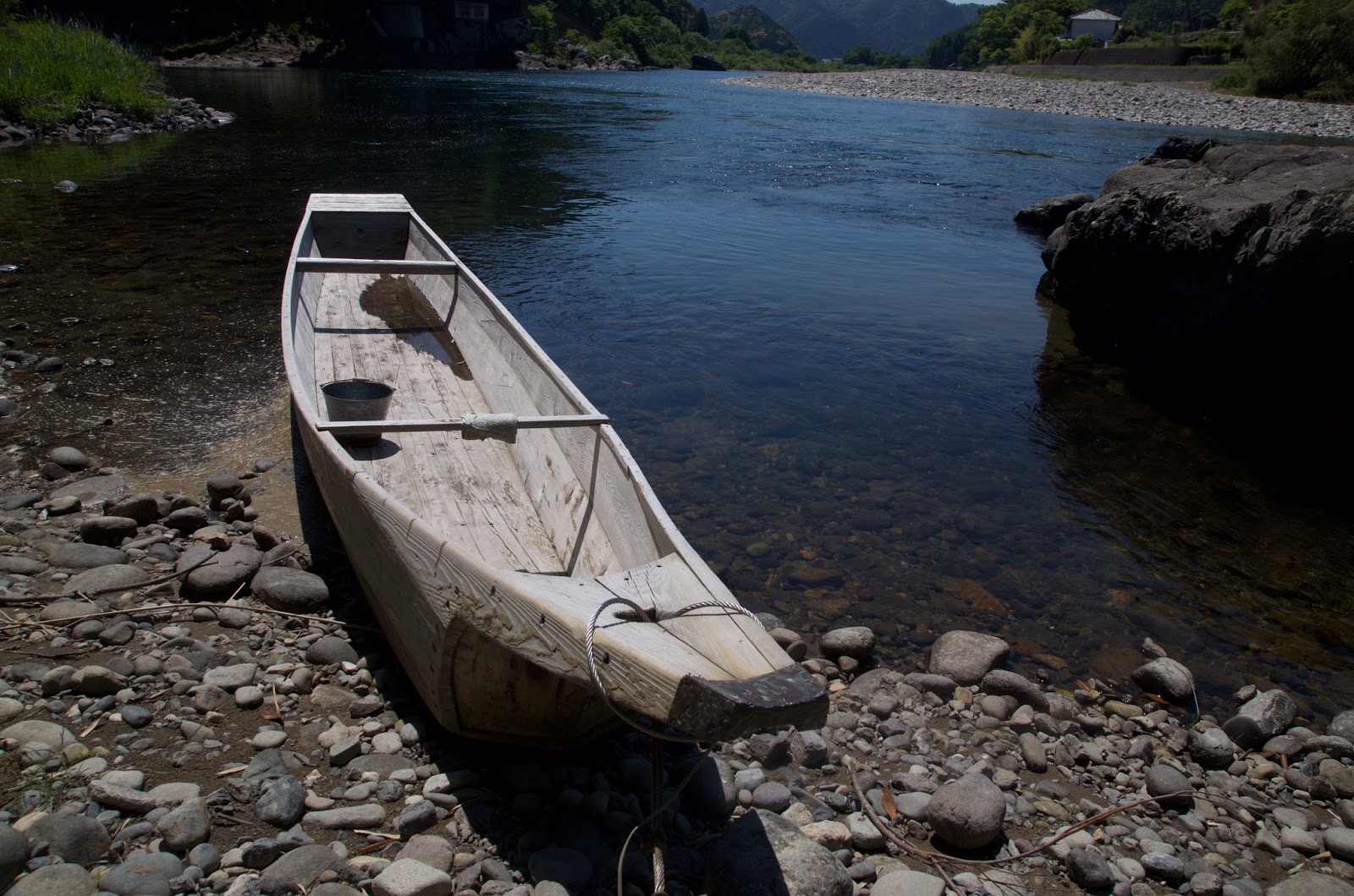
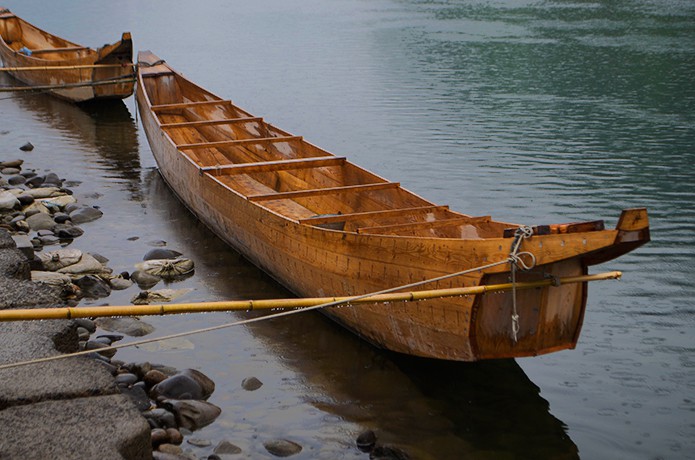
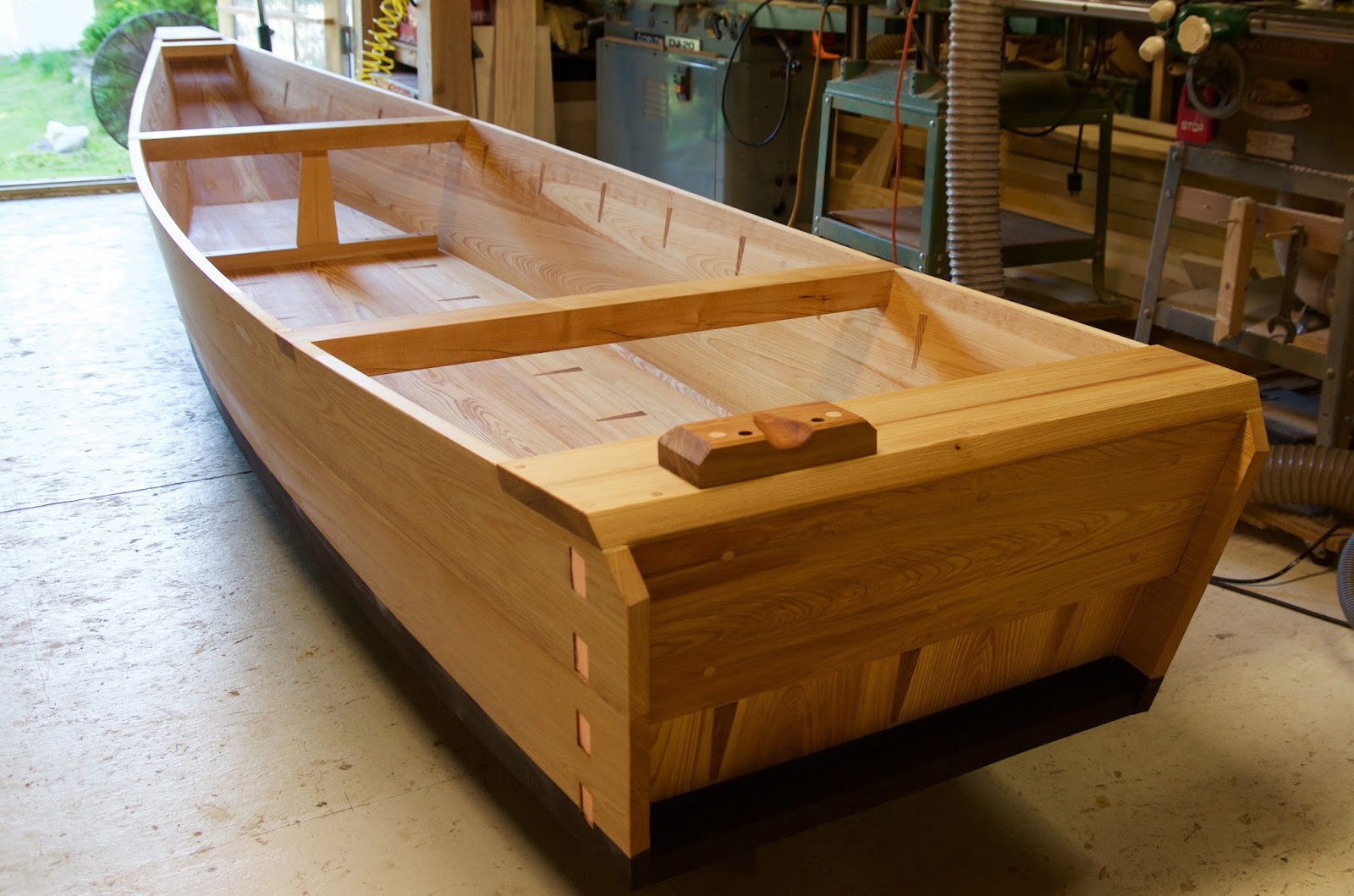
Recently, I sort of re-discovered a subject that I seem to have overlooked before. It is a boat that Douglas Brooks wrote about in past blogs from about 3 years ago, when he was building a boat in Kameoka, Japan, which is about 16 miles west of Kyoto. There, he built a Hozugawa Ayubune, a type of simple fishing boat that was used on the Hozu river.

15 shaku Ayubune built by Douglas Brooks in Kameoka, Japan, in 2014. Photo courtesy of Douglas Brooks.
Continue reading

New Japanese Measurements Page

Here is some information on measurements in the Japanese unit called the shaku that I just put together. I discovered that information like this is in my notes somewhere, but I often don’t know where I put them. So, for easy future reference, and for your benefit too, I just added this info to a new page under the Resources menu and called it Japanese Measurements.

Continue reading

Hiratabune Model – Edo Tokyo Museum

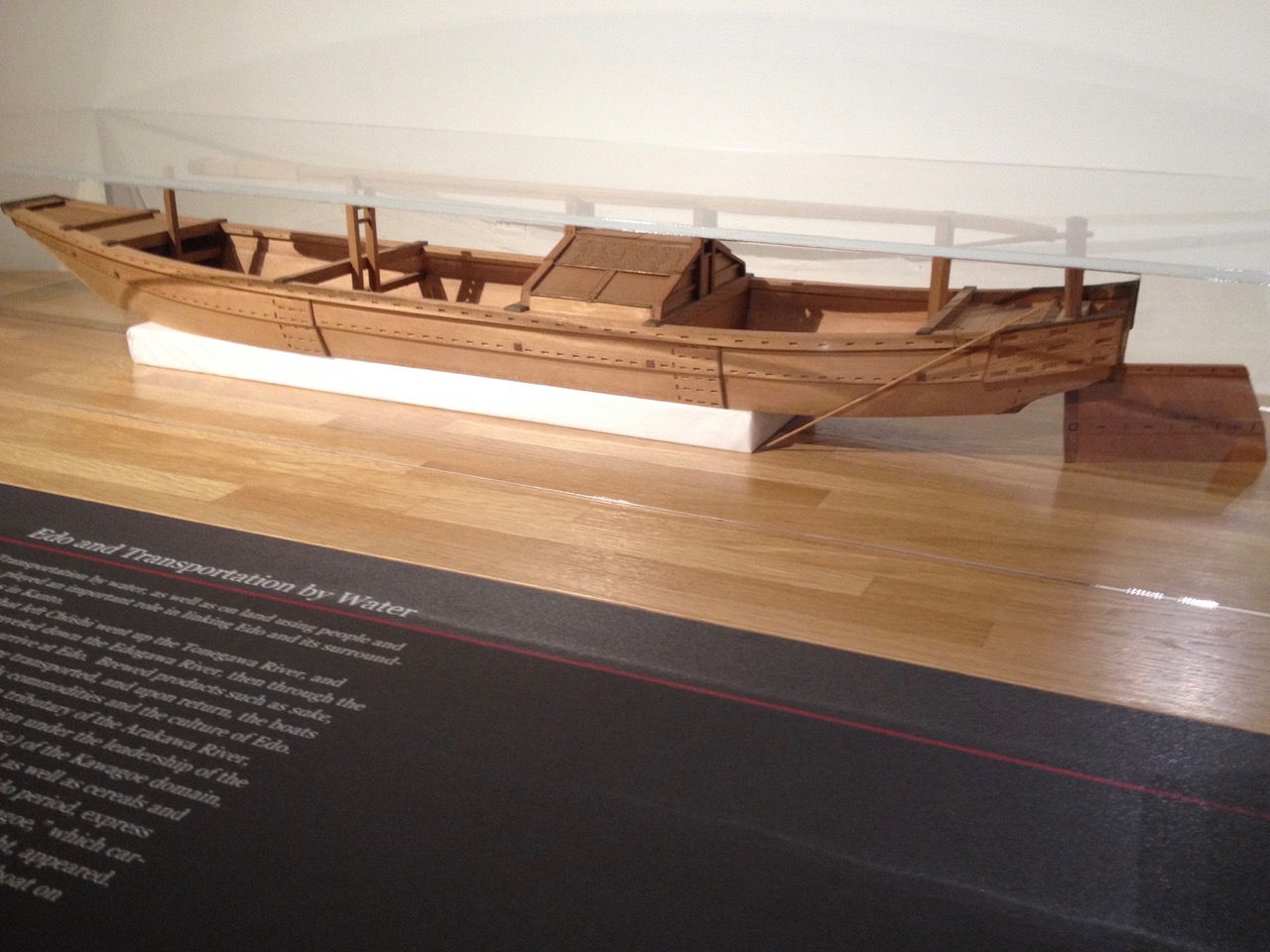
This is one of those posts where I am really putting my knowledge, or possibly my lack knowledge, out on the Internet. When I visited the Edo Tokyo Museum last September, I found a model that I was extremely happy to find, as it gave me a first-hand look at a boat type that I have been very interested in learning more about.

The boat was labeled a Takasebune, and I first encountered it in the Funakagami, a book published back in 1802, which was used to help identify different river boat types for tax purposes. The Takasebune is a type of riverboat used to carry goods, and specific size and designs varied, but they are generally shallow draft boats with single plank sides that are nearly vertical, and the bow is a flat plank or a pair of planks joined at a slight angle.

The model in the Edo Tokyo Museum was clearly labeled a Takasebune in Japanese and in English, and I was really happy to find it. I took a number of photos to catch all the details I could. But, it was after reviewing the photos of the model and further studying the boat types that I discovered a problem with the model’s identification.

Continue reading

Douglas Brooks in Gifu Prefecture to Build Ukaibune

I got an email from Douglas Brooks while on his flight to Japan last week to build an Ukaibune, a boat used by cormorant fishermen in Gifu prefecture. I also saw that he recently  posted his first blog entries from Japan, as he begins work on the new project.

Douglas Brooks’s recently completed Ayubune

I saw from Internet posts elsewhere that he is going to be working with someone from Tri-Coastal Marine to take measurements for CAD work. I don’t know any details beyond that, though I’ve been trying to look into this further as the company is local to the San Francisco Bay Area.

The cormorant fishing boats are big, and they are someone complex in shape and structure compared to other Japanese river boats. But the would certainly be interesting models.

An Ukaibune, a boat used in Gifu prefecture for cormorant fishing.

Here’s a link to Douglas Brooks’s first post from Japan this trip: http://blog.douglasbrooksboatbuilding.com/2017/05/now-in-gifu-japan.html

Check out the great photos of the 15-shaku (15 foot) Hozu river Ayubune that he built for a client just before he left for Japan. This particular boat has some extra “bling” in the form of small copper plates that were never used on the real riverboats.

Building Woody Joe’s Shinmei-zukuri Shrine – Part VIII / Completion

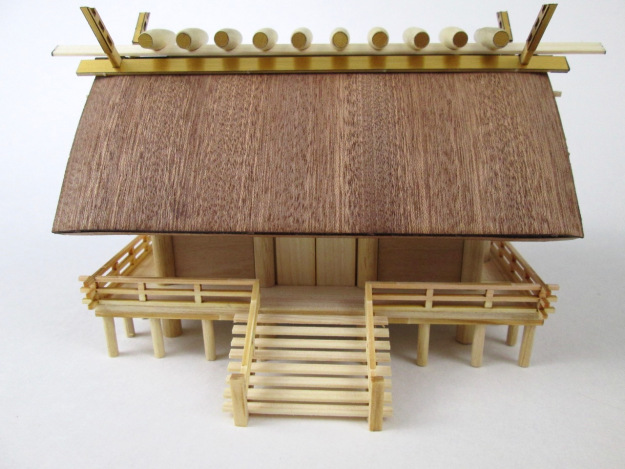
Just finished the final post on the building of Woody Joe’s Shinmei-zukuri shrine kit. It’s been a fun project, and it gives me some familiarity with another style of Japanese architecture, and inspires me to learn more about it.

catopower's avatarShip Modeler

This is the final installment of the building of Woody Joe’s Shinmei-zukuri jinjya or Shinmei-zukuri shrine kit. The final four steps are mostly really simple and quick, though Step 10, which is the construction of the fence, involves more wood cutting than any other step of the kit. Still, I figured I should wrap up the build with one posting.

The appearance of the model, going into the final steps of construction..

Step 9 << Torii Installation>>

Next will be the assembly of the torii, or the gate that, as Wikipedia describes it, marks the transition from the profane to the sacred. The instructions are very simple here. The Japanese text says to build the torii according to the full sized drawing shown, and the Japanese text in red in the box on the left simply identifies the full-sized drawing.

Building the torii requires the ends of the…

View original post 991 more words

Higaki Kaisen Article Part 2

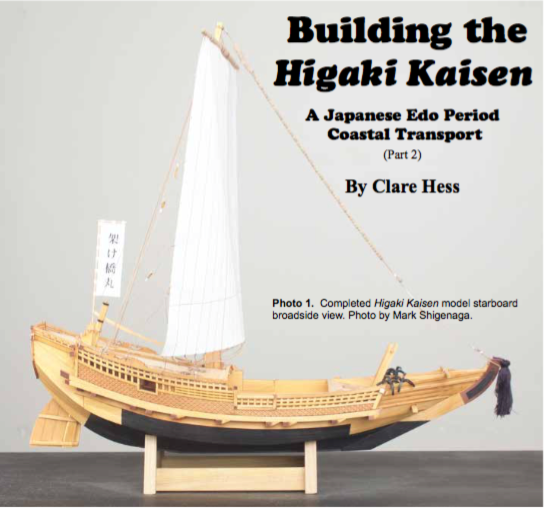
Yesterday, I received the latest Ships in Scale, the May/June 2017 issue containing part 2 of my Higaki Kaisen build article.

I’m kind of relieved to see this one. While the first part of the article discussed the background of these ships in detail, it didn’t talk at all about the kit. The problem was that seeing the model, some people would certainly be tempted to go out and buy the kit without knowing more about it, and if they didn’t read the article and the editorial on it in the previous issue, they might not have noticed that the instructions are only in Japanese, which is partly the motivation for writing the article. So, now that it’s out, I feel a lot more comfortable about it the article series.

This issue includes my list of what to watch out for in the building of the kit, including which steps contain cautionary notes written in Japanese, and what those notes say. It’s a relatively short section compared with the last issue. That’s probably good, because those not building this kit will probably find the reading quite dry. Based on this installment, I’m guessing that there will be two more parts to the series, but possibly three depending on the editors.

Mitobune (ミト船) Model – Toba Seafolk Museum

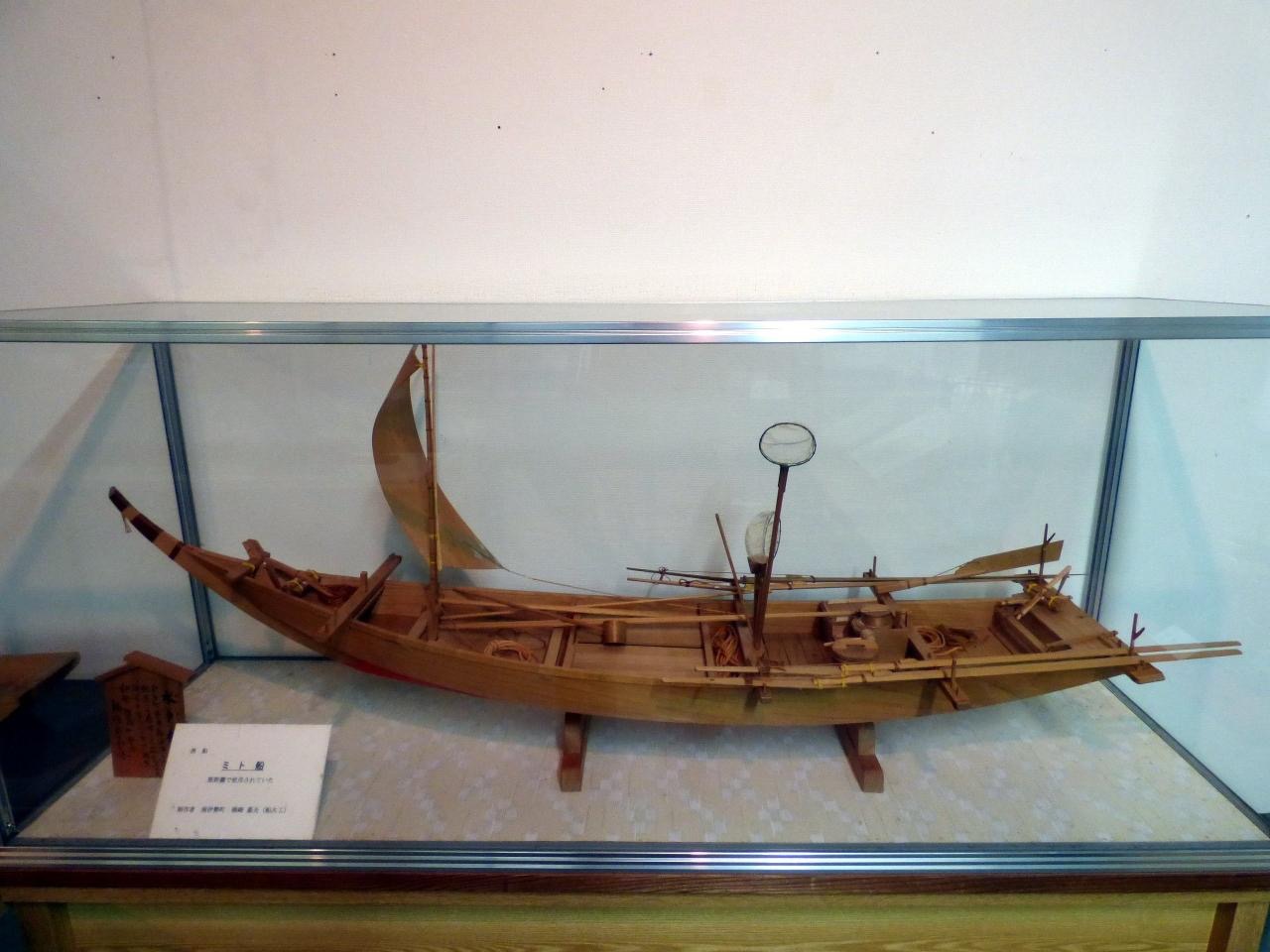
At the Toba Seafolk Museum, I encountered boats and boat models of types I’d never heard of before. That of course is no surprise given my novice status in the study of traditional Japanese boats. But, the number of boat names and terms was quite overwhelming. If I am going to continue studying wasen (tradtional Japanese boats), then I’m going to have to return to Toba at some point, armed with a better understanding of what I’ll see again there.

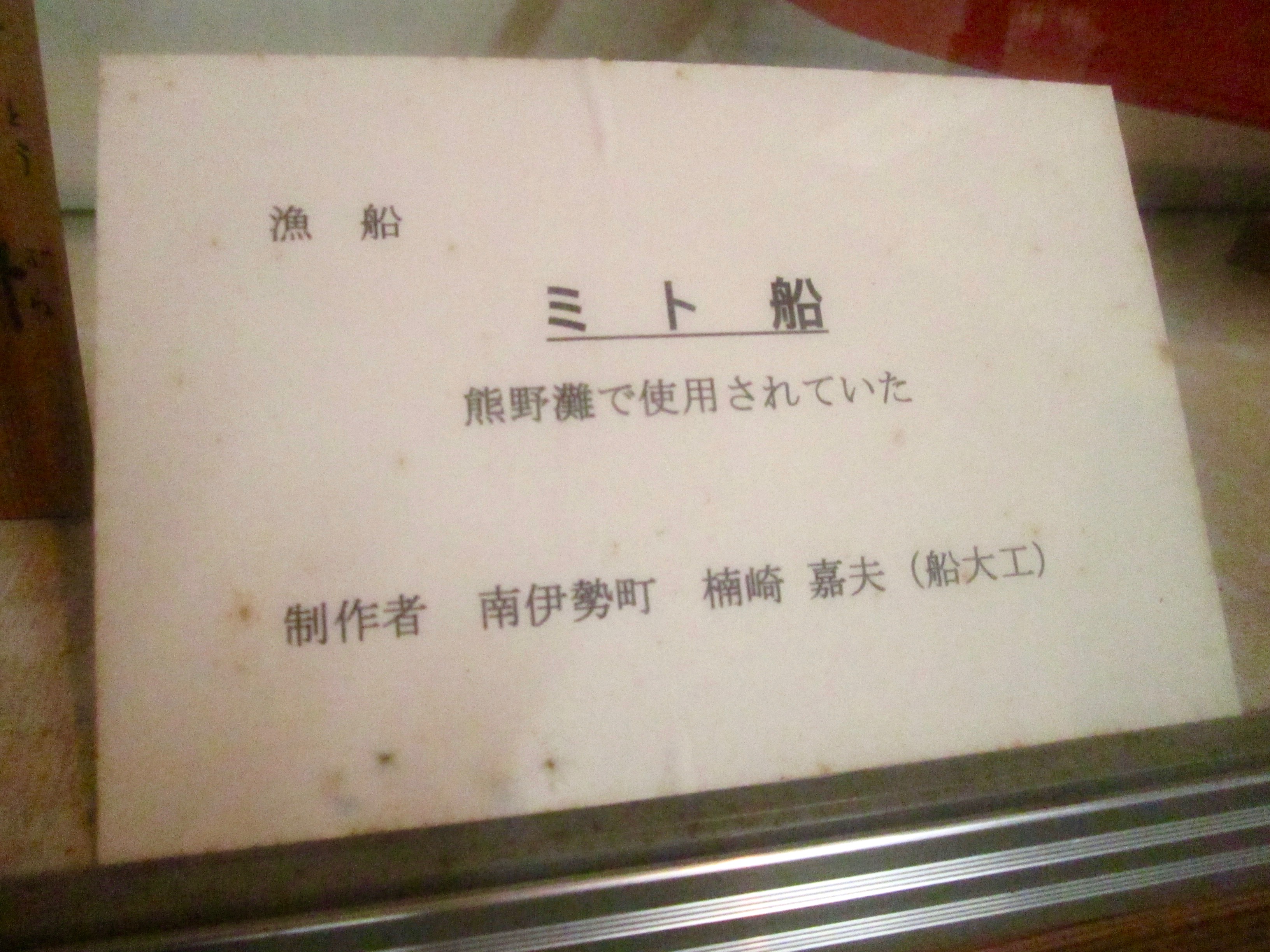
In this case, there was a nice model of a gyosen (漁船) or fishing boat called a Mitobune (ミト船).

According to the placard, the boat was a type of fishing boat used on the Kumanonada Sea, which is the area of the Pacific Ocean to the south of Kumano prefecture.

Continue reading

Higaki Kaisen Model (檜垣回線) – Edo Tokyo Museum

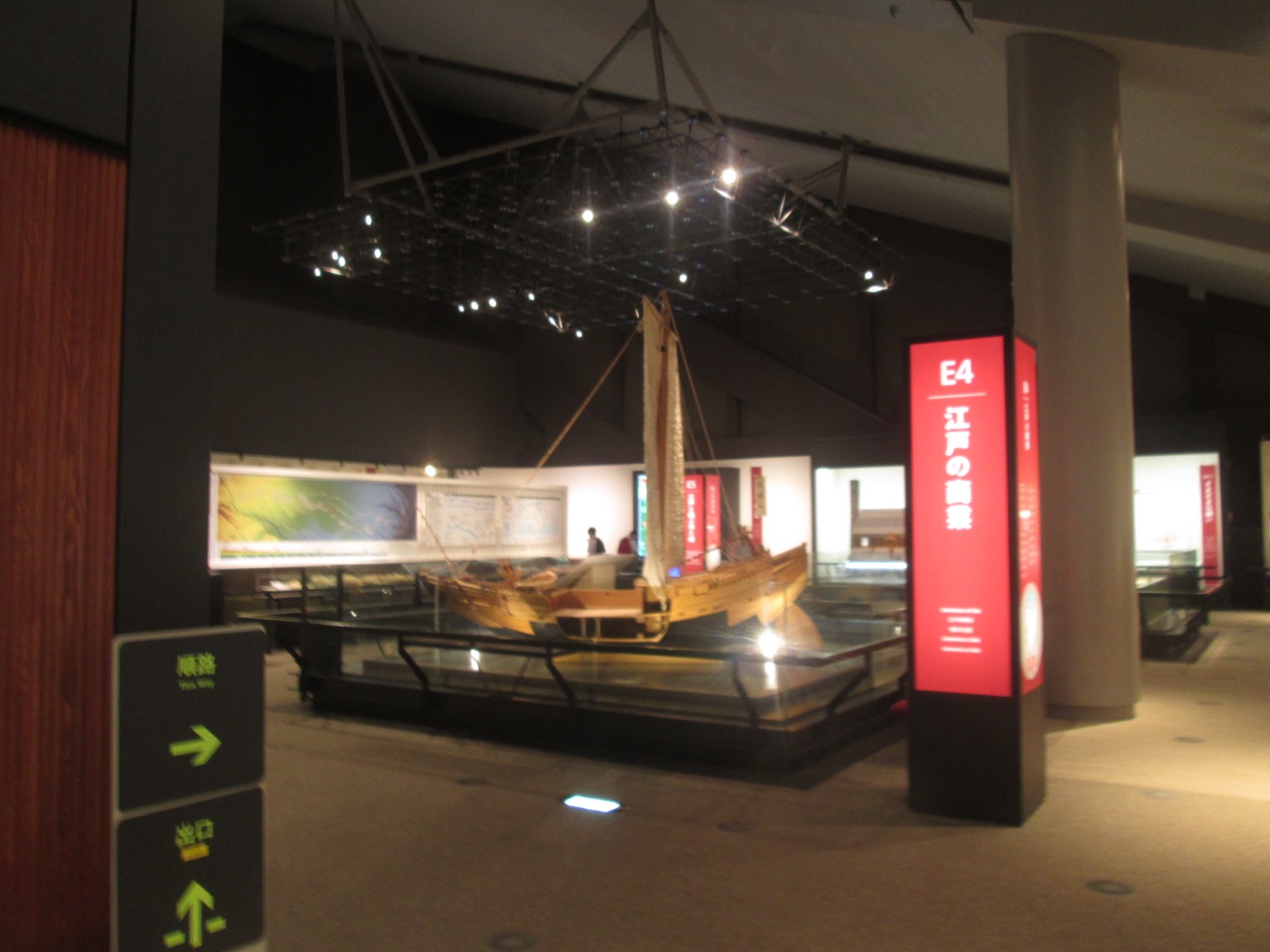
The subject of my second Japan boat/model posts is a large Higaki Kaisen model (檜垣回線) located in the Edo Tokyo Museum. The ship is a type of sengokubune (千石船), or 1000 koku ship, a type of bezaisen (弁才船) or coastal transport.

The model is one of the largest models I’ve seen in Japan so far, very nicely detailed, and is particularly nice in that it is relatively easy to photograph as it is fairly well lit and you don’t have to shoot through glass or acrylic. I don’t know the exact scale, but I think it must be about 1/10-scale. I believe there is a larger model in Japan, but this one is readily accessible.

Continue reading

Building Woody Joe’s Shinmei-zukuri Shrine – Part V

I’m just about half way through the model of a Japanese shrine. The model construction may not be exactly accurate, but the features of the building are interesting, and I’m thinking about how working on the roof structure may help with some wasen model construction.

catopower's avatarShip Modeler

Continuing on, Step 5 is the last step on the first side of the instruction sheet and deals more with the roof construction.

Step 5 << Assembling the Roof  1>>

This time, I was able to divide up this step into left and right halves, so the above is the left side of the instruction sheet for step 5.

View original post 916 more words

An Interview with Boat Builder Douglas Brooks

American boatbuilder Douglas Brooks has been working hard to study and document the craft of traditional Japanese boat building. He’s off again to Japan this month to study the construction of the cormorant fishing boats of Gifu prefecture.

An interview with him was just appeared on the Merchant & Makers website: http://www.merchantandmakers.com/the-craft-of-japanese-wooden-boatbuilding-with-douglas-brooks/

For more information on Douglas Brooks, visit his website at: http://www.douglasbrooksboatbuilding.com