Wasen Display 6.0

The sixth display of wasen models is now set up at the Japan Center Mall in the window of the Union Bank Community Room inside the East Mall building. The display will be up through the end of March and features the same models as before, but with the addition of my Kamakura Period Sea Boat or Umi-bune. Though the Umi-bune model is not quite complete, I figured it was far enough along for public display as an “in progress” model.
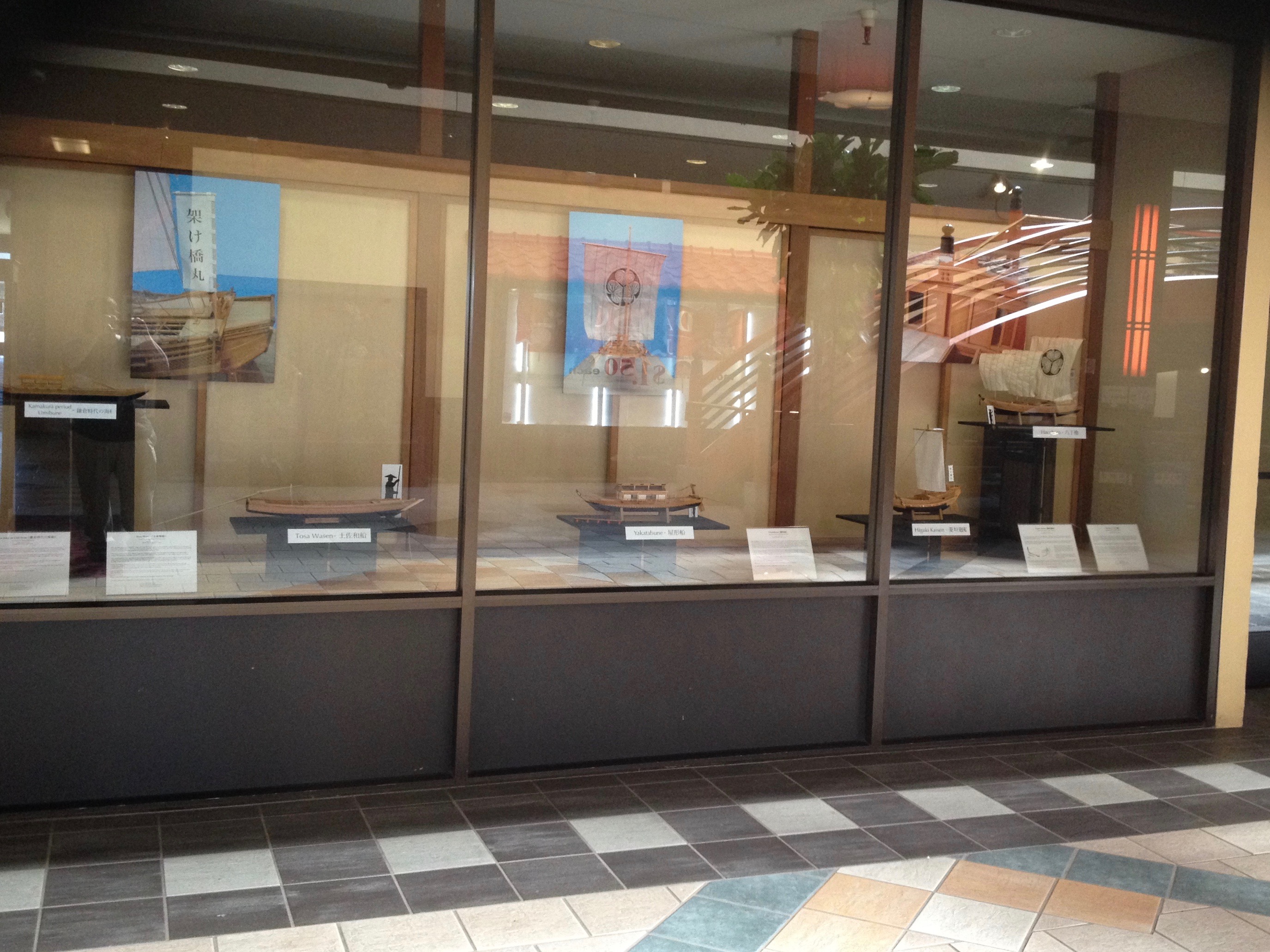
The display then consists of the Hacchoro, Higaki Kaisen, Yakatabune, Tosa wasen, and the Umi-bune. The main change in the display is the use of new folding pedestals I made. This makes transportation easier, as the new pedestals take much less room in my car.

My hope for future displays is to have a model of a Kitamaebune, which is very similar in appearance to the Higaki Kaisen, and to fix up my wasen boat shop diorama with the addition of a new partially planked boat under construction and a number of miniature tools and things.

I also hope to display the completed Umi-bune and finish up my Urayasu bekabune model and perhaps display it with the bekabune model that was given to me by the Urayasu Museum. Probably, the next display won’t be until sometime in the Fall.

This slideshow requires JavaScript.

For those interested in building any of the kit models, they are all presently available. The Tosa Wasen kit is only available direct from the manufacturer. You can see their website at thermal-kobo.jp, but you will have to email them to place your order. The HacchoroYakatabune and Higaki Kaisen kits are all available from the Japanese online seller Zootoyz.jp. Their prices are reasonable, service is very good, and you won’t get gouged on shipping fees. Again, instructions for all these kits are in Japanese, but all but the Higaki Kaisen are pretty straight forward.
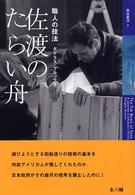
Book: The Tub Boats of Sado Island

I just found out that Douglas Brooks has a number of copies of his book, The Tub Boats of Sado Island: A Japanese Craftsman’s Methods, available for sale.

This book is in Japanese, but includes a full english translation in the back with translated photo captions as well. It was published in 2003 by the Kodo Cultural Foundation and lists for $38.99 plus shipping from the Kinokuniya book store. However, they list it as out of stock.

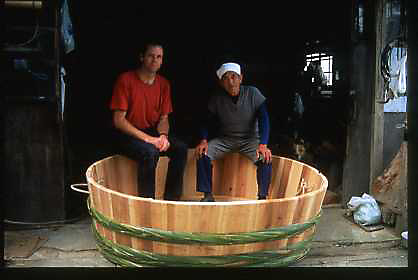
The author with Mr. Koichi Fujii. Photo courtesy of Douglas Brooks.

You can get a copy now, inscribed by the author, for only $30 including shipping. Take advantage of this opportunity by emailing the author directly. Here’s a link to his contact page: http://www.douglasbrooksboatbuilding.com/contact.html.

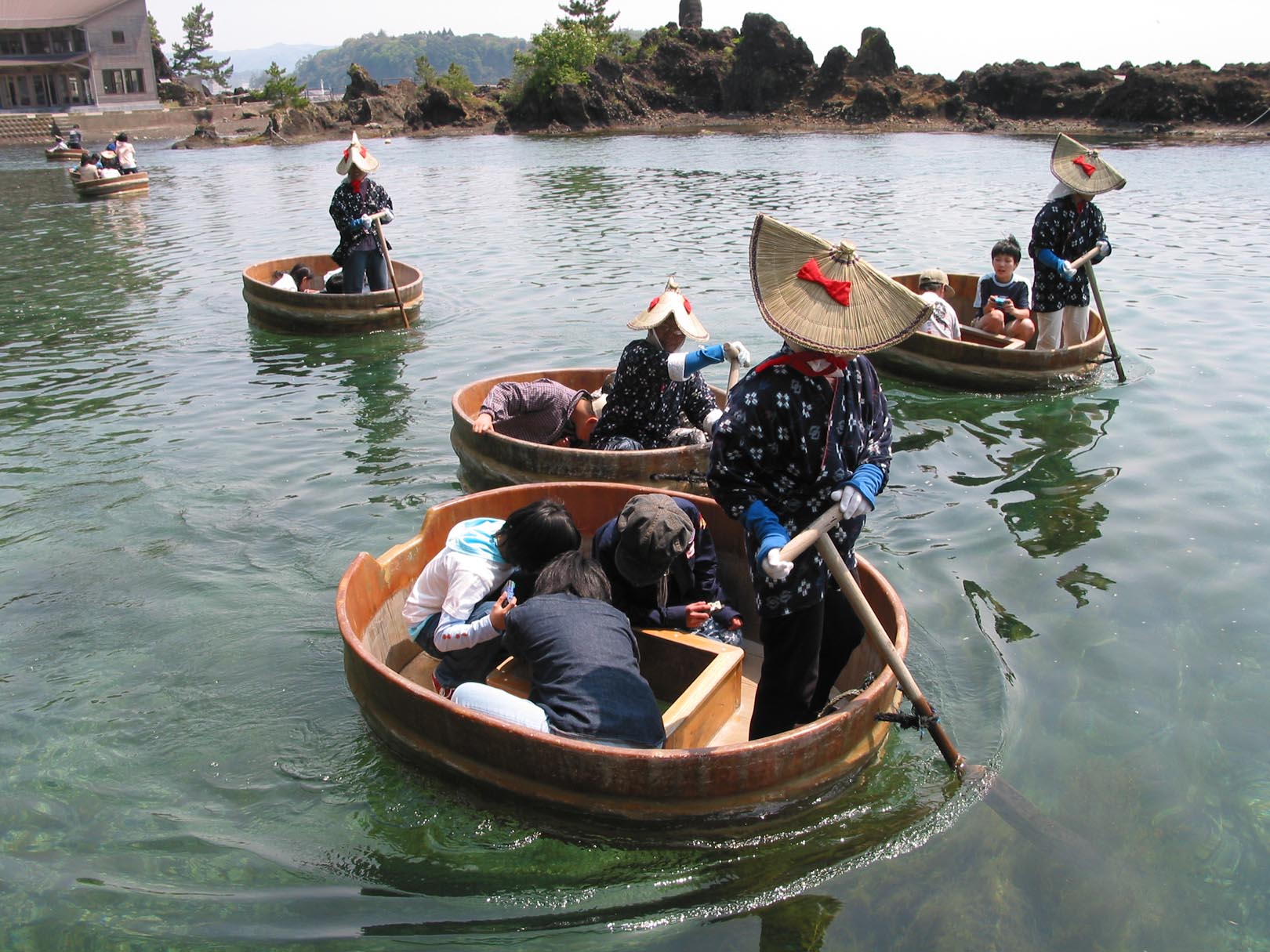
If you didn’t know, these boats are called Taraibune (たらい舟), and were used on the Echigo coast of the Sea of Japan and on Sado Island. If you ever visit Sado Island, there are a couple places where you can take a ride in one and even try out using the front mounted oar. Douglas Brooks did his first traditional apprenticeship in Japan with Mr. Koichi Fujii, who was the last professional tub boat builder on Sado Island until his death in 1999.

Taraibune for tourists at Shukunegi village, Sado Island. Photo courtesy of Douglas Brooks

Learn more about Taraibune on Mr. Brooks’s website: http://www.douglasbrooksboatbuilding.com/taraibune.html


New Wasen Modeler Facebook Page

Today, I decided to make it easier to follow my wasen modeler posts on Facebook, without having to follow my other music, personal or political postings. Click the following link, and be sure to “Like” my page!

Visit Wasen Modeler on Facebook


Wasen Models of the Ōta Ward Museum (大田区の博物館)

%e4%ba%94%e5%a4%a7%e5%8a%9b%e8%88%b9%e6%9c%a8%e6%9b%b4%e6%b4%a5%e8%88%b9_3

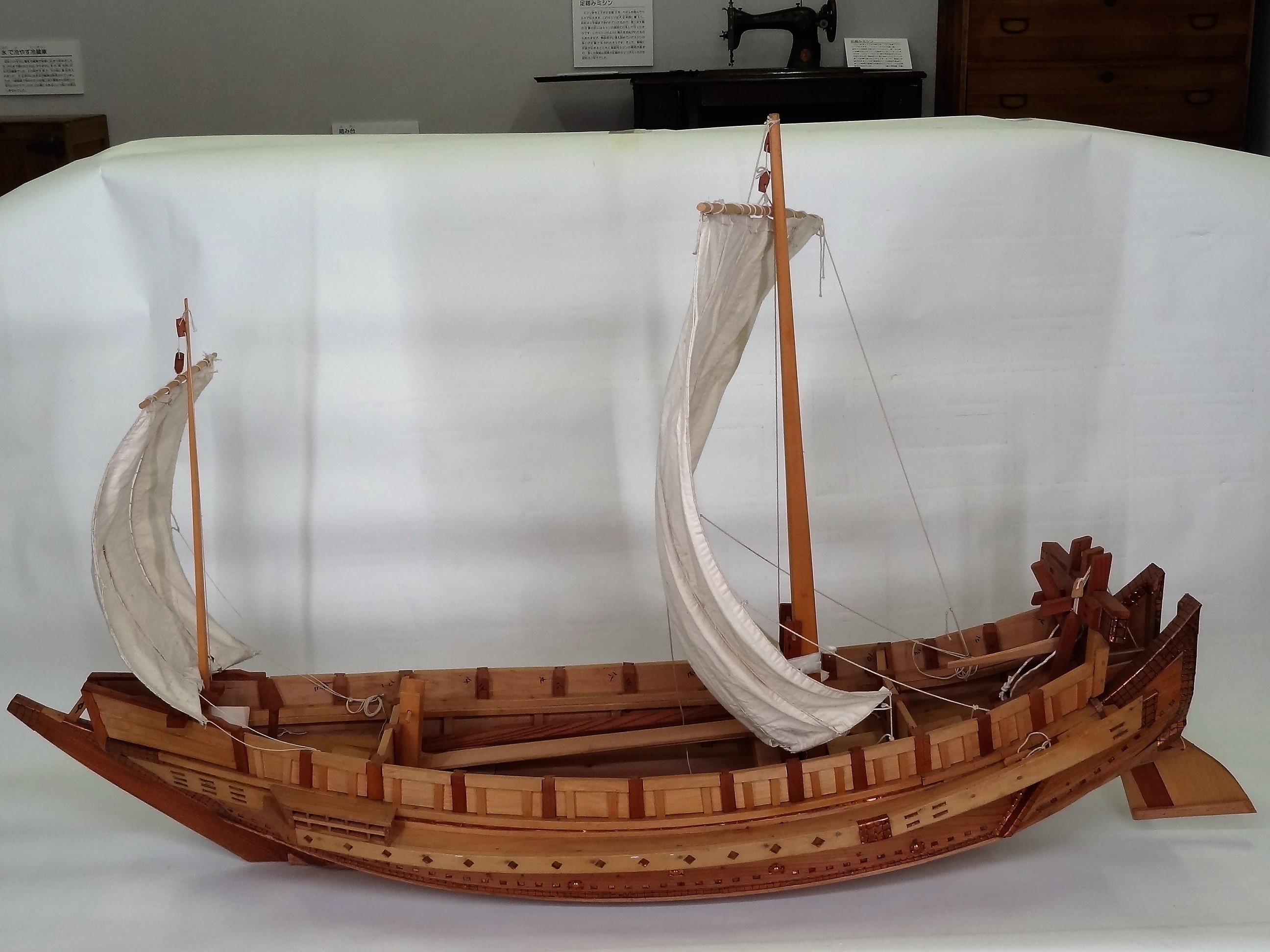
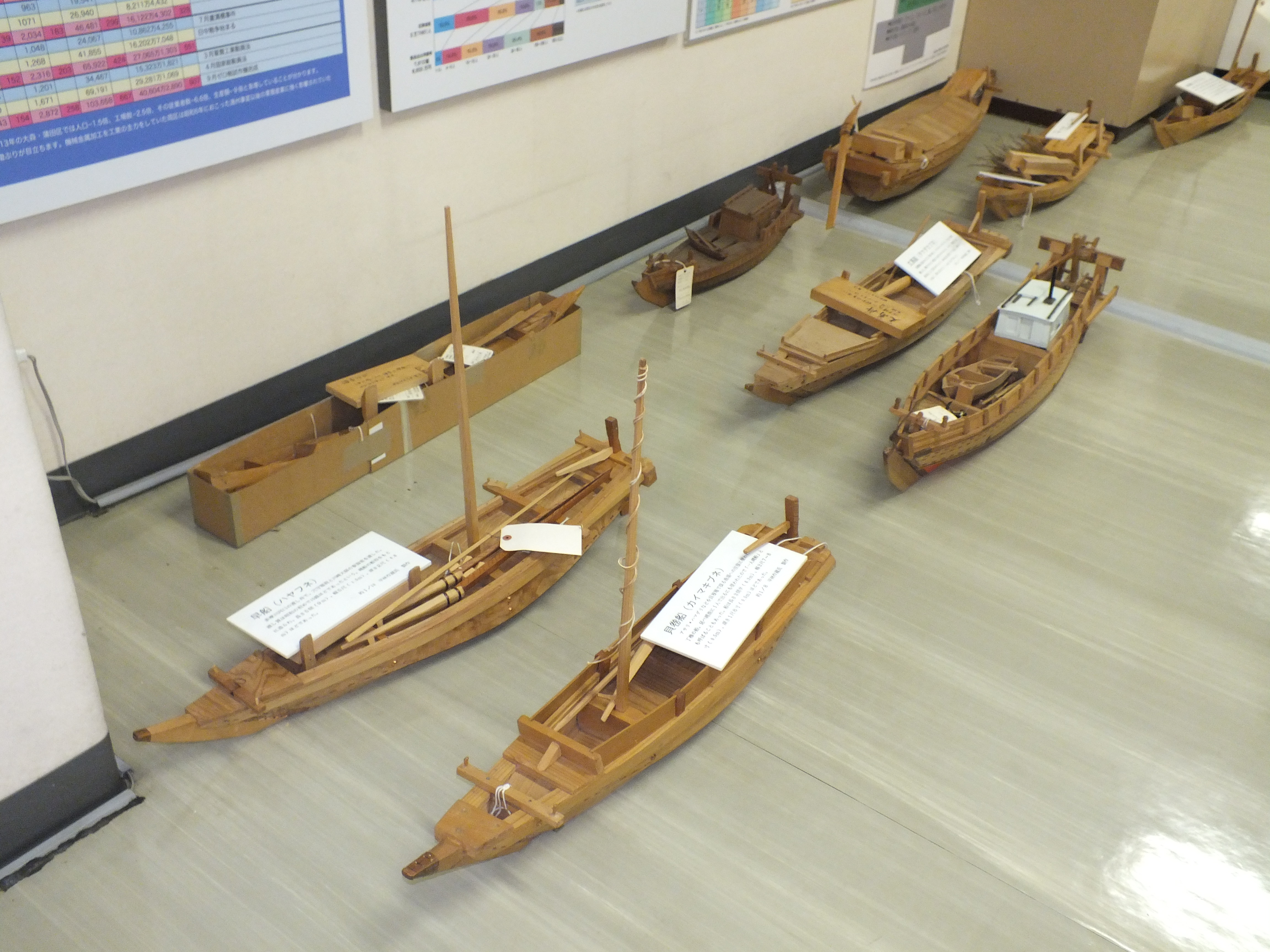
五大力船 – Godairiki-sen. 1/10 scale. One of the models in storage at the Ota Ward Regional Museum. Photo courtesy of Ota Ward Folk Museum, and taken by The Rope Tokyo.

The Ota ward’s regional museum is a place I’d never heard of, and nobody told me about. I discovered it one day as I was digging through an old database file I stumbled across on the Nippon Foundation Library website. Not being able to read much Japanese, I downloaded an Excel spreadsheet and began translating piece of it to figure out what I had. What I found was a list of about 900 wasen models and their dispositions. Included in the list was their city location and address.

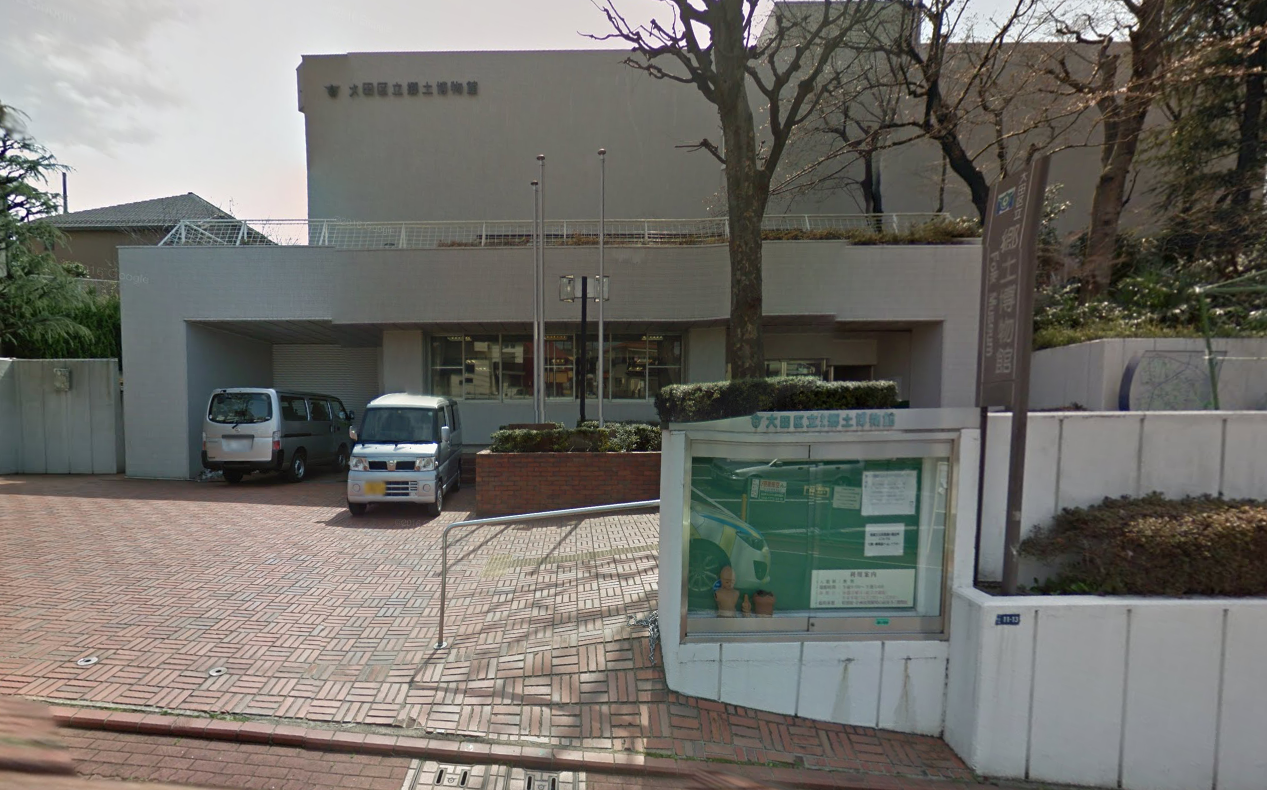
I recognized the kanji for Tokyo, 東京, so I focussed on those. I copied and pasted the address into Google Translate, and I got that the address was in the Ōta ward. Now, I’ve been to Tokyo a few times, but I’m not too familiar with the system of wards, which are subdivisions of cities. But, I had the address and popped it into Google Maps, which allowed me to locate it precisely, and even do a virtual walk around the area.

screen-shot-2017-02-12-at-9-40-25-am

Front of the Ota Ward Regional Museum as seen from Google Maps’ street view.

Continue reading

Building the Kamakura Period Umi-Bune, Part 5

Umisen Model

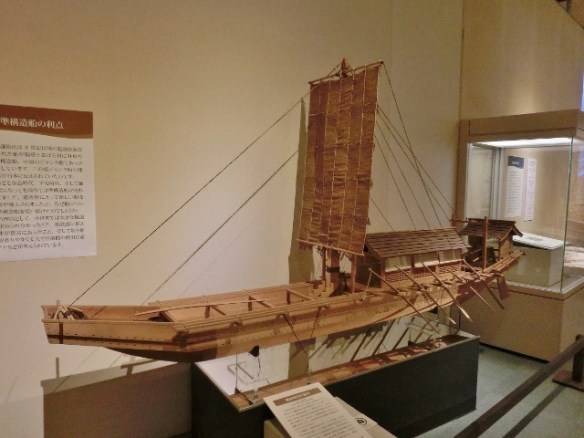
Model on exhibit at Kanagawa University. Photo by Masami Sekiguchi.

 No, that’s not my model. This 1/10-scale model of a Kamakura period umi-bune is on display at the Kanagwa University, which is home to the Institute for the Study of Japanese Folk Culture. The photo was taken by my friend Masami Sekiguchi, who is one of two Japanese ship modelers I met with in Tokyo last September. The other is Norio Uriu, Both gentlemen are members of The Rope, the Japanese ship model society in Tokyo.

I had been corresponding with Mr. Uriu for over a year, as he is a friend of fellow ship modeler Don Dressel of the Ship Modelers Association in Fullerton, California. Don was building his model of a Higaki Kaisen at about the same time I was building mine, and at some point, he put me in touch with his friend in Japan, Mr. Uriu.

When I travelled to Japan, I made arrangements to meet with Mr. Uriu for dinner in Tokyo and he brought along his daughter Hanako, who helped with our discussions, and Mr. Sekiguchi, who has been helping me understand information on Japanese ever since.

Continue reading

Changing the Look of Wasenmodeler

If you’ve visited this site before, you’ll notice I’ve made some changes in its appearance. I used WordPress to publish my blog and I hadn’t realized that the menus in the particular visual theme I chose weren’t working correctly. So, my apologies. I only discovered this today. So, I selected a different theme where the menus seem to work correctly. Now, you can see what you’ve been missing!

If you have any comments on the new look or the old looks, please feel free to leave them in the comments box below. I generally do not publish comments unless they are relevant to the subject matter of Japanese boats or their models, but I do read them.

I’m also considering making a static home page that explains more about the site up front, along with any important news, and then putting the blog entries under a (working) blog menu.

Building the Kamakura Period Umi-Bune, Part 4

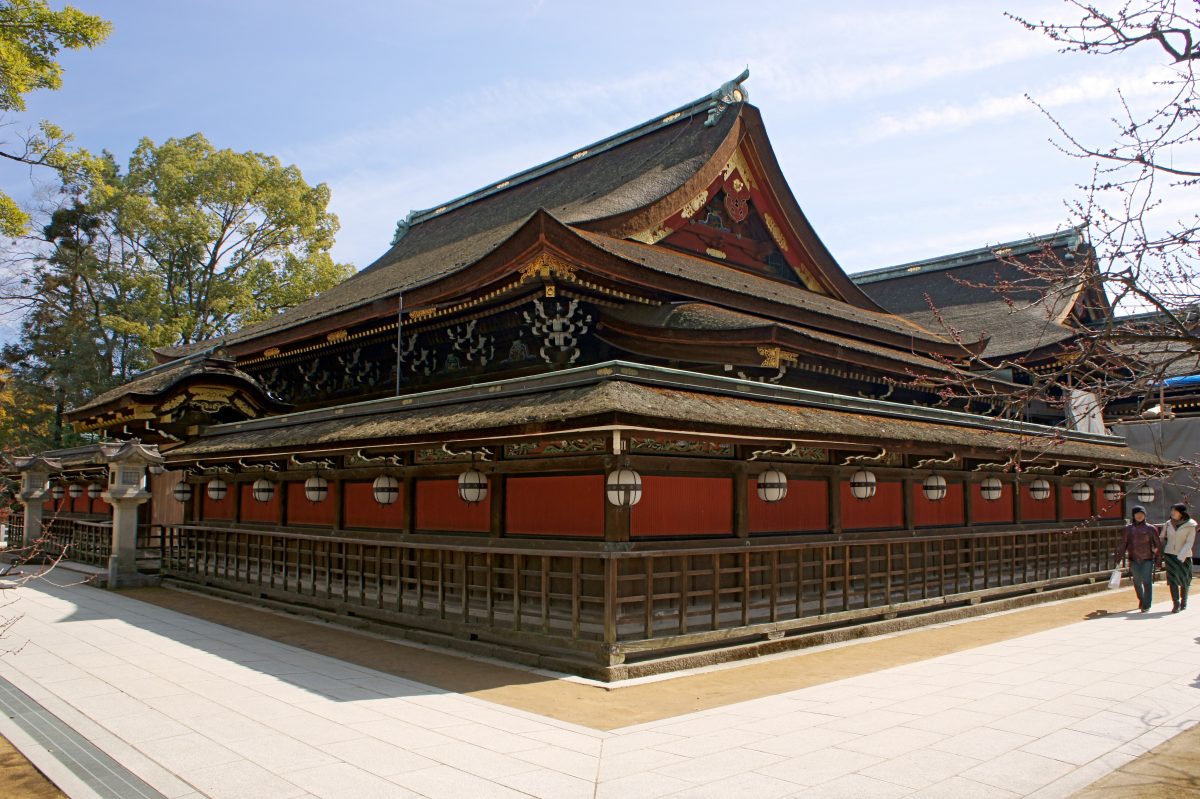
Kitano Tenmangu

Kitano Tenmangu – Shinto Shrine in Kyoto. Photo from Wikipedia.

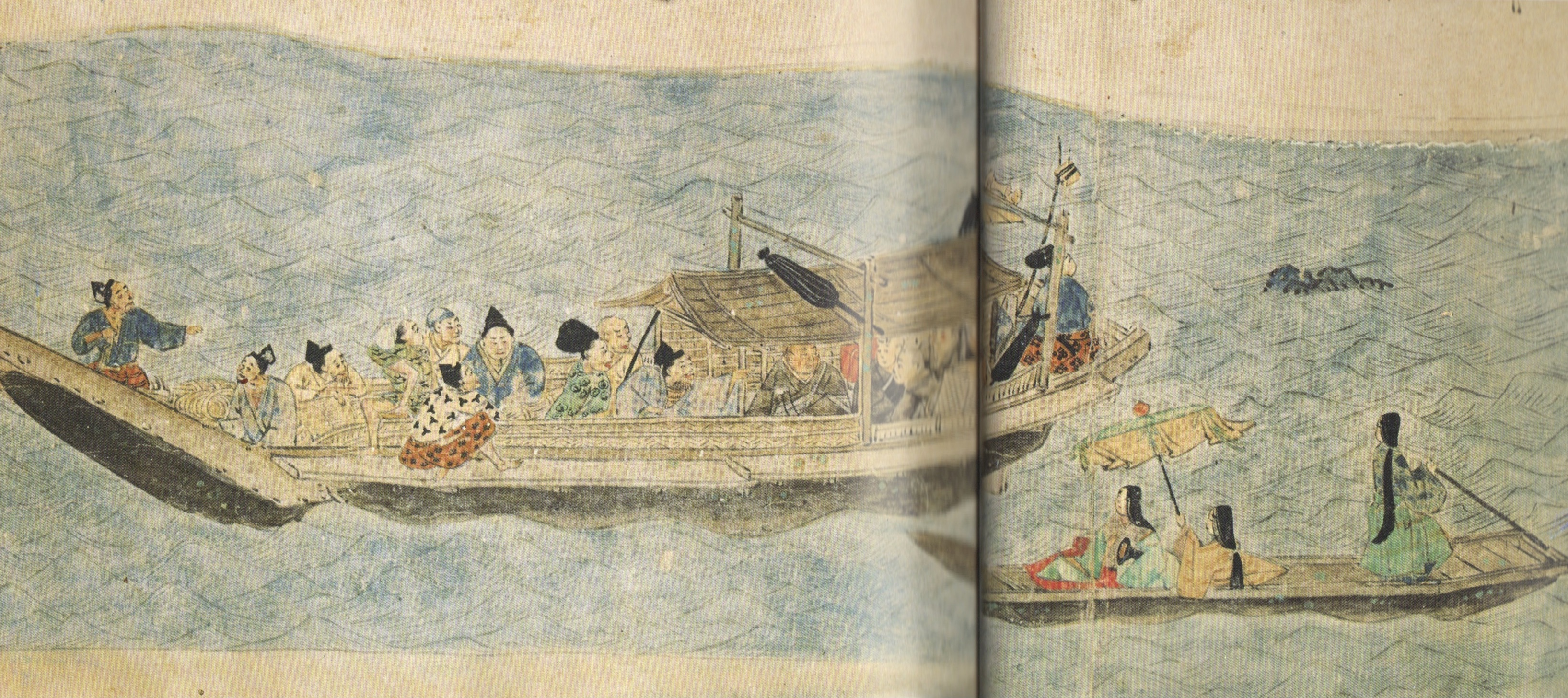
About a week ago, my ship modeler friend in Japan, Mr. Sekiguchi, explained a little about the Kitano Tenjin scrolls that depict the Kamakura period Umi-bune, and I have since re-read through online information on the subject to get a better understanding.

The scrolls represent the life of Sugawara no Michizane, a scholar and poet in the Heian period (平安時代  794-1185) who rose high in politics in Kyoto, then Japan’s capital. But, he had powerful  rivals in the Fujiwara clan that plotted against him, and he was exiled to Dazaifu on the island of Shikoku, where he died three years later in 903.

Apparently, there was much sympathy for Michizane, and shortly after his death, there were a number of calamities, including a lightning strike within the imperial palace. The emperor’s court fearing that these were caused by the wrath of Michizane’s angry spirit, decided to placate him by deifying him and erecting a shrine. He was given the Shinto name of Tenjin, and the shrine was built at Kitano, and known as Kitano Tenmangū.

Continue reading

Higaki Kaisen Build Article – Ships in Scale March/April ’17 Issue

I hadn’t heard any word at all from the editors of Seaways’ Ships in Scale magazine after submitting my article on the construction of Woody Joe’s Higaki Kaisen kit. I submitted the article in late November, so I figured I’d send them a note to ask what the status was. I got their reply a short time later and it’s good news, the article is scheduled to appear, starting with the March/April issue.

Image Extra 4 - 994A9623

Given the size of the article, I expect it will appear across 3 issues. That’s the what happened with my Mary Taylor model article a few years back, and it was of similar size. This one actually might be a little longer, so maybe it will span a 4th issue. I don’t like super long articles, so I hope it gets limited to 3, but certainly no more than 4.

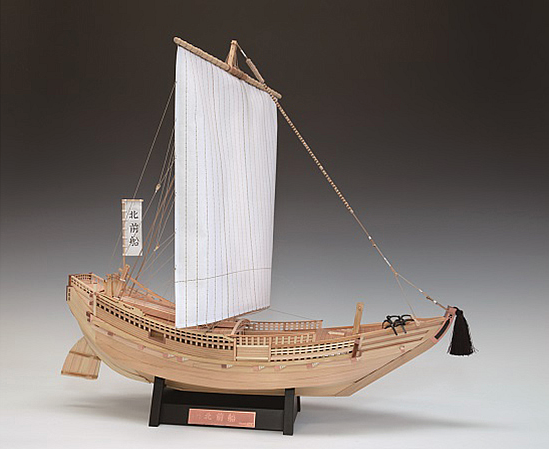
As a reminder, Zootoyz is selling Woody Joe kits again, and they’ve revamped their website a bit and added the newer offerings, like the Kitamaebune. That, by the way, is a slightly beefier cousin to the Higaki Kaisen, built for the long journeys between the northern ports and the large port cities of the south. If you are interested in a less complicated kit, but really like the look of the Higaki Kaisen, consider the Kitamaebune. It’s a newer kit, same 1/72 scale, with simplified construction for about $20 less.

Kitamaebune

Woody Joe’s Kitamaebune kit. A beefier bezaisen than the Higaki Kaisen.

If you don’t subscribe to Ships in Scale, now is a great time! You can find out more information from their website here: http://seaways.com/. Back issues include my reviews of the Woody Joe kits Higaki Kaisen, Kanrin Maru and the Charles Royal Yacht, as well as my article on scratch building the pilot boat Mary Taylor.

At some point, I am considering detailing Woody Joe’s Hacchoro kit too, and writing up an article about that. I already have the kit sitting and waiting in the closet. Too many other things to finish up first!


Building the Kamakura Period Umi-Bune, Part 3

image-2

The largest source of Kamakura period boat information appears to be in 13th century picture scrolls that appear in books and on the Internet, but I really know very little about the scrolls themselves. What they depict includes a lot of boats with hull designs very similar to the ship I’m modeling. These are semi-structured ships or junkozosen (準構造船) with dugout-style hull, which have been built up with hull planks. Most of those depicted are river boats, but some appear to be sea boats.

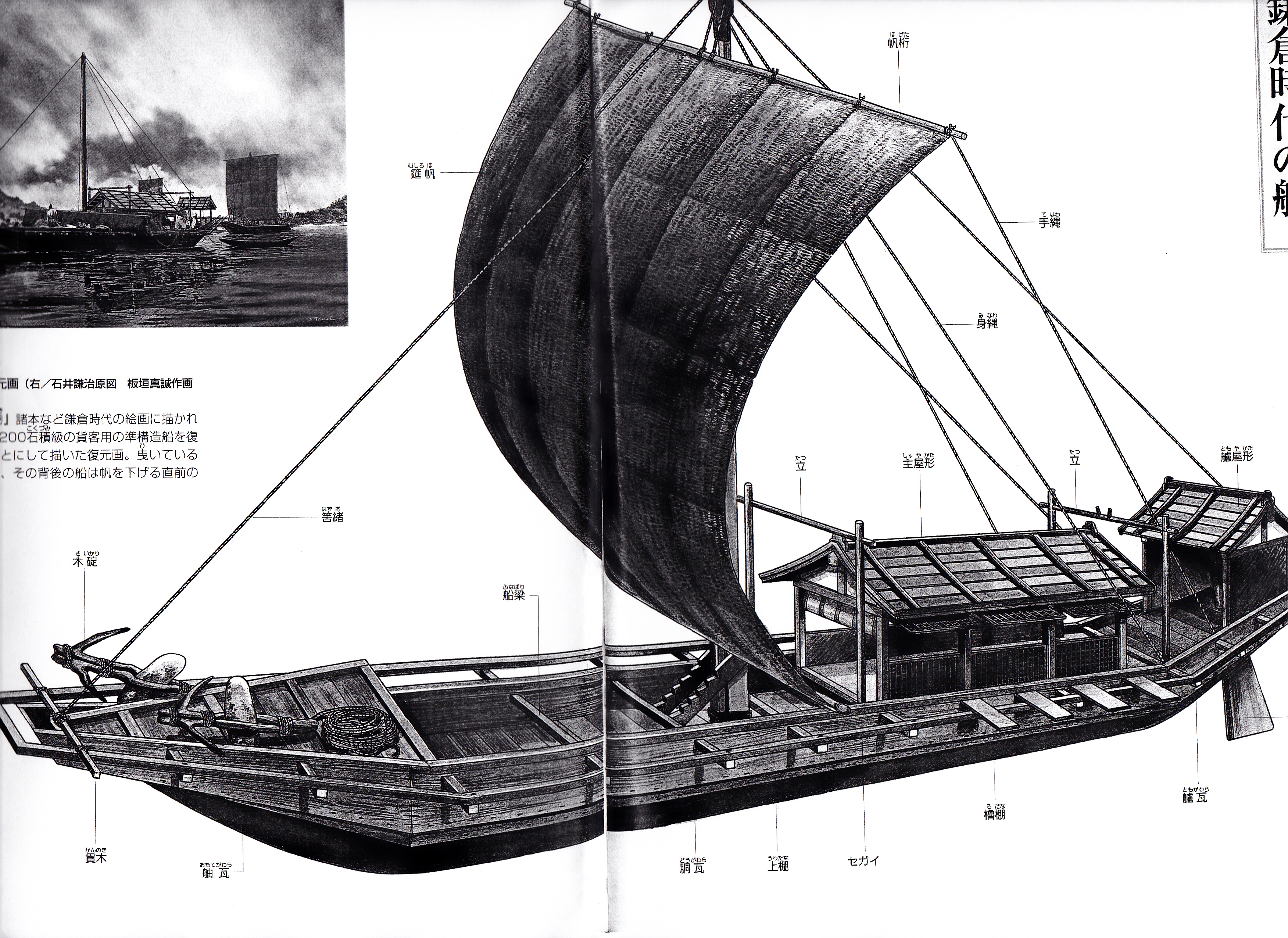
I recently found a great sketch of a large sea ship on a blog site. I believe this was scanned from one of Professor Ishii’s books, but it’s not one that I have.

25e52592258c25e8258825b9-1

This image is very similar to a less detailed drawing I have in my books. The ship depicted here varies only slightly from my model in that this image shows a peaked roof called a kappa at the bow. It also has only a single rail outboard of the hull, but it extends all the way around the bow. It also may be a somewhat smaller ship, given there are only 4 rowing platforms on either side, where my model will have 6.

A couple things I like about this image in particular is that it shows a roof design on the main deck house that is clear and makes sense to me. Note the boards that make up the roof run along the length of the roof. The drawing I’ve been working off of, shows the boards running perpendicular to these – not that it’s wrong, but that it requires an underlying structure that’s different from what I would naturally build. Also the front of the house appears to have a simple roll-up screen, no door or solid panel.

Continue reading

A Wasen Modeling Wasen Builder

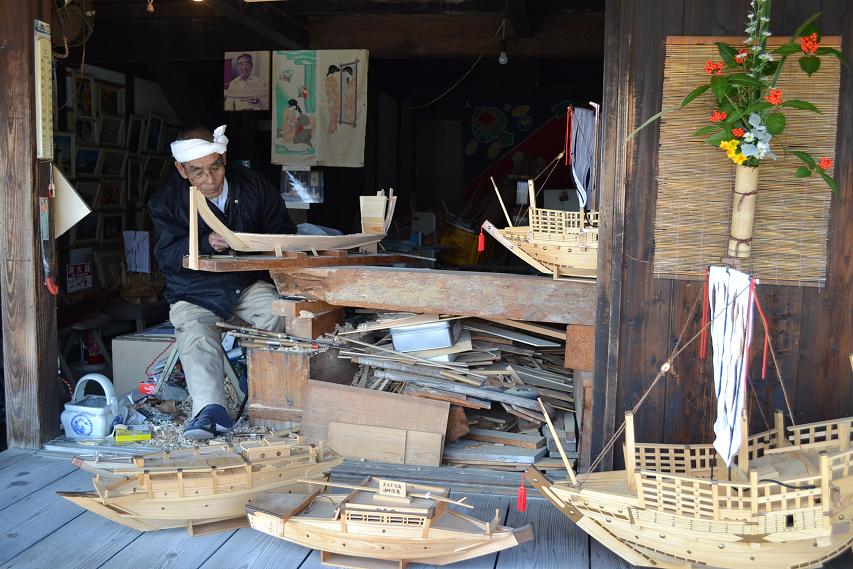
Chiharu Tao is a Japanese boatbuilder living in Onomichi, just outside of Hiroshima. I don’t know how much model building he does in comparison to his boat building now, but I got his photo from American boatbuilder Douglas Brooks. As you can see, his models are quite large and of a stylized type.

dsc_0589

Photo courtesy of Mr. Chiharu Tao and Douglas Brooks

Douglas just sent me the photo from the airport. He’s current in Japan and on his way to his next boat building project. I am really excited to share it with you here.