Tenma-Zukuri Chabune (伝間造茶船)- Plans Reconstruction Update

Work on the drawings of the Tenma-zukuri chabune continues. Over the past months, I’ve been making changes to my drawings of this wasen that I found in the the Funakagami. With the help of fellow modeler Kouichi Ohata and my mentor Douglas Brooks, I’ve gone through several revisions of the plans – seven major ones, so far.

Tenma-zukuri chabune, from the Funakagami.

The biggest difficult has been in analyzing the single wood-block print of this type. Compared to other boats in the Funakagami, this one has a very flat bottom, showing no real rise at the stern, which may be possible, but it’s really throwing people, as it seems very unusual for a Japanese style boat.

Also, if you look at the near side of the boat, particularly the bottom, it doesn’t appear to show any inward curvature. This threw me initially, as this is, again, pretty unusual. It’s not impossible, as the hozugawa boat I built doesn’t have any inward curvature at the stern either. But, looking more closely, at the far side, you can clearly detect inward curvature at the stern. The lack of curvature had bothered some people, so I’m glad I could spot some in the image to justify it on my drawings.

Continue reading

1/10-scale Figures – A Brief Update

Last week, I wrote a post about a pair of articulated 1/10-scale figures I bought made by Bandai of Japan called Body-Kun. The figures are a bit short, but a little long in the legs, so I hope to modify them slightly to make them a little closer to correct height by adding a little filler in their midsections. Ideally, I’d add some filler into the arms too, and make the heads a little larger. But, reasonably, I can only do so much.

In any case, I’m pretty sure I can do something with them, so I went ahead and ordered another pair off of Ebay for just over $30. However, I noticed that there was apparently another version, which had replacement arms and legs, to allow the figure to naturally sit seiza, or “Japanese-style”, and to allow him to have his arms folded across his chest or just his hands folded in front of him.

The biggest differences I realized only after getting the figures was that they’re a little skinnier than the other figure and, more importantly, they’re barefooted, which is exactly what I need for Japanese figures of this period. I can always rig zoris, Japanese-style sandals, waraji, straw sandals that are tied around the foot, etc.

Original figure on the left, the new one I received on the right. I think I chipped the chin of the new figure, which is why it looks a little odd. Should be repairable without too much trouble.

Continue reading

1/10-scale Figures… Almost

For the past many months, I’ve been feeling the need to add figures to my models. The models, by themselves, are nice. But to really give the feel of how the boats were used requires additional details, and figures have the added benefit of creating a sense of scale.

I’m not very good at making figures yet, but I’m working on it. In the meantime, I’m trying to use commercially available figures. This isn’t all that difficult in scales like 1/32 (Kobaya), 1/48 (my Kamakura period sea boat is 1/50 – close enough), 1/72 (Higaki Kaisen). But, many of my small boat models are in 1/10 scale. Finding a figure in the right size for a 1/10-scale model is pretty difficult, but I finally settled on something that looks like it might work.

A while ago, I saw some ads for a pair of fully articulated figures, one male, one female. The figures are produced by Bandai, a Japanese toy company that makes action figures. The figures are part of a line called S.H. Figuarts, with the male figure called Body-Kun, and the female figure called Body-Chan.

Continue reading

Tenma-Zukuri Chabune (伝間造茶船)- Plans Reconstruction

Back in March of this year, I was digging through the images of the wasen recorded in the Funakagami. This, as you might recall, is a book put together in 1802 to identify the different boat types in use on the waterways of Edo for tax collection purposes.

There was an excellent short article that appeared in issue number 82 of The Rope News about a talk given in 2014 by Mr. Iinuma, who was the curatorial director of the Museum of Maritime Science in Tokyo. The talk focussed on the Funakagami and the boats described in it. Here’s a link to it if you haven’t seen it: The Rope News, No. 82

I’ve been looking over the 33 boats shown in the book, trying to find a subject that I felt I could model. Unfortunately, I’ve found no technical drawings for any of these boats. But, there was one that piqued my interest, as it’s name became more meaningful as my Japanese language skills improved. That boat was the Tenma-zukuri Chabune. Continue reading

Kitamaebune – Another Kit from Woody Joe

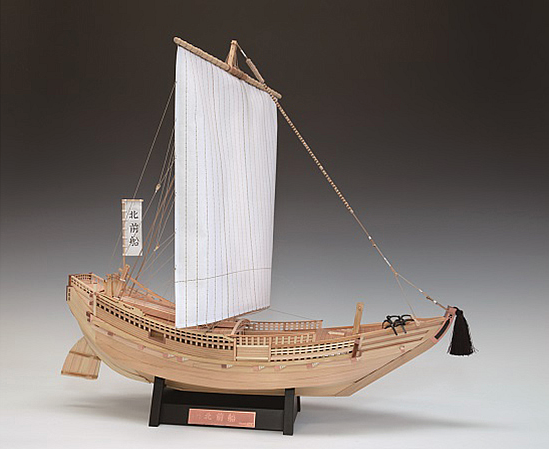
Not sure when I’ll have a chance to start this, but I recently broke down and ordered another kit from Zootoyz.jp, Woody Joe’s Kitamaebune kit.

This is the company’s latest wasen model kit offering, but has actually been out on the market for quite some time. The release date was February of 2016, I believe. But, I’ve been too busy with other projects to pay too much attention. Finally, with all my Japanese models on display for a month, the emptiness at home must have gotten to me (that and some extra money I’ve managed to set aside), and I ordered one from Japan.

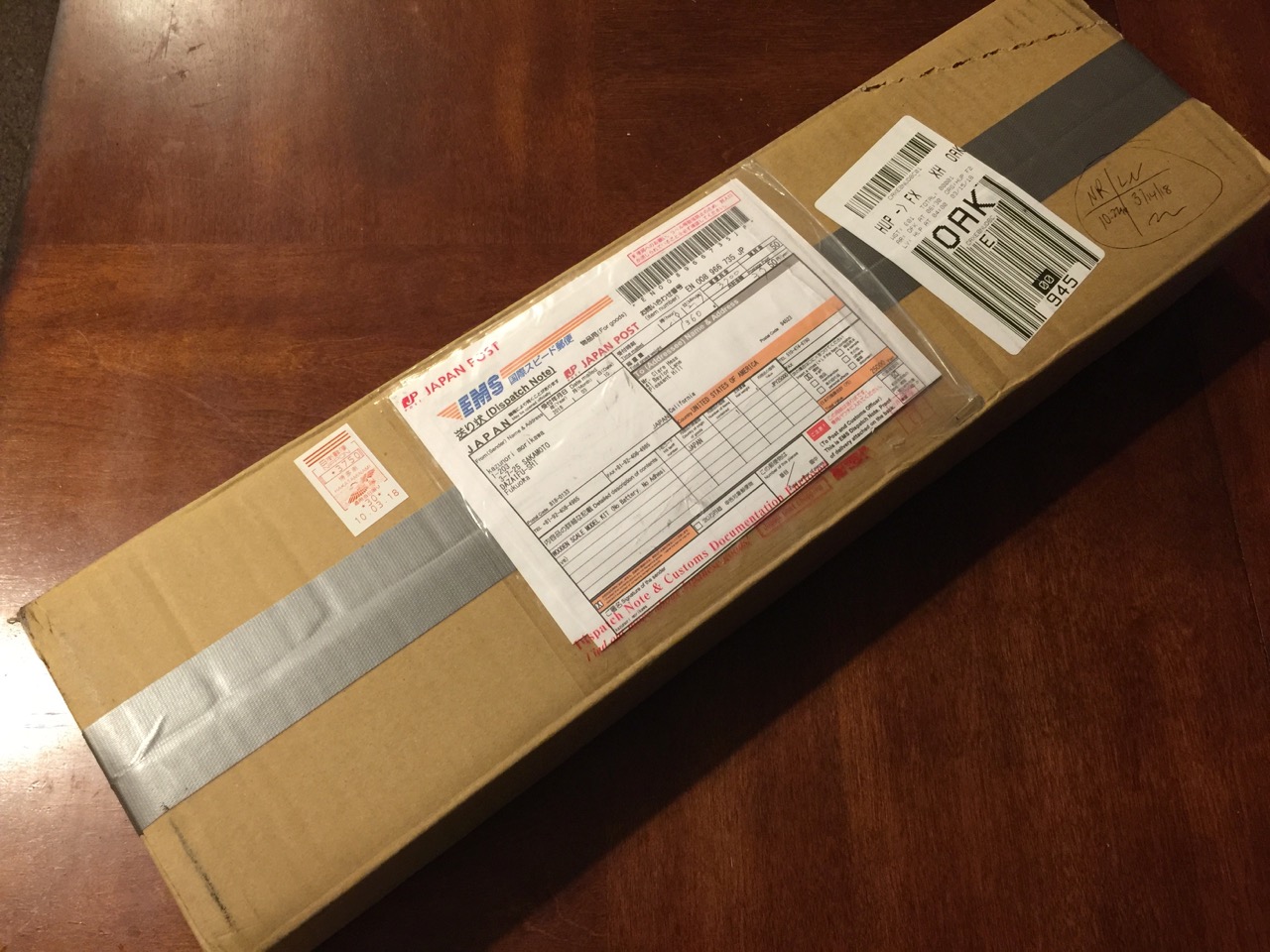
The postman is very accustomed to delivering these EMS packages from Japan.

Continue reading

Japanese Boat Models Display 7.0

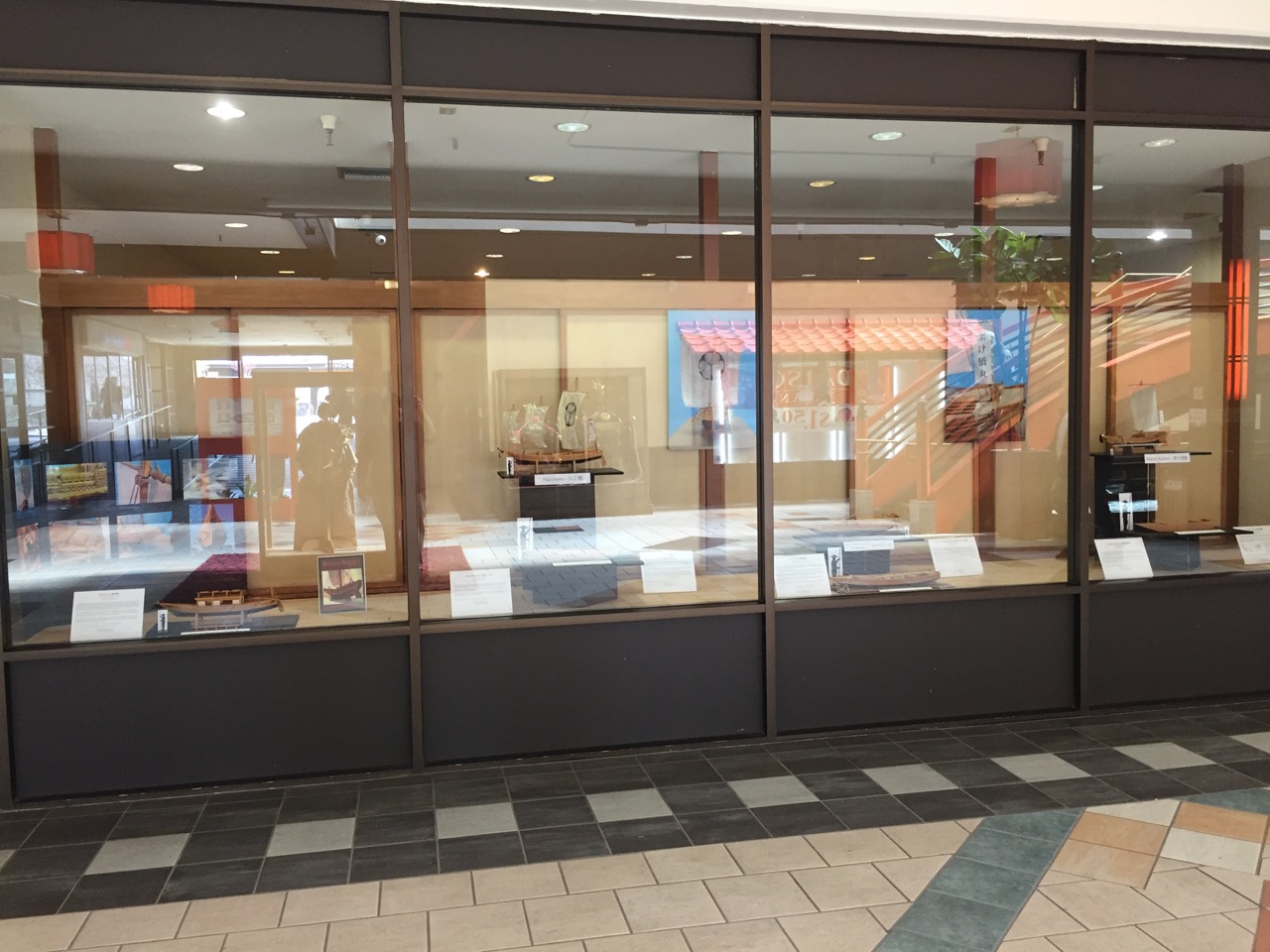
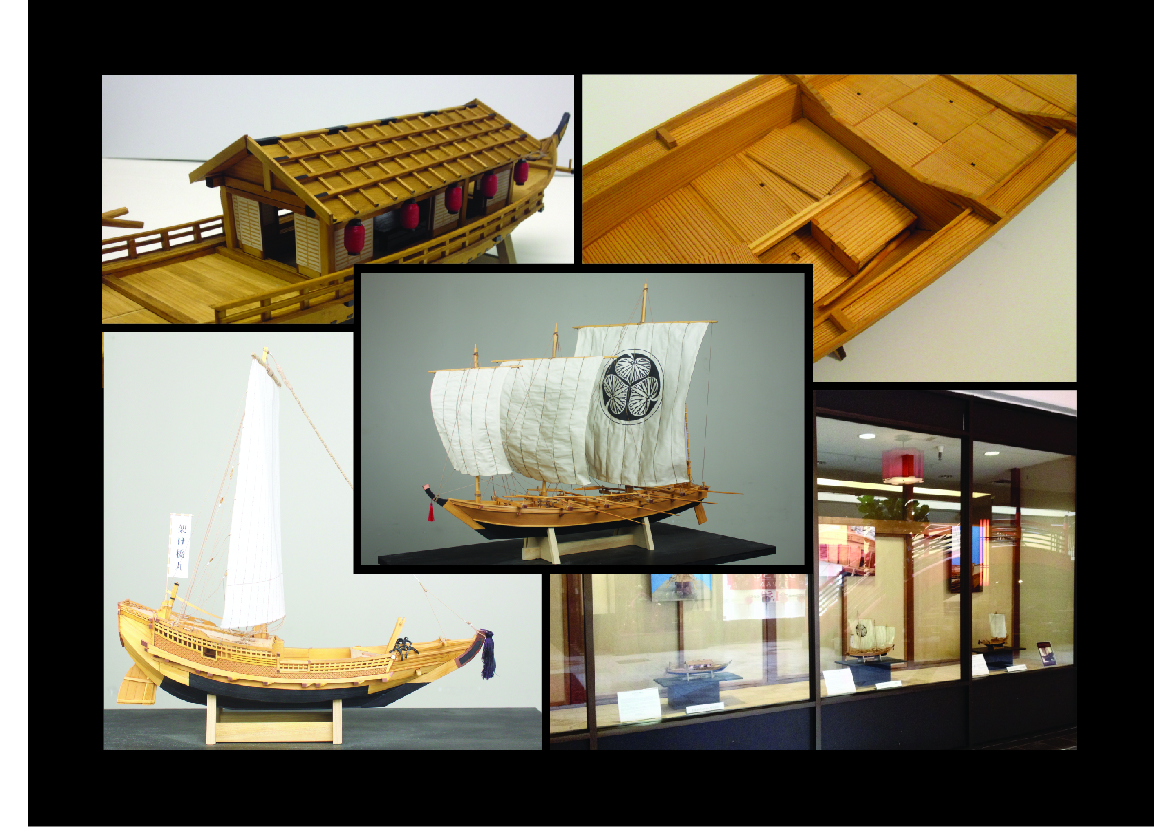
Just last week, on a rainy March 1st morning, I packed up my car with stands, posters, models, signs, and accessories, and drove 2 hours through traffic to set up the latest and largest Japanese boat models display yet. 7 models in all are on display in the window of the Union Bank community room in the Japan Center Mall from now through the end of March.

This year, Woody Joe’s Hacchoro, Higaki Kaisen, and Yakatabune are prominently featured, along with Thermal Studios’ Tosa Wasen, and my scratch built Hozugawa Ayubune, Urayasu Bekabune and Kamakura period Umibune.

Just over half of these models are based on kits, mostly from Woody Joe. And, if your interested in building one of these wonderful kits, of course, I always recommend Zootoyz.jp as your source for Woody Joe, and other kits. Here is some information on the models in this display – click on their titles to go to a website where you can purchase the kits. Continue reading

Mr. Kazuyoshi Fujiwara’s Wasen Models

While I have been in touch with boatbuilder Douglas Brooks by email for close to 3 years, we met at the Nautical Research Guild’s annual conference in Mystic, CT, in the Fall of 2016, where he gave a talk on Japanese traditional boatbuilding and his apprenticeships.

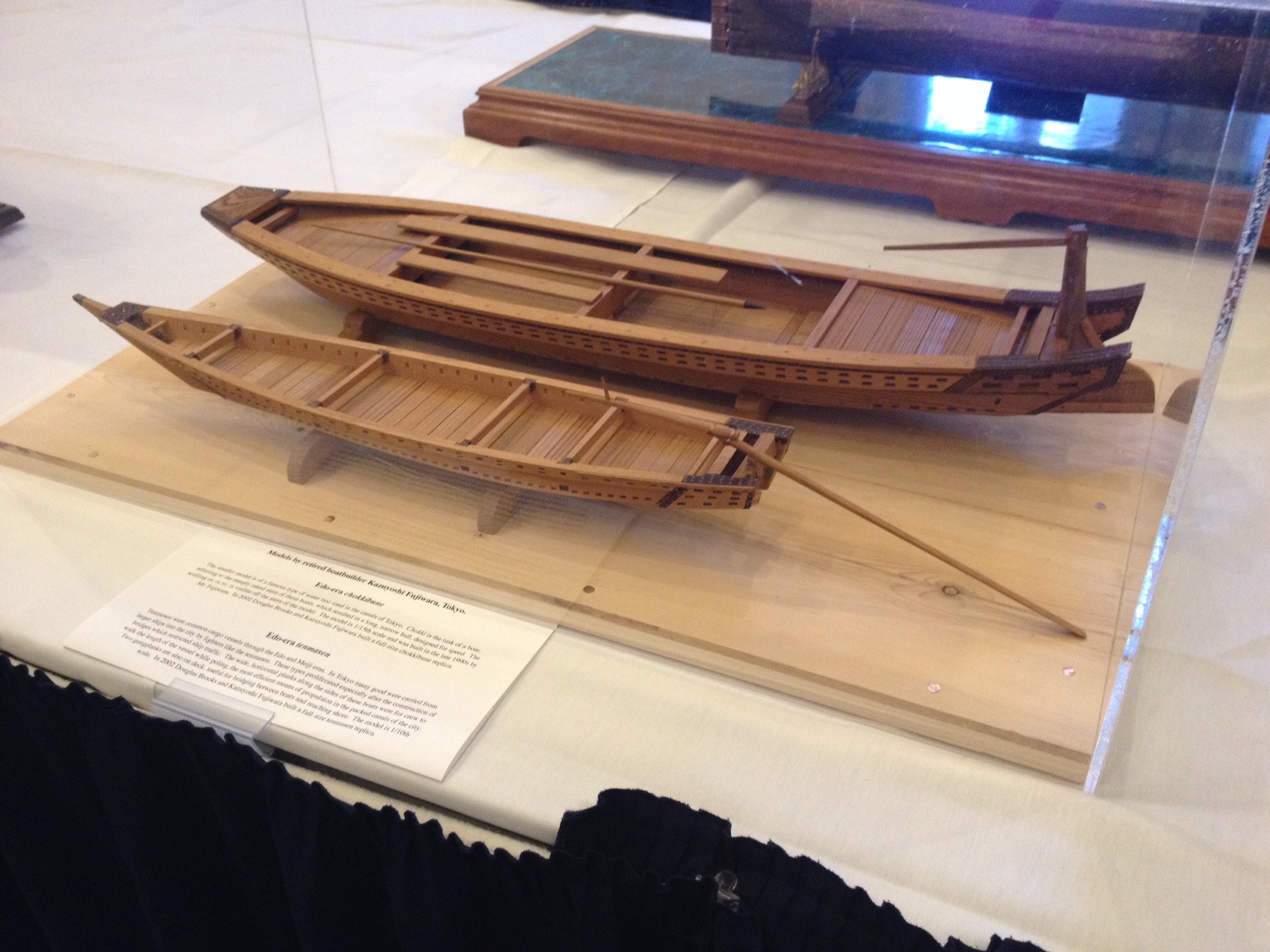
At the conference, he had a pair of models that were built by his teacher in Japan, Mr. Fujiwara. These were beautifully made and I’ve been inspired by them.

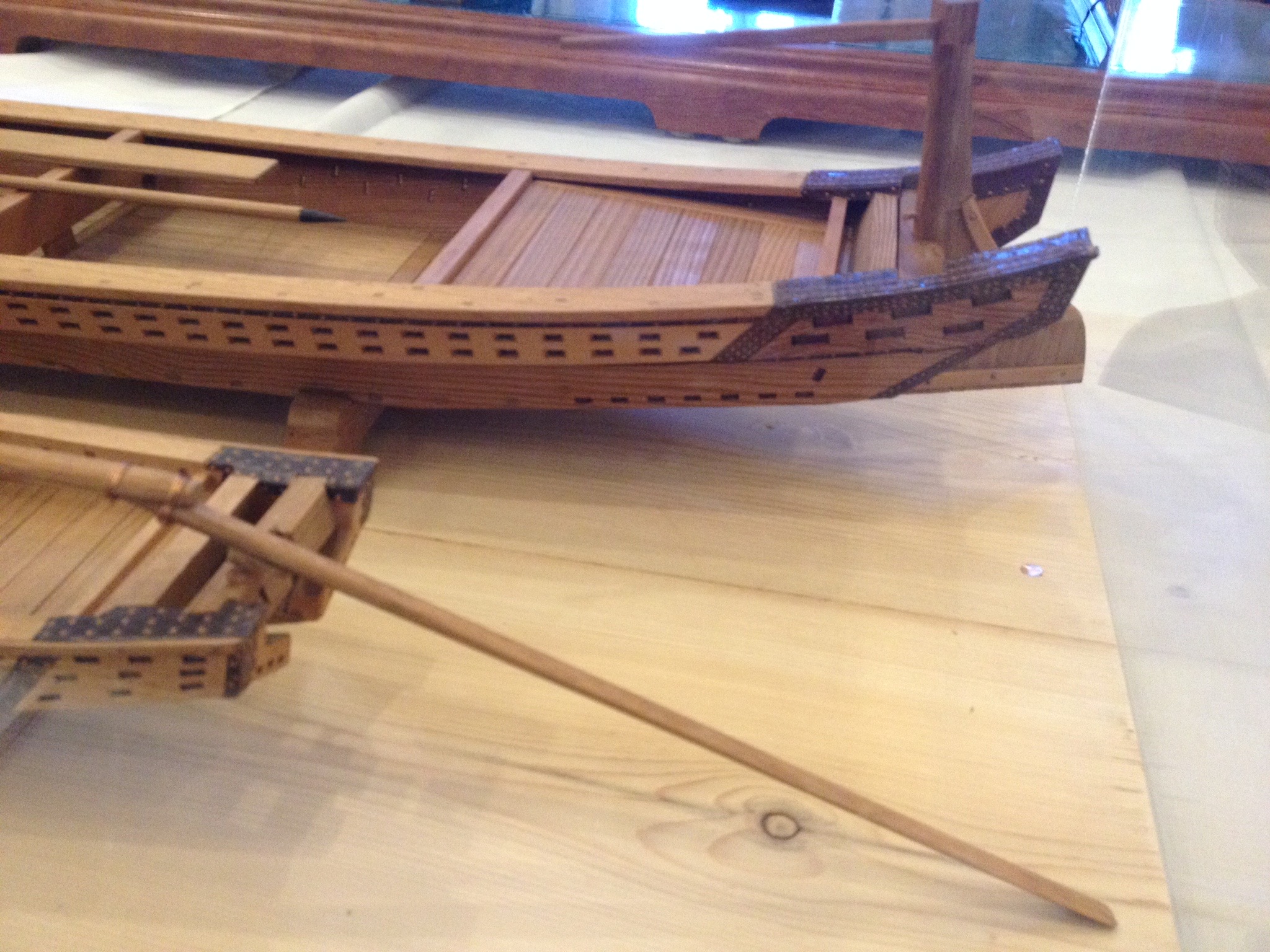
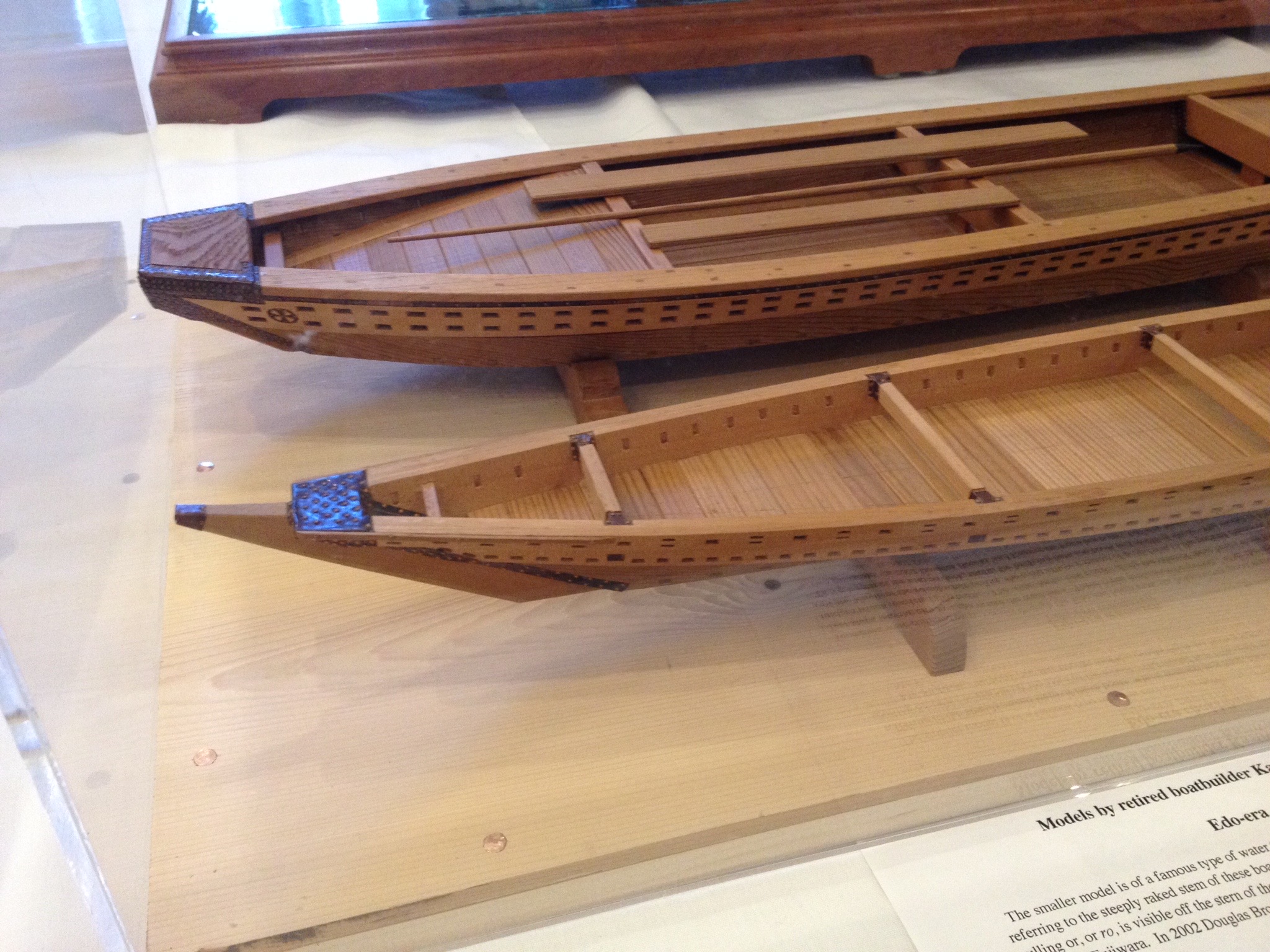
The smaller one is a chokibune, an Edo period water taxi, built at 1/15 scale. The larger is a tenmasen, a cargo lighter, also Edo period, used for carrying goods to and from the large coastal transports, commonly called sengokubune. The tenmasen model is built at 1/10 scale.

The construction of the chokibune is described in detail in Douglas Brooks’s book, but the tenmasen was built by he and his teacher after he completed his apprenticeship and only a few photos of it appear in his book. But, the tenmasen is a fairly simple design, and should be easy to construct, and there are other similar wasen found in the funakagami.

I’m hoping to score some information from Mr. Brooks, but I don’t know how much he has in the way of notes and photos. Keeping my fingers crossed. Ω

My Next Wasen Model Display, March 1st – 31st , 2018

I may be no Yukio Nakayama, but I will have my own wasen model display coming up again in Japantown, San Francisco, in the display window of Union Bank’s community room inside the Japan Center’s East Mall.

Continue reading

Building a Hozugawa Ayubune Model in 1/10 Scale – Final

This is the completion of my 1/10-scale model of the 15-shaku ayubune. This began with the cutting of the beams. I made the smallest beam at the bow, called the tsunatsuke, 1.5-sun square. The other two main beams I made 3-sun wide and 2.5-sun thick. I didn’t have any sugi of the necessary thickness, so I had to use two pieces glued together. I put the seam on the side of the beam in hopes that would make it less visible.

I used the beams as a guide to help me size the cutouts in the hull, which I cut with my Japanese Hishika, Super Fine Cut Saw, that I got from Zootoyz. It worked really well for this.

I found a supplier with the exact same saw in the U.S., but the cost for the saw was more than what Zootoyz charges, even when you add the international shipping. The one thing with this saw is that it cuts so easily, you have to be careful not to cut too much. For the final trimming of the notches, I used a scalpel.

First, I notched out the hull for the bow platform, called the omoteamaose, and the stern platform, called the tomoamaose. These were the easiest to deal with, since they are at the ends of the boat. So, I dealt with these first.

It was simple enough to add the omoteamase using a 3mm wood. I pre-cut the piece to roughly the correct size by inserting the piece into place and tracing out the extents in pencil. I could then glue the piece into place and sand away any excess using a large sanding block. Continue reading

Building a Hozugawa Ayubune Model in 1/10 Scale – Part 5

Progress continues with my 1/10-scale model of the 15-shaku boat used on the Hozu river, northwest of Kyoto. I’m 6 months into the build, but I have certainly not spent a great deal of time in actual construction. Mostly, I’ve been contemplating how I was going to accomplish each task of the build. Things are progressing quickly now.

Ayubune model with former clamped to the baseboard fixture

With the new fixture holding things in place, I taped a piece of cardstock into place to trace the shape of the hull planking. I rough marked the outlines of the bottom, bow plank, and transom on it. The planking will be cut oversized, so getting the exact shape isn’t really necessary, except to make sure that the wood I cut is large enough, but not too wasteful of my limited wood supply.

Next, I cut four straight strips of 3mm sugi on my table saw about 1 shaku wide and 16.5 shaku long. There are two hull planks on each side of the boat, but unlike many other wasen designs, the planks fit flush together, so the sides of the boat are perfectly flat. So I glued up the planks into two side-by-side pairs.

Continue reading