Japanese Boat Models Display 7.0

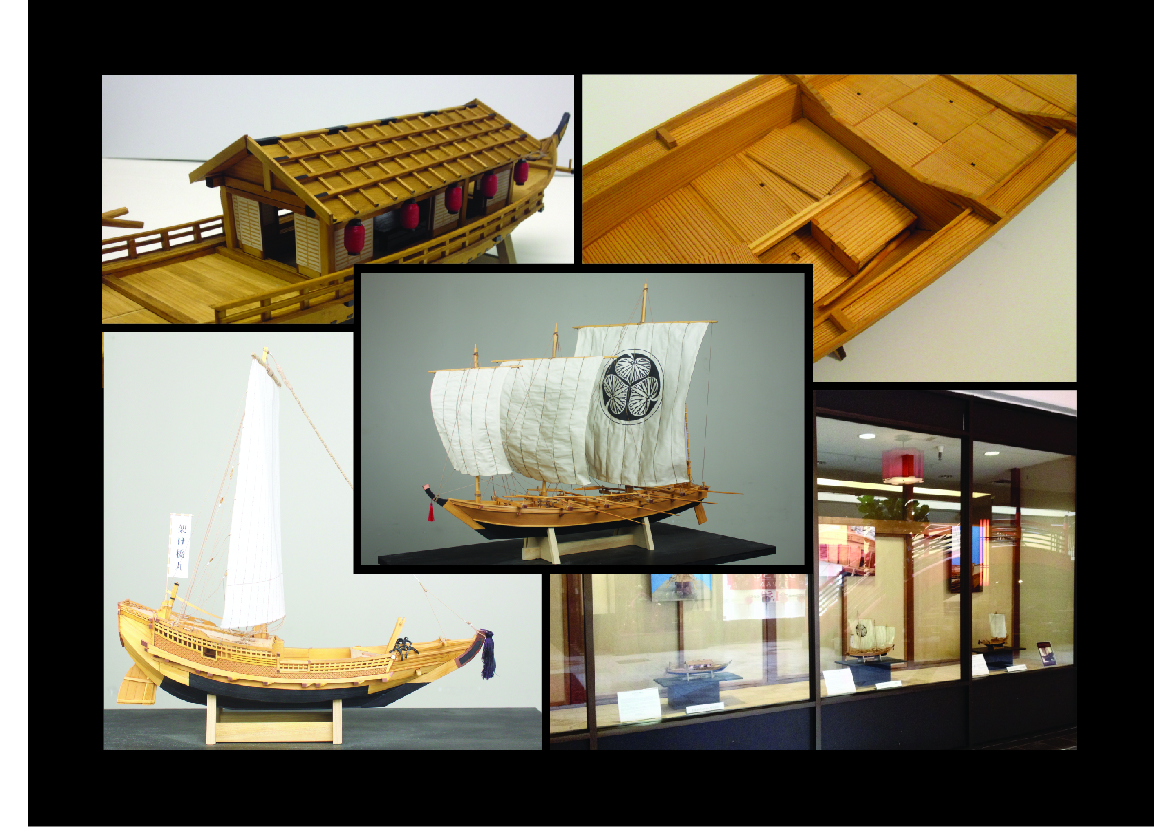
Just last week, on a rainy March 1st morning, I packed up my car with stands, posters, models, signs, and accessories, and drove 2 hours through traffic to set up the latest and largest Japanese boat models display yet. 7 models in all are on display in the window of the Union Bank community room in the Japan Center Mall from now through the end of March.
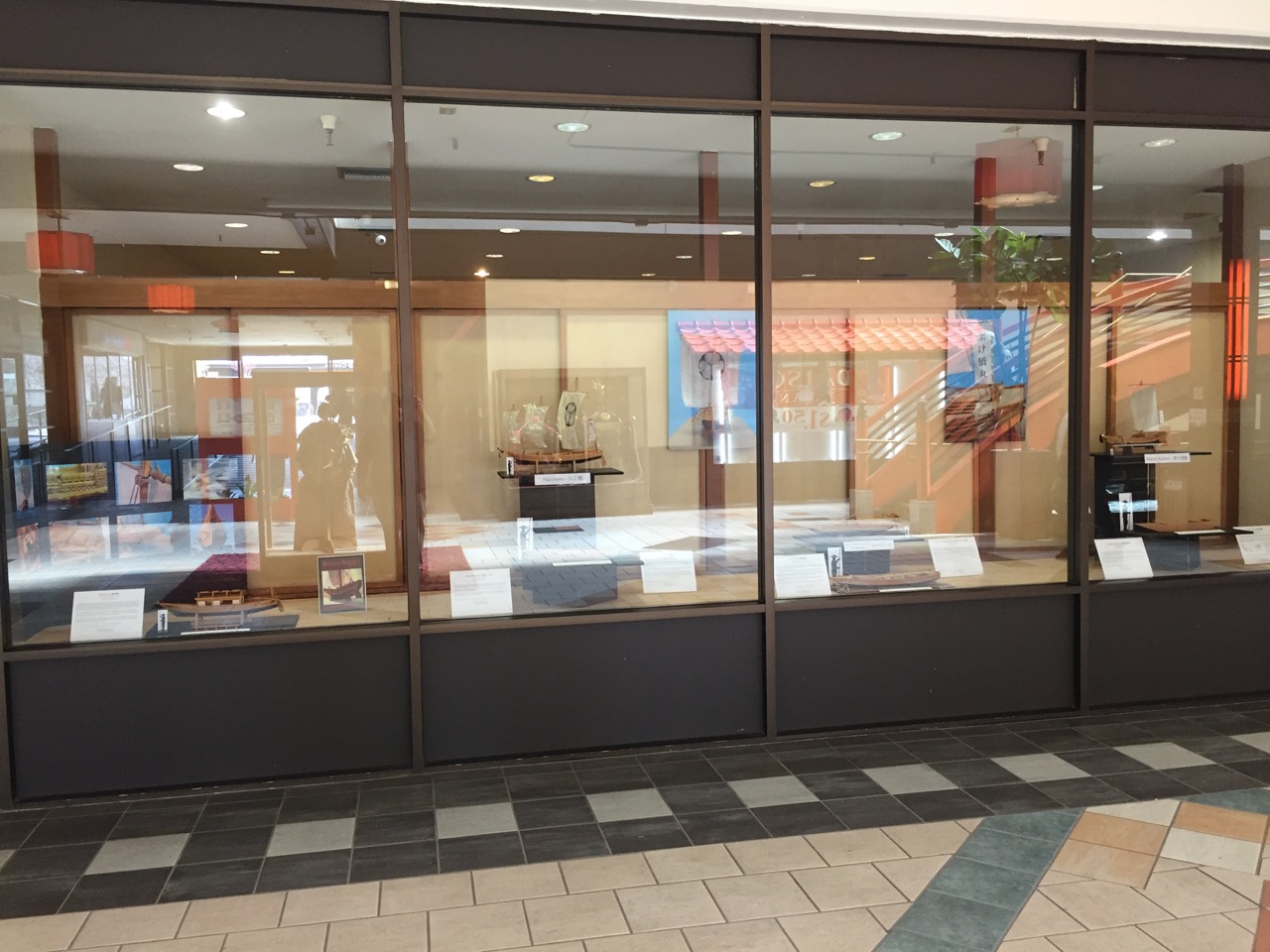
This year, Woody Joe’s Hacchoro, Higaki Kaisen, and Yakatabune are prominently featured, along with Thermal Studios’ Tosa Wasen, and my scratch built Hozugawa Ayubune, Urayasu Bekabune and Kamakura period Umibune.

Just over half of these models are based on kits, mostly from Woody Joe. And, if your interested in building one of these wonderful kits, of course, I always recommend Zootoyz.jp as your source for Woody Joe, and other kits. Here is some information on the models in this display – click on their titles to go to a website where you can purchase the kits. Continue reading
Japanese Article about Douglas Brooks

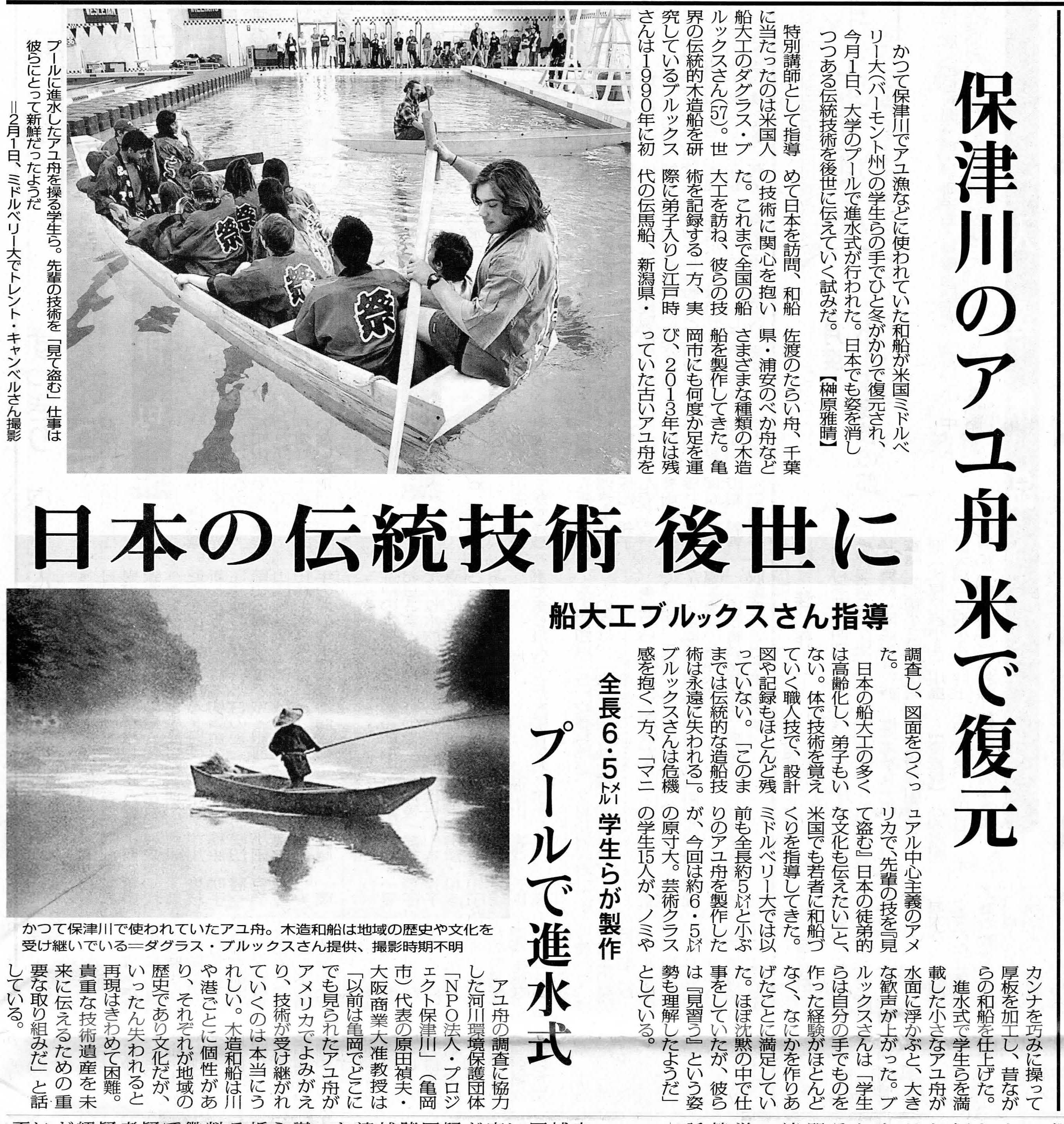
Boatbuilder Douglas Brooks, who you should know all about if you follow this blog, has been teaching Japanese boatbuilding techniques in his classes at Middlebury College in Vermont.

This article appeared recently in Mainichi Shimbun, one of Japan’s three largest newspapers. I can’t easily read much Japanese, but this article mentions the pool launching of the Hozugawa Ayubune that the class built.

This is the same type of boat I recently modeled, based on information I got from Mr. Brooks. The boat shown here that his students built was a 6.5 meter boat, or a little over 21 shaku. My model, in comparison, is about 4.5 meters, or 15 shaku.

The class at Middlebury College actually built two boats during the semester. In addition to the Ayubune, they built a rice field boat, or tabune, from Niigata prefecture. You can read more about the student built boats on Douglas Brooks’s blog here: http://blog.douglasbrooksboatbuilding.com/2018/02/launching.html


Mr. Kazuyoshi Fujiwara’s Wasen Models

While I have been in touch with boatbuilder Douglas Brooks by email for close to 3 years, we met at the Nautical Research Guild’s annual conference in Mystic, CT, in the Fall of 2016, where he gave a talk on Japanese traditional boatbuilding and his apprenticeships.

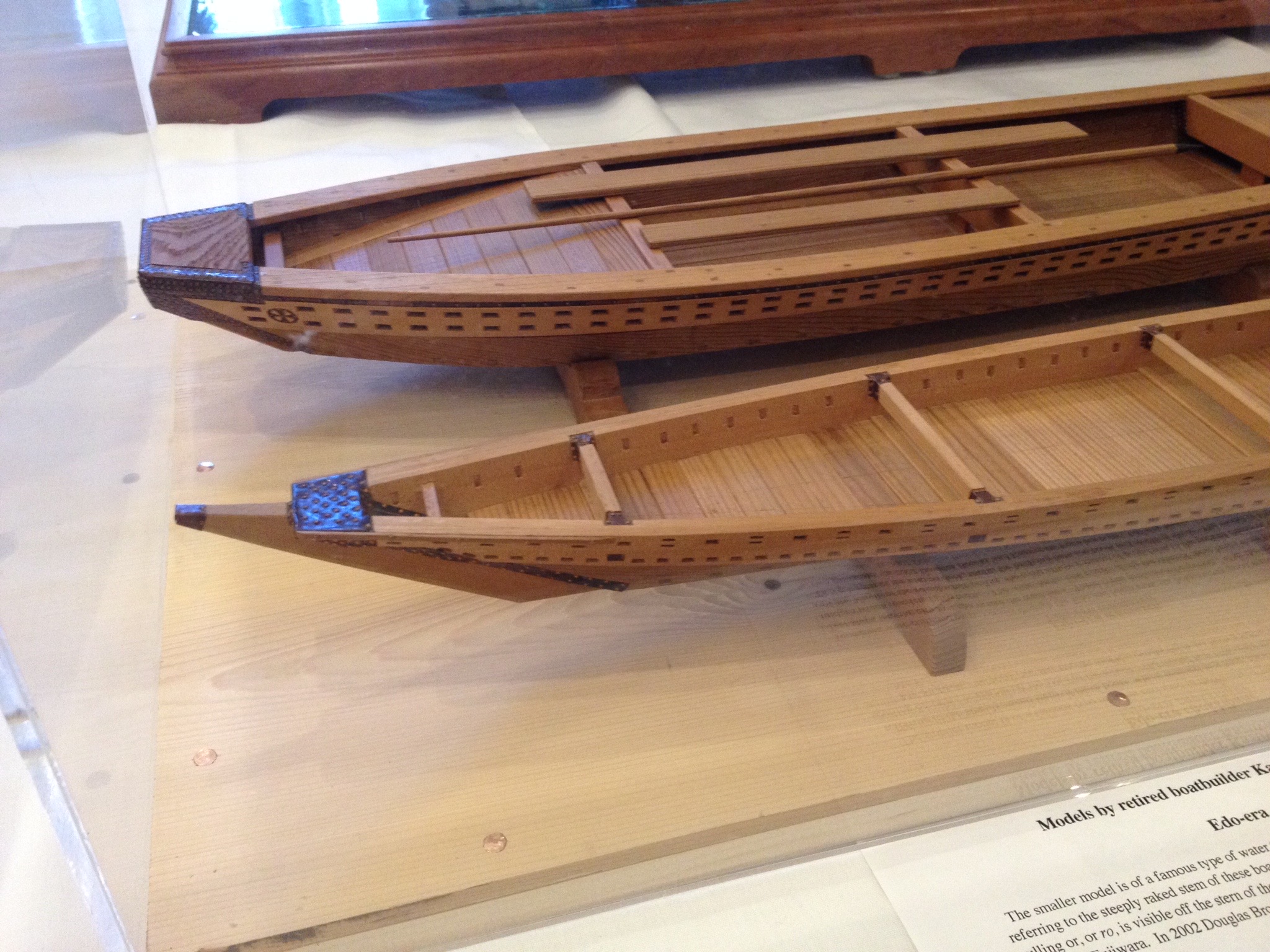
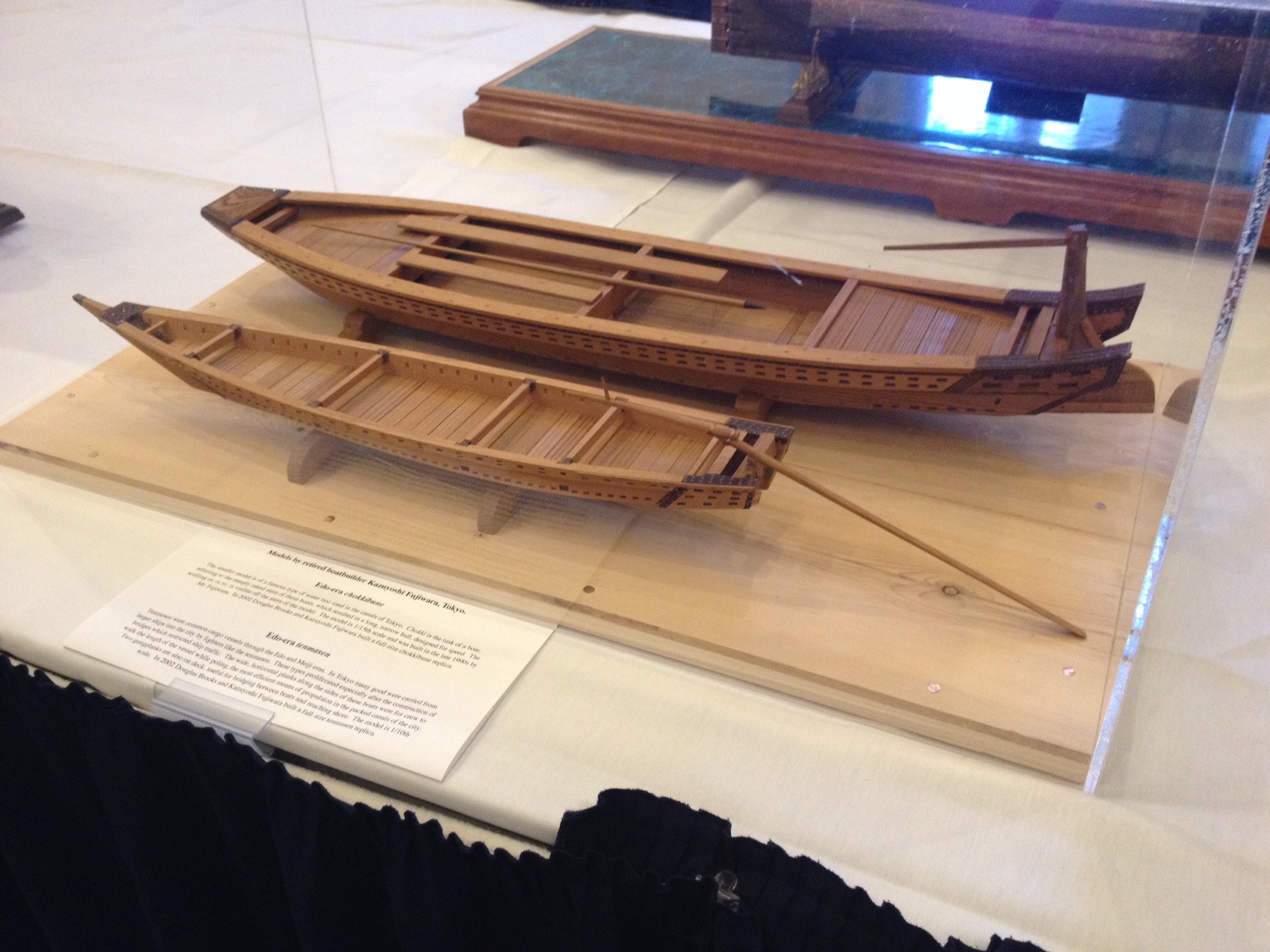
At the conference, he had a pair of models that were built by his teacher in Japan, Mr. Fujiwara. These were beautifully made and I’ve been inspired by them.

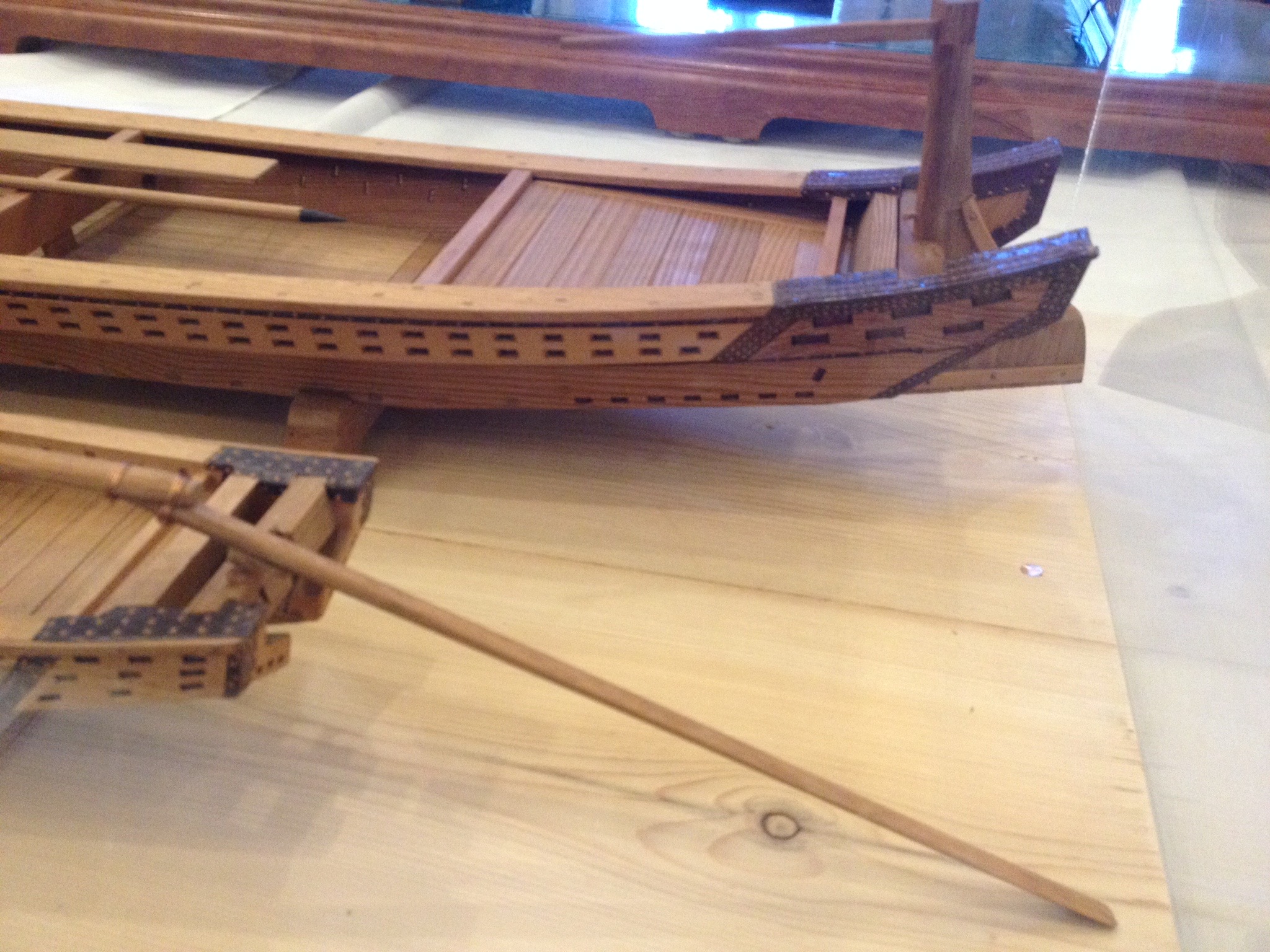
The smaller one is a chokibune, an Edo period water taxi, built at 1/15 scale. The larger is a tenmasen, a cargo lighter, also Edo period, used for carrying goods to and from the large coastal transports, commonly called sengokubune. The tenmasen model is built at 1/10 scale.

The construction of the chokibune is described in detail in Douglas Brooks’s book, but the tenmasen was built by he and his teacher after he completed his apprenticeship and only a few photos of it appear in his book. But, the tenmasen is a fairly simple design, and should be easy to construct, and there are other similar wasen found in the funakagami.

I’m hoping to score some information from Mr. Brooks, but I don’t know how much he has in the way of notes and photos. Keeping my fingers crossed. Ω

My Next Wasen Model Display, March 1st – 31st , 2018

I may be no Yukio Nakayama, but I will have my own wasen model display coming up again in Japantown, San Francisco, in the display window of Union Bank’s community room inside the Japan Center’s East Mall.

Continue reading

将軍家御座船 – Shōgunke Gozabune – Ships of the Shōgun

Gallery

This gallery contains 4 photos.

Originally posted on 木造和船 中山幸雄の世界:
御先船 麒麟丸(御召小早三十二挺立) ? 小早 住吉丸(御供小早三十挺立)   箱型八挺立川船 ? 引御船無屋形二十挺立 ? 八挺立押送型船 ? 三挺立御鳥船 ? 八挺立小碇船・大碇船 ? 八挺立水伝馬船 ? 十挺立御供船 ? 十二挺立伝馬船 ? 十四挺立箱型船

Building a Hozugawa Ayubune Model in 1/10 Scale – Final

This is the completion of my 1/10-scale model of the 15-shaku ayubune. This began with the cutting of the beams. I made the smallest beam at the bow, called the tsunatsuke, 1.5-sun square. The other two main beams I made 3-sun wide and 2.5-sun thick. I didn’t have any sugi of the necessary thickness, so I had to use two pieces glued together. I put the seam on the side of the beam in hopes that would make it less visible.

I used the beams as a guide to help me size the cutouts in the hull, which I cut with my Japanese Hishika, Super Fine Cut Saw, that I got from Zootoyz. It worked really well for this.

I found a supplier with the exact same saw in the U.S., but the cost for the saw was more than what Zootoyz charges, even when you add the international shipping. The one thing with this saw is that it cuts so easily, you have to be careful not to cut too much. For the final trimming of the notches, I used a scalpel.

First, I notched out the hull for the bow platform, called the omoteamaose, and the stern platform, called the tomoamaose. These were the easiest to deal with, since they are at the ends of the boat. So, I dealt with these first.

It was simple enough to add the omoteamase using a 3mm wood. I pre-cut the piece to roughly the correct size by inserting the piece into place and tracing out the extents in pencil. I could then glue the piece into place and sand away any excess using a large sanding block. Continue reading

Building a Hozugawa Ayubune Model in 1/10 Scale – Part 5

Progress continues with my 1/10-scale model of the 15-shaku boat used on the Hozu river, northwest of Kyoto. I’m 6 months into the build, but I have certainly not spent a great deal of time in actual construction. Mostly, I’ve been contemplating how I was going to accomplish each task of the build. Things are progressing quickly now.

Ayubune model with former clamped to the baseboard fixture

With the new fixture holding things in place, I taped a piece of cardstock into place to trace the shape of the hull planking. I rough marked the outlines of the bottom, bow plank, and transom on it. The planking will be cut oversized, so getting the exact shape isn’t really necessary, except to make sure that the wood I cut is large enough, but not too wasteful of my limited wood supply.

Next, I cut four straight strips of 3mm sugi on my table saw about 1 shaku wide and 16.5 shaku long. There are two hull planks on each side of the boat, but unlike many other wasen designs, the planks fit flush together, so the sides of the boat are perfectly flat. So I glued up the planks into two side-by-side pairs.

Continue reading

Building a Hozugawa Ayubune Model in 1/10 Scale – Part 4

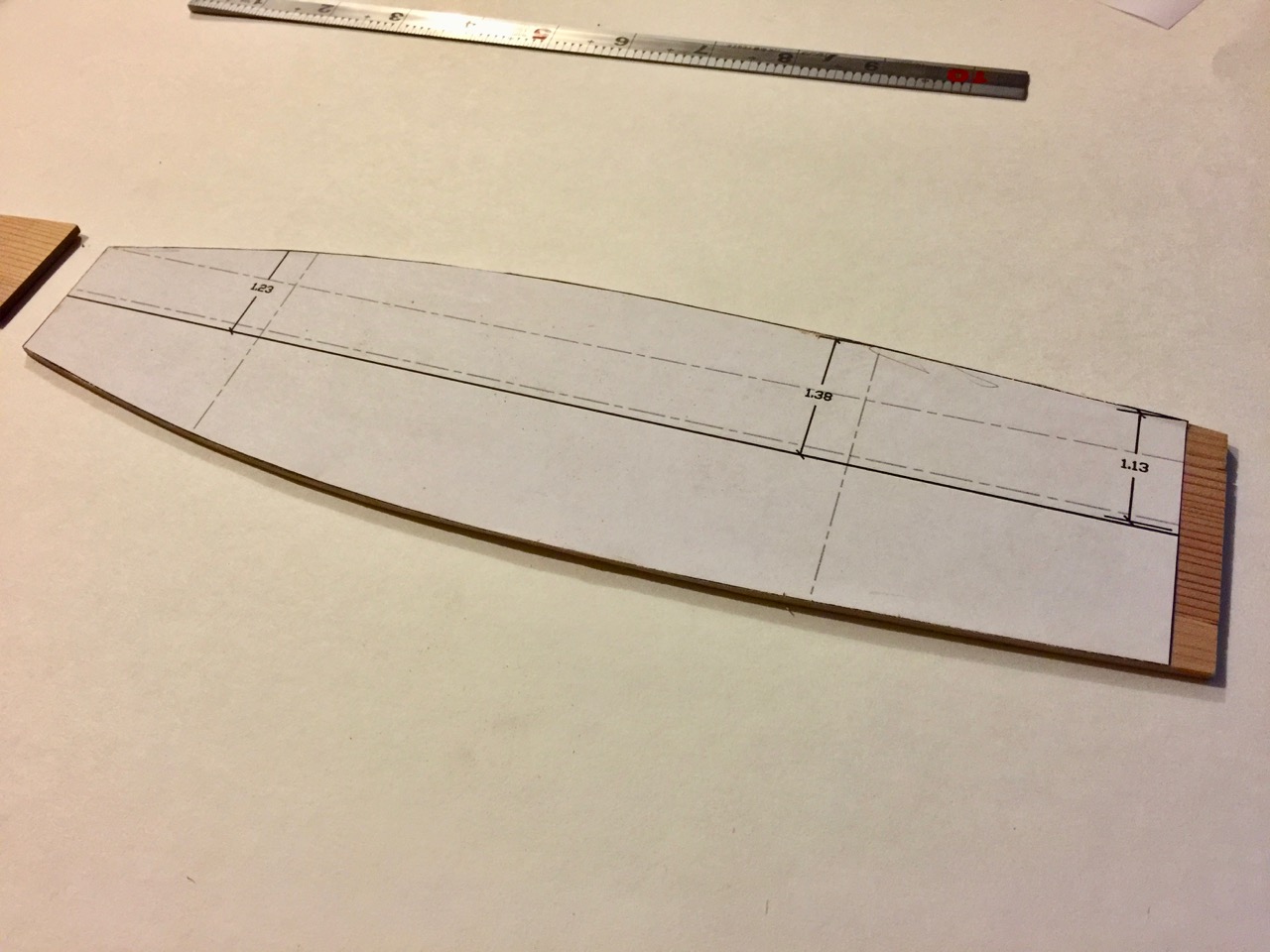
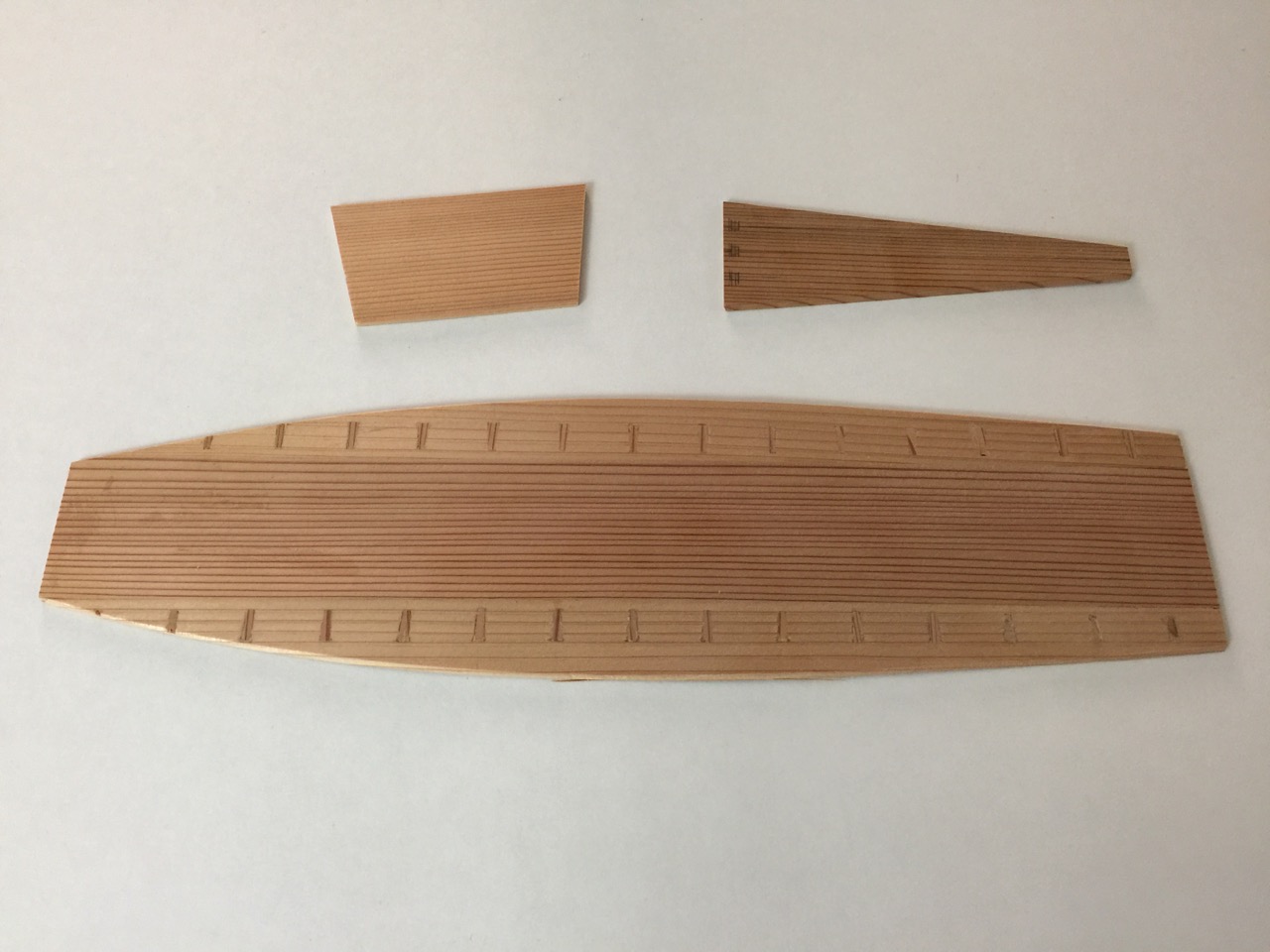
Something I didn’t mention last time was that I had cut a paper pattern for the shiki and rubber-cemented it to the assembled . I then cut the wood to the pattern. Since the plans I have show the lines to the inside of the planking, I left the pice a little long at the aft end, as the bottom extends slightly beyond the transom.

Shiki with pattern, and cut to shape, with extension at the aft end

The final pieces are ready for assembly. As on the real boat, the hull planks will be shaped in place. Note that I also cut mortises for the bow plank, which I’m told is called the omote no tate ita. I’m going to have to find the kanji to make sure I know what this really means. The same goes for the transom, or tomo no tate ita, but in other regions is called the todate.

Continue reading

Building Woody Joe’s “Hobikisen” Mini-Kit

The Hobikisen is a unique type of side trawling fishing boat that operated on Lake Kasumigaura, northwest of Tokyo. As with most mini-kits produced, Woody Joe’s mini-hobikisen isn’t particularly detailed , but it makes for a really nice looking model that’s simple enough to build that you could do it on a weekend, depending on how nicely you finish it.

You can buy one from the online seller Zootoyz here: http://zootoyz.jp/contents/en-us/p1681_Woody_JOE__Mini_Series_HOBIKI-BUNE___Wooden_Sailing_Ship_Model.html

If you really like mini-kits, you should also check out Woody Joe’s mini-yakatabune, house boat, and their mini-utasebune, another type of side trawling fishing boat used on Japan’s norther main island of Hokkaido. Both are also available at http://zootoyz.jp

catopower's avatarShip Modeler

DSC03574

As a mini-kit, there is not much of a story to tell about building Woody Joe’s Hobikisen kit. I’ve given an out of the box review already and beyond that, it’s just a matter of several hours spent on building the model over the course of about 10 days. As I mentioned before, I got this and the Utasebune kit through Zootoyz as soon as I found out that the kits were released.

Starting the build was easy and I got through the first half of the 12-page instruction book in a just a couple hours. As with my Higaki Kaisen kit build, I chose to treat the beautifully aromatic Hinoki wood with a wood dye mixture using TransTint wood dyes. A bottle of this stuff is pretty pricey, but it goes a long ways. I have three colors I mixed for the Higaki Kaisen and I used a…

View original post 1,092 more words

Building a Hozugawa Ayubune Model in 1/10 Scale – Part 3

My illustration of the ayubune, based on plan drawing by Douglas Brooks (with his permission). Position and size of details shown here are only approximate.

Counting up all the major planks, transom, and beams, this Ayubune model will be made up of only 17 pieces:

  • Shiki (bottom) – 3 pieces
  • Omote no tate ita (bow plank)
  • Todate (transom)
  • Tana (hull planks) – 4 pieces, 2 on each side
  • Omoteamaose (bow platform)
  • Tsunatsuke (lit. rope attachment) – Bow beam
  • Omote no funabari (forward beam) – 3 pieces
  • Tomo no funabari (aft beam)
  • Tomoamaose (stern platform)
  • Transom Strake

In addition to these, I made patterns in paper for obtaining the proper angle for the lay of the hull planking. I have yet to decide at this point just how I’m going to fix the hull planks to that angle. But, there’s time before that needs to be deal with.

My second illustration of the ayubune. I’ve labeled most of the parts here, but haven’t been able to get the names of all of them yet.

Continue reading