The Atakebune is the subject of a new kit from the Japanese wooden kit manufacturer Woody Joe. It’s something that I, Kazunori Morikawa of Zootoyz, and a few others were actively petitioning Woody Joe to produce. There was hesitancy on their part as there is actually very little solid information on the construction of these largest of Sengoku Period Japanese warships.
Category Archives: Wasen Projects
Utasebune 打瀬船 Fishing Boat – 1/72 Scale Model from Paris Drawings – Part 3
It’s been a busy few days for the Utasebune project. This is a really good thing, as I haven’t made much model progress over the past several months, and I’ve found that the Japanese boat models I make at this small scale tend to progress rapidly. There’s really not that much to say about the current progress, as I’m now basically cutting and fitting the upper beams and deck boards.
There is quite a bit of review of the hull details I can do here, but I’m mostly trying to focus on getting this model completed. At a future date, I may sit down and do a more thorough writeup of the details show in the Paris drawings, and how they relate to some of what I have learned about Japanese watercraft in general, and fishing boats, specifically.

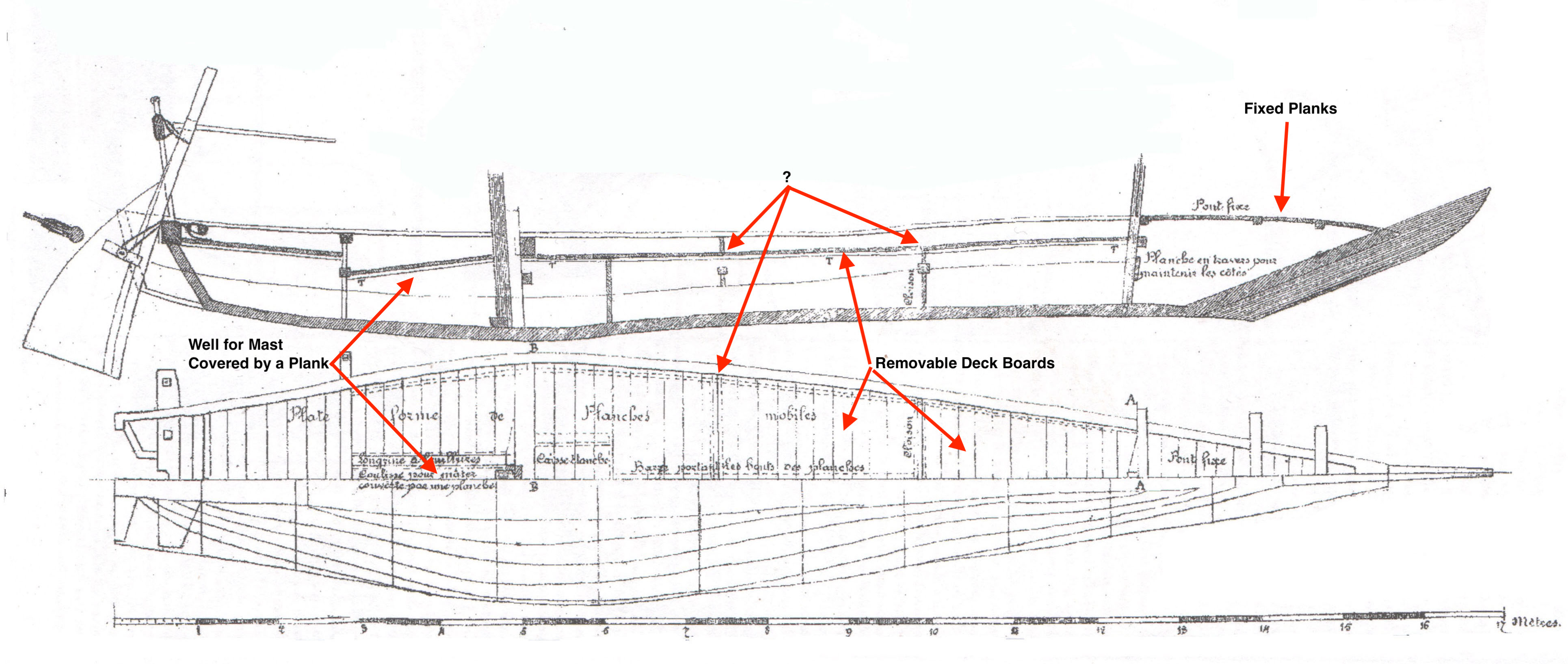
Hull details from the Paris drawings. I’ve labeled some general items. The items marked with the question mark “?” are features where I’m not quite sure how they manifest themselves on the deck. Rather than go into a lot of explanation here, in later photos of my model, you can see how I dealt or didn’t deal with them.
Utasebune 打瀬船 Fishing Boat – 1/72 Scale Model from Paris Drawings – Part 2
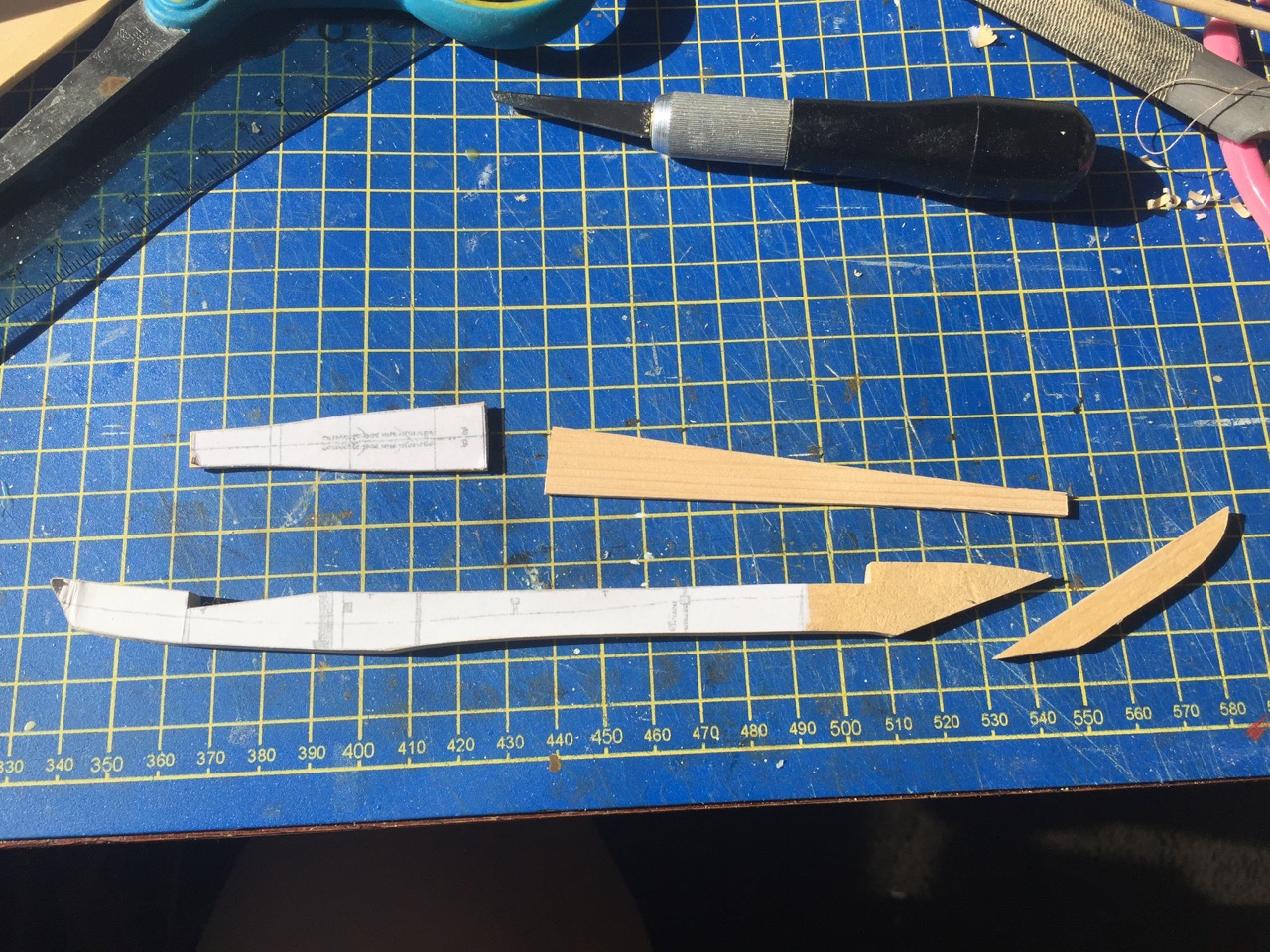
When there are available drawings, if at all possible, I’ll scale them and print them out to use as patterns for the shaping of the shiki, or the hull bottom, and the miyoshi, or stem, and also to create some kind of temporary former to simplify the shaping of the hull. I make copies of the drawings, cut them out, and glue them directly to the wood.
For this small model, with its completely enclosed deck, a removable internal former seems unnecessary. So I’m going to do the same as I did for the first Japanese boat model I built from Paris drawings and build it with a permanent internal frame. This frame consists of a strong back and a couple bulkheads that define the shape of the hull planking. 
Utasebune 打瀬船 Fishing Boat – 1/72 Scale Model from Paris Drawings – Part 1
The Souvenirs de Marine is a multi-volume collection of drawings that are the basis for many of the models in the French National Maritime Museum. The book was put together by Edmond Pâris and originally published in the 1880s. Among the collection of drawings of watercraft from around the world are several Japanese boats that were recorded by French Lieutenant Armand Paris, mostly in the areas of Osaka and Edo in the 1860s.
These drawings provide the only detailed records of some of the watercraft depicted. These include large coastal transports, fishing boats, pleasure boats, a large yacht owned by one of the many feudal lords, a row galley in the service of the Shogun, etc.
Now, I’ve built a model of the row galley, which is referred to in Japanese as a Kobaya, though there are some features that I feel that the drawing is missing, as the ship was out of service for some time and in disprepair, following the fall of the Shogun’s government many years earlier. So, that model remains technically unfinished.
However, there is an intriguing looking fishing boat that’s detailed in the available drawings. The boat is only described as a fishing boat, but it is quite large at 17 meters long, a little over 55 feet. But, what stands out the most is the unusual downward turn of the bow. This is the first time I’d seen this kind of feature. But, it turns out that it wouldn’t be the last time.
The Tonegawa Takasebune (高瀬船) – a Model in 1/72 Scale, Part 6 – Final
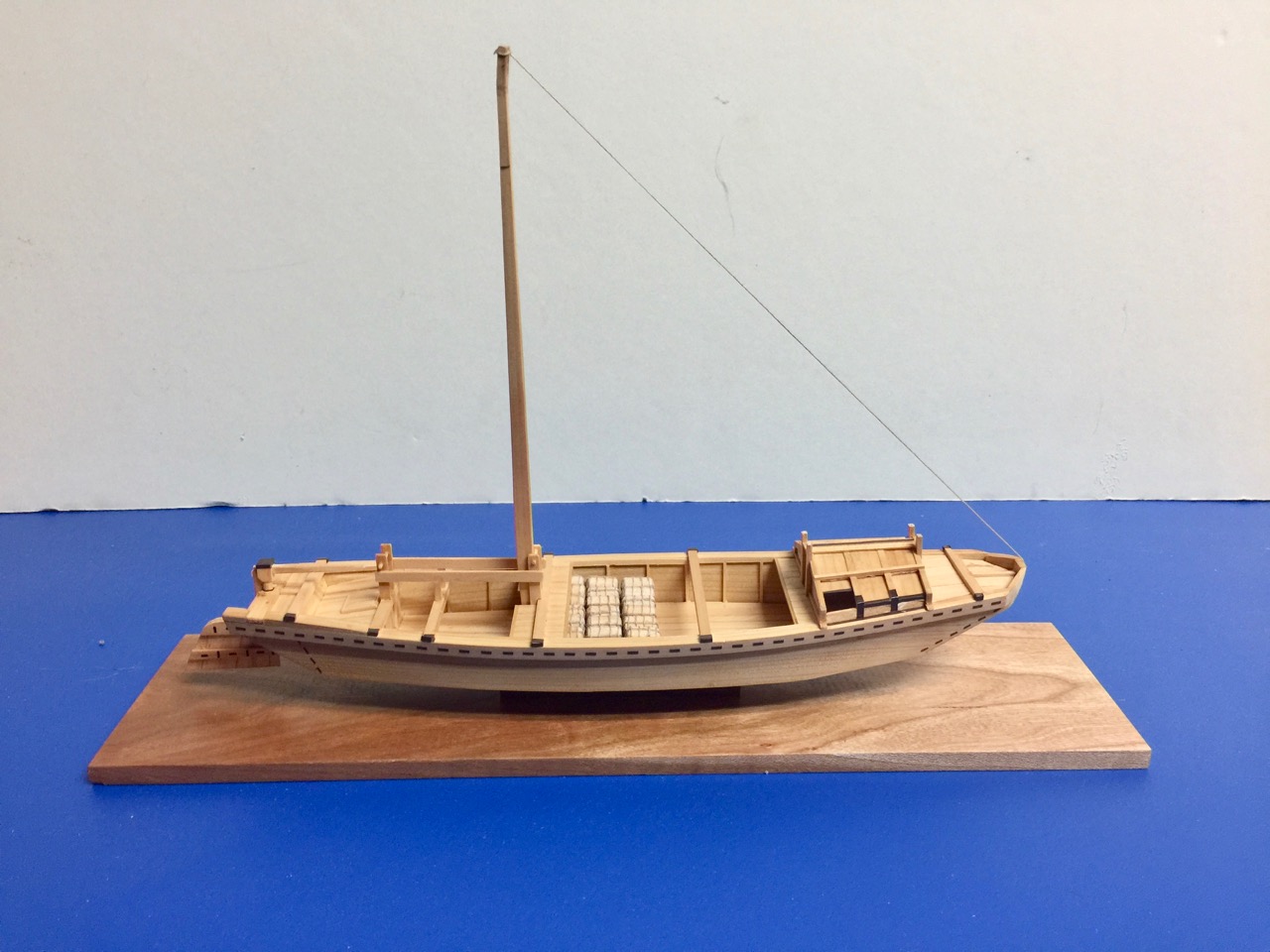
I finally managed to finish enough cargo to call that stage of the model complete… Or, at least as complete as it’s going to get for this model. As you can see in the photos below, I’ve come up with a third kind of cargo. Probably not a very accurate type, as it appears to be some kind of finished product.
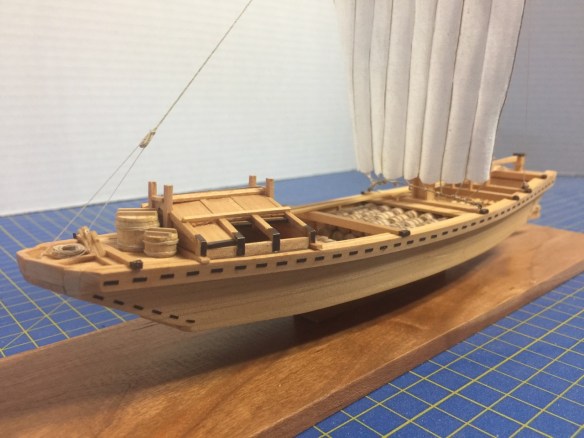
Perhaps the boat is carrying something downriver from one of the larger towns along the way where somebody produces a product that’s very flat. I think it might be somewhat unlikely that the boat should carry rice bales, some kind of vegetable in buckets, plus some kind of finished goods. But, I think it looks good, and keeps the viewers wondering what kind of goods those can be.
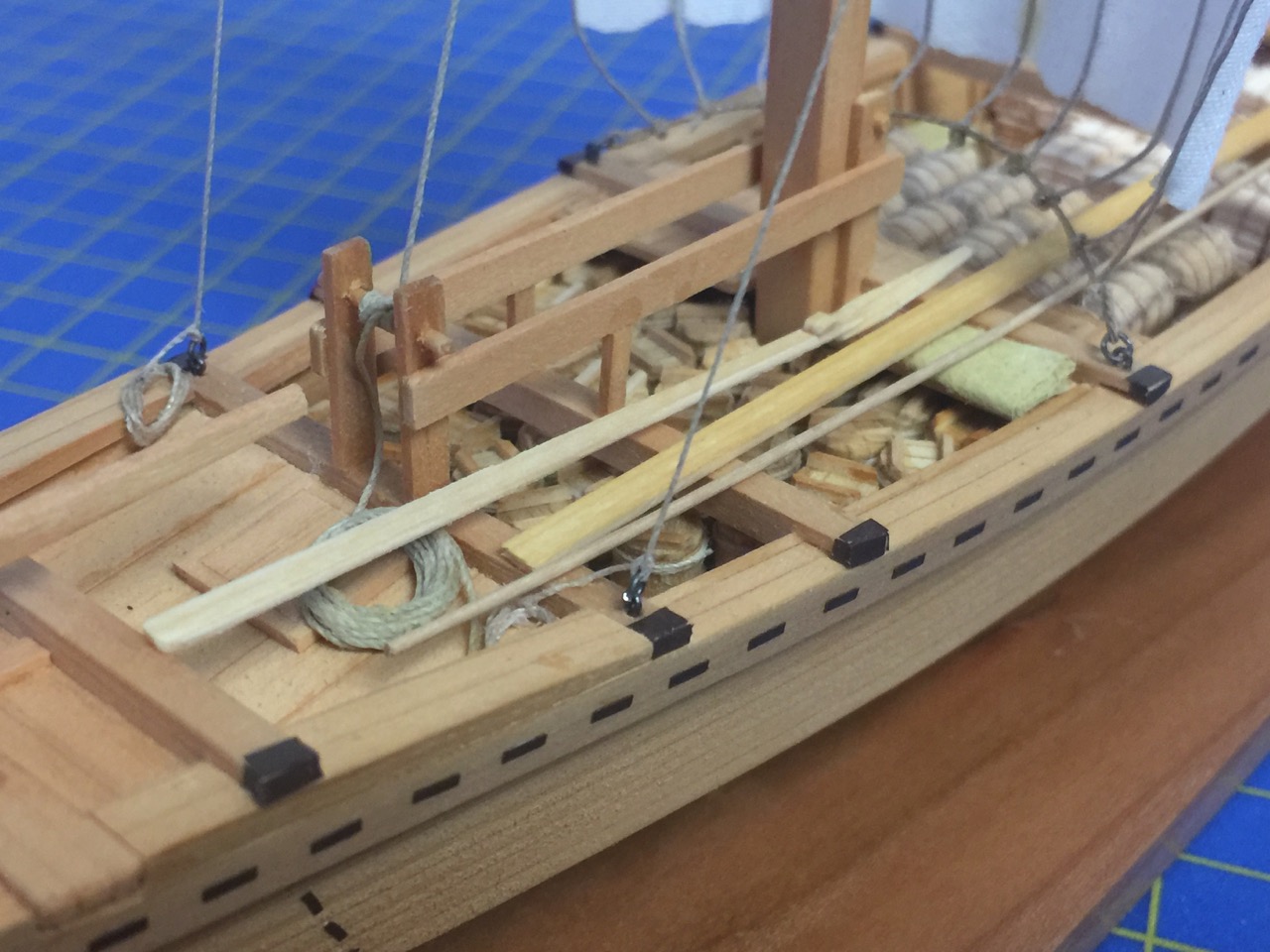
By the way, you’ll notice in the photo below, and the previous one above, that the main stay runs down to the deck and I had to make a small structure that’s effectively a pair of bits holding a simple winch. This was not on the drawings I was using, but appears on many of these boats. Without more knowledge of how the stay might be secured, this seemed to be reasonable.
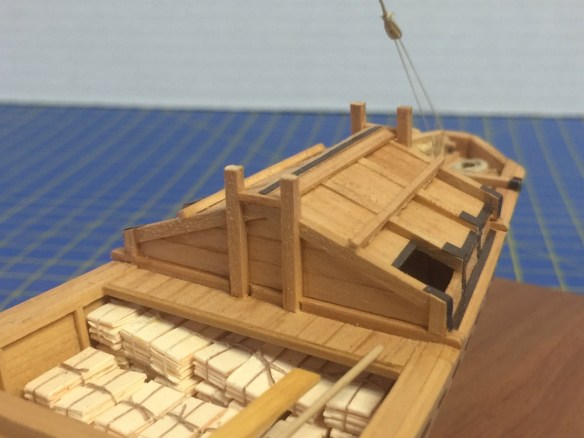
The stay leads down to a simple wooden block, which I basically copied from those on the Woody Joe Kitamaebune model. The block I made is a very simple teardrop shape with no sheave. I don’t know this for sure, but I believe early blocks in Japan did not have a sheave. This was suggested to me by someone I spoke with in Japan when I visited the Hacchoro in Yaizu harbor.
At the top end of the stay is a small loop that goes around the mast from the back side. The stay itself goes back over the loop and down the front side. In this way, the stay holds itself in place.
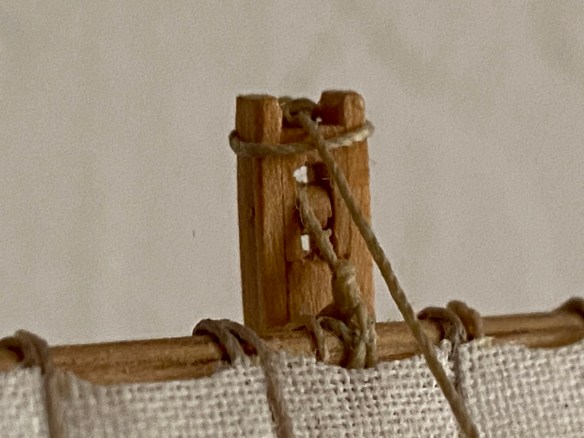
I completed the rigging by securing the halliard, and adding braces that hold the yard at a proper angle. I also added parrals that hold the yard to the mast.
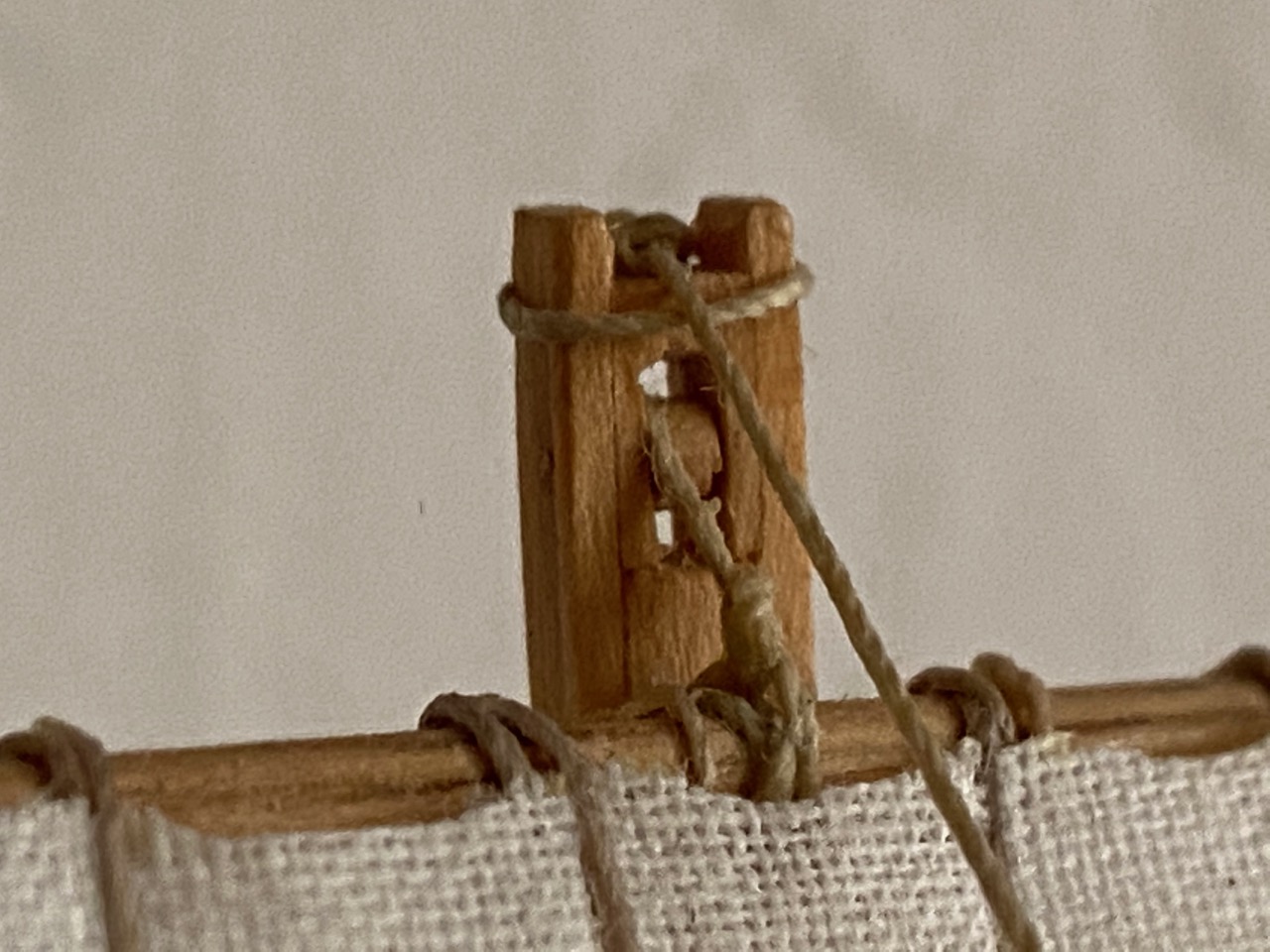
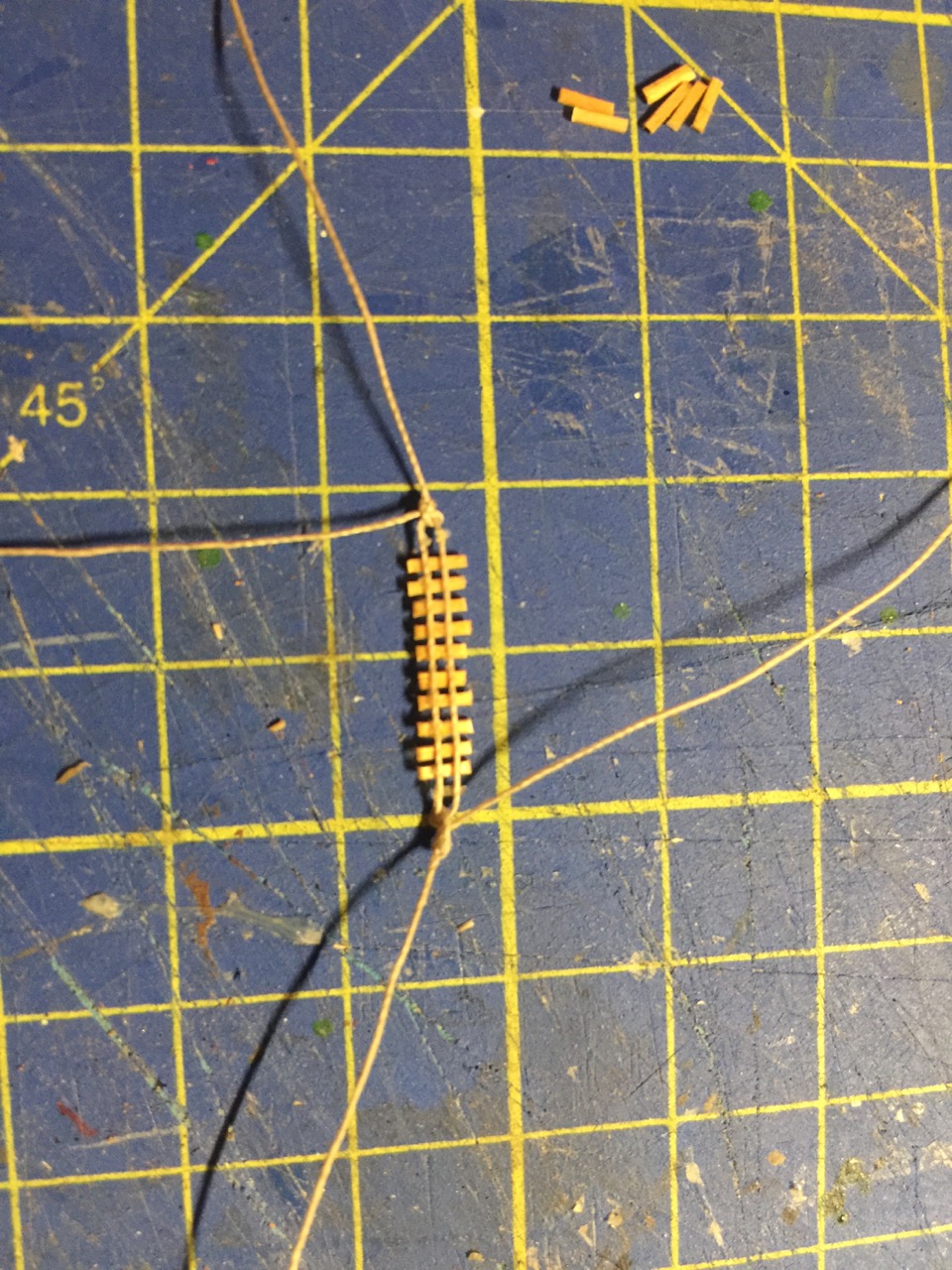
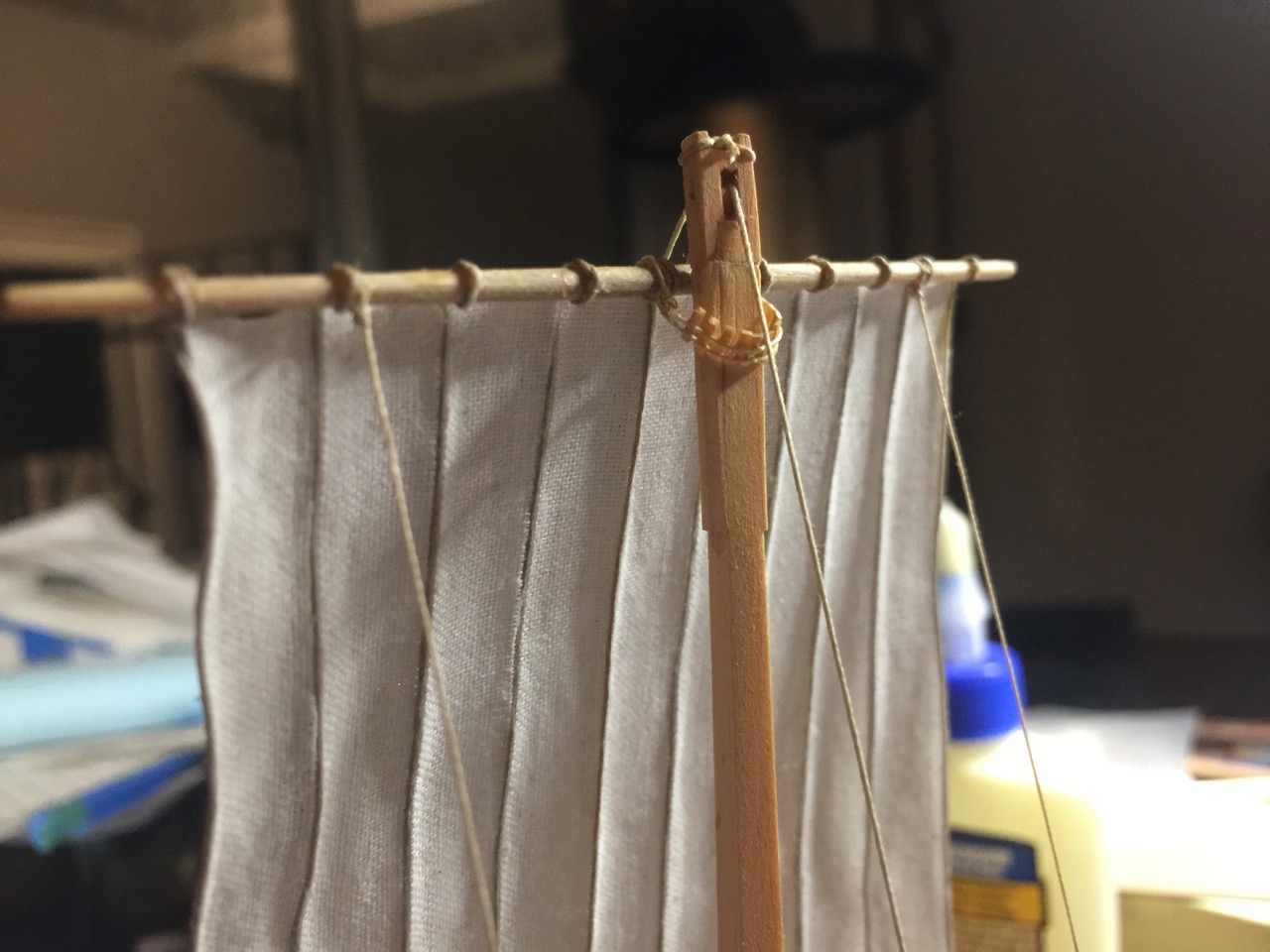
Larger Japanese boats basically had two loops around the mast with wooden battens attached that prevented chafing of the ropes. At 1/72 scale, this feature is pretty small, but still noticeable. I simply cut some tiny wooden strips to use for the battens and glued them a couple thin ropes across their backs. Some double-sided tape helped hold them into place on the work surface while the ropes were tape down across the battens as the glue dried.
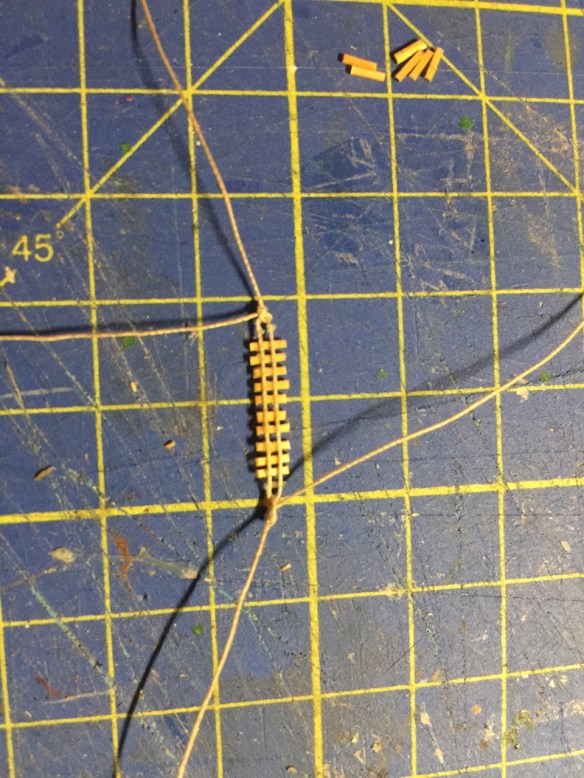
The final assembly was tied to the yard, and hung somewhat loosely around the mast. This feature appears on the larger coast transports as well, but I haven’t seen anything like this on small boats. I don’t know how large a boat would have to have been before it required something like this.
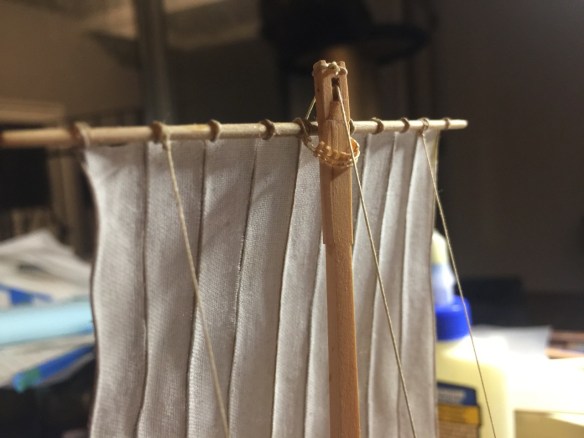
The last step in the construction of the Tonegawa Takasebune was to add some working “stuff” into place. I figured there needs to be a plank, which can be used for loading and unloading, as well as for walking over the top of the cargo, as well as a pole or too for pushing the boat along where necessary, and a sculling oar for the same.
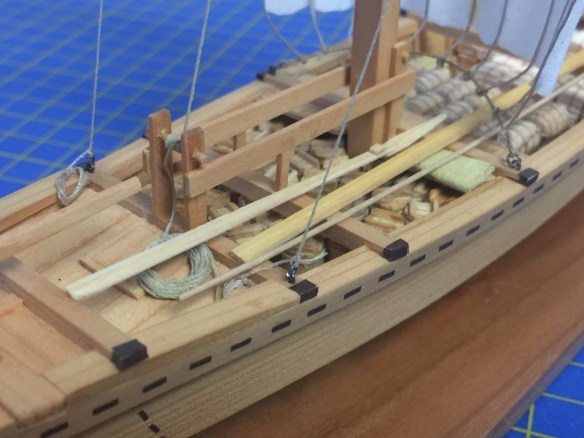
I also folded a piece of painted tissue paper to represent a matt or tarp that could be used to cover some of the cargo in bad weather. I say tarp here, but I suppose that really depends on when this boat is represented, as it was used up into the early 20th century, and probably back into at least the 18th century, but I really don’t know how far back it goes. Something to look into.
In any case, in early days, the tarp would have actually been more like a thin straw mat. Realistically, these boat probably would have been piled high with as much cargo as they could handle, and the straw mat would probably allow the boatmen to better secure the cargo, as they could tie the mat down over the cargo to help keep any from shifting loose off the pile of cargo.
Some woodblock prints depict canal boats loaded high and covered with a tarp or mat with planking riding on top so the boatmen could climb more easily over the mountain of cargo.
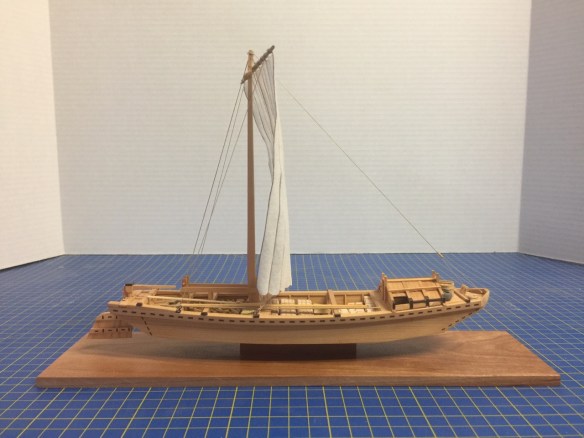
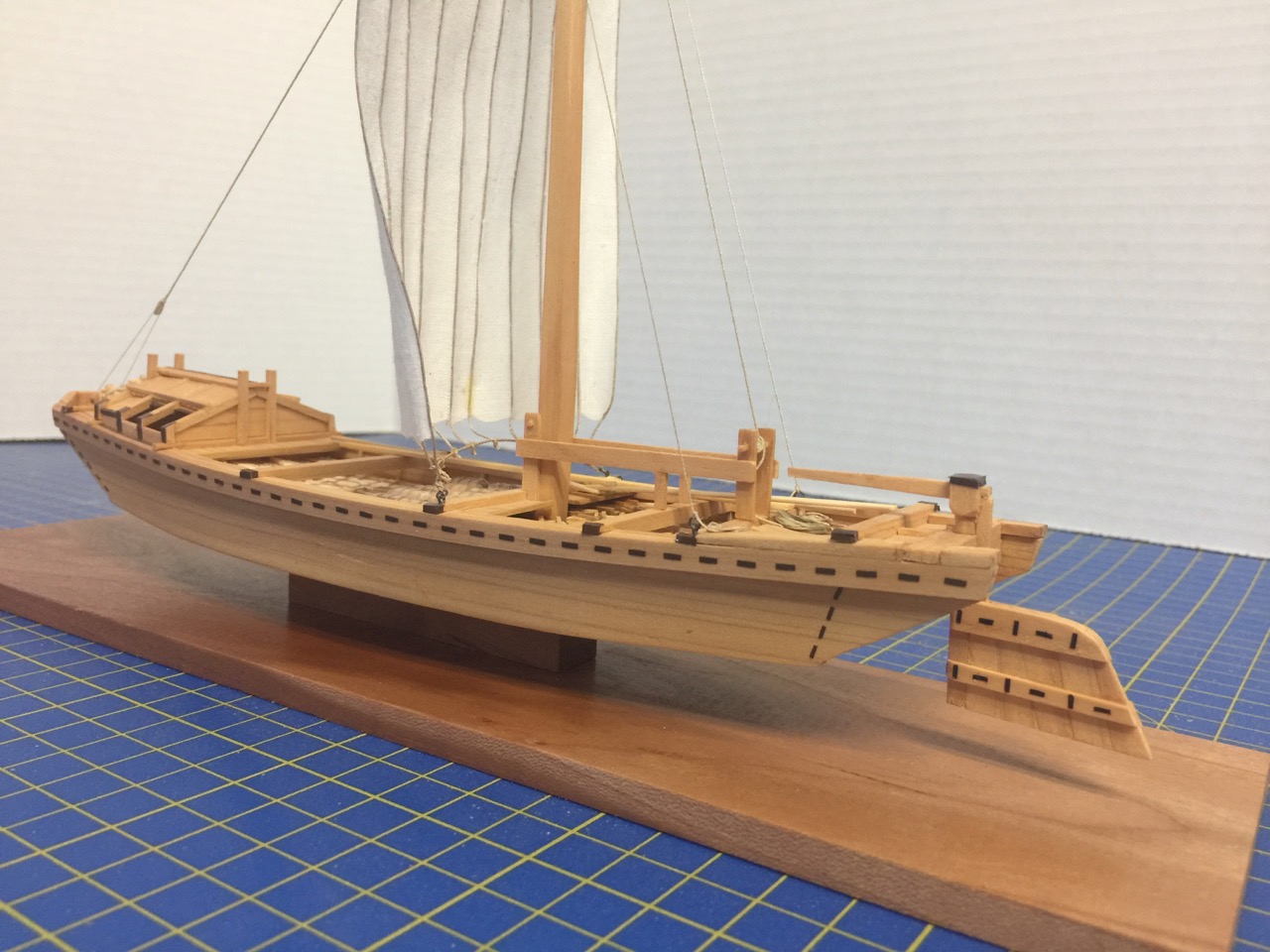
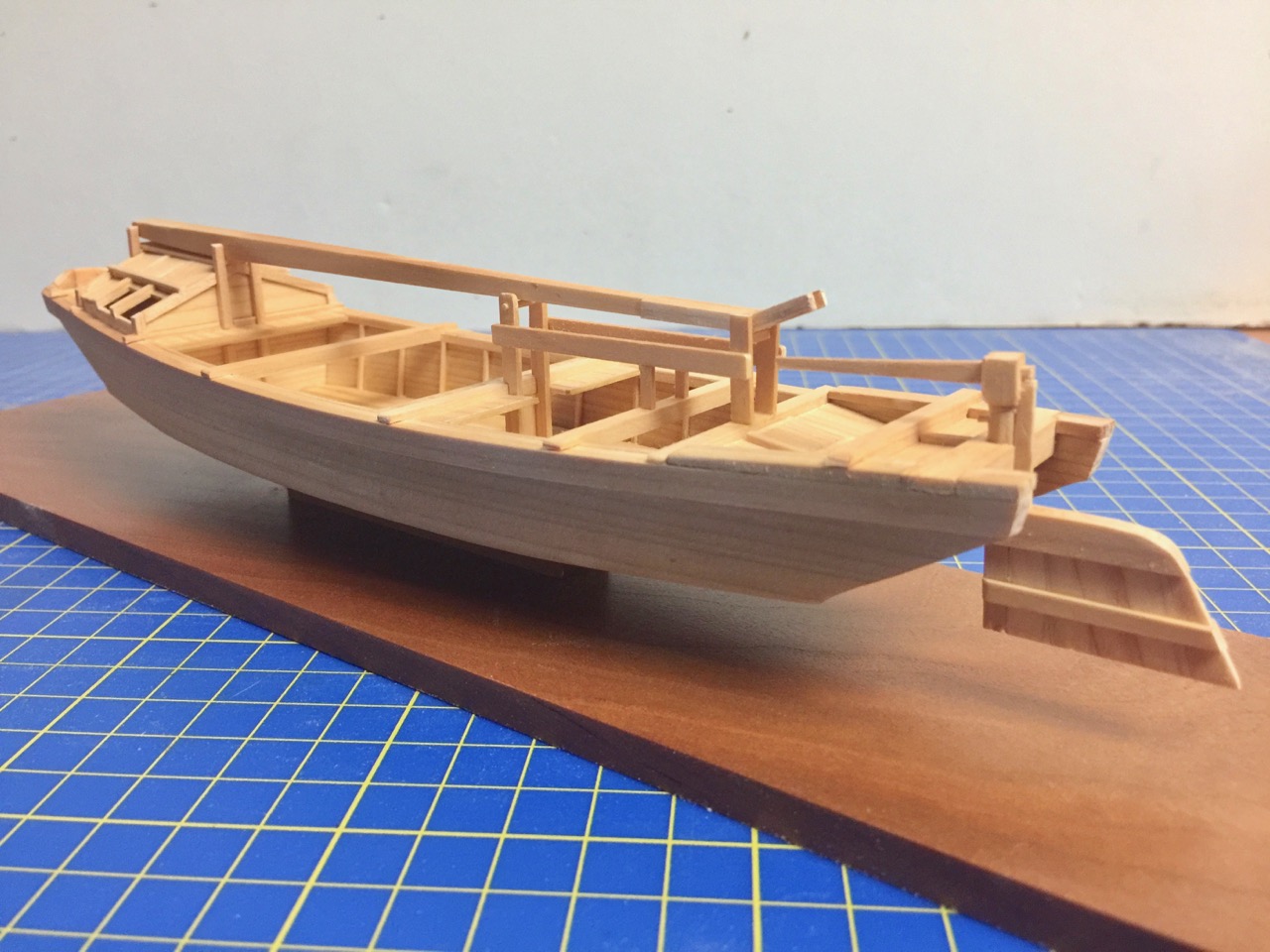
The final model was mounted with double-stick tape onto a very simple cherry wood display base I cut for it that I gave a simple satin lacquer finish. The model raised up on a cherry wood block, allowing the rudder to properly hang down.
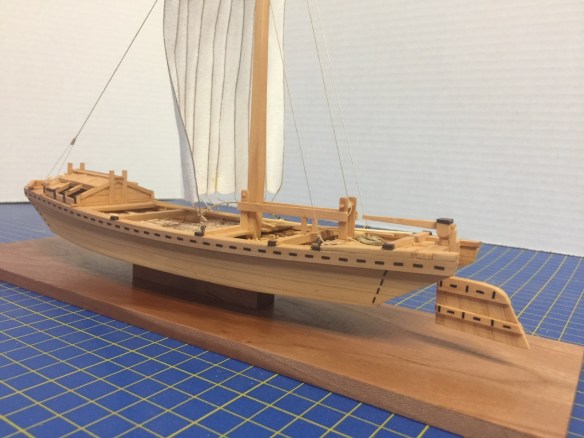
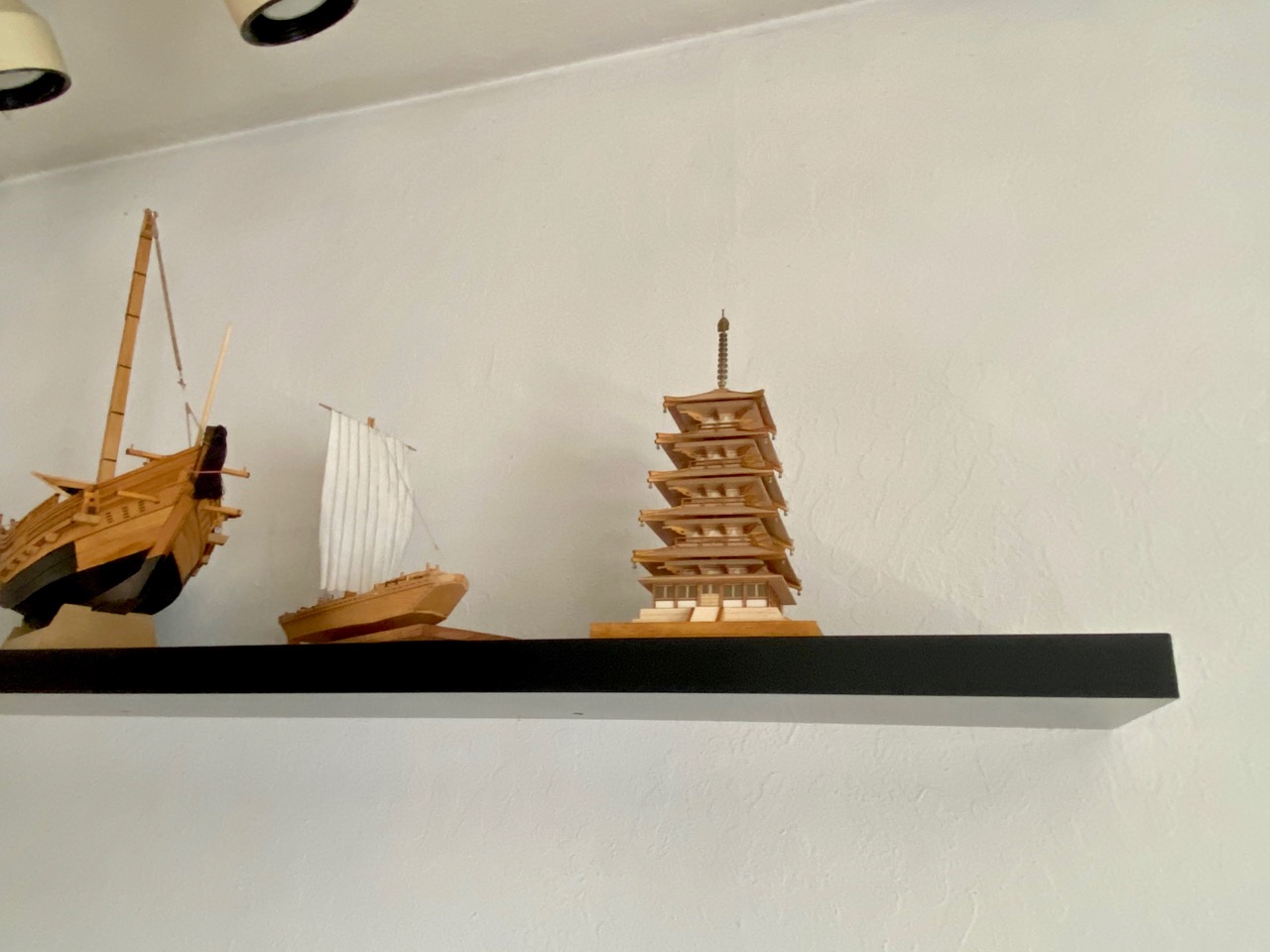
The 60尺 (60-shaku or about 60 foot) Tonegawa Takasebune model is only 10″ long at this scale. So, it’s a pretty small model, but perfect for scale comparison with Woody Joe’s Kitamaebune and Higaki Kaisen models, which are both also in 1/72 scale.
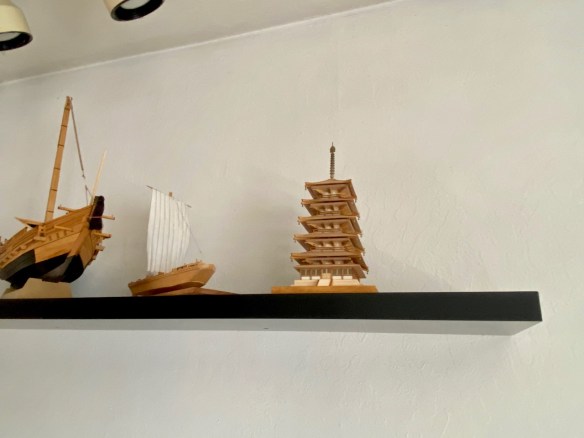
In the photo above, you can see the model sitting up on the shelf with the still incomplete Kitamaebune model on the left, for size comparison. The model on the right is a Woody Joe kit of the Horyu-ji 5-story pagoda, but that’s in a completely different scale of 1:150.
But the Tonegawa Takasebune is now complete. I will be including it at an upcoming display of my Japanese boat models at a Japan Day event next month at the Asian Art Museum in San Francisco. The date for that is October 17th, 2021, but I’ll post more info shortly. Ω
The Tonegawa Takasebune (高瀬船) – a Model in 1/72 Scale, Part 5
In my last post on the building of the Tonegawa Takasebune, I got a bit overwhelmed with the making of the rice bales, or Tawara. I would have loved to configure the boat model with a full load of rice, but to do that would have required a lot more rice bales than what I’d made. My model has 39 of them, and I would have ideally wanted them filling the boat and stacked a couple layers higher. But, to do that would have required probably at least another 200, and that was more than I could handle.
So, my idea was to mix it up a little. I’d experimented with making simulated, covered buckets, or Oke (oh-kay), and this certainly turned out to be easier to make that the rice bales with all the rope wrappings. There was still a bit of a process, but a little production line made the construction simpler. I’d experimented with a couple sizes, but opted for the larger size, partly because it meant needing fewer of them. Continue reading
The Tonegawa Takasebune (高瀬船) – a Model in 1/72 Scale, Part 4
Last time I left off on the construction of the Tonegawa Takasebune model, I had completed the rudder, or kaji, and had shaped the mast, or hobashira. I’m not positive on the exact appearance of the top of the mast, so I based it upon what I’ve seen on other models, and also on my experience with the masts on the Higakikaisen and Kitamaebune models I’ve built. It actually went through a slight change during construction.
I originally built the mast with a pretty strong crook at the top end. But, I ended up modifying this so it’s a lot straighter. The mast top is notched to allow me to secure a forestay to it to hold the mast in place by looping it around the mast top. There is also a slot at the top for the main sail halliard, with a brass rod simulating a sheave.
Building Woody Joe’s 1/72-scale Kitamaebune Kit – Part 12
I took something of a break from the Kitamaebune project again while I tried developing techniques for making the Japanese-style sails. It’s held me up for quite a while, and I’ve actually started the process of sailmaking at least five times, never satisfied with the results. It’s partly a matter of coming up with a good idea, but it’s also a matter of my skill, or lack of skill, in making the idea work.
At the same time, I finished up a card model of a European medieval period ship called a cog. Like the Woody Joe Kitamaebune kit (and Higaki Kaisen too), it’s a 1/72-scale model that features, almost exclusively, laser cut parts. Cogs, like Japanese boats, also featured edge-fastened hull planking, and a single large mast with a square sail. If you’re interested, you can read about it on my shipmodeler blog.

Bremen Cog and Kitamaebune niswk comparison.
Tenma-Zukuri Chabune Display at the Nakagawa Bansho Museum (中川船番所博物館)
I ran across some images from a Japanese museum in Tokyo’s Koto ward in early May, and I feel like some of my work has been completely validated. This little museum is called the Nakagawa Funabansho Museum (中川船番所博物館), and I know absolutely nothing about this museum. I don’t even know if I’ve heard about it before, though I recognize the Nakagawa, or Naka river, or middle river in Japanese, which flows down from Saitama prefecture through Tōkyō.
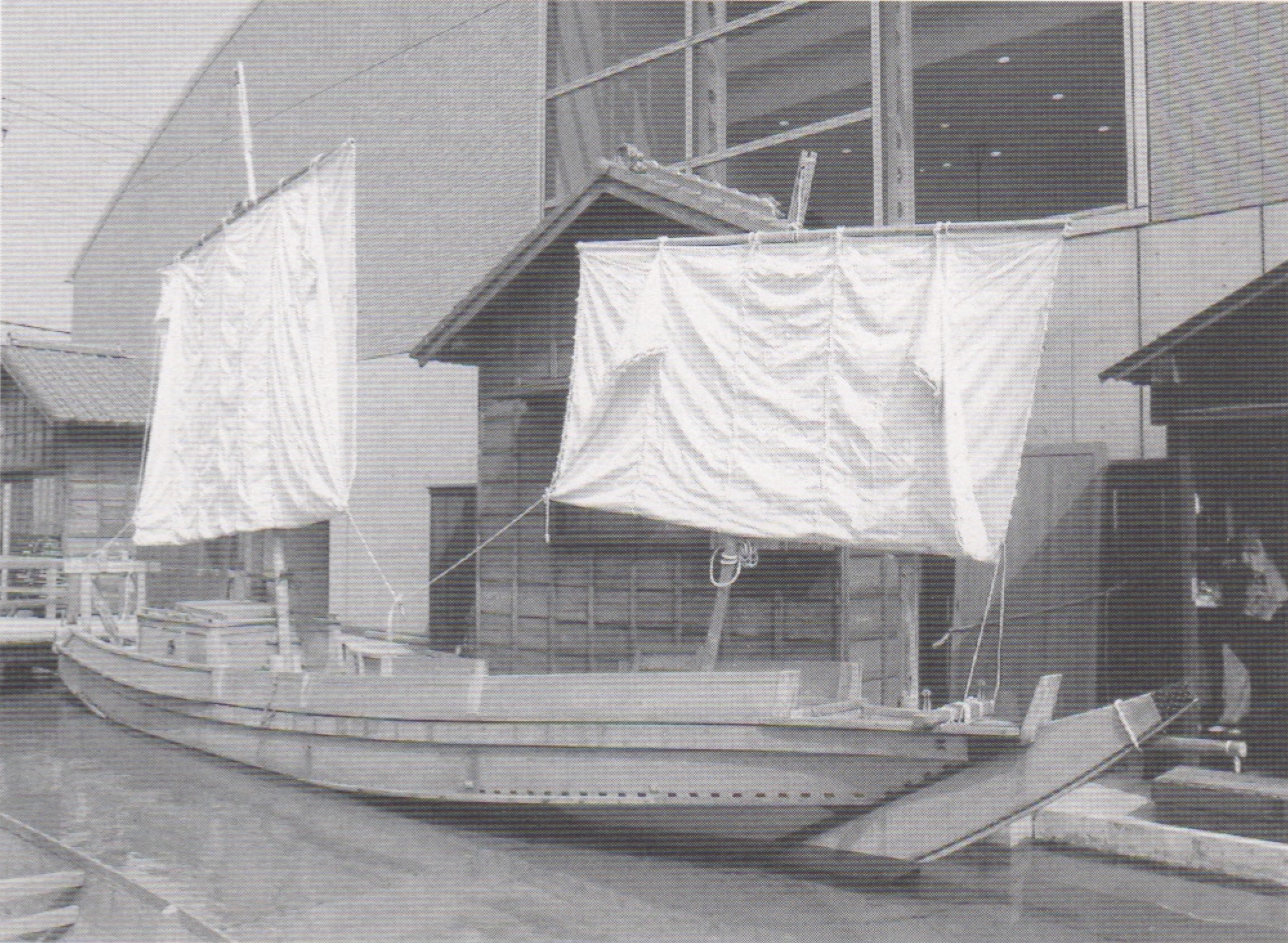
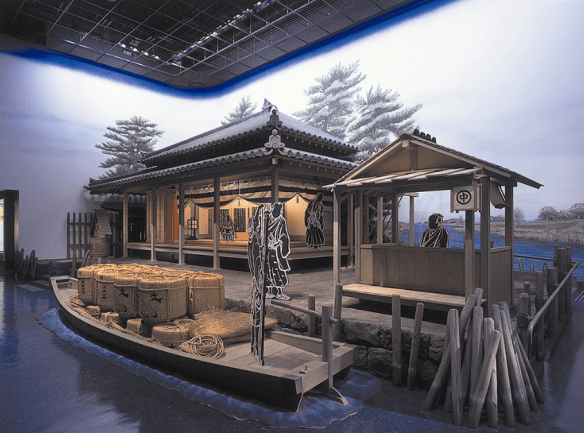
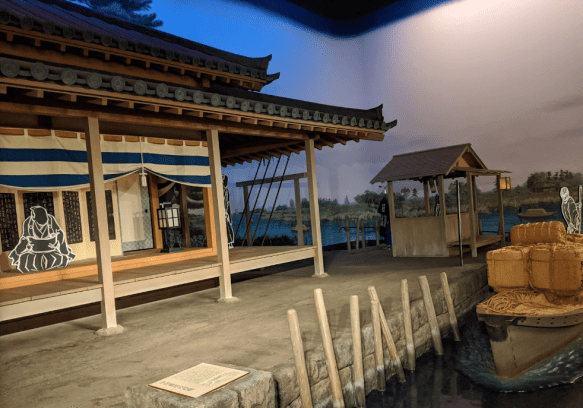
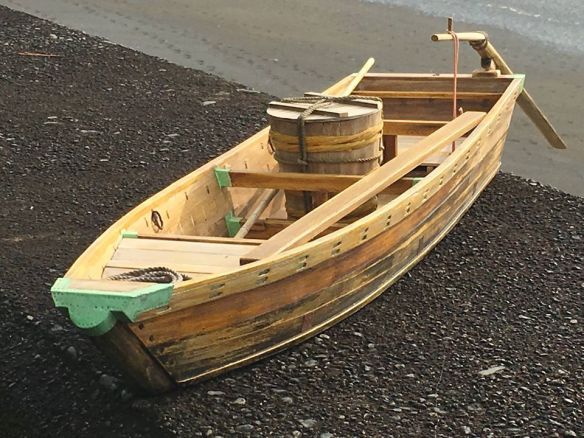
A large display in the museum is a full-sized diorama of a small, fully loaded canal boat that looks like it’s pulling away from the dock. What surprised me was that I recognized this specific type of boat as one that I studied and created a set of drawings.

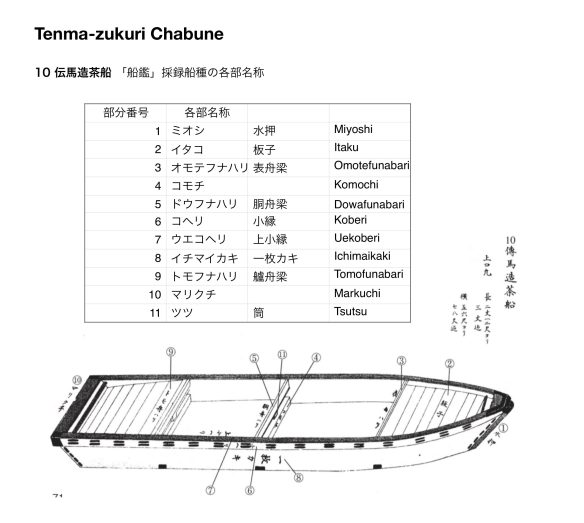
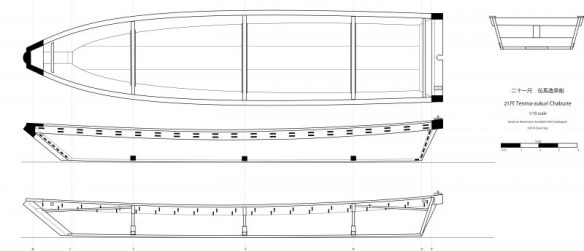
This is a tenma-zukuri chabune, a small general purpose boat from the canals of old Edo. I’ve seen very little about this boat, outside of a woodblock print in the Funakagami, an illustrated identification guide to river boats that was used to aid the government’s tax assessors.


Page from the Funakagami, with my annotations on the names of parts.
Using this illustration, plus some information provided in the book, I came up with a set of drawings that I created in Adobe Illustrator.

My own drawings based on the Funakagami illustration and provided dimensions.
There are some variations from the museum display, but all the details mostly seem to match. I will consider some modifications that I might make to the drawings, but I’m very confident with them, especially now that I’ve seen this museum display.
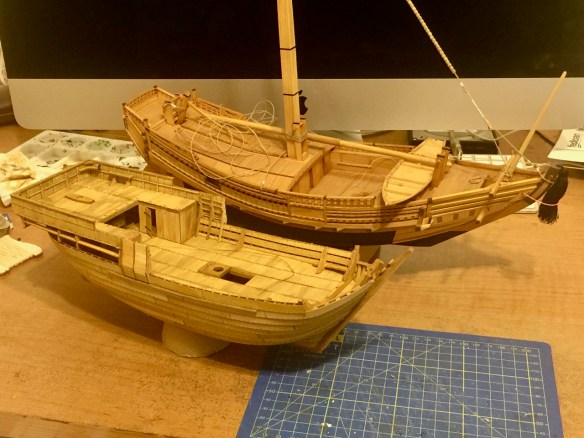
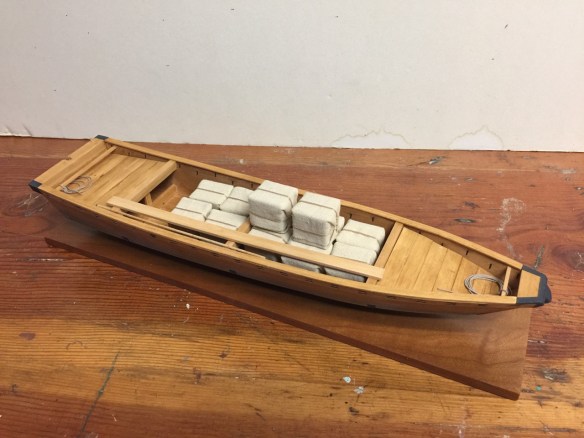
The drawings have been used to make at least two models: My 1/20-scale model and one by Japanese modeler Kouichi Ohata, who built a beautiful 1/10-scale model. Kouichi-san’s model actually came before mine, and he provided some great feedback that helped me improve the drawings from their original version.

My 1/20-scale tenma-zukuri chabune

1/10-scale tenma-zukuri chabune by Kouichi Ohata
This is the first time I’ve researched a particular boat type and created a set of drawings based mostly on the interpretation of a woodblock print. While I knew I had the basic dimensions right, I never really new for sure if my interpretation of all the details was correct.
Seeing this museum display is not proof that I got everyhing correct, but at least it shows me that whoever was involved with the creation of this museum display agrees with my interpretation of this boat. That means a lot to me, given how separated and independent my study of wasen has to be.
So, I look forward to visiting this display at some point after Covid concerns have lightened up. In the meantime, perhaps I should pick another subject to try to illustrate and model. Ω
The Tonegawa Takasebune (高瀬船) – a Model in 1/72 Scale, Part 3
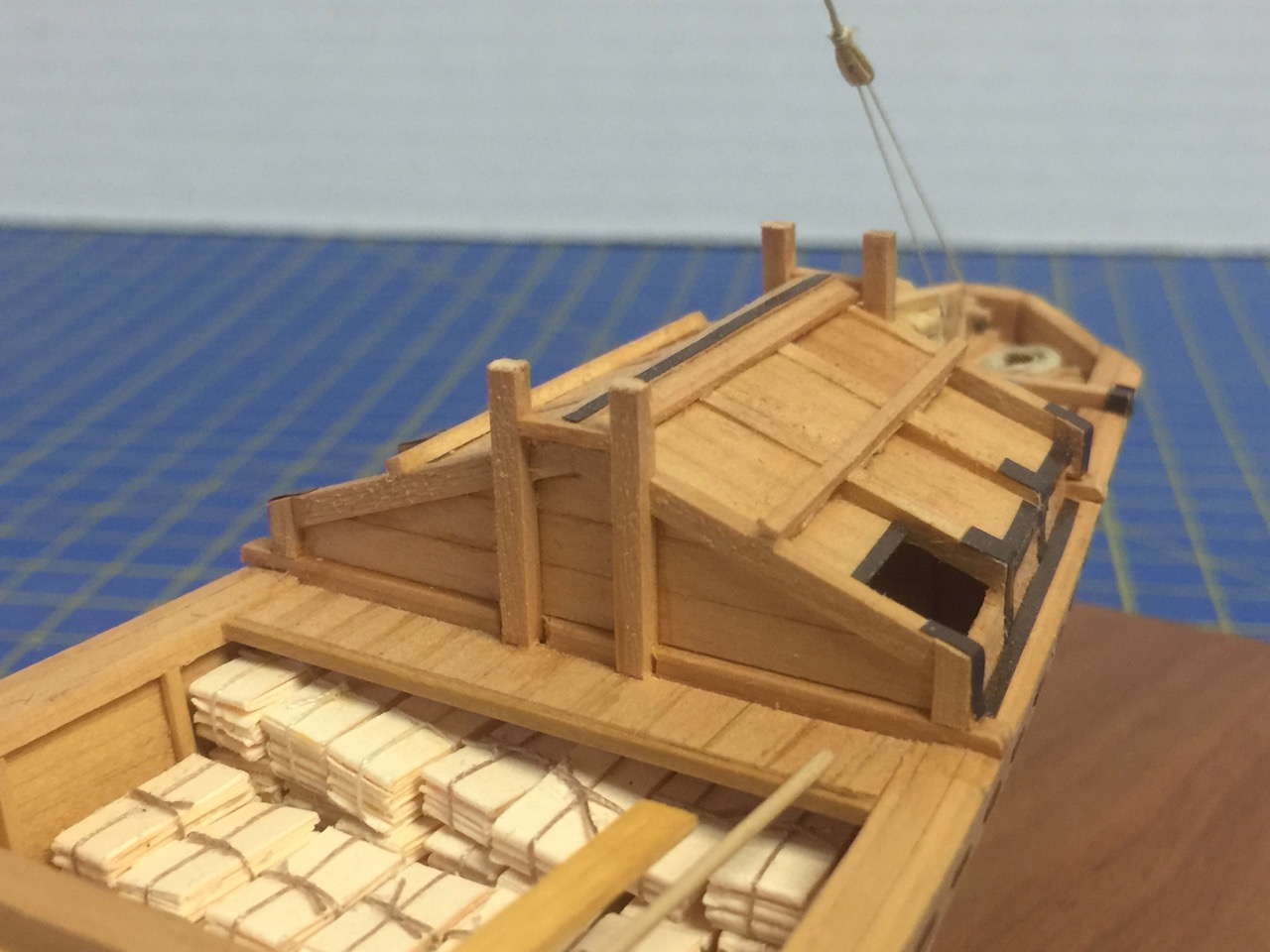
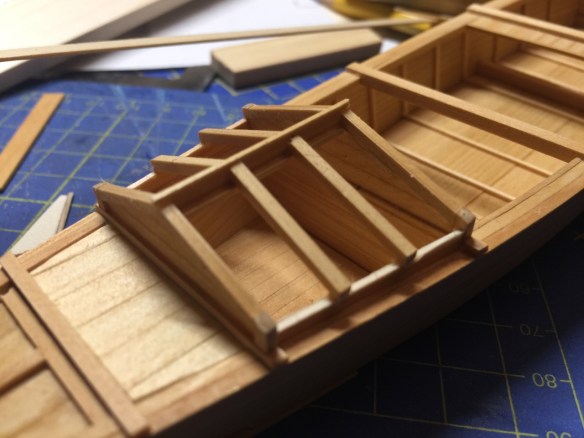
The bow cabin, which was called the seiji (say-jee) actually turned out to be one of the easier features of this model to reconstruct. And, honestly, nothing about the Tonegawa Takasebune is difficult to construct, though I did have a little trouble getting the upper part of the bow so that it looked right. But, the cabin is essentially like a wooden tent. Triangular walls front and back, a center beam at the top, and sloping roofs divided into three parts by a pair of beams on either side.

You might notice that I put an interior wall in the bow of the ship, and I added strips to simulate the frame around a sliding door. It’s not a big cabin, maybe close to 9 feet square, so there’s not a lot of living space. Probably enough for a small family to sit or sleep together. But, bedding, utensils and dishes would certainly have to be put away when not in use. Most of it, probably in the storage in the bow. Continue reading