Building a Hozugawa Ayubune Model in 1/10 Scale – Part 3

My illustration of the ayubune, based on plan drawing by Douglas Brooks (with his permission). Position and size of details shown here are only approximate.

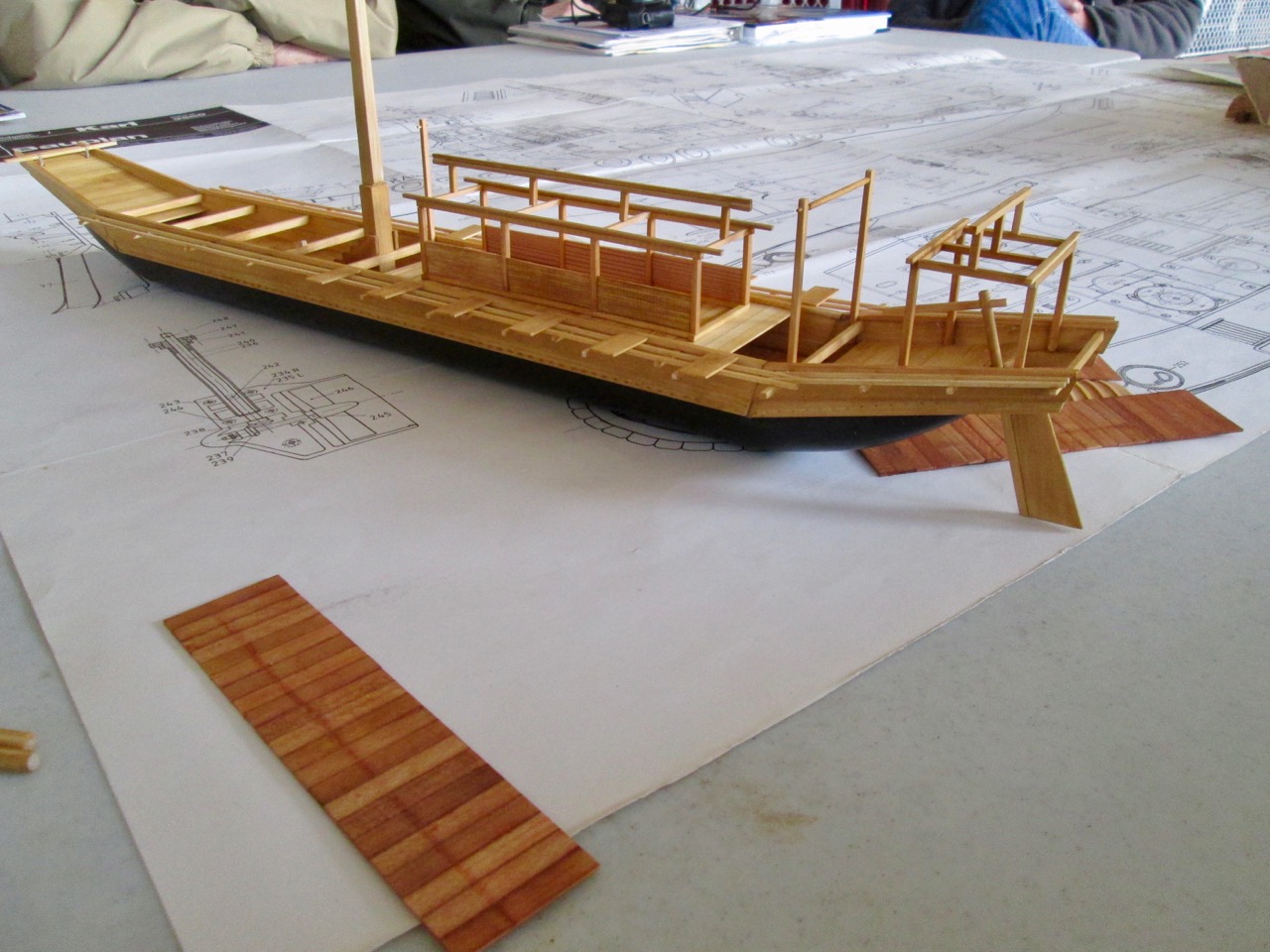
Counting up all the major planks, transom, and beams, this Ayubune model will be made up of only 17 pieces:

  • Shiki (bottom) – 3 pieces
  • Omote no tate ita (bow plank)
  • Todate (transom)
  • Tana (hull planks) – 4 pieces, 2 on each side
  • Omoteamaose (bow platform)
  • Tsunatsuke (lit. rope attachment) – Bow beam
  • Omote no funabari (forward beam) – 3 pieces
  • Tomo no funabari (aft beam)
  • Tomoamaose (stern platform)
  • Transom Strake

In addition to these, I made patterns in paper for obtaining the proper angle for the lay of the hull planking. I have yet to decide at this point just how I’m going to fix the hull planks to that angle. But, there’s time before that needs to be deal with.

My second illustration of the ayubune. I’ve labeled most of the parts here, but haven’t been able to get the names of all of them yet.

Continue reading

Building a Hozugawa Ayubune Model in 1/10 Scale – Part 2

The ayubune is not my first Japanese boat scratch build attempt. The first was the Urayasu bekabune, a boat designed for working among the seaweed nets of Tokyo Bay. But, being unaccustomed to scratch building Japanese traditional boats, I was wresting with a few construction problems and a couple errors, so I set it aside. Then, I found the ayubune on Douglas Brooks’s blog.

The ayubune is a very simple design. There is no cutwater, the side are flush, making for a very simple shape, and there few details beyond the hull and beams. This seemed to be an ideal subject to start with.

Mr. Brooks recorded 3 sizes of ayubune in Japan, a 24-shaku, 18-shaku and a 15-shaku boat. I noted that he built at least 3 of the 15-shaku boats and posted photos and notes on their construction. At a traditional 1/10 scale, the 15-shaku boat would be just about 15″ long, which seemed like a good size.

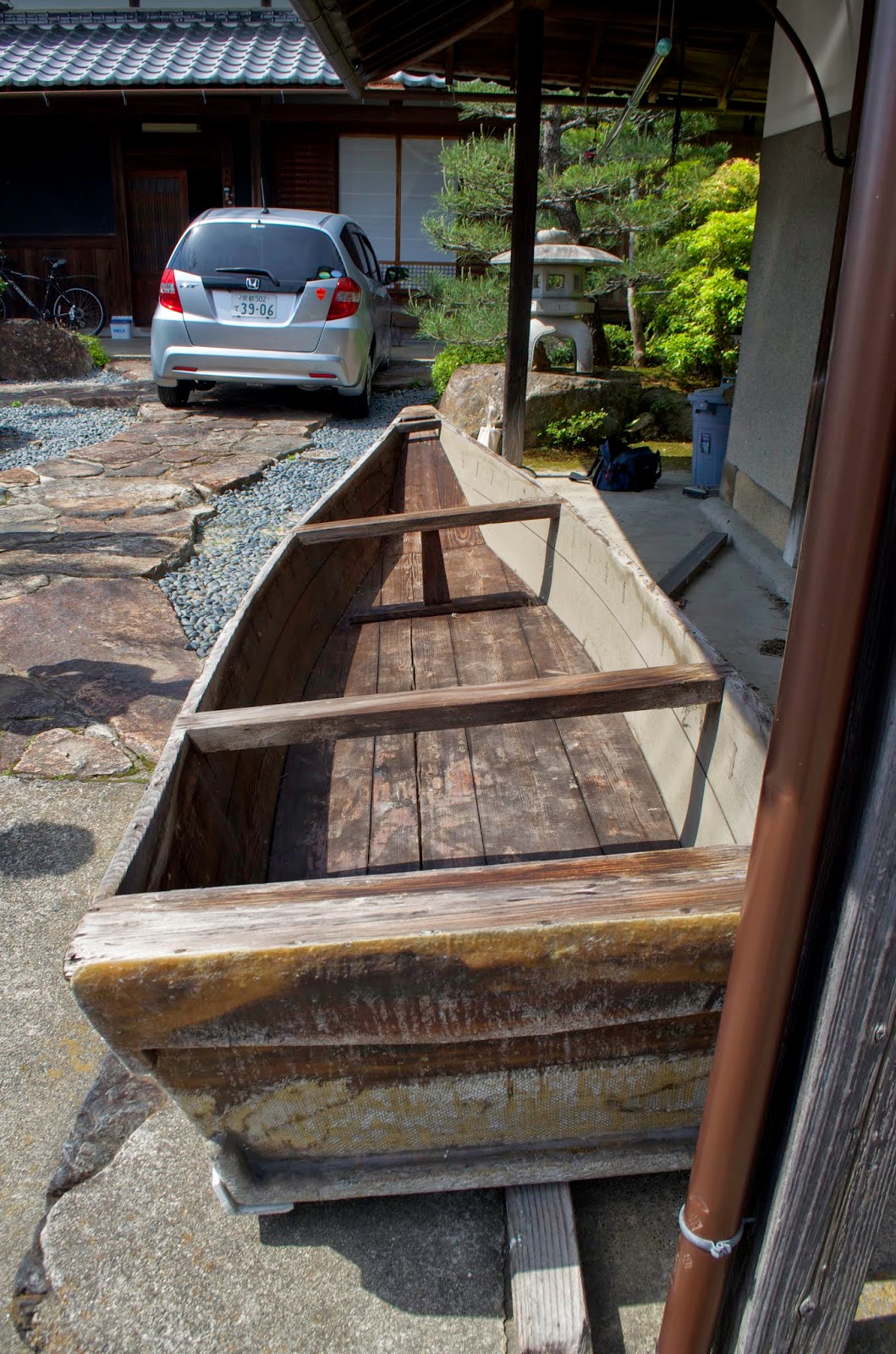
Large, 24-shaku fiberglass ayubune usee to give river tours to tourists on the Hozu river.

15-shaku ayubune on which my drawings are patterned. Photo courtesy of Douglas Brooks.

Continue reading

Building the Kamakura Period Umi-Bune, Part 6

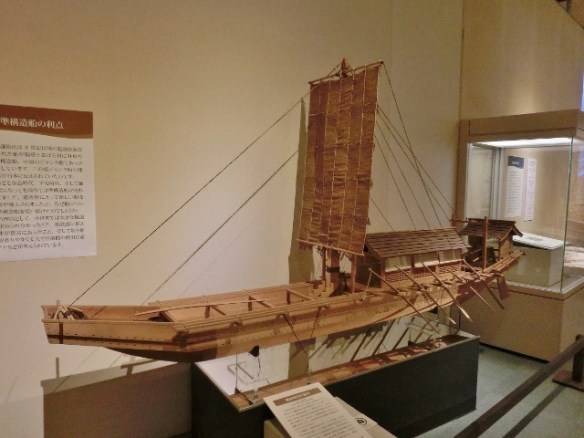
As I mentioned in my last post on this model, I’d been wrestling with the configuration of the roofs. The 1/20-scale museum model that I often see reference on the web, differs from Professor Ishii’s 3-view illustration that I’ve mostly been basing construction on. Those drawings are more of a match to the early scroll paintings. Oddly enough, none of the models I’ve seen match them exactly. Is it possible that the builders had access to more updated information? Or did they just decide that the Ishii-san was wrong? But, then what about the scroll paintings? Are they simply written off as being wrong?

As you can see in the photo below, which was taken at a ship model club meeting, I initially made flat roofs panels. If I could justify them, they would certainly be the simplest to construct.

Flat roof panel initially constructed is seen in foreground.

Continue reading

Building a Hozugawa Ayubune Model in 1/10 Scale

There are a lot of potential wasen subjects to model, but good plans are difficult to come by. Also, when decent drawings are found, it’s often difficult to find or to understand the details of the subject. I’ve been toying with a lot of different possible model building subjects, but would usually run into some issue that kept me from pursuing it further.

Recently, I sort of re-discovered a subject that I seem to have overlooked before. It is a boat that Douglas Brooks wrote about in past blogs from about 3 years ago, when he was building a boat in Kameoka, Japan, which is about 16 miles west of Kyoto. There, he built a Hozugawa Ayubune, a type of simple fishing boat that was used on the Hozu river.

15 shaku Ayubune built by Douglas Brooks in Kameoka, Japan, in 2014. Photo courtesy of Douglas Brooks.

Continue reading

Building the Kamakura Period Umi-Bune, Part 5

Umisen Model

Model on exhibit at Kanagawa University. Photo by Masami Sekiguchi.

 No, that’s not my model. This 1/10-scale model of a Kamakura period umi-bune is on display at the Kanagwa University, which is home to the Institute for the Study of Japanese Folk Culture. The photo was taken by my friend Masami Sekiguchi, who is one of two Japanese ship modelers I met with in Tokyo last September. The other is Norio Uriu, Both gentlemen are members of The Rope, the Japanese ship model society in Tokyo.

I had been corresponding with Mr. Uriu for over a year, as he is a friend of fellow ship modeler Don Dressel of the Ship Modelers Association in Fullerton, California. Don was building his model of a Higaki Kaisen at about the same time I was building mine, and at some point, he put me in touch with his friend in Japan, Mr. Uriu.

When I travelled to Japan, I made arrangements to meet with Mr. Uriu for dinner in Tokyo and he brought along his daughter Hanako, who helped with our discussions, and Mr. Sekiguchi, who has been helping me understand information on Japanese ever since.

Continue reading

Building the Kamakura Period Umi-Bune, Part 4

Kitano Tenmangu

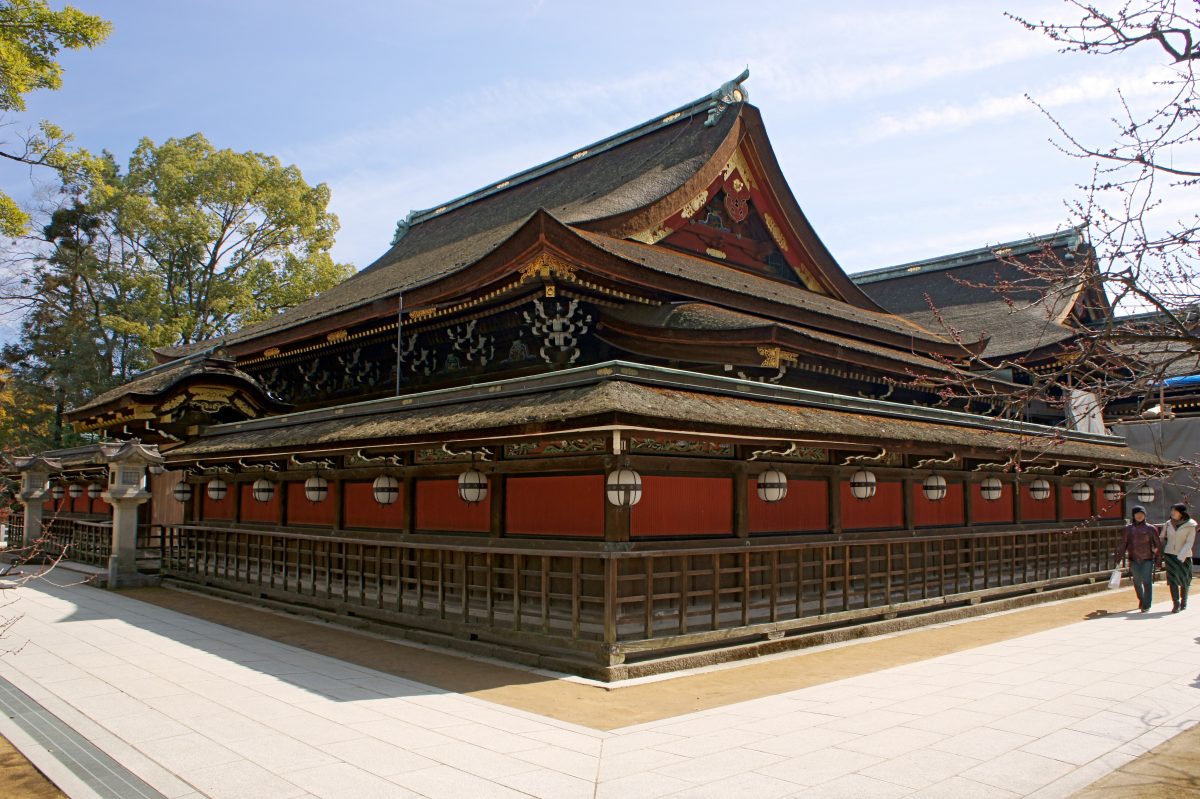
Kitano Tenmangu – Shinto Shrine in Kyoto. Photo from Wikipedia.

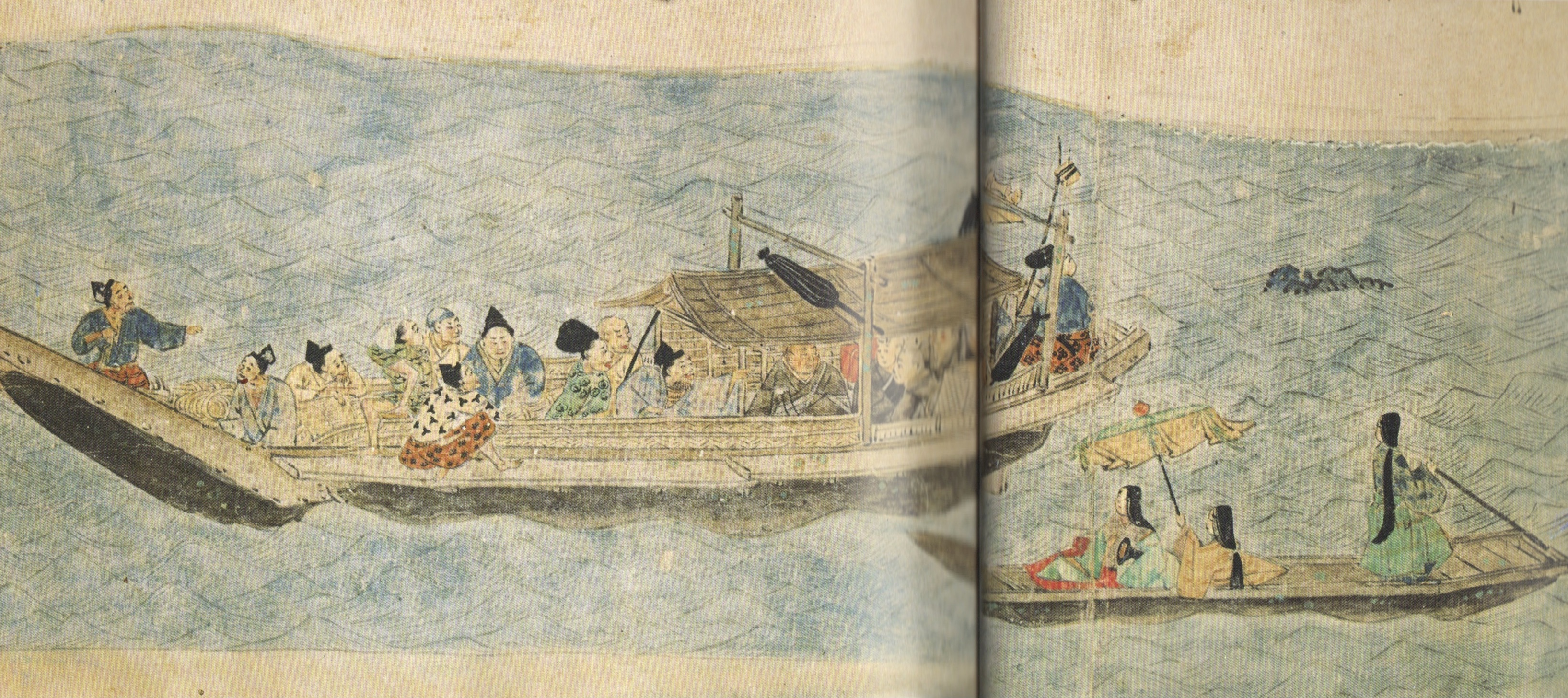
About a week ago, my ship modeler friend in Japan, Mr. Sekiguchi, explained a little about the Kitano Tenjin scrolls that depict the Kamakura period Umi-bune, and I have since re-read through online information on the subject to get a better understanding.

The scrolls represent the life of Sugawara no Michizane, a scholar and poet in the Heian period (平安時代  794-1185) who rose high in politics in Kyoto, then Japan’s capital. But, he had powerful  rivals in the Fujiwara clan that plotted against him, and he was exiled to Dazaifu on the island of Shikoku, where he died three years later in 903.

Apparently, there was much sympathy for Michizane, and shortly after his death, there were a number of calamities, including a lightning strike within the imperial palace. The emperor’s court fearing that these were caused by the wrath of Michizane’s angry spirit, decided to placate him by deifying him and erecting a shrine. He was given the Shinto name of Tenjin, and the shrine was built at Kitano, and known as Kitano Tenmangū.

Continue reading

Building the Kamakura Period Umi-Bune, Part 3

image-2

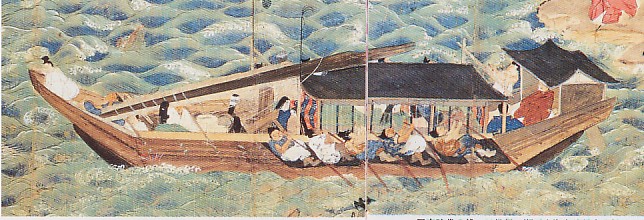
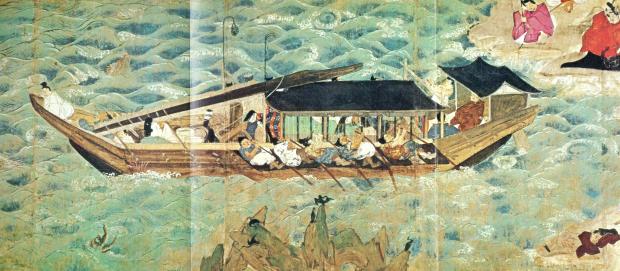
The largest source of Kamakura period boat information appears to be in 13th century picture scrolls that appear in books and on the Internet, but I really know very little about the scrolls themselves. What they depict includes a lot of boats with hull designs very similar to the ship I’m modeling. These are semi-structured ships or junkozosen (準構造船) with dugout-style hull, which have been built up with hull planks. Most of those depicted are river boats, but some appear to be sea boats.

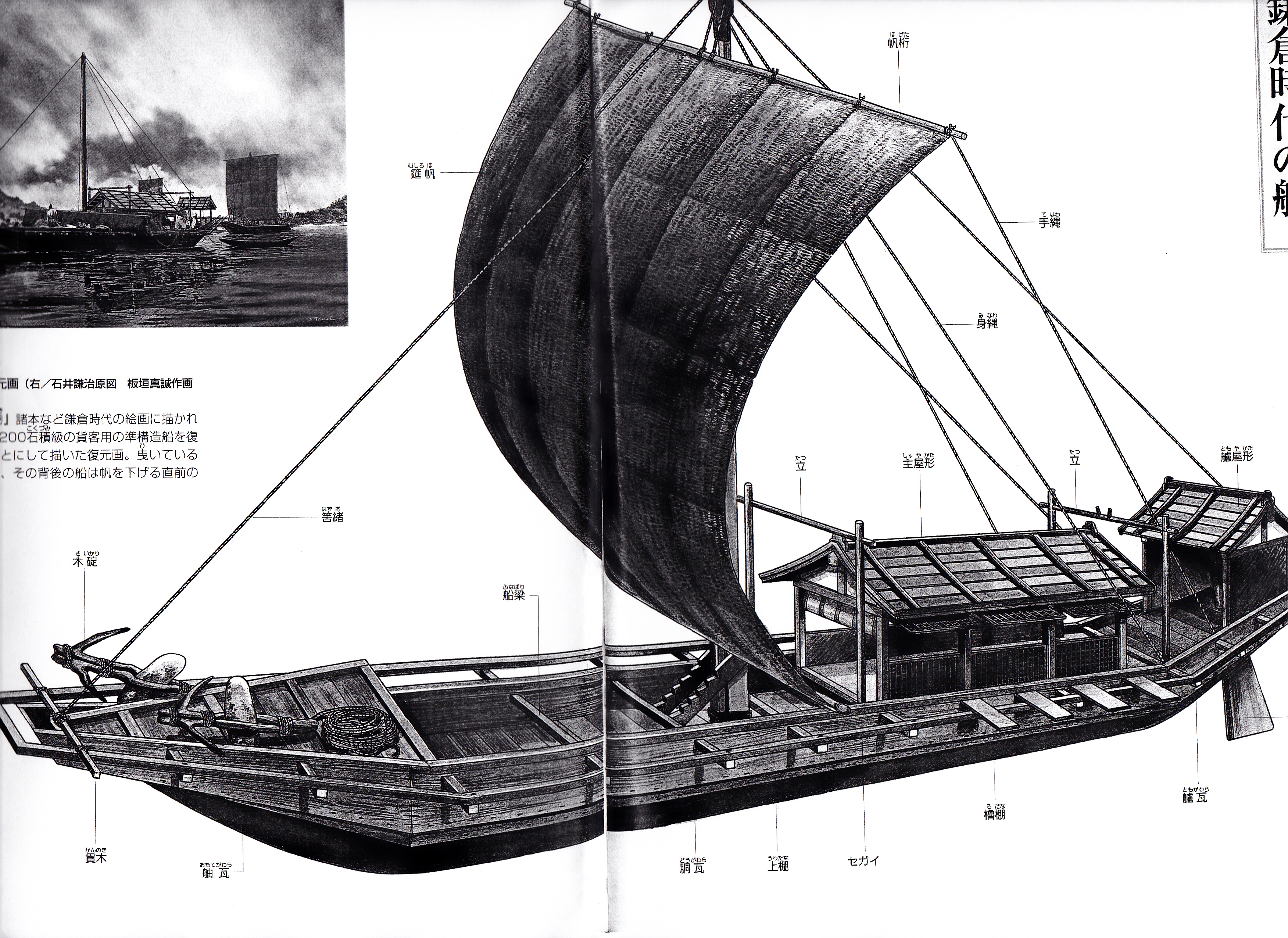
I recently found a great sketch of a large sea ship on a blog site. I believe this was scanned from one of Professor Ishii’s books, but it’s not one that I have.

25e52592258c25e8258825b9-1

This image is very similar to a less detailed drawing I have in my books. The ship depicted here varies only slightly from my model in that this image shows a peaked roof called a kappa at the bow. It also has only a single rail outboard of the hull, but it extends all the way around the bow. It also may be a somewhat smaller ship, given there are only 4 rowing platforms on either side, where my model will have 6.

A couple things I like about this image in particular is that it shows a roof design on the main deck house that is clear and makes sense to me. Note the boards that make up the roof run along the length of the roof. The drawing I’ve been working off of, shows the boards running perpendicular to these – not that it’s wrong, but that it requires an underlying structure that’s different from what I would naturally build. Also the front of the house appears to have a simple roll-up screen, no door or solid panel.

Continue reading

Building the Kamakura Period Umi-Bune, Part 2

Illustrated History of Japanese Traditional Boats

Illustrated History of Japanese Traditional Boats

As I mentioned last time, I’m using drawings in one of the books I ordered from Japan earlier in the year. There were three I bought at the same time using a buying service called Buyee.com. This allows me to shop on Japanese online stores more easily than ordering directly from the stores since the purchases are done in English. It doesn’t help with product descriptions, but once I find something I want, buying it is fairly easy.

This service also receives the items using local shipping service in Japan, inspects the products, and ships them internationally to me.  There is a small fee in addition to the shipping charges. I’ve only needed to use the service a couple times, but has so far worked well.

Continue reading

Building the Kamakura Period Umi-Bune, Part 1


ship2-kitanotenjin

I’m no expert on Japanese history. In fact, my interest in traditional Japanese boats is a way for me to learn more about it. Up to this point, I’ve primarily been interested in watercraft from the Edo period, which was from 1603 to 1868. This era began with the rise of the Shogun Tokugawa Ieyasu who established the capital of Japan at Edo (now called Tokyo). But, there are some interesting, large watercraft that I’ve been intrigued by as well, and many of these date back to earlier times.

Some of the ships I’ve been looking at were fairly complicated, and my information on them is clearly incomplete. But, there was one that stood as a simple design, with enough information available for me to feel that I could scratch build a model. This ship, referred to only as a large umi-bune or sea ship, dated back to the Kamakura period, which lasted from 1185 to 1333, and saw the rise of feudalism, the establishment of the Shogunate government, called the bakufu, two invasion attempts by the Mongols, and the spread of Buddhism. Continue reading

My First Wasen Scratch Builds

I’ve just about come to the end of the available wasen model kits, having built the higaki kaisen, hacchoro, yakatabune, mini-yakatabune, and mini-hobikisen kits from Woody Joe, plus the Tosa wasen kit from Thermal Studio. There are still a couple kits I haven’t gotten to yet, but now that I’ve had a chance to see a number of models, replicas, and actual examples in Japan, it seemed like it was time to take what I’ve learned and chart a new direction.

I decided to begin with the Urayasu bekabune, which was the subject of one of Douglas Brooks’s apprenticeships. I’ll post the details about this shortly. But, I want to mention that it has been a bit of a struggle for me at times because I’ve never scratch built any of this type or scale before. Also, I’m trying to build this model as close as I can to the way the actual boatbuilders built the full-sized boats. This has led to some issues that I’ve had a difficult time resolving.
book_cover

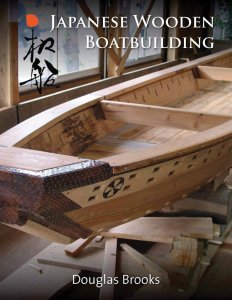
Click image to order your copy

Certainly, I’m not going to be using tiny flat nails to fasten the planks together, but I do want to simulate the mortises. Also, with no internal framing, I’ve had to work out methods for getting the angles of the hull correct, as well as shaping the planks and getting a decent fit between them.
img_2815

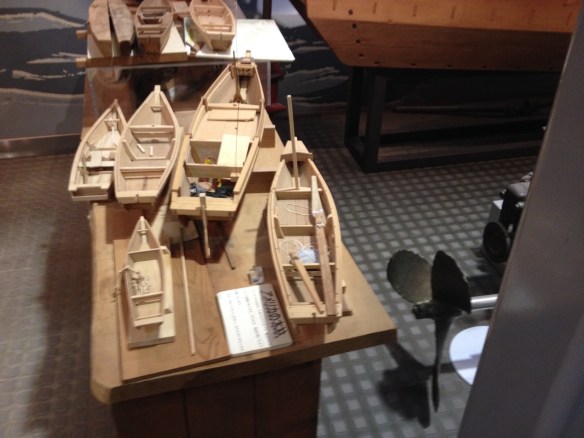
bekabune and itasebune models at the Urayasu Museum

So, in the meantime, I’ve been interested in larger ships, but detailed information there is tough with anything except 19th century bezaisen. I’ve been curious about the smaller godairikisen, which carried goods along shorter, nearer to shore routes. Also, there are the warships of the Sengoku or Warring States, period. But, these are complicated designs, and decent drawings are few.

But, there is one vessel design that I’ve found interesting, and I’ve seen models of it in museum photos. There is also a decent drawing in the books of Professor Kenji Ishii. The boat is a Kamakura period umi-bune, or sea boat.
umi-sen

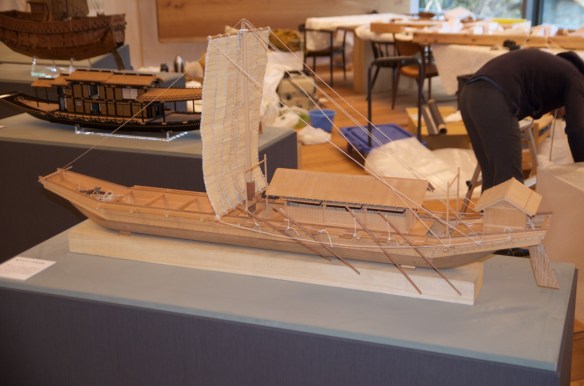
Kamakura period umi-bune model. Photo by Douglas Brooks.

This was a trade boat used in the late 12th and 13th centuries on large rivers and inland seas. The ship’s hull is a semi-structured type, which is based around a dugout log to which hull planks are added, allowing the ship to sit deeper in the water and to carry a larger cargo.

I’ve decided to experiment with scratch building the Kamakura period ship, as I think I can tackle the subject. So, I’ll be posting updates on this model as well. Stay tuned.