Unknown's avatar

About catopower

Ship modeling since 1993.

Building the Kamakura Period Umi-Bune, Part 3

image-2

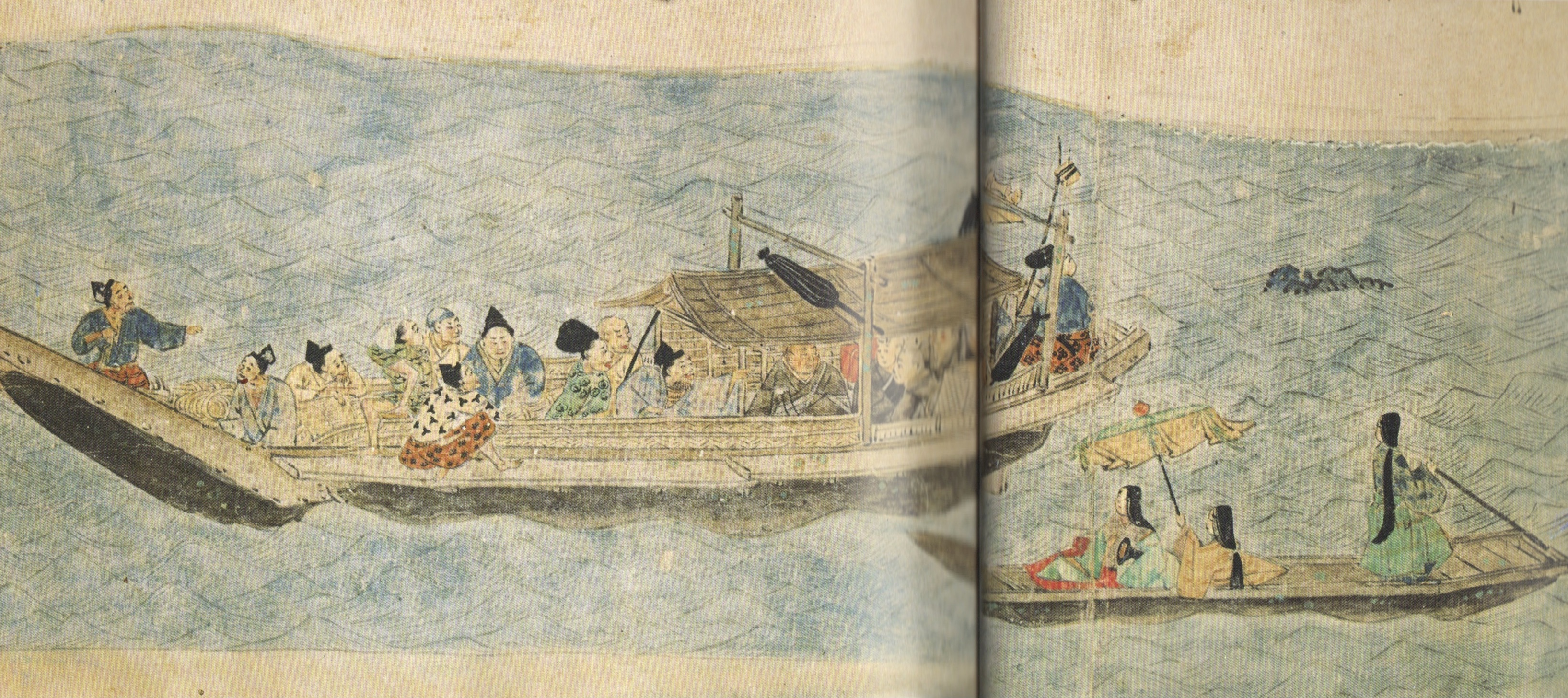
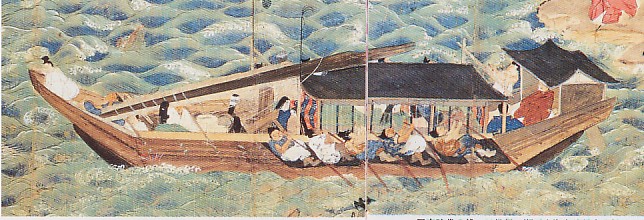
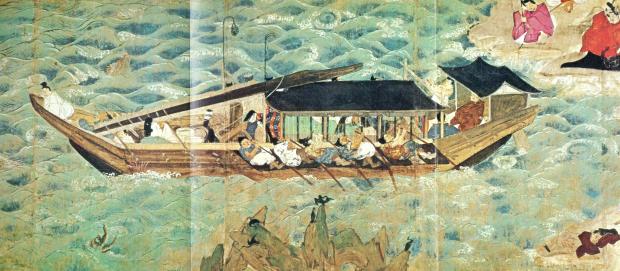
The largest source of Kamakura period boat information appears to be in 13th century picture scrolls that appear in books and on the Internet, but I really know very little about the scrolls themselves. What they depict includes a lot of boats with hull designs very similar to the ship I’m modeling. These are semi-structured ships or junkozosen (準構造船) with dugout-style hull, which have been built up with hull planks. Most of those depicted are river boats, but some appear to be sea boats.

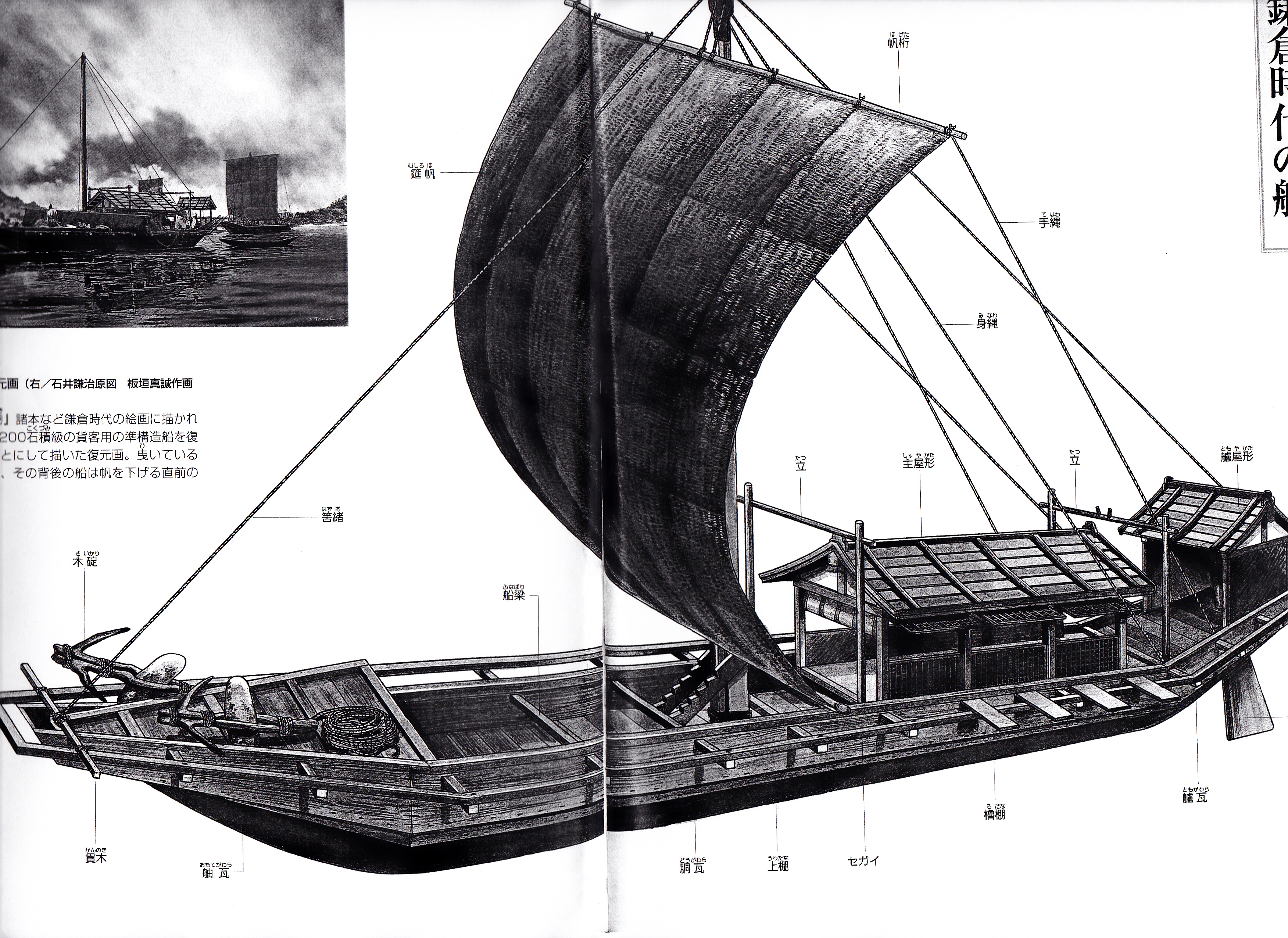
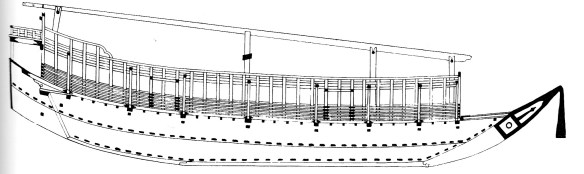
I recently found a great sketch of a large sea ship on a blog site. I believe this was scanned from one of Professor Ishii’s books, but it’s not one that I have.

25e52592258c25e8258825b9-1

This image is very similar to a less detailed drawing I have in my books. The ship depicted here varies only slightly from my model in that this image shows a peaked roof called a kappa at the bow. It also has only a single rail outboard of the hull, but it extends all the way around the bow. It also may be a somewhat smaller ship, given there are only 4 rowing platforms on either side, where my model will have 6.

A couple things I like about this image in particular is that it shows a roof design on the main deck house that is clear and makes sense to me. Note the boards that make up the roof run along the length of the roof. The drawing I’ve been working off of, shows the boards running perpendicular to these – not that it’s wrong, but that it requires an underlying structure that’s different from what I would naturally build. Also the front of the house appears to have a simple roll-up screen, no door or solid panel.

Continue reading

A Wasen Modeling Wasen Builder

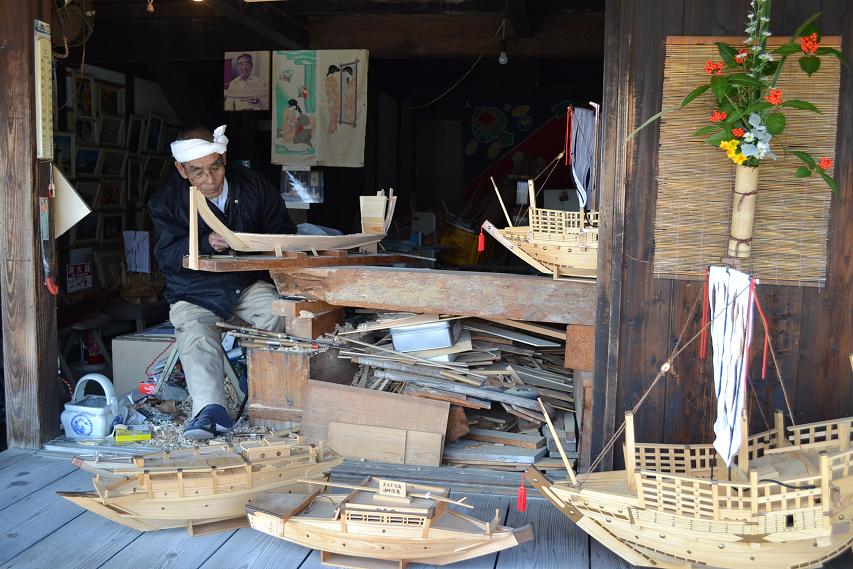
Chiharu Tao is a Japanese boatbuilder living in Onomichi, just outside of Hiroshima. I don’t know how much model building he does in comparison to his boat building now, but I got his photo from American boatbuilder Douglas Brooks. As you can see, his models are quite large and of a stylized type.

dsc_0589

Photo courtesy of Mr. Chiharu Tao and Douglas Brooks

Douglas just sent me the photo from the airport. He’s current in Japan and on his way to his next boat building project. I am really excited to share it with you here.

Building the Kamakura Period Umi-Bune, Part 2

Illustrated History of Japanese Traditional Boats

Illustrated History of Japanese Traditional Boats

As I mentioned last time, I’m using drawings in one of the books I ordered from Japan earlier in the year. There were three I bought at the same time using a buying service called Buyee.com. This allows me to shop on Japanese online stores more easily than ordering directly from the stores since the purchases are done in English. It doesn’t help with product descriptions, but once I find something I want, buying it is fairly easy.

This service also receives the items using local shipping service in Japan, inspects the products, and ships them internationally to me.  There is a small fee in addition to the shipping charges. I’ve only needed to use the service a couple times, but has so far worked well.

Continue reading

Building the Kamakura Period Umi-Bune, Part 1


ship2-kitanotenjin

I’m no expert on Japanese history. In fact, my interest in traditional Japanese boats is a way for me to learn more about it. Up to this point, I’ve primarily been interested in watercraft from the Edo period, which was from 1603 to 1868. This era began with the rise of the Shogun Tokugawa Ieyasu who established the capital of Japan at Edo (now called Tokyo). But, there are some interesting, large watercraft that I’ve been intrigued by as well, and many of these date back to earlier times.

Some of the ships I’ve been looking at were fairly complicated, and my information on them is clearly incomplete. But, there was one that stood as a simple design, with enough information available for me to feel that I could scratch build a model. This ship, referred to only as a large umi-bune or sea ship, dated back to the Kamakura period, which lasted from 1185 to 1333, and saw the rise of feudalism, the establishment of the Shogunate government, called the bakufu, two invasion attempts by the Mongols, and the spread of Buddhism. Continue reading

My First Wasen Scratch Builds

I’ve just about come to the end of the available wasen model kits, having built the higaki kaisen, hacchoro, yakatabune, mini-yakatabune, and mini-hobikisen kits from Woody Joe, plus the Tosa wasen kit from Thermal Studio. There are still a couple kits I haven’t gotten to yet, but now that I’ve had a chance to see a number of models, replicas, and actual examples in Japan, it seemed like it was time to take what I’ve learned and chart a new direction.

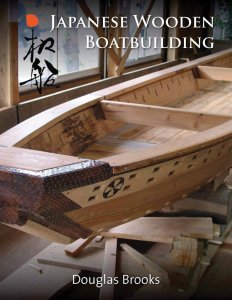
I decided to begin with the Urayasu bekabune, which was the subject of one of Douglas Brooks’s apprenticeships. I’ll post the details about this shortly. But, I want to mention that it has been a bit of a struggle for me at times because I’ve never scratch built any of this type or scale before. Also, I’m trying to build this model as close as I can to the way the actual boatbuilders built the full-sized boats. This has led to some issues that I’ve had a difficult time resolving.

book_cover

Click image to order your copy

Certainly, I’m not going to be using tiny flat nails to fasten the planks together, but I do want to simulate the mortises. Also, with no internal framing, I’ve had to work out methods for getting the angles of the hull correct, as well as shaping the planks and getting a decent fit between them.

img_2815

bekabune and itasebune models at the Urayasu Museum

So, in the meantime, I’ve been interested in larger ships, but detailed information there is tough with anything except 19th century bezaisen. I’ve been curious about the smaller godairikisen, which carried goods along shorter, nearer to shore routes. Also, there are the warships of the Sengoku or Warring States, period. But, these are complicated designs, and decent drawings are few.

But, there is one vessel design that I’ve found interesting, and I’ve seen models of it in museum photos. There is also a decent drawing in the books of Professor Kenji Ishii. The boat is a Kamakura period umi-bune, or sea boat.

umi-sen

Kamakura period umi-bune model. Photo by Douglas Brooks.

This was a trade boat used in the late 12th and 13th centuries on large rivers and inland seas. The ship’s hull is a semi-structured type, which is based around a dugout log to which hull planks are added, allowing the ship to sit deeper in the water and to carry a larger cargo.

I’ve decided to experiment with scratch building the Kamakura period ship, as I think I can tackle the subject. So, I’ll be posting updates on this model as well. Stay tuned.


The Nippon Foundation Library

One of the handiest sources of online information for the wasen modeler is the online library of the Nippon Foundation, or the Nippon Zaidan Toshokan – 日本財団図書館. I’ve made great  use of this resource, but of course, it requires sufficient knowledge of the Japanese language. With my limited knowledge, it’s a bit like walking through a maze with no map and wandering through long dark corridors. But, when I do stumble across something, it can be a great find.

h02-2

I don’t know the full extent of the library, but I have found some interesting information, photos, diagrams, and such. It is helpful that the site is easy to navigate using Google Translate, in which you can translate entire web pages in real time. But, you do have to start somewhere.

If you don’t know any Japanese, just open up Google Translate in a web browser page and copy the text from the Japanese site and paste into the translator. Here are some articles you can do this with. Note that some of these articles include some english text at the bottom, but the text I have read clearly is just a basic summary of some of the information on the page. The following articles came up when doing a search on wasen, or tradition Japanese boats, using the Japanese text, 和船.

Overview of Japanese Sailing Ships – This is from the Osaka Port Promotion Association. It appears to be a good primer on Japanese sailing vessels and their development. There is some great info here about coastal transports, how they were built, how and where they operated, etc. Great information about bezaisen or sengokubune: kitamaebune and higakikaisen.

A Japanese Boat from Start to Finish – This looks to be a log of the construction of a Japanese boat put together by the University of Tokyo (at least the log is). I haven’t read it all, but it begins with the gathering of lumber and follows construction through launch. I don’t know what type of boat it is yet, but it reminds me of the bekabune because of the flush seam between the upper and lower planks.

Maritime Science Museum – I’m not sure, but this appears to be a book, or maybe just a big article, on maritime science from the Maritime Science Museum, which is essentially closed for now (though there is a small annex that is open to the public with some limited displays). This is a GREAT resource that seems to cover the gamut of Japanese boats. With 36 web pages, it’s enough material to write dozens of posts.

Boat Building Handbook – Wow. I just saw this for the first time while writing this post. This is a major find. It’s like a boat building handbook. It covers later period boats, but primarily goes into a tremendous amount of fine detail on wasen construction of all types. This is a real find, again worthy of multiple posts. If you put your browser into a “reader” mode, you can export this as a 140-page pdf, making it a lot easier to search through. Lots of great diagrams.

Well, that should be enough material to keep you going for a while. While writing this, I’ve discovered so much that I never knew existed. This is pretty amazing. I’ll post a follow-up soon as I’ve just made a discovery that I need to look into before I say anything more.

Remember, if you don’t read Japanese, just copy the text and paste it into Google Translate. It’s not a perfect translation, but you can figure out the important stuff when combining with the illustrations.

Good luck!

Absolutely in Awe – My New Wasen Modeler God

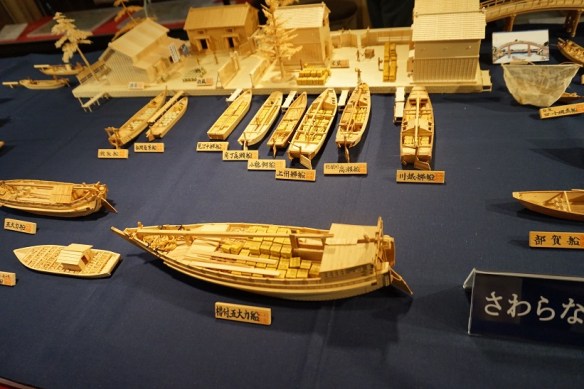
Today, I was digging through my usual research websites. In particular the Nippon Foundation’s online library, studying an article on Takasebune, when I ran across this photo, clearly depicting an entire collection of wasen models, all at the same scale. Translating some of the text around this image, I discovered that they appear to all have been built by a Mr. Yukio Nakayama.

011_02

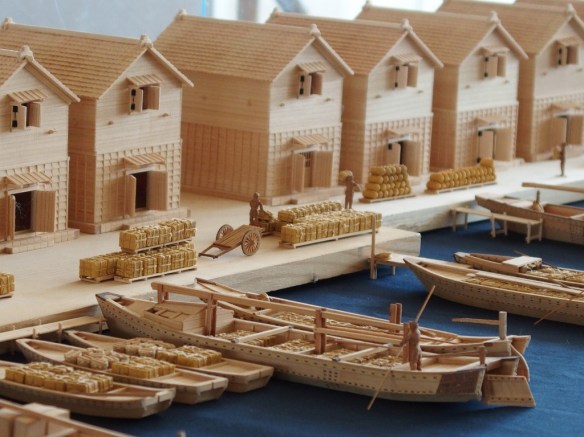
Not knowing anything about this person, I began digging around using his name in Japanese for my searches, 中山幸雄. What I found is a gentleman who has been built more than models of traditional Japanese boats and buildings, all at 1/70 scale.

636847_1462952095

OLYMPUS DIGITAL CAMERA

I don’t know much more about him, aside from the fact that he was born in 1953 and has been doing this for a long time, but it appears that the information on his work is fairly current. It seems that there are periodically exhibits of his work.

I will do what I can to find out about him and see if I can contact him. Being that my Japanese isn’t very good, I suspect that I won’t be able to do much communicating.

Time to send out some calls for help through my network of contacts!


What I Learned Today – Wasen Names

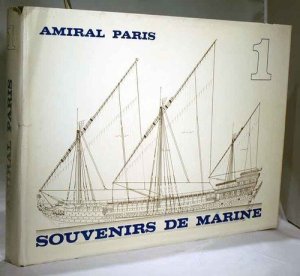
Last night, I finished writing a post about the set of books published in the late 19th century called Souvenirs de Marine, which contain drawings of ship from around the world, and specifically contain several examples of traditional Japanese wooden ships and boats.

Afterwards, I was inspired to do some hunting around for images on the Internet of a specific type of ship I was looking at called a gozabune (Goh-zah-boo-nay). This is a type of large river or coastal ship that was highly ornate and used as official yachts by daimyo and other aristocracy. Many are simply warships, sekibune, dressed up during peacetime.


seto-ryu-sekibune

A Sekibune

In order to get the best hits on Internet search engines, I went to my Glossary of Terms page and copied the Japanese text for the gozabune to use for the search. This, by the way, is the reason I added the Japanese text to the page. If you’re looking for something specifically Japanese, the best way to find it is to do the search in Japanese. So, I searched for images using the text, 御座船, for gozabune. 

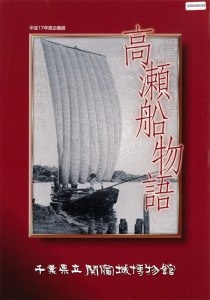
I found what I was looking for: lots of images of gozabune. But in my search, I stumbled across many things. One drawing, in particular, got my attention and it led me to a great article in the Nippon Foundation’s online library on the story of the Takasebune. To the best of my understanding, this was a book published by the Chiba Prefecture Tsukigaki Castle Museum in 2005.

h02

I don’t know if it’s still in print or available somewhere, but this appears to be the contents of that book: https://nippon.zaidan.info/seikabutsu/2005/00589/mokuji.htm

There was one image in particular in this article that showed various types of Takasebune and on what rivers they were used. Click on the image if you want to see the full-sized version on the Foundation site.

008

Now, I recognize some of these boats and their names, and specific information is great. But, what I’ve come to realize, more than anything else, is that the specific names of these boats may be irrelevant unless you are looking at a specific river system. This article is about Takasebune, but all the boats shown here have different names and are still Takasebune, even though some are called Hiratabune.

I think the issue may be that academics, and in this case I think I have to put myself under this group, attempt to classify these boats by names, but the names were given to them by the local people. They didn’t plan out how they were going to name them, they just named them.

So, I learned that when you hear or read the name of a boat, don’t think you know anything about the boat or what kind of boat it is unless you know the location it was used and have actually seen one or a drawing of one. There is much to learn!


Paris’s Souvenirs de Marine

There are a several kits available to the wasen modeler, between Woody Joe and Thermal Studio, but if you want to scratch build something unique, you’re going to have an extremely difficult time. Japanese boat builders didn’t draw detailed plans the way western boat builders did, and pretty much all that is available are those created from a study of an existing boat type.

61golufxt7l-_sl500_

However, there is one fairly accessible set of drawings of Japanese watercraft that was made in the 1880s and published in a set of books called La Souvenirs de Marine by French Vice-Admiral François-Edmond Paris. This set of large-format books has seen a number of re-prints, and I’m not sure what the date is on the most recent reprint. But, there should be copies accessible in most of the larger library collections, and used copies can be found on Amazon and other booksellers, with prices that vary greatly depending on edition and condition.

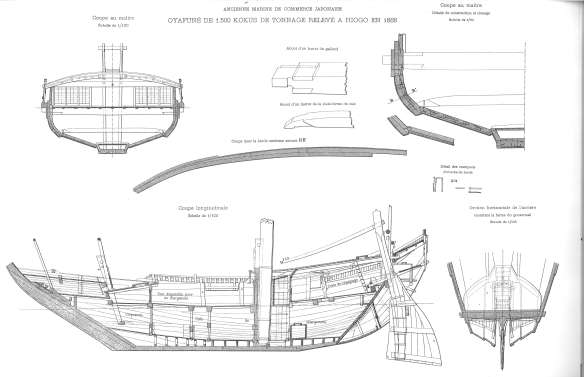
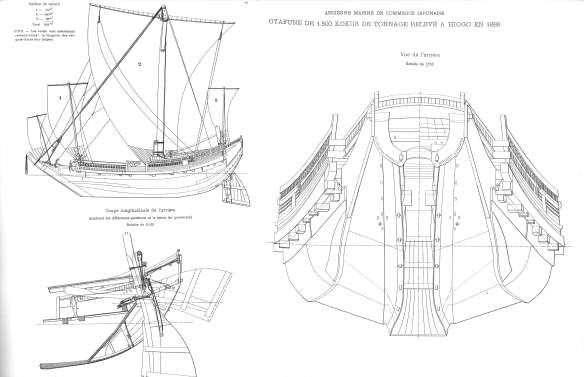
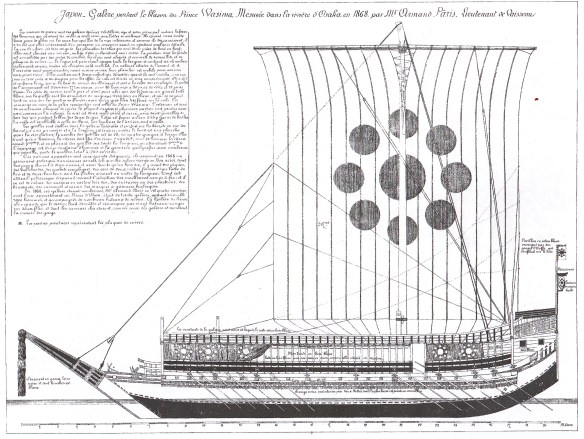
Drawings included are of ships from across the globe, and the text is in French, but this collection contains some of the few contemporary records of traditional Japanese watercraft available. Of the sections I’ve collected from the books, one illustration plate shows four different riverboats of various types. Other plates show two examples of bezaisen, or coastal transports. Other plates show a couple examples of highly ornate row galleys, one of which bears the crest of the Chiba clan on it’s large squaresail.

page-355

I haven’t studied these drawings in too much detail except for the two sets of bezaisen drawings, which are specifically of what appear to be northern port coastal transports, or Kitamaebune. The text doesn’t mention any Japanese terms, and again, it’s all in French. But the drawings are fairly well detailed. And, I suspect the text doesn’t give a huge amount of detail about the watercraft as it’s mostly limited to labels and sidebars.

page-356

Now, that I look at it more closely, I’m seeing how I might be able to model some of the other boats illustrated in the books, so I’m finding myself more interested in learning about them. If I find out more, I’ll post about them here.

image-2

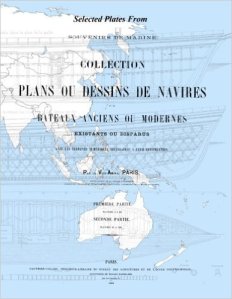
There are a couple of paperback books of selected plates that were published by James E. Hitchcock, which you can find on Amazon.com for less than $10. While the images are scanned and reprinted from an original copy, and the French text is very difficult to read, the book provides a handy reference so you can determine which plates you may be interested in.

51rr-z63tol-_sx384_bo1204203200_

I have found that the San Francisco Maritime Research Center has the set of books available, and will scan whatever figures you need and will email them to you at your request at no cost. You can contact them for details at 415-561-7030 or email them through the Park’s website.

Traditional Japanese Boats through Prints

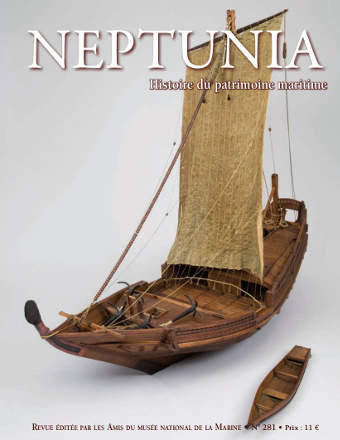
The second installment of a 4-part article on an examination of traditional Japanese boats through famous woodblock prints is in the September 2016 issue of the French journal Neptunia. The journal is a quarterly publication of the Association of the Friends of the National Maritime Museum of France.

couv283

I have yet to see the issue, but I have the March 2016 issue, which contains the first article. Being that it is an examination of the boats through art, the article is filled with some wonderful photos of Japanese woodblock prints. And, while my ability to read French is limited, a scan through optical character recognition software (free online), and Google Translate, make it possible to understand the majority of the text.

couv281

I’ve been in pretty close email contact with the author, Mr. Jean Pierre Mélis, since late Summer, and we have been exchanging and discussion the subject of Japanese watercraft pretty regularly. I highly recommend taking a look at the articles if you can. Check your libraries for availability or purchase single issues directly from the Association here. Ω