Building a Hozugawa Ayubune Model in 1/10 Scale – Final

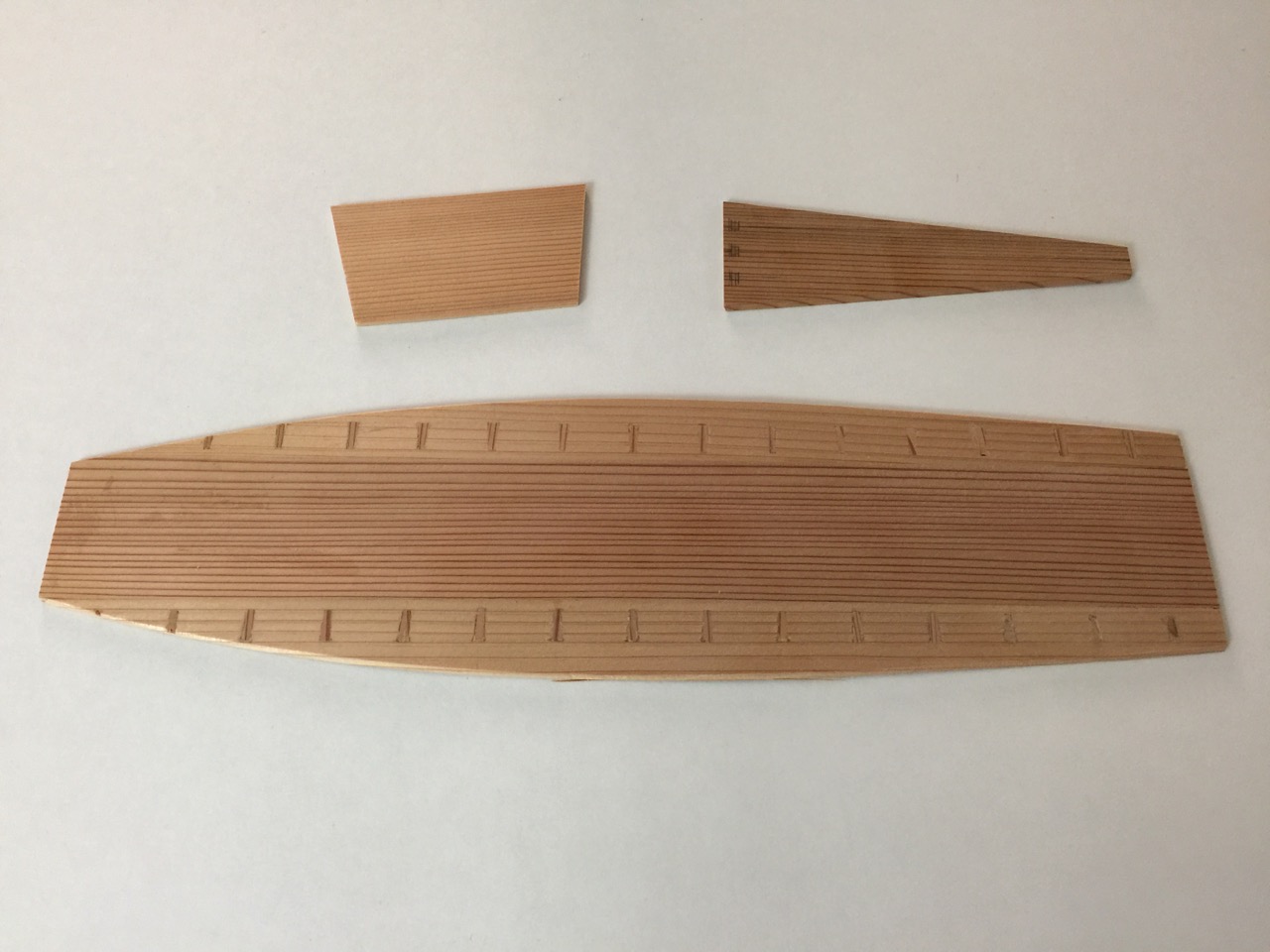
This is the completion of my 1/10-scale model of the 15-shaku ayubune. This began with the cutting of the beams. I made the smallest beam at the bow, called the tsunatsuke, 1.5-sun square. The other two main beams I made 3-sun wide and 2.5-sun thick. I didn’t have any sugi of the necessary thickness, so I had to use two pieces glued together. I put the seam on the side of the beam in hopes that would make it less visible.

I used the beams as a guide to help me size the cutouts in the hull, which I cut with my Japanese Hishika, Super Fine Cut Saw, that I got from Zootoyz. It worked really well for this.

I found a supplier with the exact same saw in the U.S., but the cost for the saw was more than what Zootoyz charges, even when you add the international shipping. The one thing with this saw is that it cuts so easily, you have to be careful not to cut too much. For the final trimming of the notches, I used a scalpel.

First, I notched out the hull for the bow platform, called the omoteamaose, and the stern platform, called the tomoamaose. These were the easiest to deal with, since they are at the ends of the boat. So, I dealt with these first.

It was simple enough to add the omoteamase using a 3mm wood. I pre-cut the piece to roughly the correct size by inserting the piece into place and tracing out the extents in pencil. I could then glue the piece into place and sand away any excess using a large sanding block. Continue reading

Building a Hozugawa Ayubune Model in 1/10 Scale – Part 5

Progress continues with my 1/10-scale model of the 15-shaku boat used on the Hozu river, northwest of Kyoto. I’m 6 months into the build, but I have certainly not spent a great deal of time in actual construction. Mostly, I’ve been contemplating how I was going to accomplish each task of the build. Things are progressing quickly now.

Ayubune model with former clamped to the baseboard fixture

With the new fixture holding things in place, I taped a piece of cardstock into place to trace the shape of the hull planking. I rough marked the outlines of the bottom, bow plank, and transom on it. The planking will be cut oversized, so getting the exact shape isn’t really necessary, except to make sure that the wood I cut is large enough, but not too wasteful of my limited wood supply.

Next, I cut four straight strips of 3mm sugi on my table saw about 1 shaku wide and 16.5 shaku long. There are two hull planks on each side of the boat, but unlike many other wasen designs, the planks fit flush together, so the sides of the boat are perfectly flat. So I glued up the planks into two side-by-side pairs.

Continue reading

Building a Hozugawa Ayubune Model in 1/10 Scale – Part 4

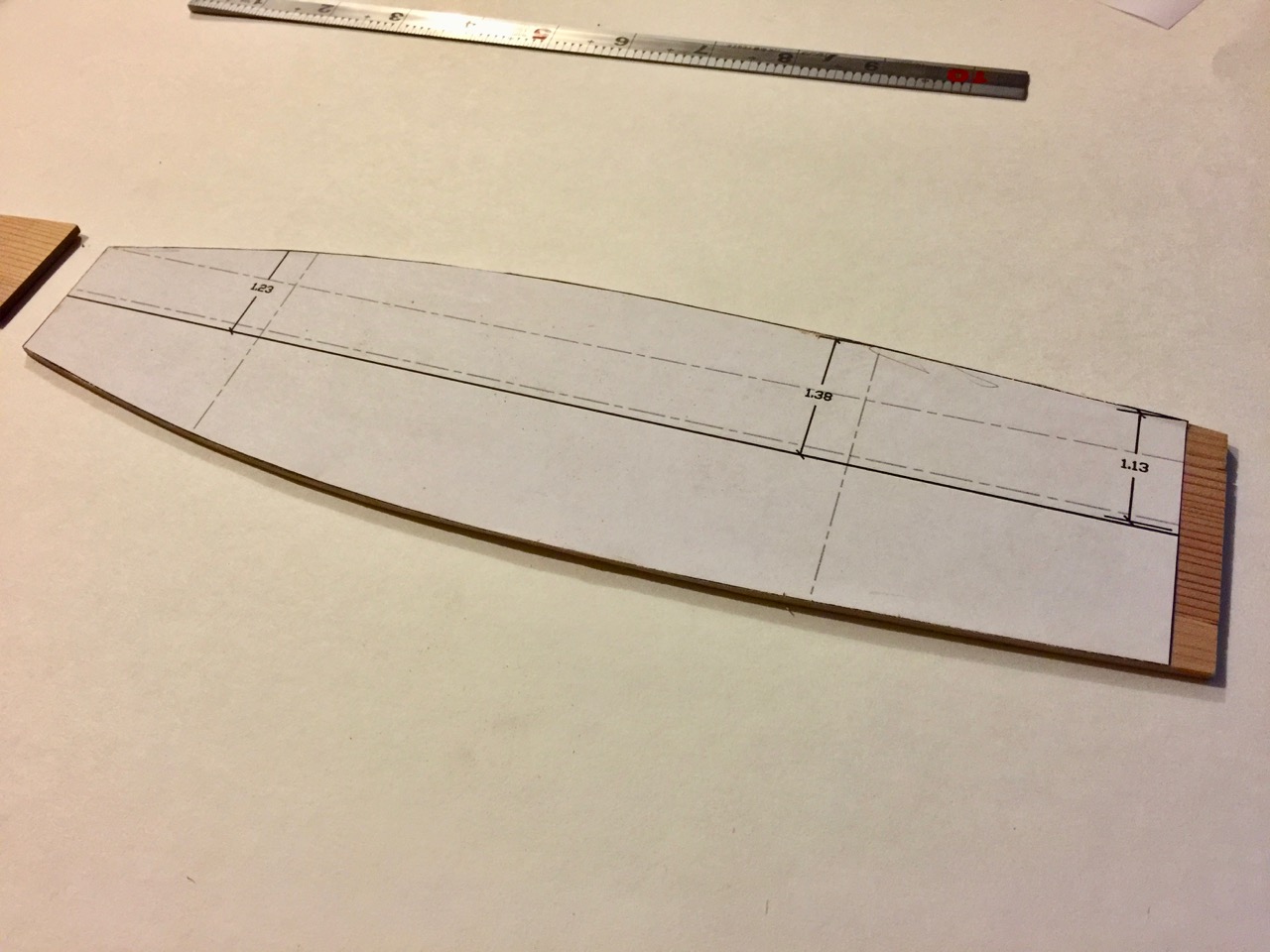
Something I didn’t mention last time was that I had cut a paper pattern for the shiki and rubber-cemented it to the assembled . I then cut the wood to the pattern. Since the plans I have show the lines to the inside of the planking, I left the pice a little long at the aft end, as the bottom extends slightly beyond the transom.

Shiki with pattern, and cut to shape, with extension at the aft end

The final pieces are ready for assembly. As on the real boat, the hull planks will be shaped in place. Note that I also cut mortises for the bow plank, which I’m told is called the omote no tate ita. I’m going to have to find the kanji to make sure I know what this really means. The same goes for the transom, or tomo no tate ita, but in other regions is called the todate.

Continue reading

Building Woody Joe’s “Hobikisen” Mini-Kit

The Hobikisen is a unique type of side trawling fishing boat that operated on Lake Kasumigaura, northwest of Tokyo. As with most mini-kits produced, Woody Joe’s mini-hobikisen isn’t particularly detailed , but it makes for a really nice looking model that’s simple enough to build that you could do it on a weekend, depending on how nicely you finish it.

You can buy one from the online seller Zootoyz here: http://zootoyz.jp/contents/en-us/p1681_Woody_JOE__Mini_Series_HOBIKI-BUNE___Wooden_Sailing_Ship_Model.html

If you really like mini-kits, you should also check out Woody Joe’s mini-yakatabune, house boat, and their mini-utasebune, another type of side trawling fishing boat used on Japan’s norther main island of Hokkaido. Both are also available at http://zootoyz.jp

catopower's avatarShip Modeler

DSC03574

As a mini-kit, there is not much of a story to tell about building Woody Joe’s Hobikisen kit. I’ve given an out of the box review already and beyond that, it’s just a matter of several hours spent on building the model over the course of about 10 days. As I mentioned before, I got this and the Utasebune kit through Zootoyz as soon as I found out that the kits were released.

Starting the build was easy and I got through the first half of the 12-page instruction book in a just a couple hours. As with my Higaki Kaisen kit build, I chose to treat the beautifully aromatic Hinoki wood with a wood dye mixture using TransTint wood dyes. A bottle of this stuff is pretty pricey, but it goes a long ways. I have three colors I mixed for the Higaki Kaisen and I used a…

View original post 1,092 more words

Building a Hozugawa Ayubune Model in 1/10 Scale – Part 3

My illustration of the ayubune, based on plan drawing by Douglas Brooks (with his permission). Position and size of details shown here are only approximate.

Counting up all the major planks, transom, and beams, this Ayubune model will be made up of only 17 pieces:

  • Shiki (bottom) – 3 pieces
  • Omote no tate ita (bow plank)
  • Todate (transom)
  • Tana (hull planks) – 4 pieces, 2 on each side
  • Omoteamaose (bow platform)
  • Tsunatsuke (lit. rope attachment) – Bow beam
  • Omote no funabari (forward beam) – 3 pieces
  • Tomo no funabari (aft beam)
  • Tomoamaose (stern platform)
  • Transom Strake

In addition to these, I made patterns in paper for obtaining the proper angle for the lay of the hull planking. I have yet to decide at this point just how I’m going to fix the hull planks to that angle. But, there’s time before that needs to be deal with.

My second illustration of the ayubune. I’ve labeled most of the parts here, but haven’t been able to get the names of all of them yet.

Continue reading

Boatbuilder’s Workshop model by Yukio Nakayama

Yukio Nakayama recently posted some photos of a traditional boatbuilder’s workshop on his blog site. There are several photos worth checking out.

He also posted some images of what appears to be a lumber yard, where a small craftsman appears to be preparing to split a log to cut into planks.

I realized later that the boat outside is a bekabune. The boat inside, I think is an utasebune. In fact, that’s exactly what they are. If I had bothered to pay more attention, the label under the title of his blog page identifies them.

I sent this image to Douglas Brooks, who says that Nakayama-san had worked at the Urayasu Museum and think he had helped build the full-sized versions there.

These are posted on his blog, Edowasen, also on WordPress. Click the link below to view:

via 仮屋 — 木造和船 中山幸雄の世界

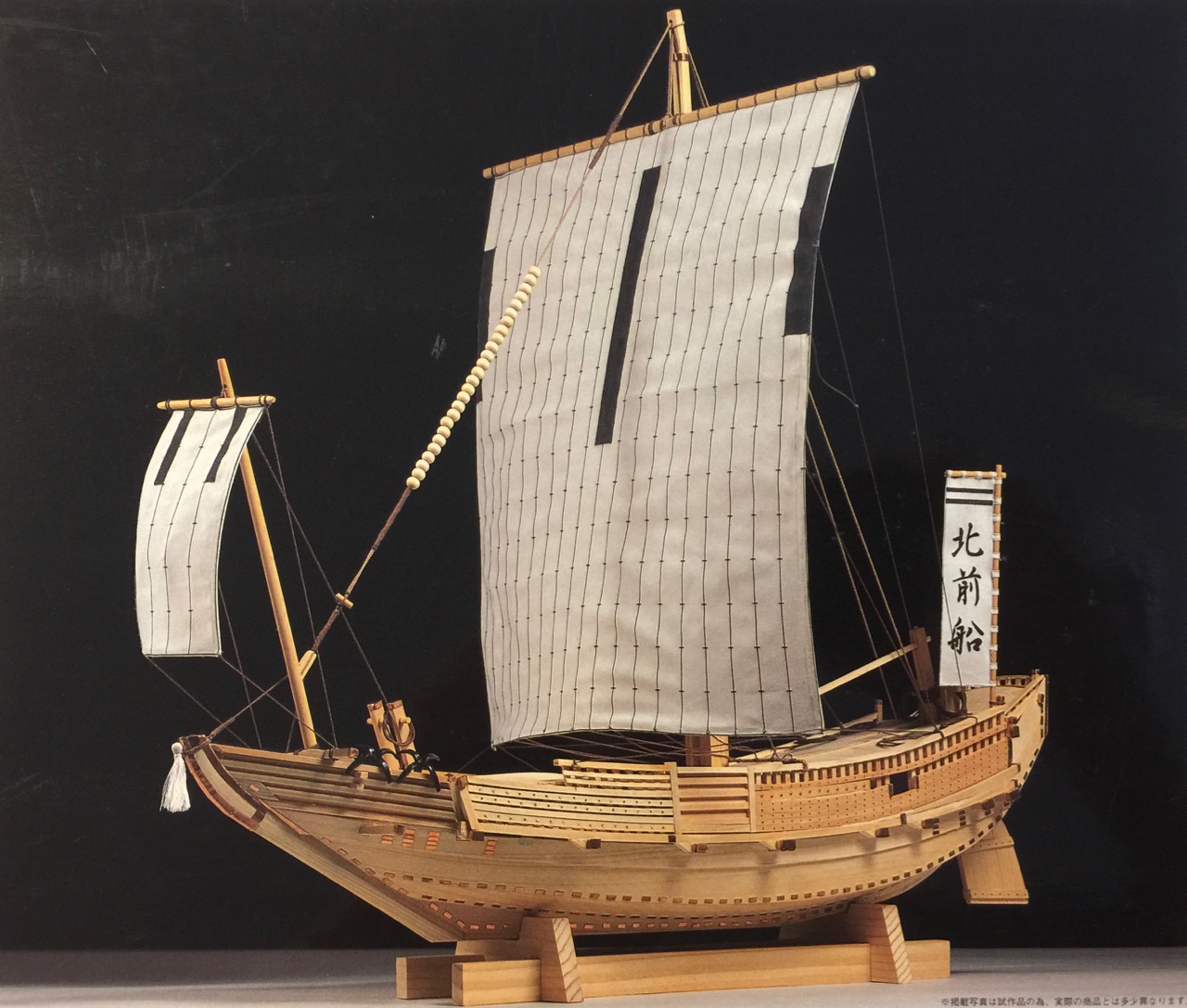
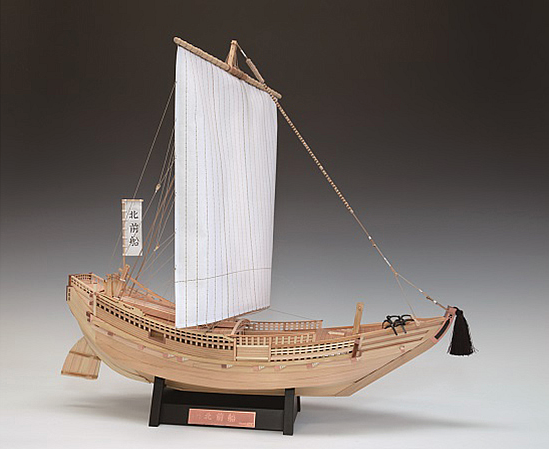
Woody Joe’s Old Sengokubune and Kitamaebune Kits Now Collectors’ Items

Before the advent of laser cutting, Woody Joe made two bezaisen kits, the Sengokubune and the Kitamaebune. Both were described as 1/30 scale models, but were in actuality about 1/60 scale. These kits were supplied with milled wood parts, wooden sheets, strips and dowels. Construction was more what one would expect from a wooden model kit.

Woody Joe’s old Kitamaebune kit.

Woody Joe’s new 1/72-scale laser-cut Kitamaebune kit.

Continue reading

Building a Hozugawa Ayubune Model in 1/10 Scale – Part 2

The ayubune is not my first Japanese boat scratch build attempt. The first was the Urayasu bekabune, a boat designed for working among the seaweed nets of Tokyo Bay. But, being unaccustomed to scratch building Japanese traditional boats, I was wresting with a few construction problems and a couple errors, so I set it aside. Then, I found the ayubune on Douglas Brooks’s blog.

The ayubune is a very simple design. There is no cutwater, the side are flush, making for a very simple shape, and there few details beyond the hull and beams. This seemed to be an ideal subject to start with.

Mr. Brooks recorded 3 sizes of ayubune in Japan, a 24-shaku, 18-shaku and a 15-shaku boat. I noted that he built at least 3 of the 15-shaku boats and posted photos and notes on their construction. At a traditional 1/10 scale, the 15-shaku boat would be just about 15″ long, which seemed like a good size.

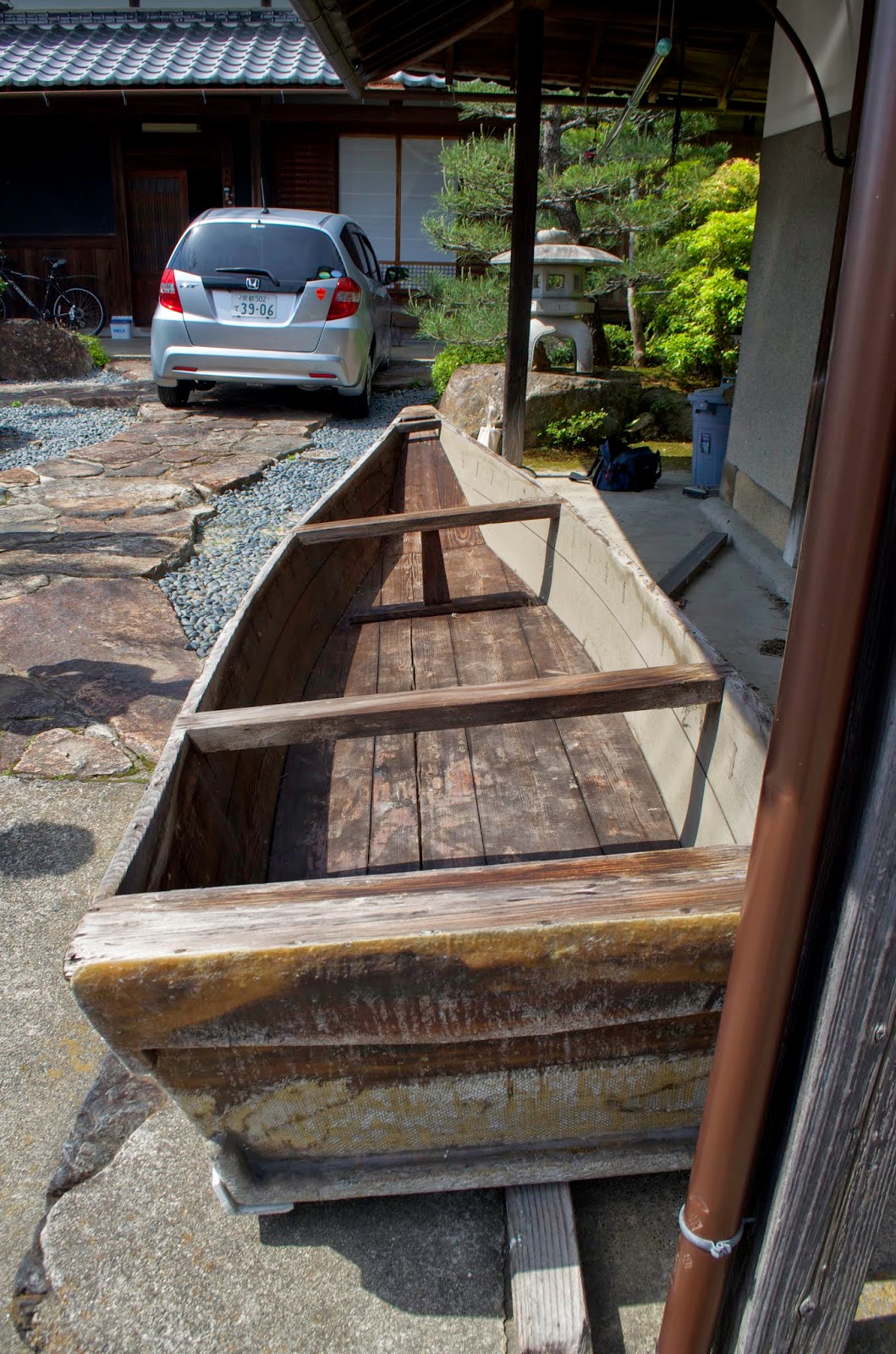
Large, 24-shaku fiberglass ayubune usee to give river tours to tourists on the Hozu river.

15-shaku ayubune on which my drawings are patterned. Photo courtesy of Douglas Brooks.

Continue reading

Urayasu no Bekabune (浦安のべか舟)

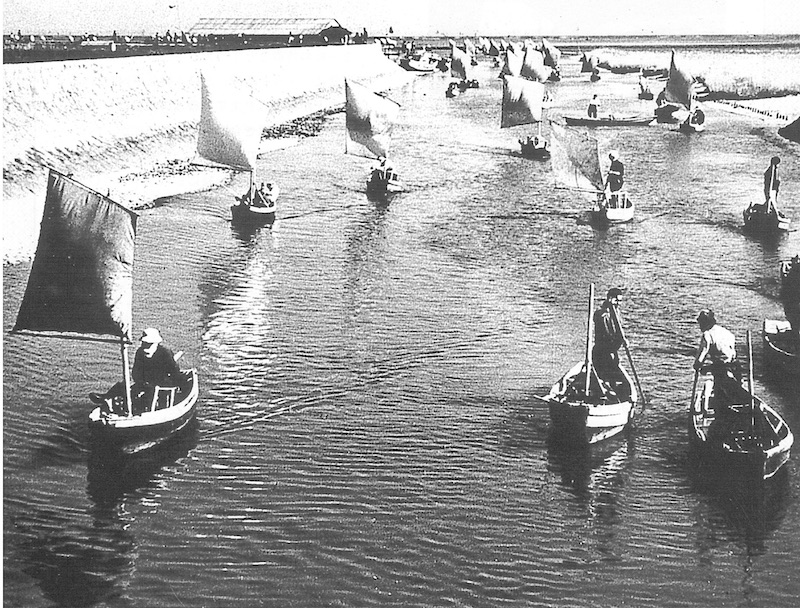
The bekabune, sometimes referred to simply as a beka, is a small, one person, flat-bottomed boat used for gathering seaweed. In the city of Urayasu, which was once on Tokyo Bay until landfill projects left it far from shore, there were two types of bekabune used. A smaller one, sometimes called a noribeka, that was used strictly for gathering seaweed, and a slightly large oner which was also used for catching shellfish. Large numbers of these boats operated out of Urayasu, while similar boats operated out of the rival port to the west at Ōta.

Many of these boats were designed to allow the use of a mast with a single spritsail. Others, which I believe were expected to be towed or carried aboard the large net fishing Utasebune, were only designed to be paddled.

At one time, large numbers of bekabune operated out of Urayasu on Tokyo Bay. Photo courtesy of the Urayasu City Regional Museum.

Continue reading