Building the Kamakura Period Umi-Bune, Part 5

Umisen Model

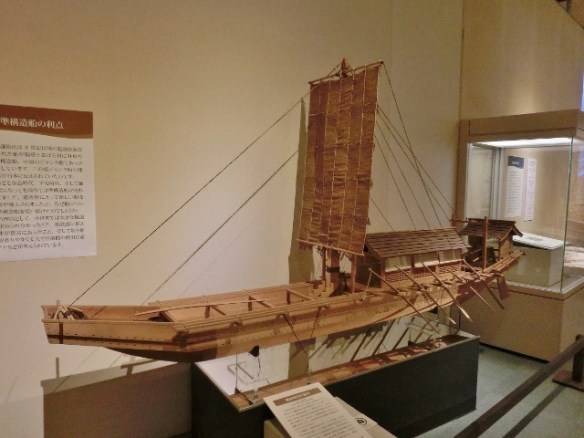
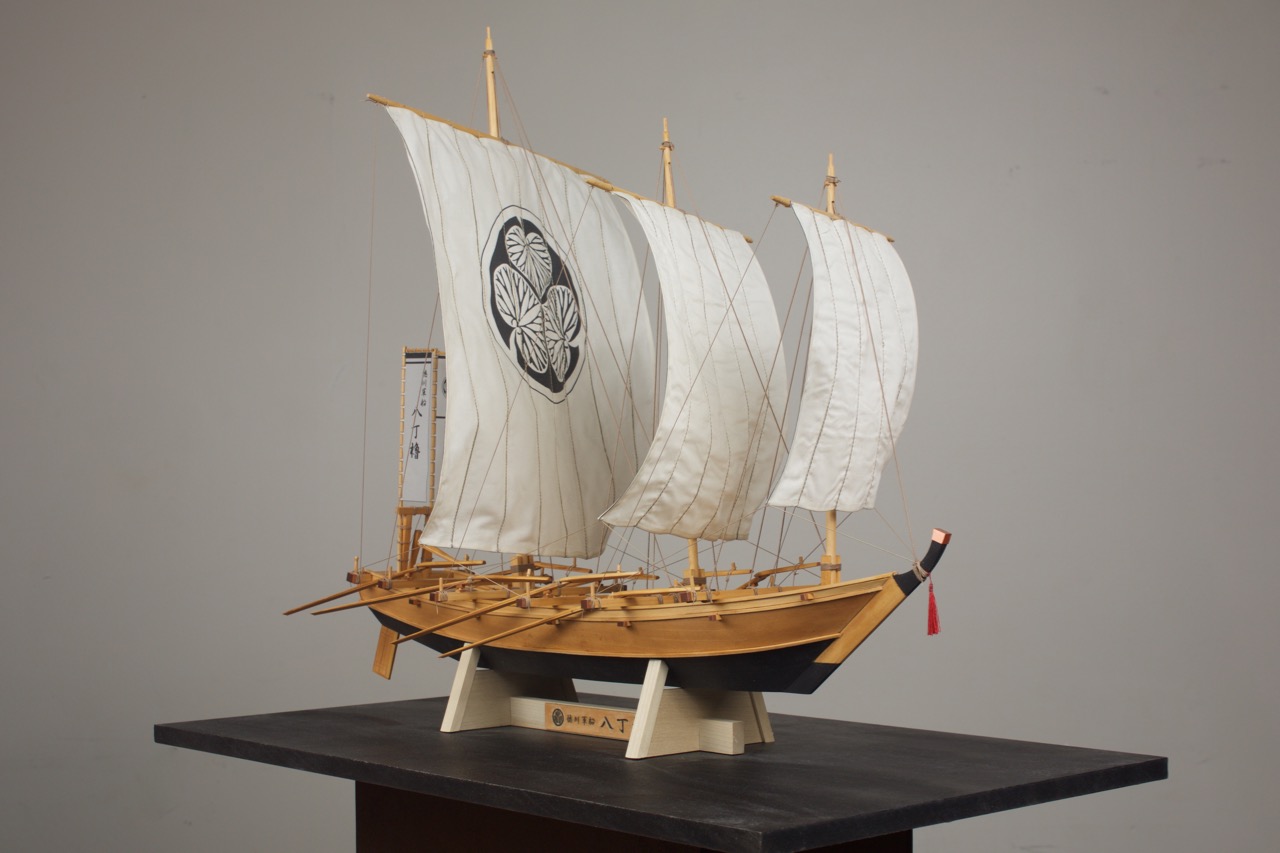
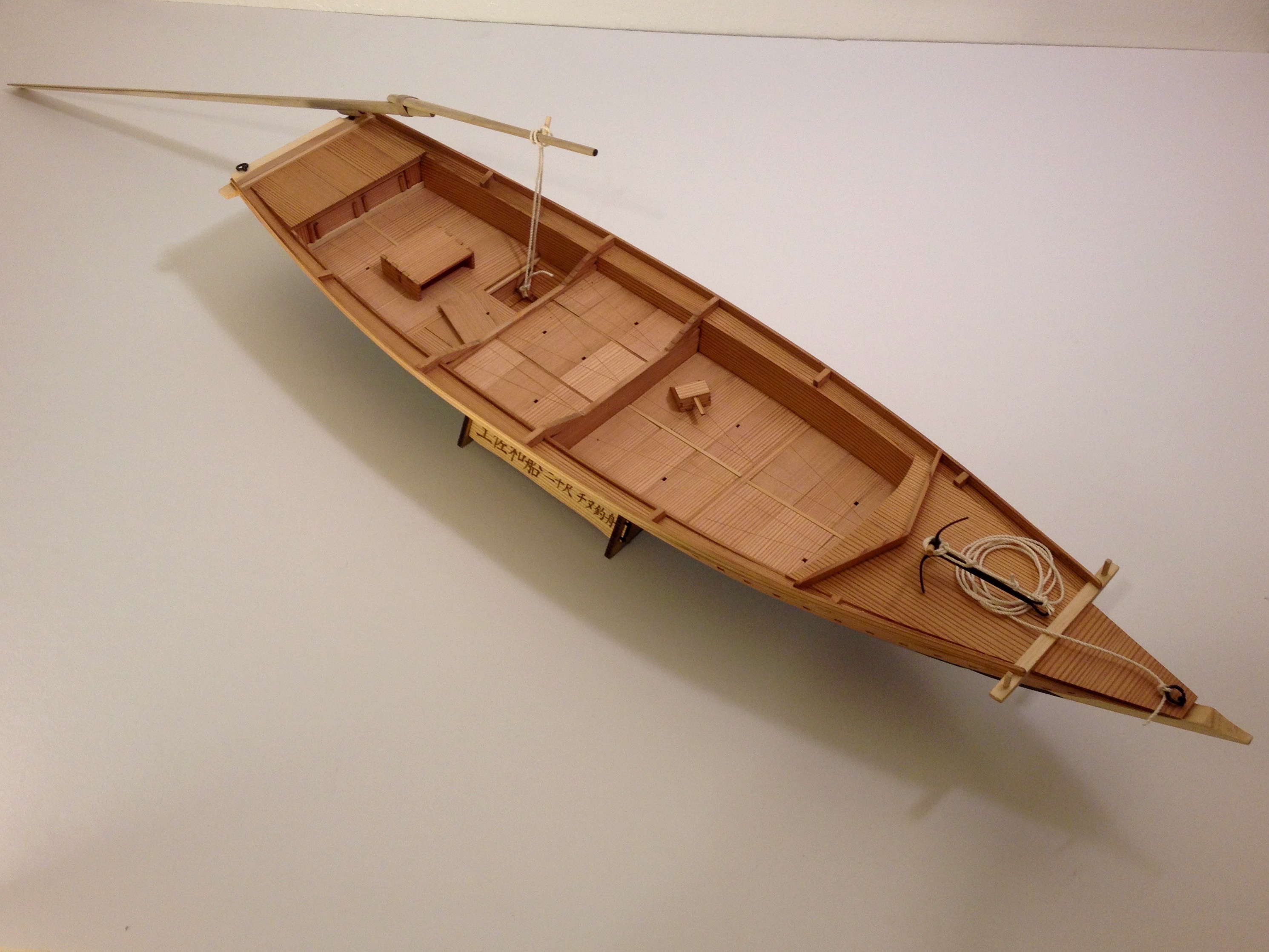
Model on exhibit at Kanagawa University. Photo by Masami Sekiguchi.

 No, that’s not my model. This 1/10-scale model of a Kamakura period umi-bune is on display at the Kanagwa University, which is home to the Institute for the Study of Japanese Folk Culture. The photo was taken by my friend Masami Sekiguchi, who is one of two Japanese ship modelers I met with in Tokyo last September. The other is Norio Uriu, Both gentlemen are members of The Rope, the Japanese ship model society in Tokyo.

I had been corresponding with Mr. Uriu for over a year, as he is a friend of fellow ship modeler Don Dressel of the Ship Modelers Association in Fullerton, California. Don was building his model of a Higaki Kaisen at about the same time I was building mine, and at some point, he put me in touch with his friend in Japan, Mr. Uriu.

When I travelled to Japan, I made arrangements to meet with Mr. Uriu for dinner in Tokyo and he brought along his daughter Hanako, who helped with our discussions, and Mr. Sekiguchi, who has been helping me understand information on Japanese ever since.

Continue reading

Building the Kamakura Period Umi-Bune, Part 4

Kitano Tenmangu

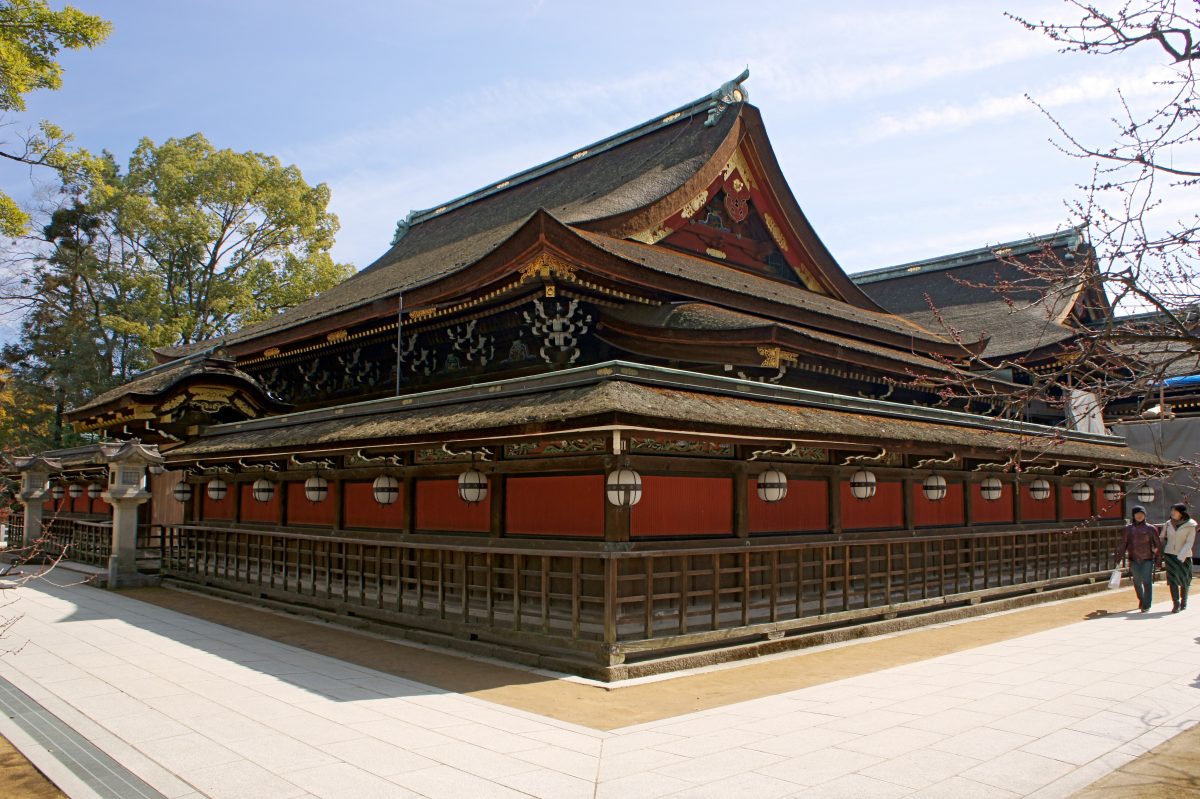
Kitano Tenmangu – Shinto Shrine in Kyoto. Photo from Wikipedia.

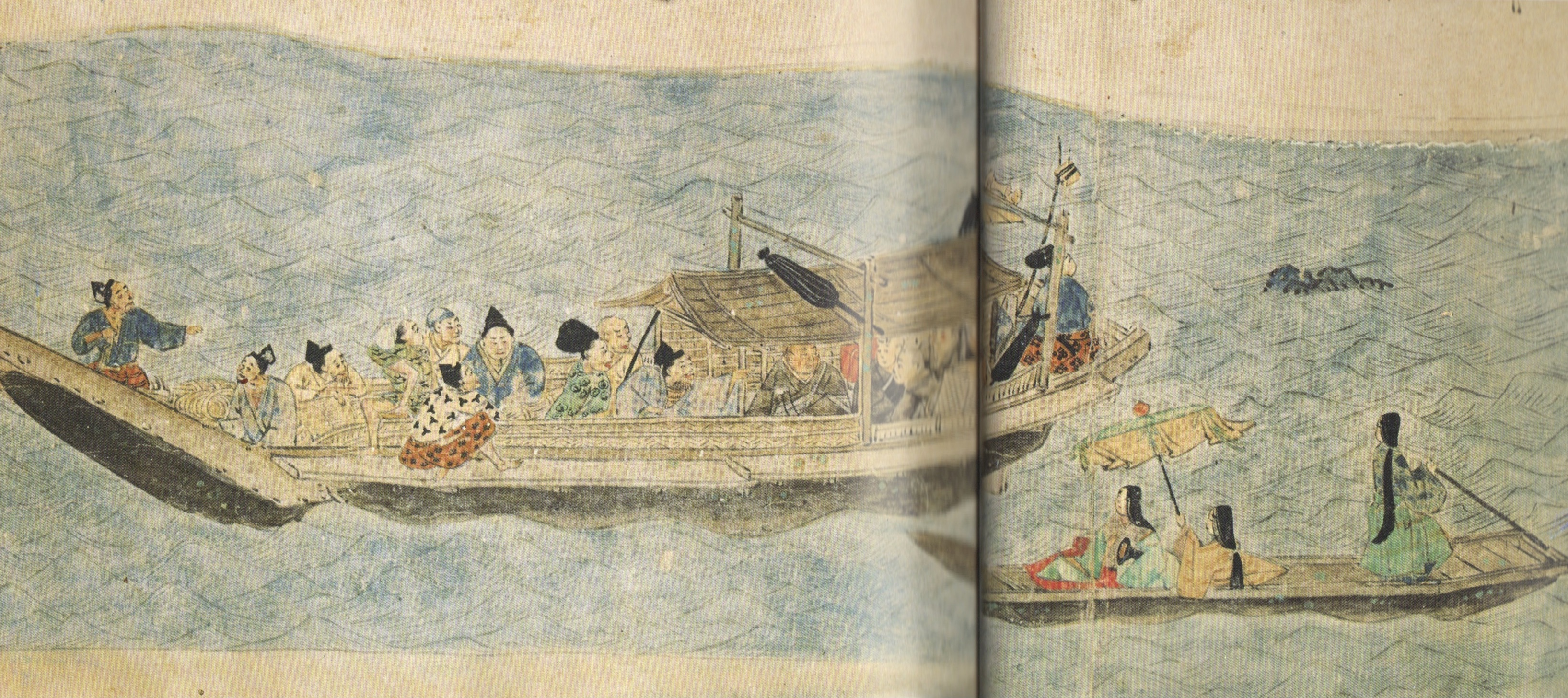
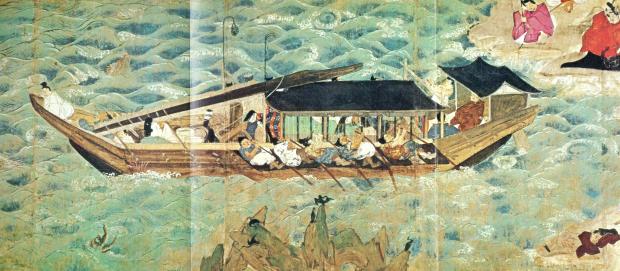
About a week ago, my ship modeler friend in Japan, Mr. Sekiguchi, explained a little about the Kitano Tenjin scrolls that depict the Kamakura period Umi-bune, and I have since re-read through online information on the subject to get a better understanding.

The scrolls represent the life of Sugawara no Michizane, a scholar and poet in the Heian period (平安時代  794-1185) who rose high in politics in Kyoto, then Japan’s capital. But, he had powerful  rivals in the Fujiwara clan that plotted against him, and he was exiled to Dazaifu on the island of Shikoku, where he died three years later in 903.

Apparently, there was much sympathy for Michizane, and shortly after his death, there were a number of calamities, including a lightning strike within the imperial palace. The emperor’s court fearing that these were caused by the wrath of Michizane’s angry spirit, decided to placate him by deifying him and erecting a shrine. He was given the Shinto name of Tenjin, and the shrine was built at Kitano, and known as Kitano Tenmangū.

Continue reading

Building the Kamakura Period Umi-Bune, Part 3

image-2

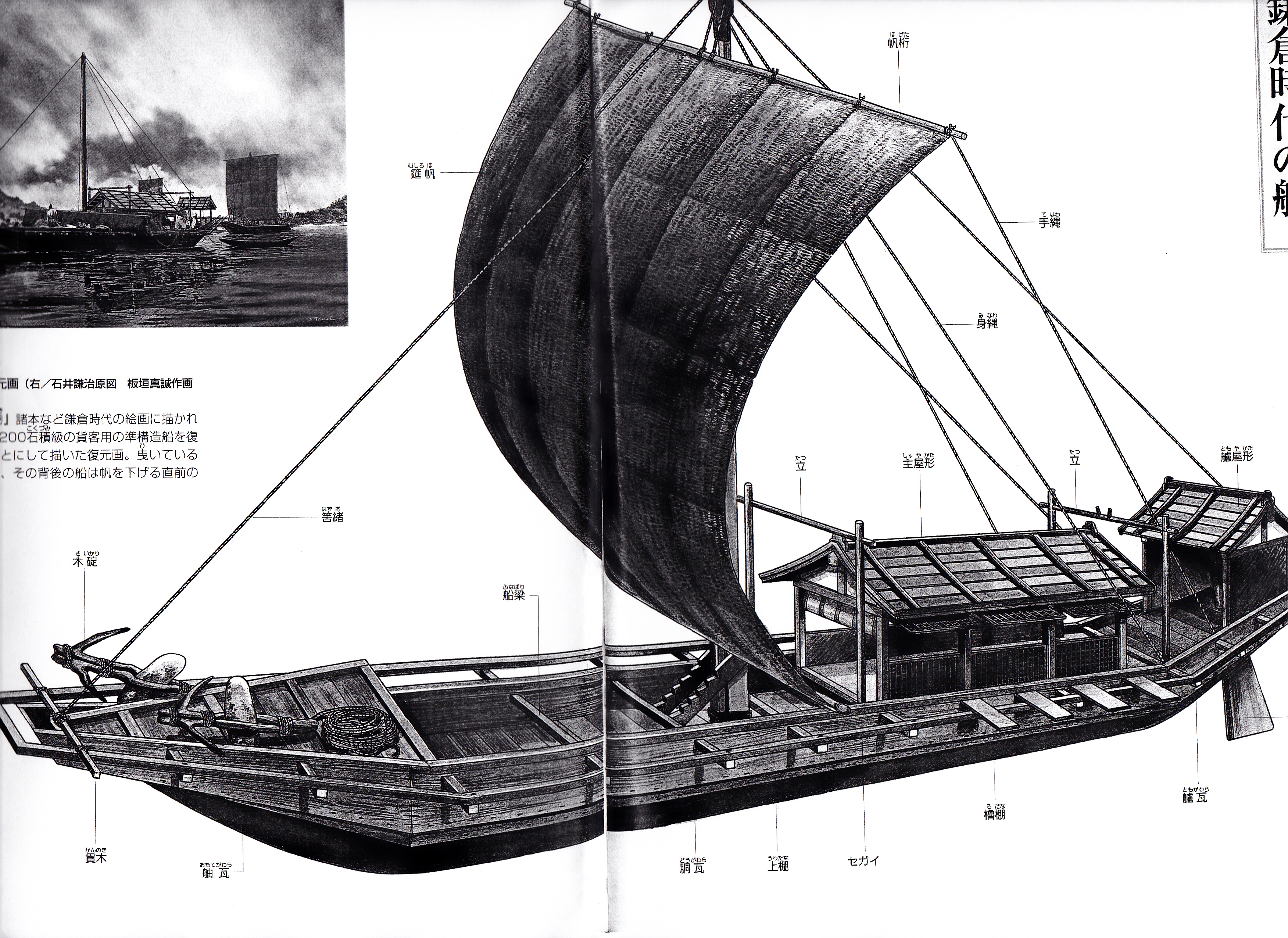
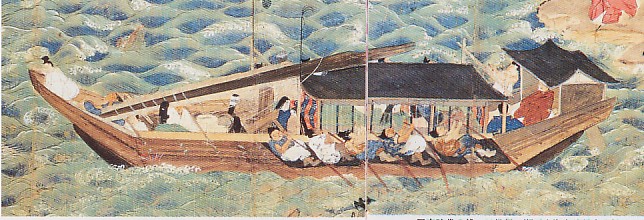
The largest source of Kamakura period boat information appears to be in 13th century picture scrolls that appear in books and on the Internet, but I really know very little about the scrolls themselves. What they depict includes a lot of boats with hull designs very similar to the ship I’m modeling. These are semi-structured ships or junkozosen (準構造船) with dugout-style hull, which have been built up with hull planks. Most of those depicted are river boats, but some appear to be sea boats.

I recently found a great sketch of a large sea ship on a blog site. I believe this was scanned from one of Professor Ishii’s books, but it’s not one that I have.

25e52592258c25e8258825b9-1

This image is very similar to a less detailed drawing I have in my books. The ship depicted here varies only slightly from my model in that this image shows a peaked roof called a kappa at the bow. It also has only a single rail outboard of the hull, but it extends all the way around the bow. It also may be a somewhat smaller ship, given there are only 4 rowing platforms on either side, where my model will have 6.

A couple things I like about this image in particular is that it shows a roof design on the main deck house that is clear and makes sense to me. Note the boards that make up the roof run along the length of the roof. The drawing I’ve been working off of, shows the boards running perpendicular to these – not that it’s wrong, but that it requires an underlying structure that’s different from what I would naturally build. Also the front of the house appears to have a simple roll-up screen, no door or solid panel.

Continue reading

Building the Kamakura Period Umi-Bune, Part 2

Illustrated History of Japanese Traditional Boats

Illustrated History of Japanese Traditional Boats

As I mentioned last time, I’m using drawings in one of the books I ordered from Japan earlier in the year. There were three I bought at the same time using a buying service called Buyee.com. This allows me to shop on Japanese online stores more easily than ordering directly from the stores since the purchases are done in English. It doesn’t help with product descriptions, but once I find something I want, buying it is fairly easy.

This service also receives the items using local shipping service in Japan, inspects the products, and ships them internationally to me.  There is a small fee in addition to the shipping charges. I’ve only needed to use the service a couple times, but has so far worked well.

Continue reading

Building the Kamakura Period Umi-Bune, Part 1


ship2-kitanotenjin

I’m no expert on Japanese history. In fact, my interest in traditional Japanese boats is a way for me to learn more about it. Up to this point, I’ve primarily been interested in watercraft from the Edo period, which was from 1603 to 1868. This era began with the rise of the Shogun Tokugawa Ieyasu who established the capital of Japan at Edo (now called Tokyo). But, there are some interesting, large watercraft that I’ve been intrigued by as well, and many of these date back to earlier times.

Some of the ships I’ve been looking at were fairly complicated, and my information on them is clearly incomplete. But, there was one that stood as a simple design, with enough information available for me to feel that I could scratch build a model. This ship, referred to only as a large umi-bune or sea ship, dated back to the Kamakura period, which lasted from 1185 to 1333, and saw the rise of feudalism, the establishment of the Shogunate government, called the bakufu, two invasion attempts by the Mongols, and the spread of Buddhism. Continue reading

My First Wasen Scratch Builds

I’ve just about come to the end of the available wasen model kits, having built the higaki kaisen, hacchoro, yakatabune, mini-yakatabune, and mini-hobikisen kits from Woody Joe, plus the Tosa wasen kit from Thermal Studio. There are still a couple kits I haven’t gotten to yet, but now that I’ve had a chance to see a number of models, replicas, and actual examples in Japan, it seemed like it was time to take what I’ve learned and chart a new direction.

I decided to begin with the Urayasu bekabune, which was the subject of one of Douglas Brooks’s apprenticeships. I’ll post the details about this shortly. But, I want to mention that it has been a bit of a struggle for me at times because I’ve never scratch built any of this type or scale before. Also, I’m trying to build this model as close as I can to the way the actual boatbuilders built the full-sized boats. This has led to some issues that I’ve had a difficult time resolving.

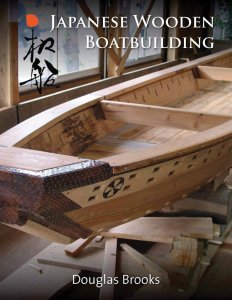
book_cover

Click image to order your copy

Certainly, I’m not going to be using tiny flat nails to fasten the planks together, but I do want to simulate the mortises. Also, with no internal framing, I’ve had to work out methods for getting the angles of the hull correct, as well as shaping the planks and getting a decent fit between them.

img_2815

bekabune and itasebune models at the Urayasu Museum

So, in the meantime, I’ve been interested in larger ships, but detailed information there is tough with anything except 19th century bezaisen. I’ve been curious about the smaller godairikisen, which carried goods along shorter, nearer to shore routes. Also, there are the warships of the Sengoku or Warring States, period. But, these are complicated designs, and decent drawings are few.

But, there is one vessel design that I’ve found interesting, and I’ve seen models of it in museum photos. There is also a decent drawing in the books of Professor Kenji Ishii. The boat is a Kamakura period umi-bune, or sea boat.

umi-sen

Kamakura period umi-bune model. Photo by Douglas Brooks.

This was a trade boat used in the late 12th and 13th centuries on large rivers and inland seas. The ship’s hull is a semi-structured type, which is based around a dugout log to which hull planks are added, allowing the ship to sit deeper in the water and to carry a larger cargo.

I’ve decided to experiment with scratch building the Kamakura period ship, as I think I can tackle the subject. So, I’ll be posting updates on this model as well. Stay tuned.


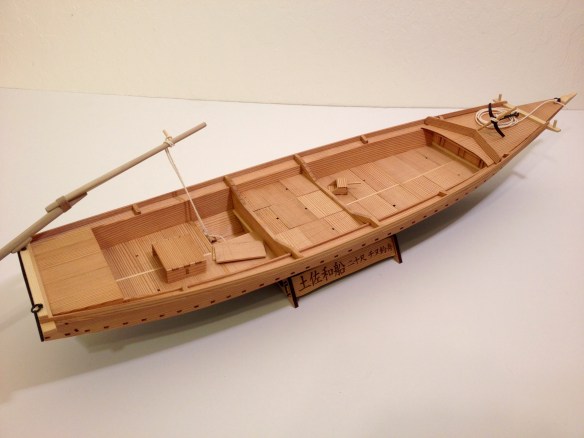
Buying the Tosa Wasen Kit

11224318_1065597873491157_360908378737328974_n

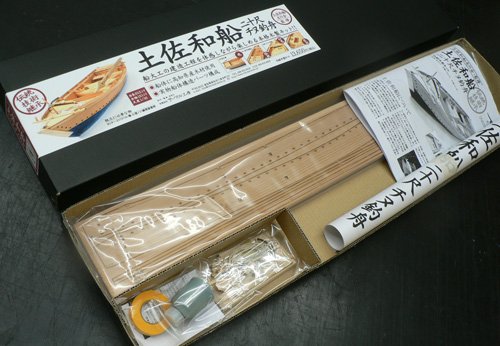
If you’re looking to buy the kit, there is good news! There is a faster, less expensive method than trying to get it through Amazon-Japan where I got mine. I found out that manufacturer will sell direct to the USA for a very good price. To buy from the manufacturer,  send an email to the company: info@thermal-kobo.jp. For buyers from other countries. I don’t know what his policy is, but you can always ask.

51PcOLPqd-L

Price for the kit is 13,000 Yen. Shipping is via EMS (A Chinese Express Mail Service that ends with a USPS delivery) for 2,400 Yen. Payment has to be via Paypal, sending to the email address above.

This is a really good price. Makes the whole thing with express shipping only about $150. I went ahead and ordered a second kit.

The only thing that I’m not so sure about is that the kit is shipped in its own box, but wrapped with a bubblewrap bag. It’s a long box, so it seems like it would be easy to bend in half. But, I received the first kit this way and it was delivered just fine. Then again, I generally have good experiences with the US Postal Service here.

It looks like I might have been their first international sale of this kit, as the owner posted a picture of the kit shipping out to the USA on their Facebook page.

When you order one, please feel free to mention where you heard about it. Ω

Yaizu’s Hacchoro (八丁櫓) Fishing Boat

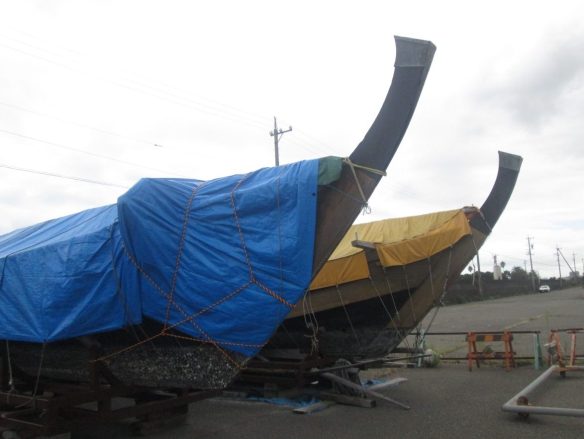
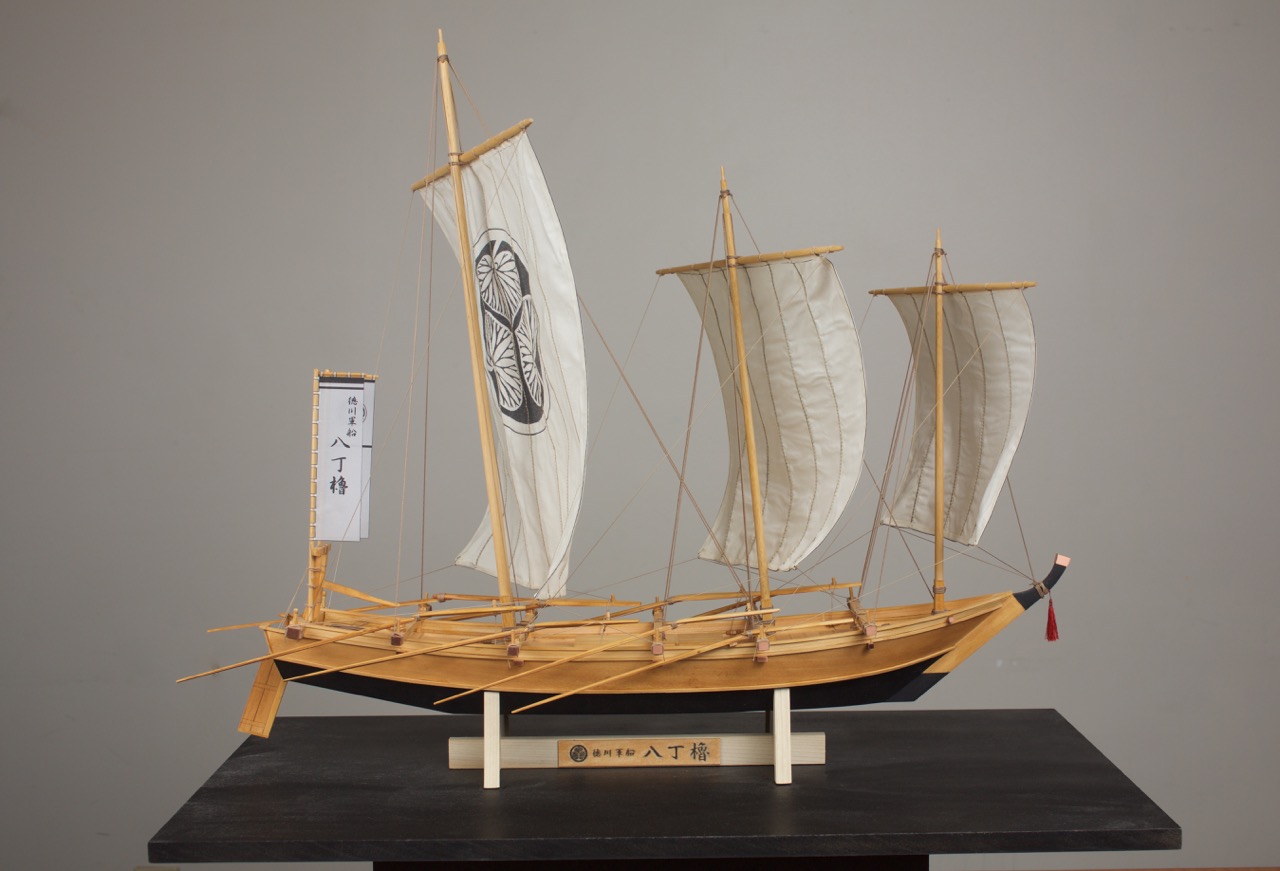
Yaizu is a coastal city on Suruga Bay, 10 miles south of Shizuoka, and about 50 miles southwest of Mt. Fuji. On a clear day, you can see Fujiyama. I visited Yaizu during typhoon season, and the mountain was obscured by clouds. Yaizu is the home of two replica Hacchoro (hot-cho-ro), fishing boats that got their claim to fame as boats of these types were once commissioned as escort boats for the retiring Shogun, Tokugawa Ieyasu.

img_0886

Hacchoro at the port of Yaizu, wrapped up for the season.

The story goes that the Shogun, or military ruler of Japan, liked to hunt game using a falcon. Travel to the hunting grounds required a trip by sea. To provide escort, 24 fishing boats were commissioned. But, the fishermen operating the boats had a difficult time keeping up with the Shogun’s boat due to strict limitations in place on the number of oars that could be implemented on fishing boats – a limitation imposed to limit the military capability of the craft. The fishermen of Yaizu were then granted permission to use 8 oars, which gave the boats their name – Hacchoro, translates to “8 oars”.

Continue reading

Hacchoro – Notes for building the Woody Joe kit

I have completed an initial draft of notes I compiled on building the Hacchoro kit by Woody Joe. The kit is a model of an 8-oared Japanese finishing boat from the area of Yaizu, Japan, which is on the coast, roughly about 100 miles southwest of Tokyo. The boat is a traditional type boat, following the classic 5 sided Japanese construction. That is, bottom, garboard strakes and shear strakes in a hard-chine hull configuration.
994A9695

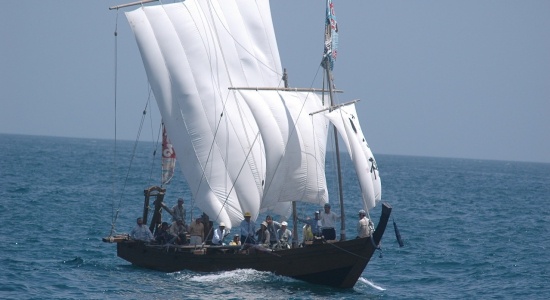
The real boats were roughly 45 feet long and could carry 3 square sails on masts that could be stepped as needed. There are still Hacchoro in existence today, though I don’t know what the total number is like. I also don’t know how they are used today, except that there are Hacchoro races where teams man the boat’s oars to race each other on a short course.

DSC_0077

I am aware of two operating Hacchoro in Yaizu. With the help of a wasen authority in Japan, I have made contact with a gentleman in Yaizu who has offered to show me the Hacchoro there. So, I am now making arrangements to see them in order to record some of their finer details for later use in modeling them. This is part of my Japanese Boat Research Trip that I’m trying to raise some funds for. If all works out, I will take lots of photos and record the details.

For now, anyone who is building Woody Joe’s Hacchoro kit can download a copy of my notes.

But, in using these notes, you must accept that these are just suggested guidelines and there are always the possibility of errors in the document. Also, the document includes my own translation of the text of the Woody Joe instructions. I am not an expert in translating Japanese into English. Use them to give you more confidence in using the kit instructions, but you must agree not to hold me responsible if you end up gluing a part into place wrong. The kit is pretty well buildable using just the illustrations in the instruction book. But, sometimes it helps to know what the text says. Also, note that there are a lot of labels in the instructions, and I’m only translating the descriptional text and not all the individual labels.

Download Hacchoro Notes and Translated Instructions

Of course, if you have any questions about the document, just send me a comment with your email address and I’ll answer as best I can. Ω

Building the Tosa Wasen – Part 6

The next step in construction of the Tosa Wasen kit is the addition of the deck boards.

This part of the build turned out to be a lot tricker than I’d expected. This is an area where you really want to take your time, and it’s easy to want to rush through it. The deck boards serve as a deck to walk (or sit) on and work on, but they are also designed to be removable, allowing the fisherman access to storage space under the deck. This allows the deck to be kept clear and free of clutter, making for a tidy looking boat.
IMG_1936

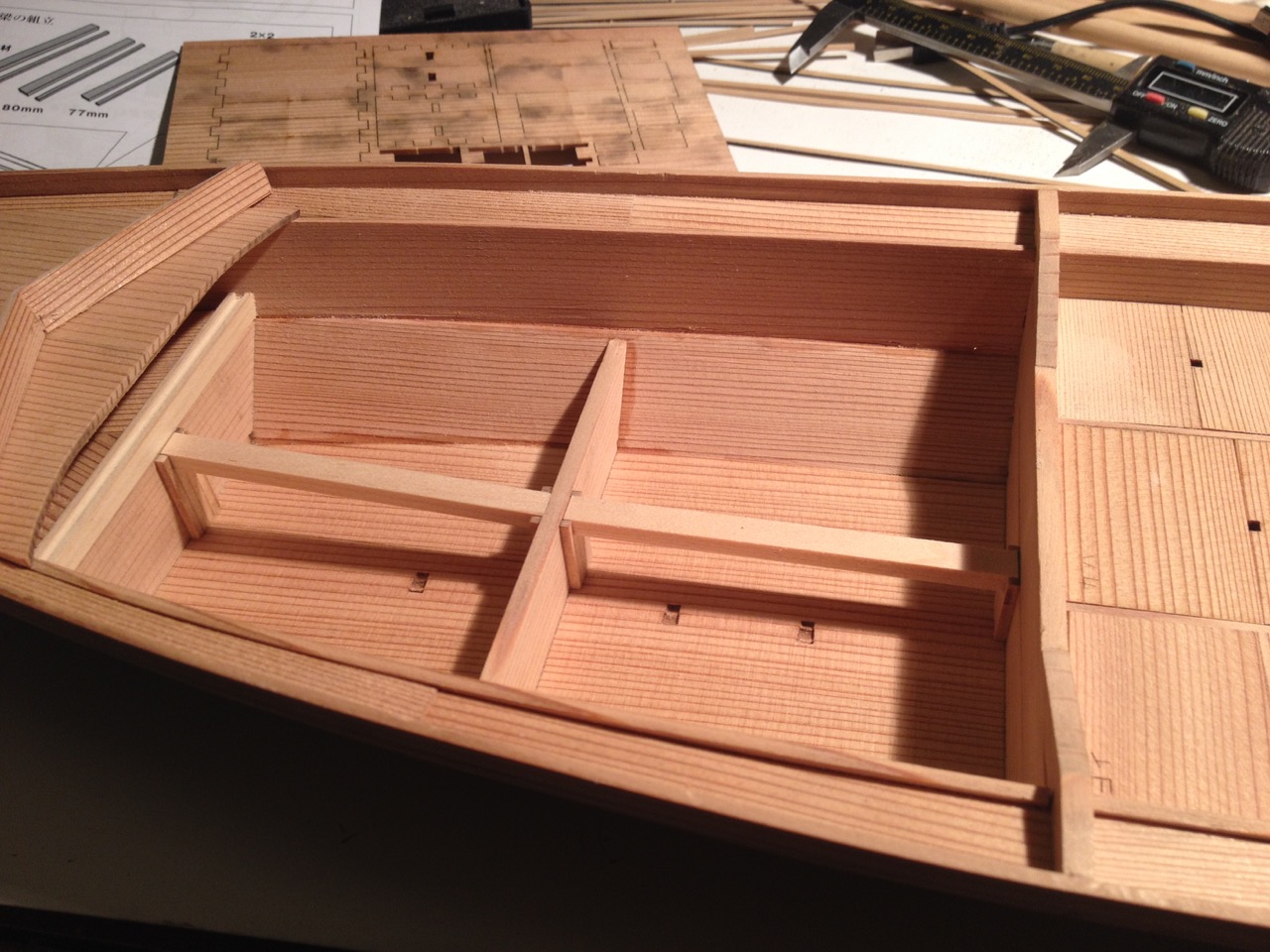
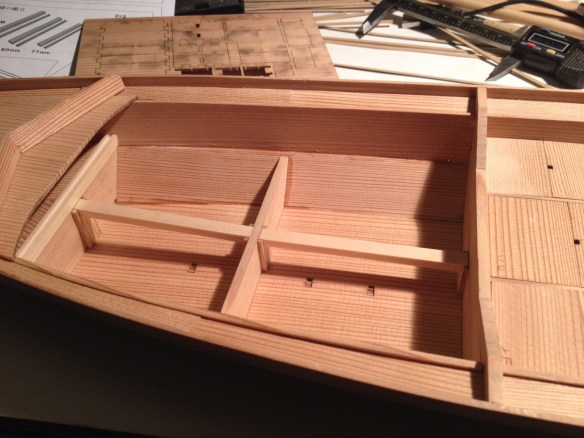
Beam supports glued into place. The beams are sanded to fit, but I left them unglued, so they’ll remain removable. Ledges are then cut to length and glued to the beams for the deck boards to rest upon.

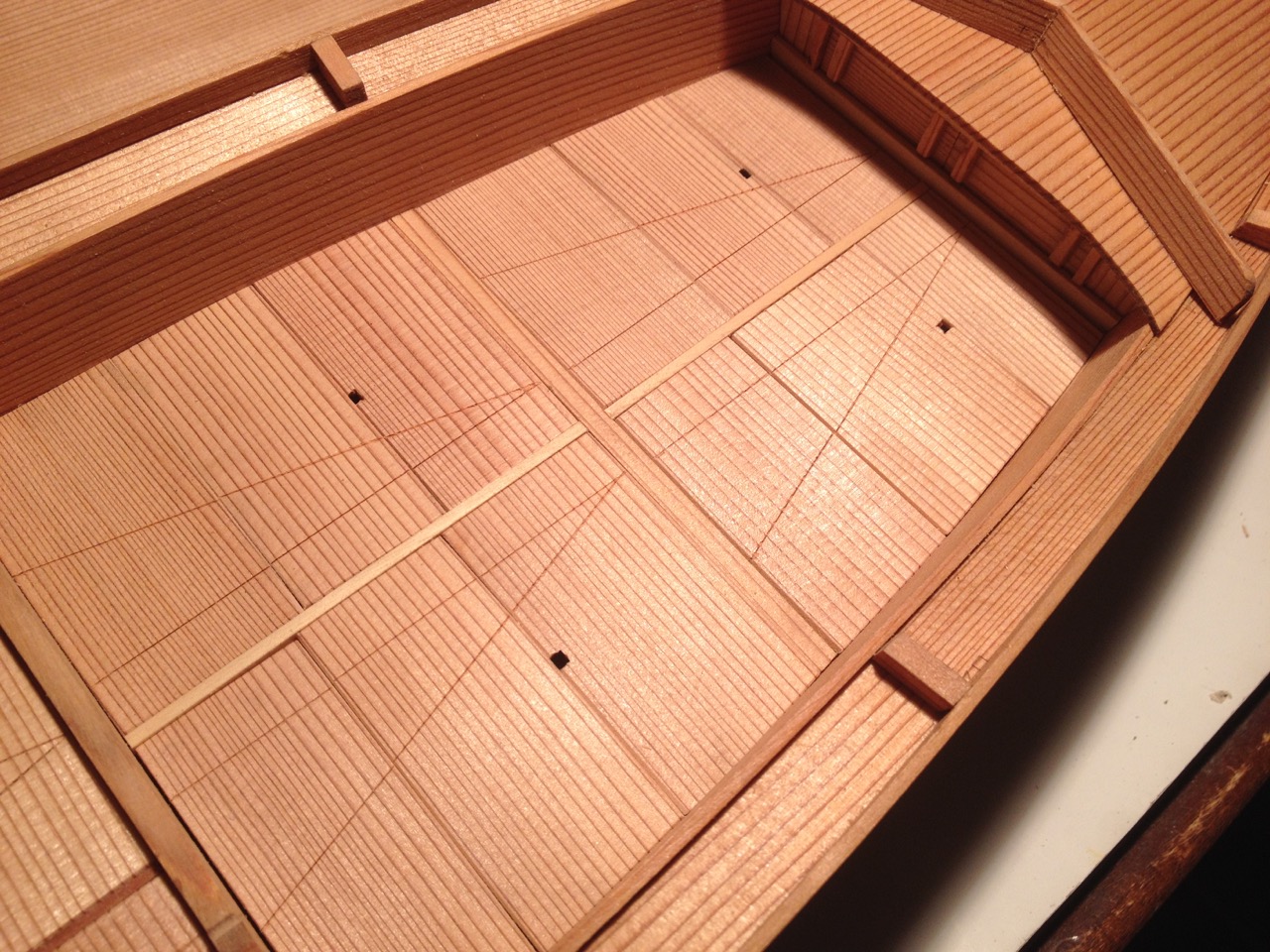
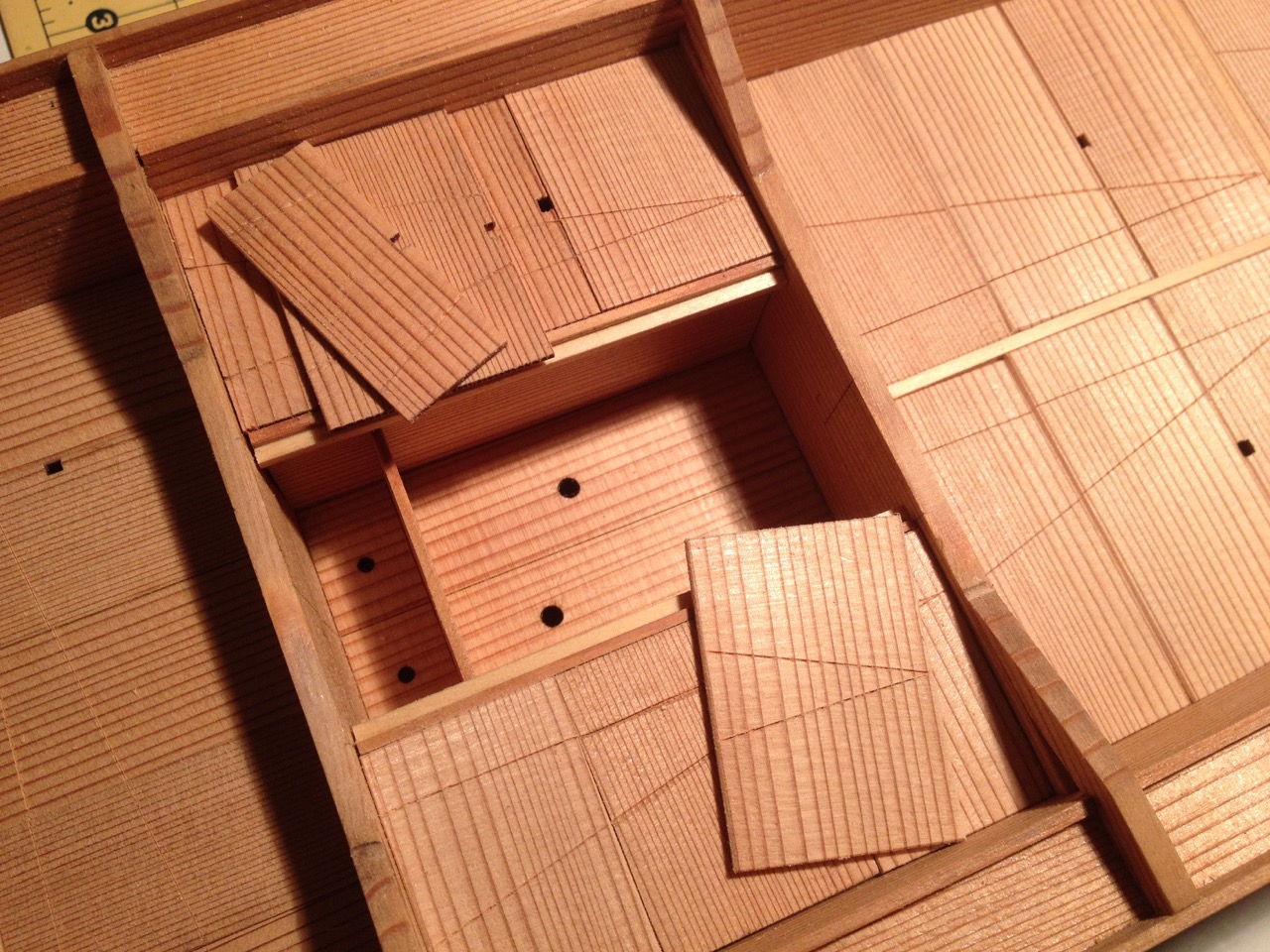
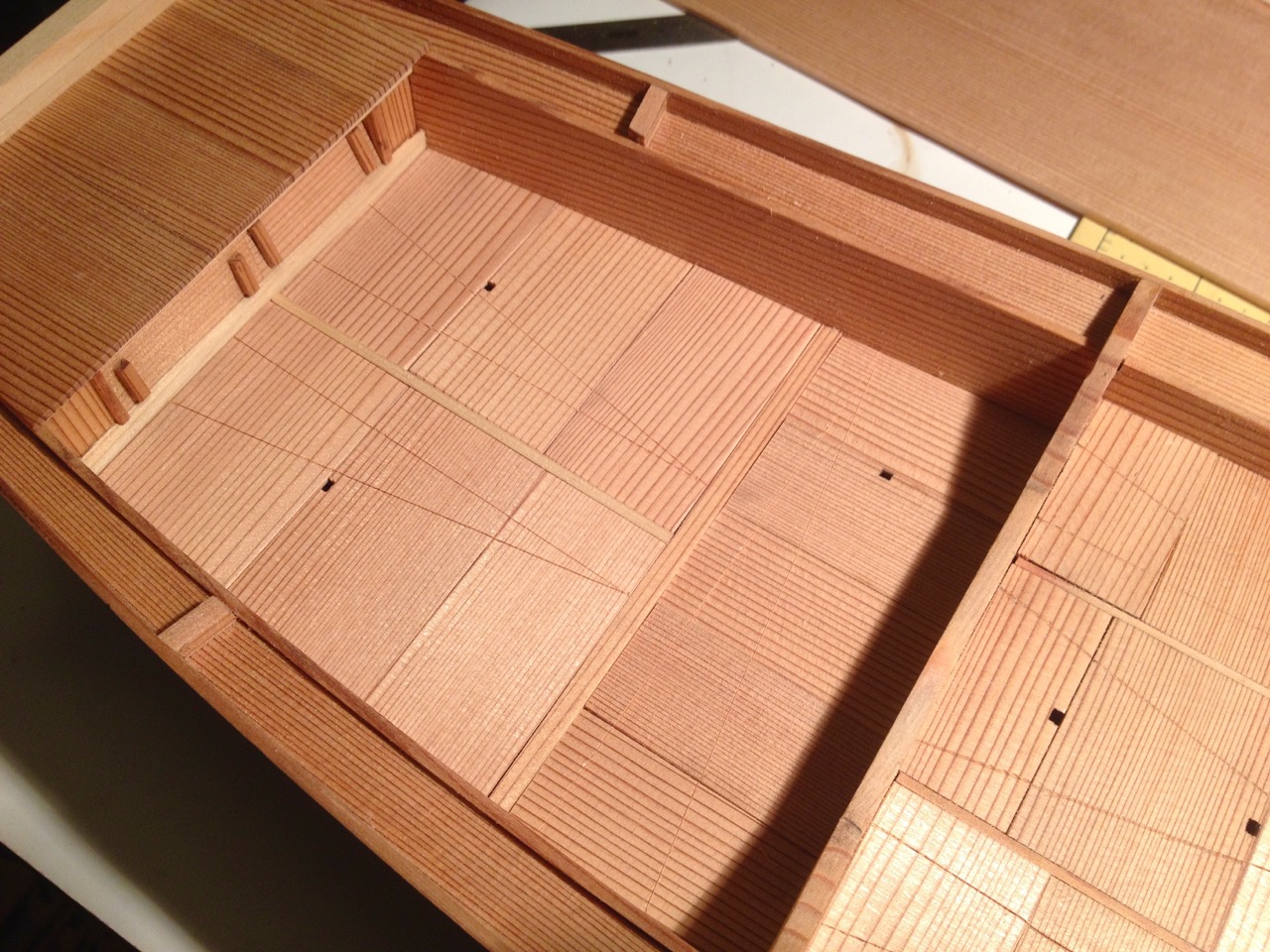
The deck boards themselves are rather interesting in that they are made so that almost no two are alike. Each one can only fit in one location, with the possible exception of the boards that cover the live wells in the center of the boat. But, given that there are many boards, it would seem to be something of a puzzle trying to figure out which one fits where. To make the positioning more obvious, there are two lines scribed into the top of the boards.
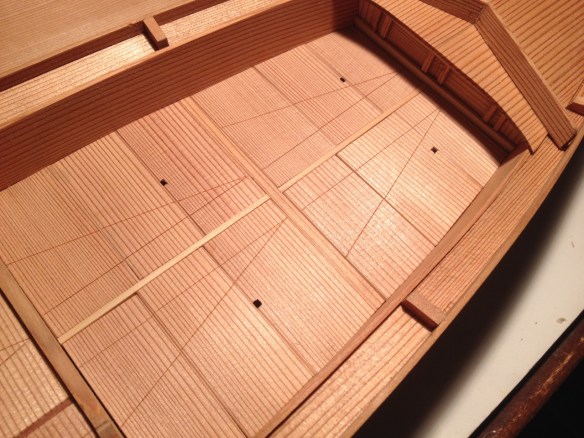
IMG_2035

The lines form a sort of an arrowhead with the point at the front of the forward most board, and each compartment has a 3 or more deck boards covering it, with its own arrowhead pattern scribed on it. This makes for a quick recognition of the order of the deck boards and also makes it easier to keep from mixing them up, kind of the way a picture is printed on jigsaw puzzle pieces.

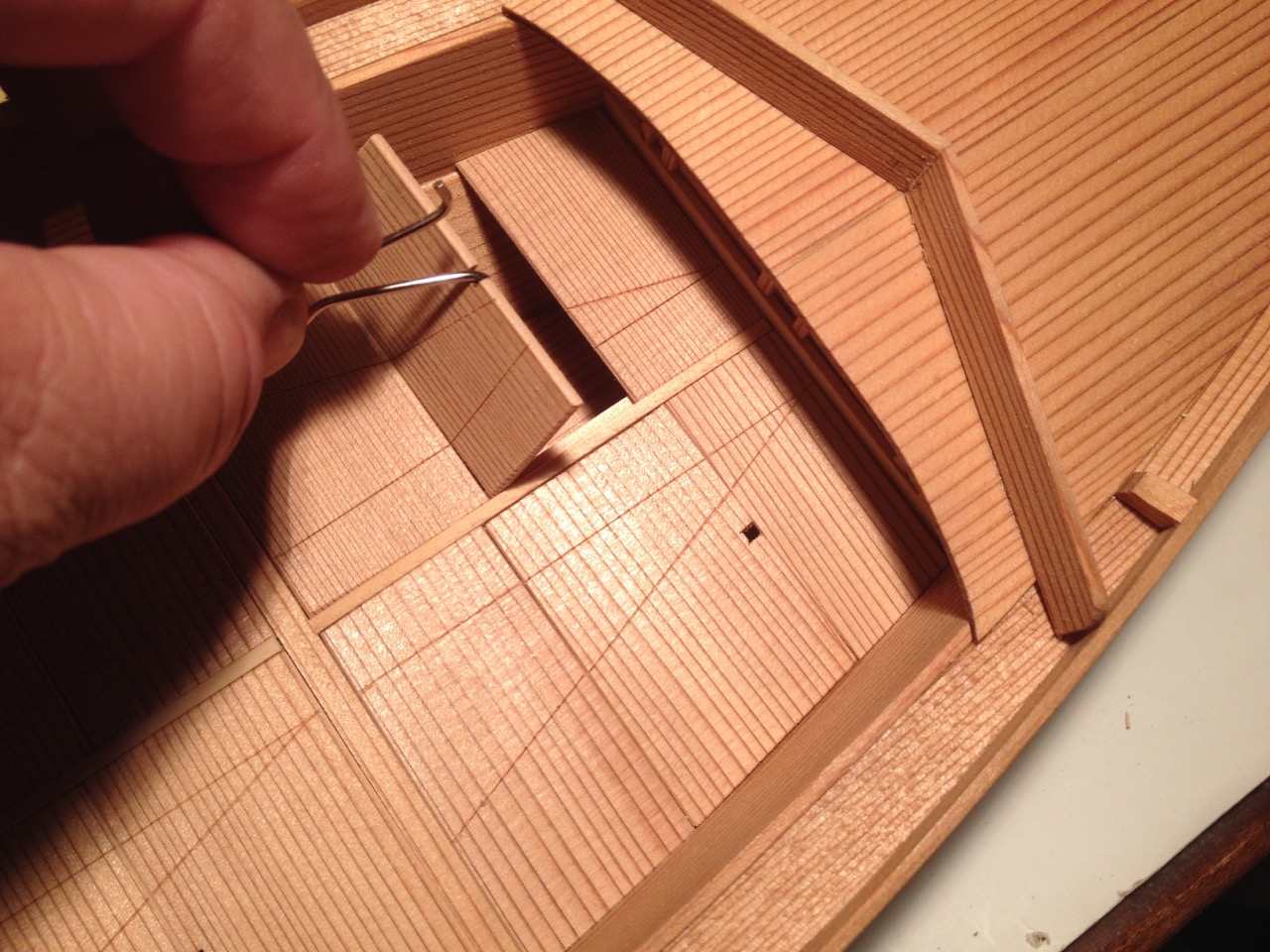
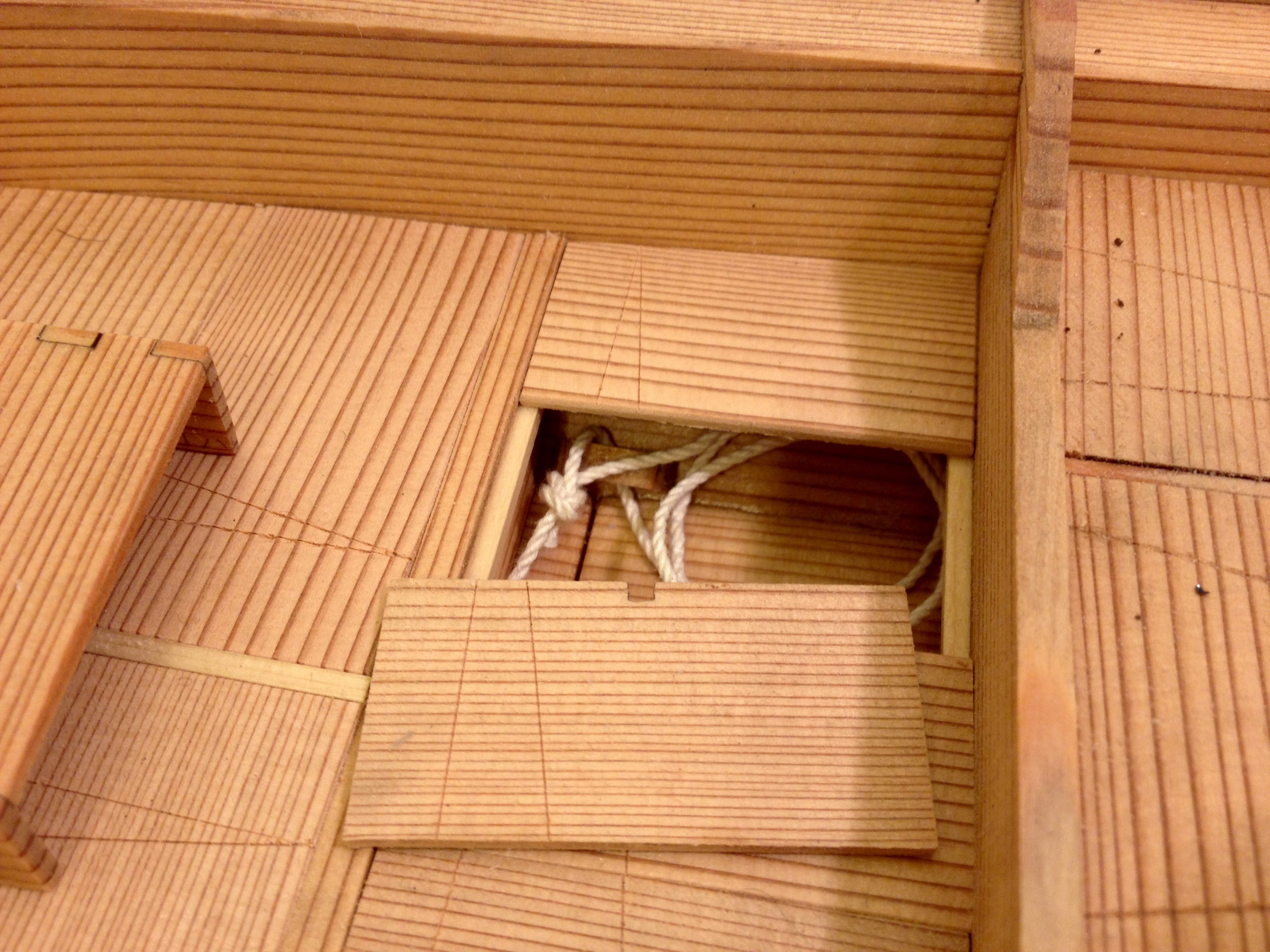
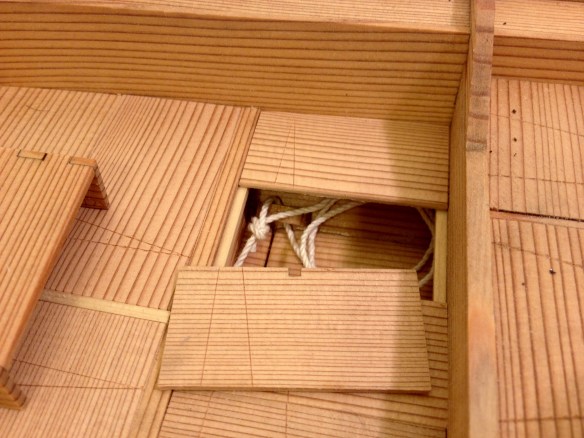
Note that one deck board of each set has a square notch cut into one edge that serves as a finger hole to make it easier to pull up the boards. This also makes it easier to pull up the boards on the model using a paperclip or other small tool.
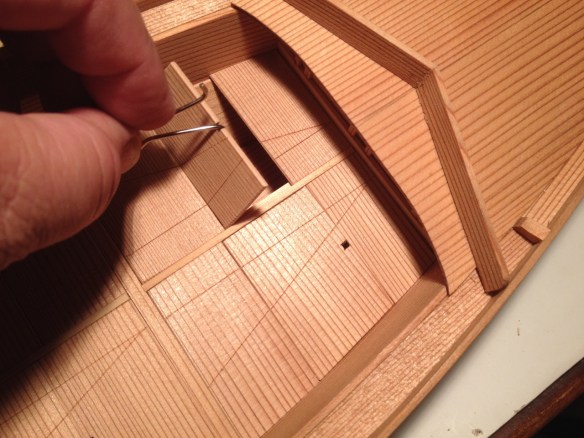
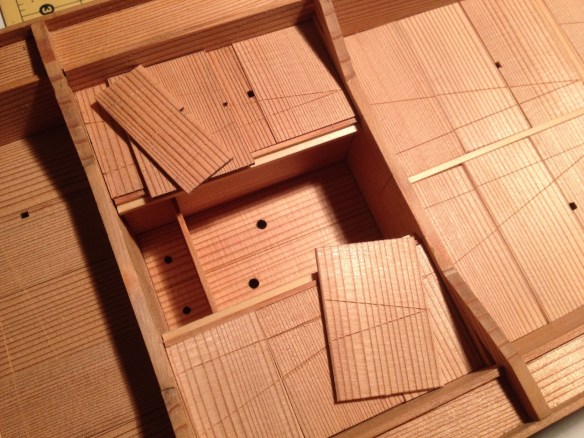
IMG_2041

IMG_2042

Live wells with holes in the bottom of the boat, open to the sea. The large one is for the catch, the small one is for bait.

The kit supplies the deck boards as laser-cut pieces, which look they’d make it easy to put them into place. However, in order to allow some variation between models, these parts are cut over-sized, so they have to be sanded to fit. This turned out to be a far trickier than I’d expected, as the Japanese cedar is pretty soft, and really wanted to avoid small gaps between boards. In fact, I used every scrap piece of cedar that I could find in the kit in order to finish the deck boards.

If you’re building this kit, Proceed Very Carefully here.

The next step was to scribe the patterns into the deck boards. I found it easiest to take each group of deck boards which are part of the same pattern set and marking the endpoints on the first and last board, then scribing them all together as a group. I lined them up against a straight edge to keep them in alignment (each set of boards has at least one straight side).

This was pretty much the last of the difficult work. There is one more step that was a little tricky, but in a completely different way, and that was the next step. For those following along with the kit instructions, this is step 33. This involves the construction of the covers for the cargo compartments in the bow and the stern of the boat. If you haven’t built the model kit yet, I would consider doing this work in steps 17 and 18 before the compartments are decked over. It seems it would just be a lot easier.
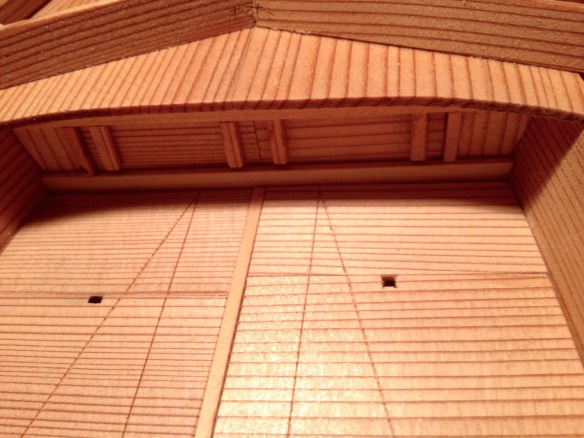
IMG_2033

I’m not positive why the kit has you build the compartment covers at this stage instead of earlier in the build. Possibly, it’s because the real boat might be built in the order shown in the kit. That would be okay, except that trying to reach in with your finger and thumb to get the covers into place without knocking parts into the compartments is pretty difficult.

The kit includes a small pair of wooden tweezers that you’re instructed to build for handling those compartment doors. In the long run, these will be necessary in order to be able to remove or replace these doors without damaging the soft wood.

Completing the Rail

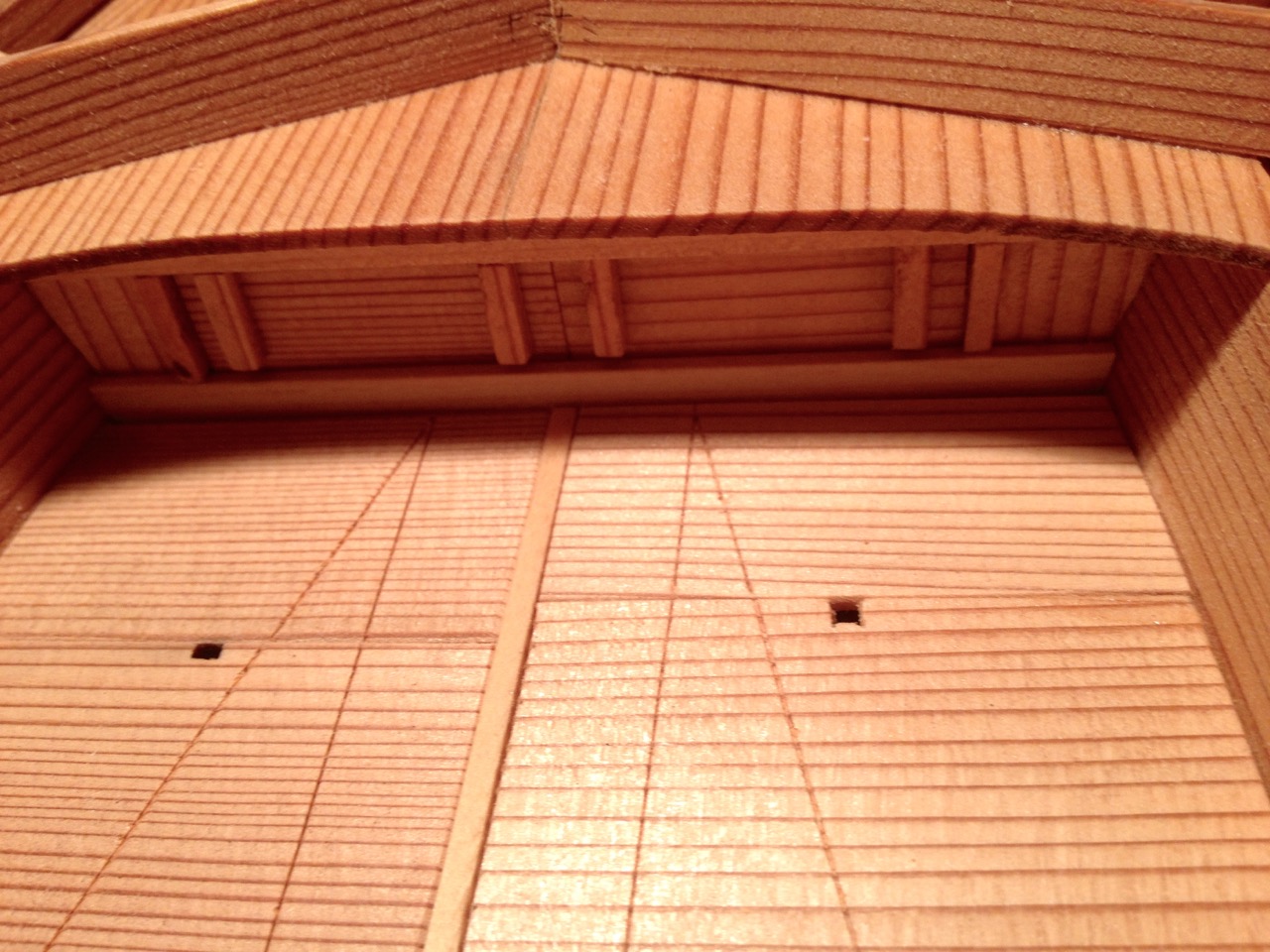
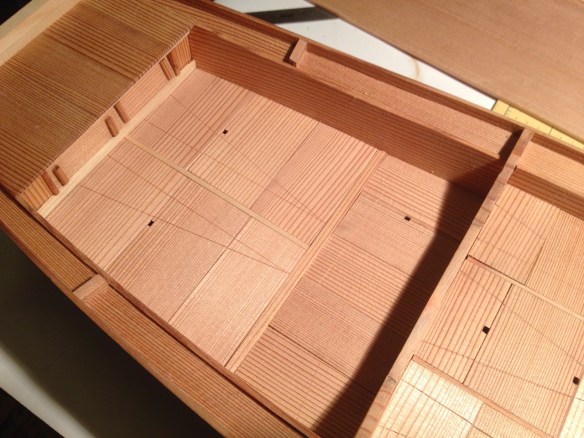
I jumped ahead just a little bit with the compartment covers since I was kind of on a roll with the trickier stuff. So, afterwards, I went back to deal with the rail supports. These are tapered blocks that are added to the rail after it has been constructed. By constructing the rails first, the nice fair curve has already been established and doesn’t need to be engineered into the design. Afterward, the support blocks were added to give the structure more rigidity.

You can see the support blocks of the rail in the photo below, and also in the second photo shown above.
IMG_2037


Finishing Details

The last steps of the Tosa Wasen kit involve adding the finishing details. These included the rail supports, oar, ringbolts, anchor, oar and some fisherman’s accessories.

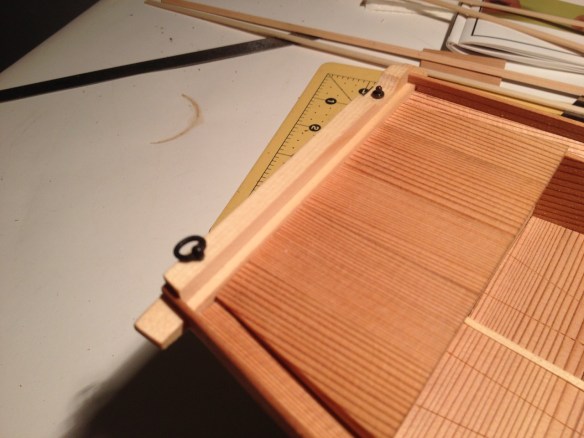
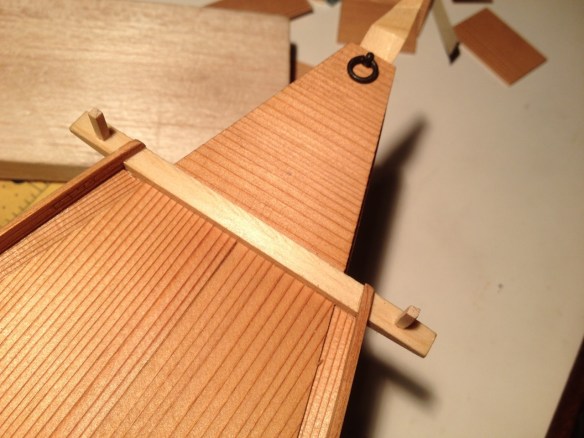
Dealing with the details on the boat first required drilling some 2mm holes to accommodate the ringbolts, etc.
IMG_2044

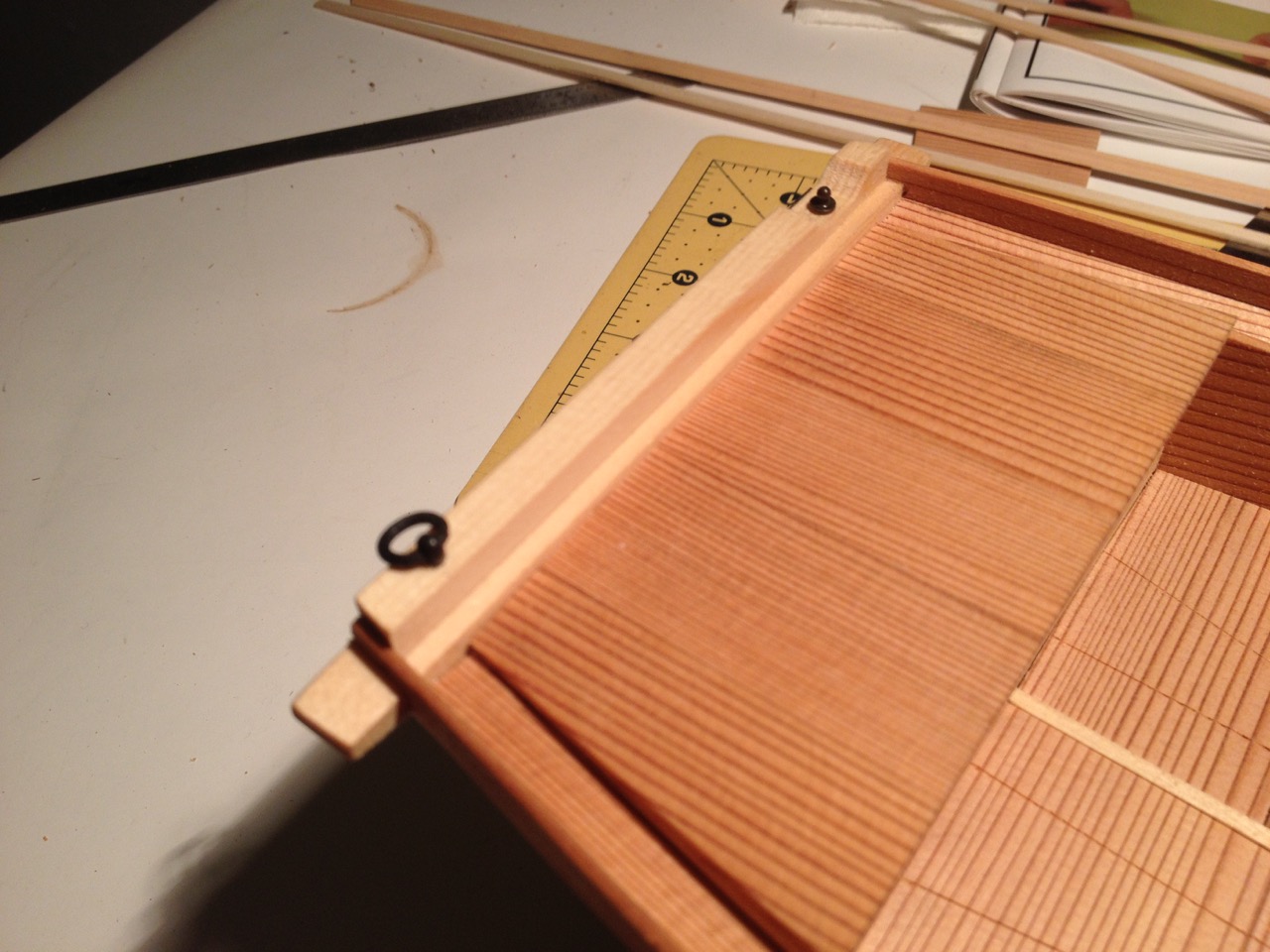
Ringbolt and the pin for the sculling oar added to the stern beam.
IMG_2043

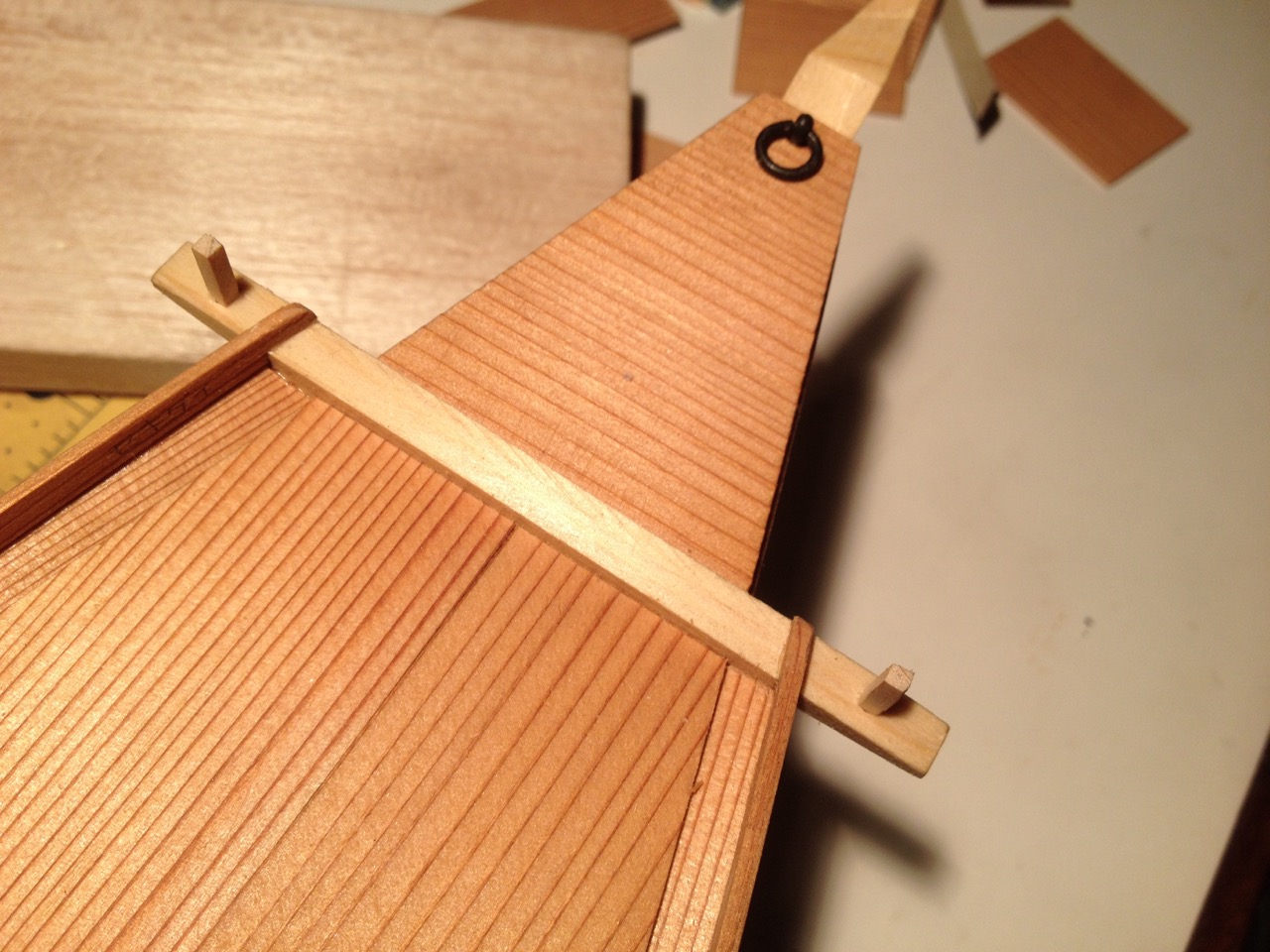
Ringbolt and, for lack of better term, “belaying pins”, which are mounted on the bow beam.

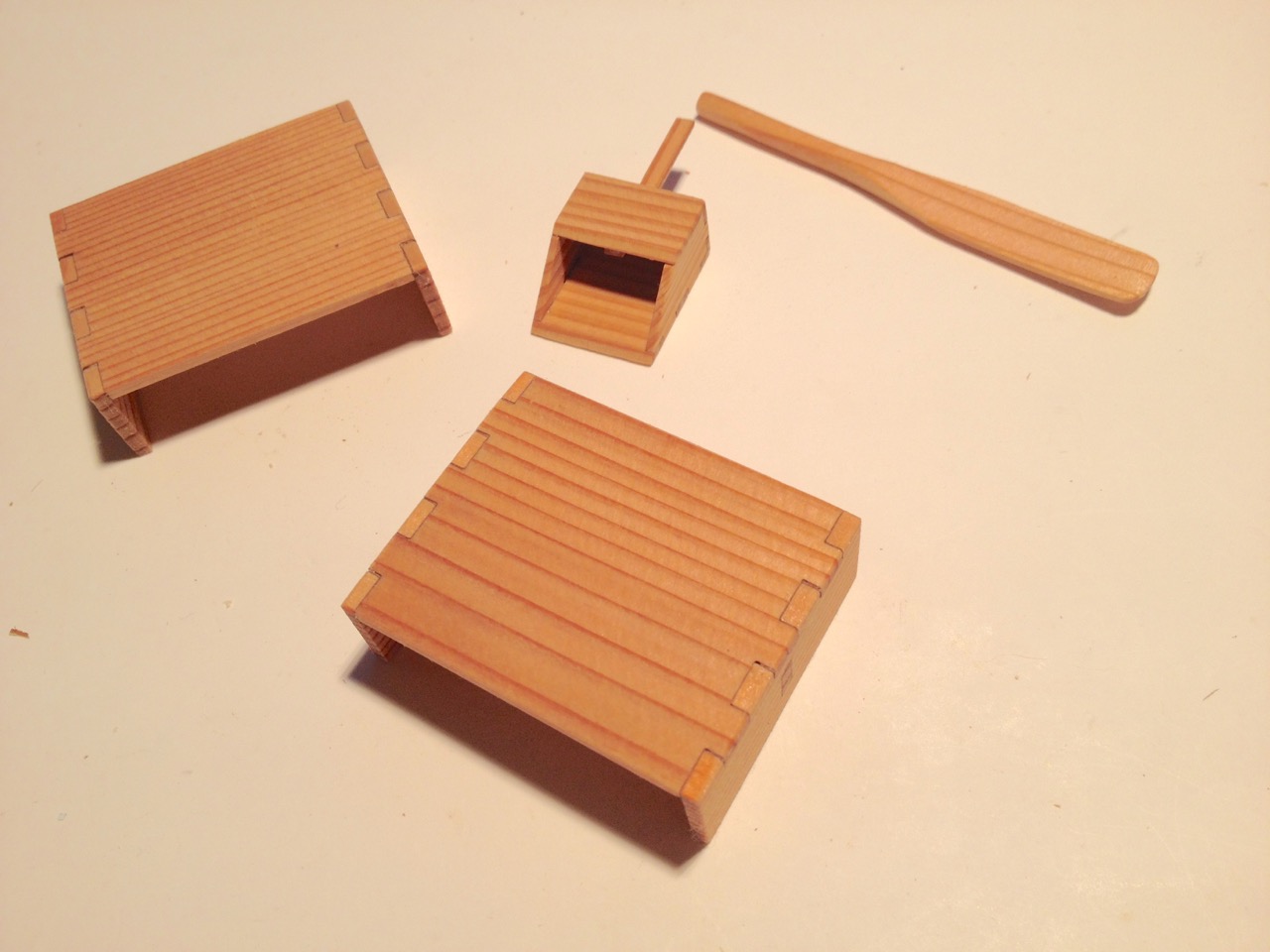
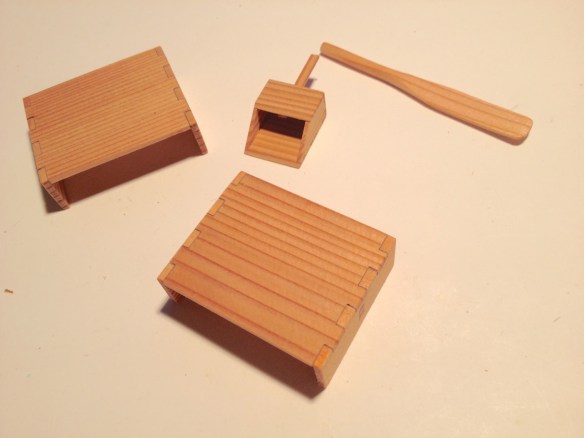
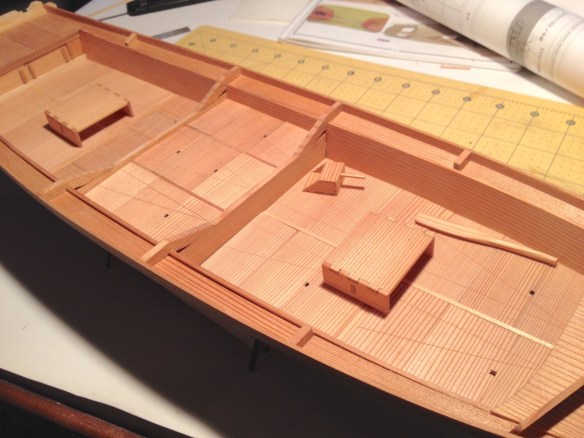
The kit includes some accessories that I jumped ahead and worked on because they looked fun and interesting. Specifically, there are two wooden seats, a small hand-paddle, and a bailer for scooping water out of the boat.
IMG_2045


The laser-cut pieces are designed to create nice box joints between all the parts, and as with everything else, the parts go together in a perfect fit. This is true of the bailer as well as the seats. The hand-paddle, called a Tekaki, was the only item here that required any shaping. Everthing else just went together and took a little sanding to soften the edges just a bit.

Afterwards, if you don’t want to display them on deck, they fit quite neatly in the storage spaces below the deck.
IMG_2046


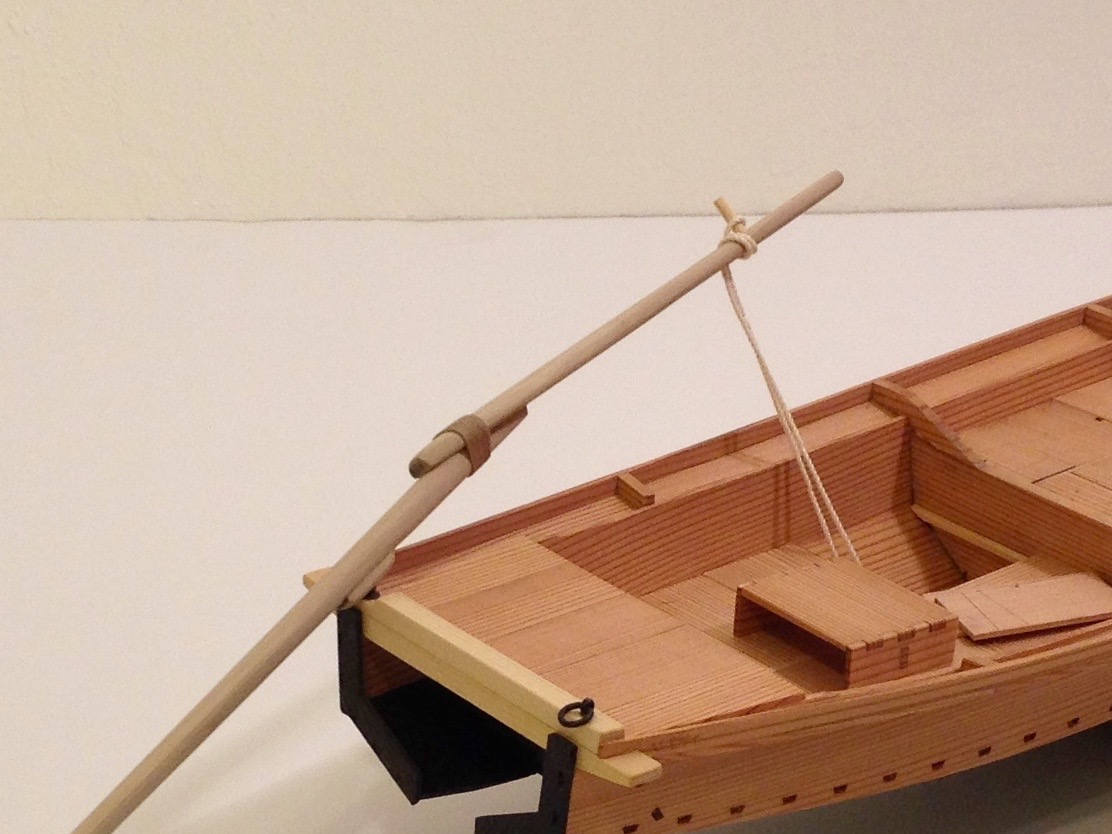
The Sculling Oar

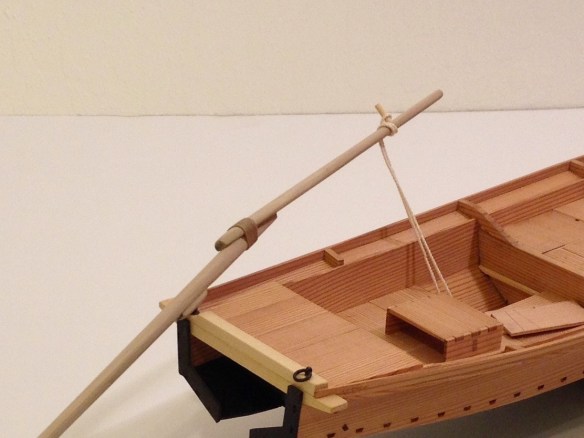
The boat, like most traditional Japanese boats, is propelled by a long, rearward facing sculling oar called a “Ro”. The sculling oar in this kit makes an accurate representation of a Japanese sculling oar. The plans show the cross-section of the oar at different points along its length, and the scale is large enough for people to see the shape detail.

The oar comes in two main pieces where were milled, not laser-cut, from Japanese magnolia, or “Ho”. This is kind of a grayish colored wood with a fairly fine grain that is harder than the cedar or cypress in the kit.

I varied a bit from the kit design here in that the kit included a tiny screw and nut to fasten the parts together. This is how the real Ro are made today and for the last 100 years or so. But, going for the Edo period look, I decided to wrap them together with rope instead.
IMG_2084

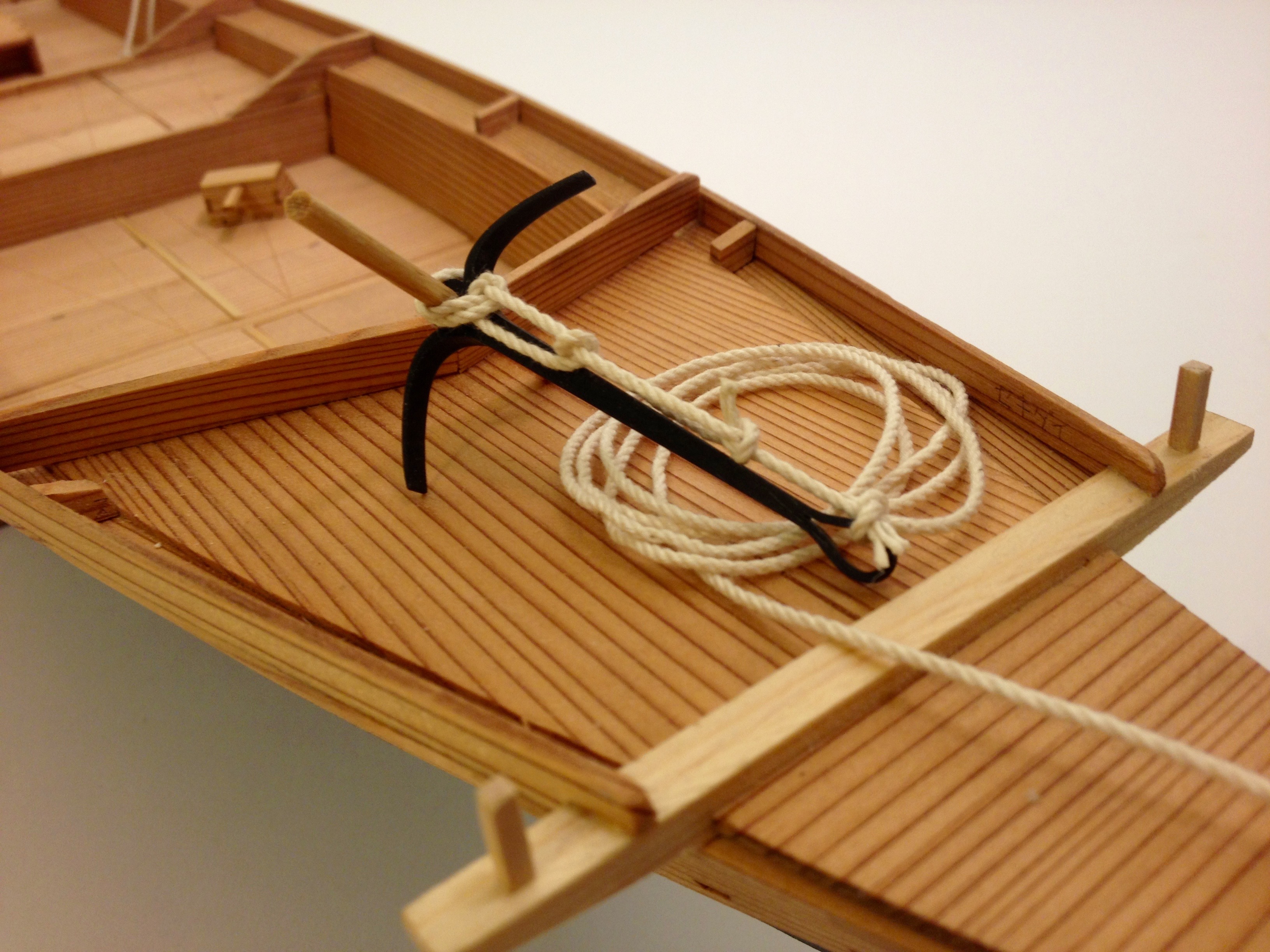
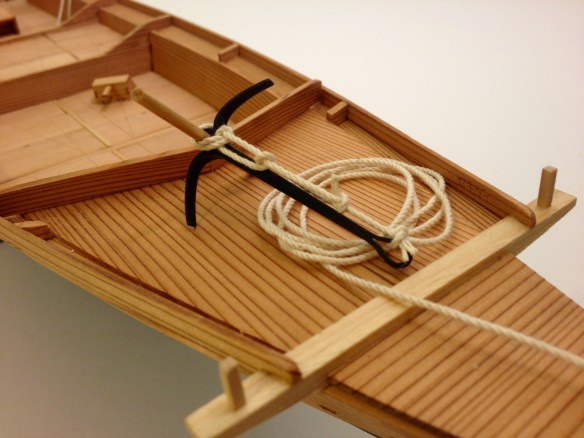
The anchor is the last item of this build. Not sure how they form this, but it seems like a piece of cast acrylic. It’s just a ted flexy, but has a good shape to it. It comes a little too thick, so it required some sanding to get it to look a bit more like the photos in the instructions. I ended up speeding up the process by using my belt sander. The part held up well and didn’t melt, so this worked out pretty well.

The anchor’s shape has a bit of taper, so it’s thinner at the top than at the bottom. At the base, there is a hole from a cross piece, making it look something like a grappling hook.
IMG_2071

The hardest part was tying the knots. I tried translating the text with Bing Translate, but all I got was a Japanese name for the knot. However, Google Translate came up with “Bowline”, which made life much easier. Basically, there’s a bowline at the base, a pair of half hitches, and the a separate rope ties the anchor cable to the eye of the anchor. The cable is then fastened to the ringbolt on the stem using a bowline.

A short piece of the supplied rope for the anchor cable was needed for the loop that secures the sculling oar. When not in use, that loop of rope stores away nicely under the deck.
IMG_2086

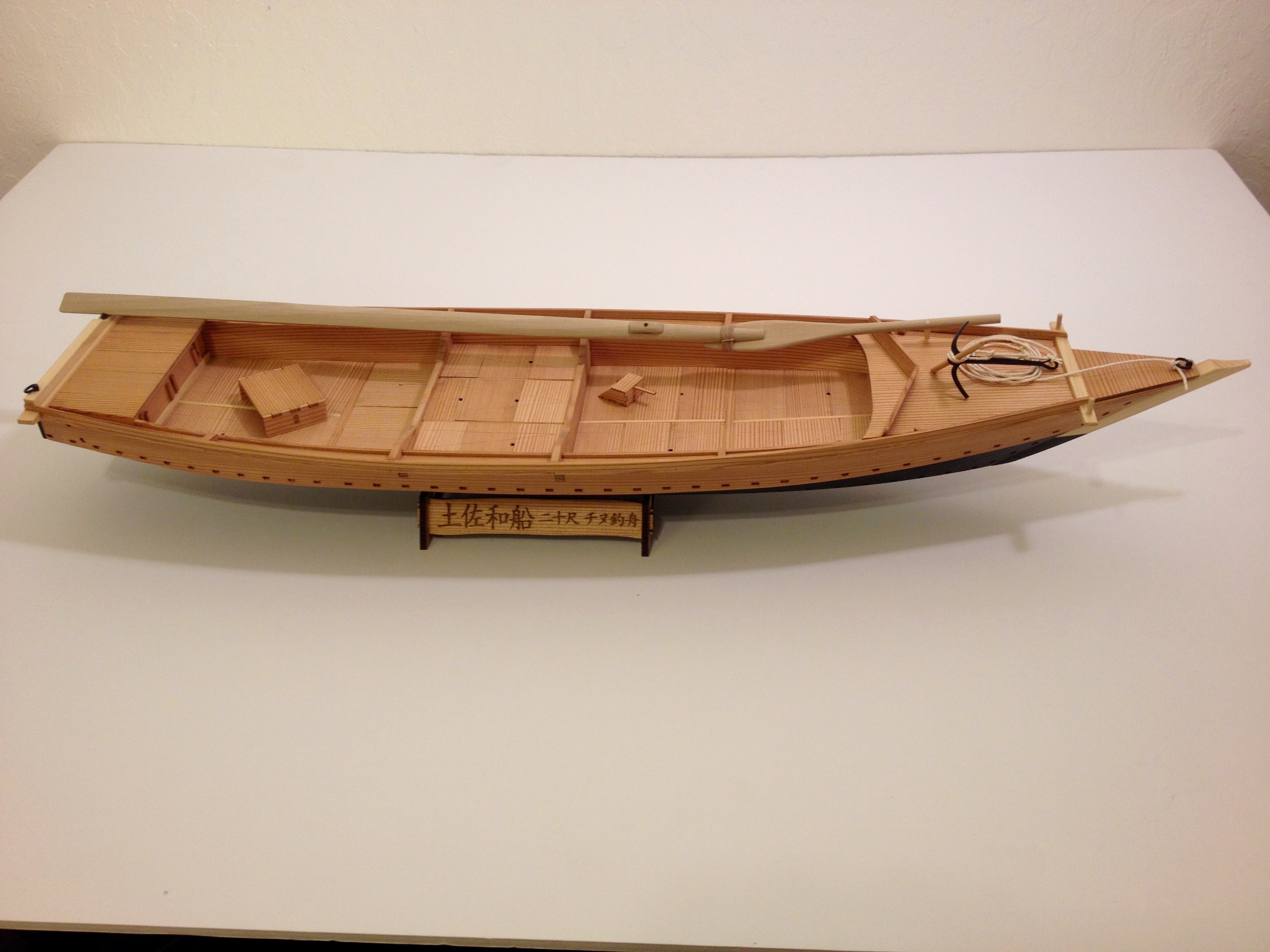
The finished project turned out beautifully. I used a coat of natural stain to finish it off and seal the wood. According to the label on the Minwax can, it seals, so that should help the longevity of the model as well as bring out some of the color of the wood.

I’ll eventually build a case for the model. With not masts, a cased Tosa Wasen model will fit easily in the bookcase. My Wasen Display is still running at the bank in San Francisco’s Japantown, but I have plenty to do with other projects, so I won’t worry about adding this model until Wasen Model Display 4.0 maybe in the Summer.
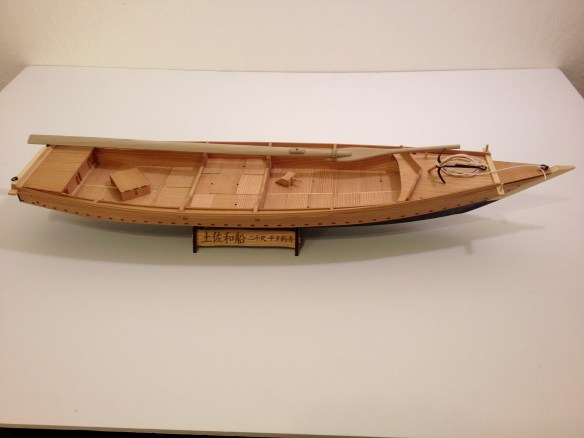
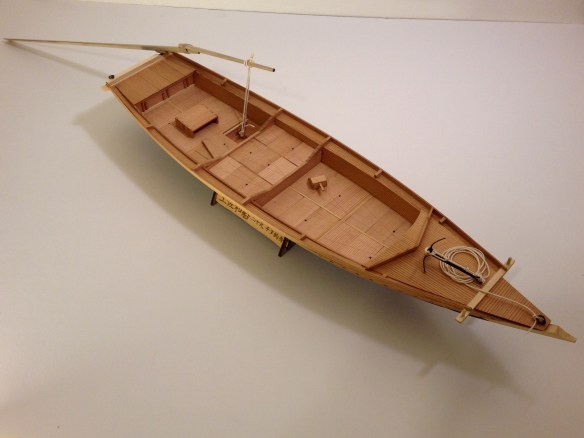
IMG_2087 IMG_2070 IMG_2085

Again, this is a great model kit for those interested in traditional Japanese boats. Email info@thermal-kobo.jp for ordering information. For now, the kit has a very low price – about $130 shipped by express service, payable using Paypal. If you would, tell them I sent you. Ω